
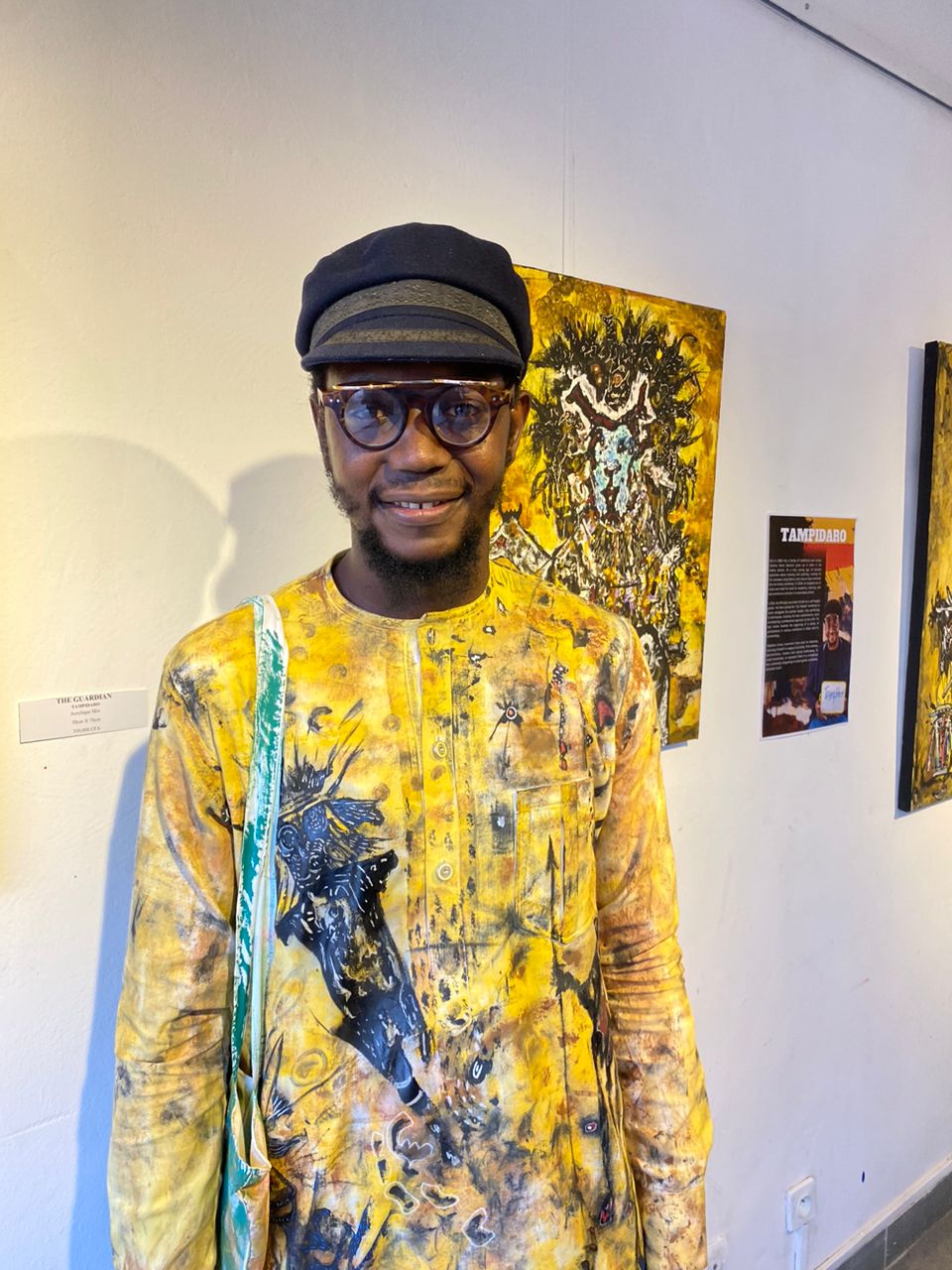

The “Avant-garde” exhibition, organized by the Art Box gallery in Dakar, showcases the striking works of the emerging Senegalese artist Ibrahima Wone Bocoum, known as Tampidaro. Celebrated for his vibrant and colorful pieces, Tampidaro takes us this time into a world where art interrogates the deeply rooted beliefs in Senegalese society, particularly those related to spells, enchantment, and known locally as “maraboutage.
Tampidaro’s latest series of paintings delves into the pervasive influence of mysticism and supernatural beliefs in Senegalese culture. Through his art, Tampidaro critiques the way these beliefs shape social behavior and personal responsibility.
“Here in Africa, particularly in Senegal, people often attribute mental illness to maraboutage or enchantment,” Tampidaro told Dakartnews. “Many firmly believe they are bewitched and fail to take charge of their lives. I see this as a weakness because we need to fight and persevere in life. This mentality holds us back.”
The Symbolism of Color and Imagery
The dominant yellow hues in Tampidaro’s paintings create a luminous atmosphere, evoking the omnipresent African sun. Yet, this brightness contrasts with the chaos and conflict depicted within. Black forms, representing both animalistic and human figures, are etched against the yellow background, adding depth and complexity. These figures symbolize spirits and demonic entities, reflecting the artist’s perspective on the internal conflicts caused by these deep-seated beliefs.

One striking painting, titled “Clan Battle,” features a human figure mounted on a horse-like creature, adorned with intricate black patterns, engaged in combat with a horned beast, possibly representing a menacing spirit. This imagery highlights the intense and often violent nature of mystical experiences.
Tampidaro also emphasizes the mistreatment of animals linked to these rituals. “In these rituals, animals are sacrificed to gain favor from the spirits,” he notes. “Sadly, animals here are often mistreated. Children and sometimes adults throw stones at cats and dogs just because they don’t want to see them. It’s a backward mentality.”
Blood and Life
Red accents on the figures symbolize blood and life force, signifying the sacrifices made but also hinting at deeper meanings. These elements could represent the inherent violence in these practices and the life force drained from both animals and humans by such beliefs.
“Despite all our mysticism and marabouts, we have never made it to a World Cup final. This shows that progress comes from believing in ourselves and fighting, not from mystical practices,” Tampidaro asserts.
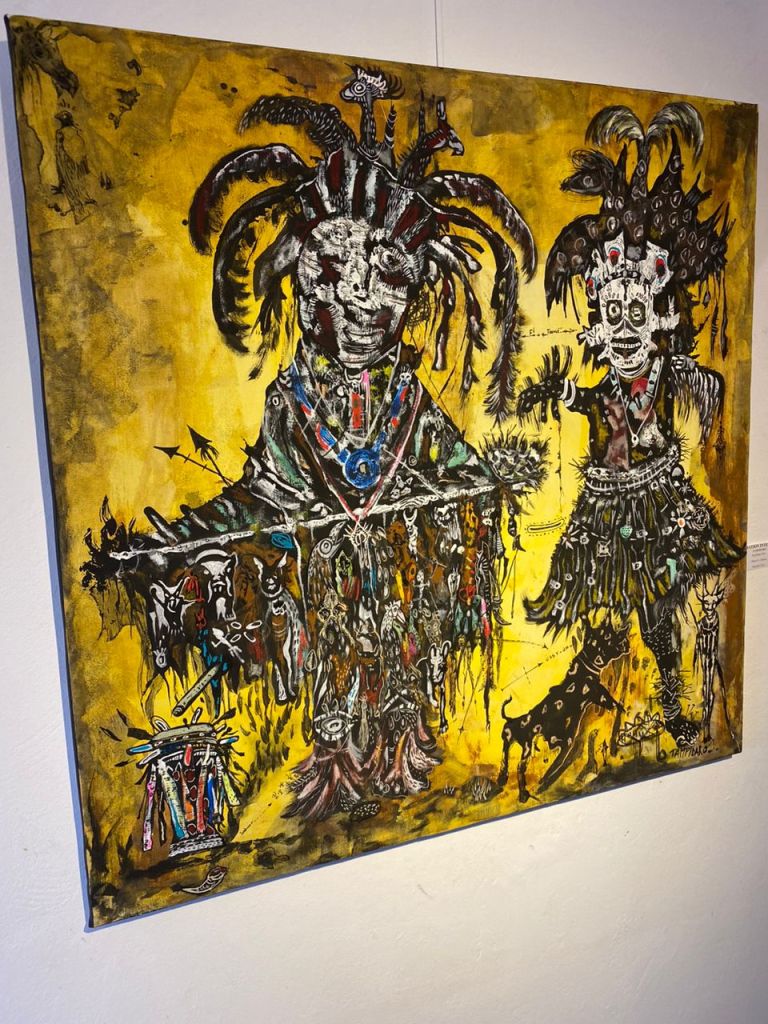
His work resonates with René Girard’s theory from “Violence and the Sacred,” which posits that sacrificial rituals serve as a social mechanism to manage violence and maintain cohesion. The depicted tension and sacrifice in his paintings illustrate this dynamic, where violence can become mimetic, leading to rivalry and conflict. The sacrificial rites depicted in Tampidaro’s art reflect Girard’s idea of using ritual to defuse communal violence.
Call for Change
The artist poignantly critiques how these beliefs hinder societal progress. “When someone becomes a minister or reaches a high position, their family urges them to visit marabouts to secure their position. But what we need from leaders is not superstition but hard work,” he says.
Tampidaro’s work reveals a society entrapped by its own beliefs, yet his intention is not just to critique but to inspire change. “Through this series, I hope people become aware of their confinement, start believing in themselves, respect animals, and develop a positive mindset,” he expresses.
In this thought-provoking exhibition, the artist transcends his usual vibrant street art style, echoing neo-expressionists like Basquiat and his mentor Saadio. By exploring this new thematic and stylistic direction, he challenges viewers to rethink their perceptions and embrace a more progressive mindset, free from the shackles of superstition.
This exhibition is not merely an artistic display but a profound social commentary, urging a shift from mysticism to self-belief and rational progress. Tampidaro’s powerful imagery and bold critique make “Avant-garde” a must-see exhibition for anyone interested in the intersection of art, culture, and societal change.
DakArtNews
 Bridging Africa and The World Through Contemporary Art
Leave a comment