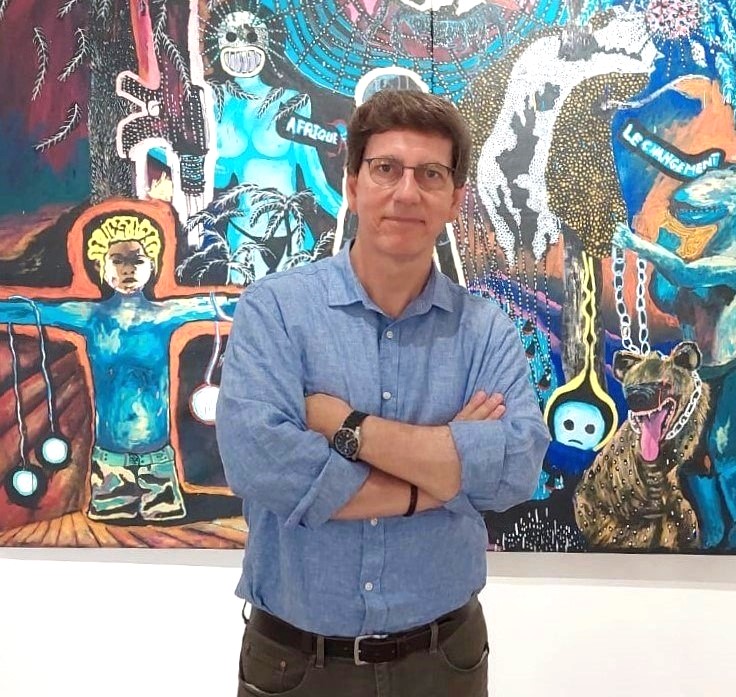

DakartNews had the honor to interview Paul G. Chandler, the Founding President of CARAVAN Arts. Chandler shares, in this interview, his profound journey from growing up immersed in Senegal’s vibrant arts scene to establishing CARAVAN, an international NGO dedicated to using the arts for transformational purposes. His reflections on the contemporary African art scene, the intersection of spirituality and creativity, and the impactful partnerships CARAVAN has fostered offer a compelling narrative on the power of art to bridge cultural and religious divides and inspire global harmony. Chandler, who recently stayed in Senegal in May/June to attend the events of Dak’art OFF, provides insightful observations on these experiences.
——————————-
What initially drew you to the arts, and how did your journey lead you to founding CARAVAN?
I spent the first 18 years of my life in Dakar, Senegal, and grew up around the arts. My father, who was a minister of an international church in Dakar, was a born artist. While not officially educated as an artist, he had an innate creative gift. I remember being captivated by it at an early age. As we say in French, “Il a l’œil.” He is now 91. I was also struck early when witnessing the pleasure he found in creating. I remember late one night being with him as he was creating (drawing, painting, and cutting out) the backdrop for a theatre play that was going to be held during the holiday season, and being enamored with how he was lost in the joy of creating. Secondly, growing up in Senegal under President Senghor, meant that I grew up in one of the most artistic and creative cultures in the world – from visual arts, to music, literature, poetry, film, dance, etc. All this had a profound influence on me. I recall the late President Senghor saying, “Art is animated by invisible forces that rule the universe.” I couldn’t agree more, and I felt surrounded by those invisible forces from an early age. As a result, while I am not a visual artist myself, I have been an art collector and patron of the arts since early adulthood.
CARAVAN originated in 2009 in Cairo, Egypt, where I was living and working at the time. Following the tragedy of 9/11 and the subsequent tensions, and even wars in the Middle East, there was a growing chasm of discord and misunderstanding at that time between the peoples, cultures and creeds of the Middle East and the West. In Egypt, I was involved in a number of East-West intercultural and interreligious bridgebuilding initiatives. And we noticed that typically we would have a small number of the same people attend the various panels and forums that were organized. And quite frankly, many of these events were boring. Being passionate about the arts, and having associated myself with the arts community in Egypt, I proposed to some senior imams that we instead hold a major East-West arts festival, with a primary focus on visual art, that had the objective of changing negative perceptions and stereotypes of the “other.”
So, with the encouragement of senior imams at Al Azhar in Cairo, the spiritual and intellectual heart of Sunni Islam, we temporarily converted a historic church into an art gallery and curated an art exhibition of 20 well-known Middle Eastern and Western artists with the goal of fostering creative interreligious and intercultural exchange and dialogue. It resulted in a major citywide East-West arts festival titled “On A Caravan: Journeying together through the Arts.” The art exhibition served as the catalyst for a wide range of other programs held around it (such as film, literature, and music) with the goal of facilitating dialogue and furthering understanding between those of diverse backgrounds.
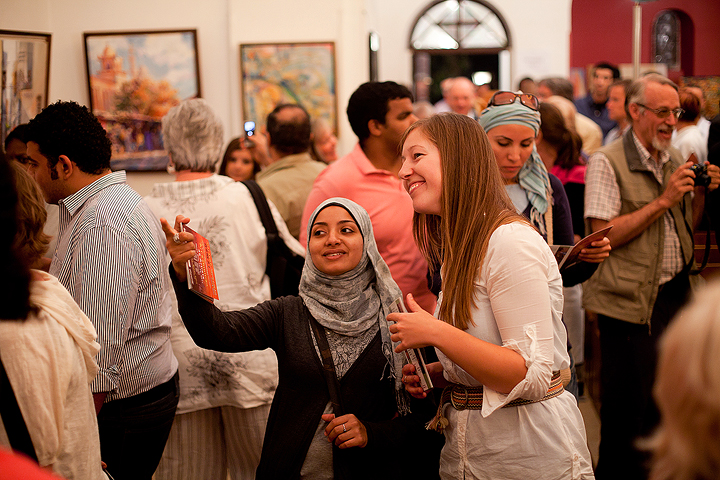
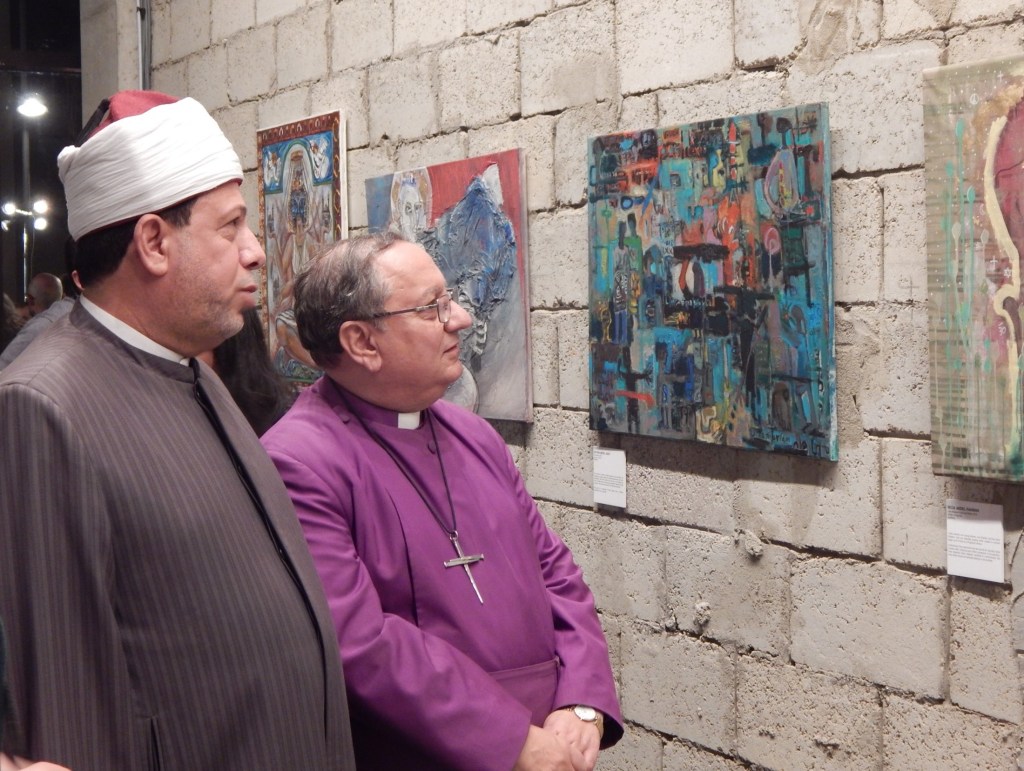
We were completely taken back at the tremendous response! In the first week alone, we had thousands attend. By curating these bridge-building artistic initiatives each year in Egypt, our experience showed us that the arts can be one of the most effective mediums to heal our world, by creatively fostering peace, harmony, wholeness and health in all its forms.
In 2013, the exhibition we curated traveled outside of Egypt to London, and it resulted in the founding of CARAVAN as an international non-profit/NGO, with the mission of using the arts to further our global quest for a more harmonious future, both with each other and with the earth. CARAVAN employs the arts to bring needed transformation in our world, which entails artistic initiatives that focus on building respect, enhancing understanding, enabling sharing and deepening friendships between those of diverse backgrounds. So, our name “CARAVAN,” comes out of the founding vision to encourage and facilitate those from diverse backgrounds and worldviews to “journey together through the arts.” Our exhibitions typically tour…often traveling from one region (i.e. Middle East) to another region (i.e. North America), “caravaning.”
I was captivated by the sheer creativity that felt like it was in the Senegalese air…
During your recent visit to Senegal, what were your impressions of the contemporary African art scene? Were there any artists or exhibitions that stood out to you or resonated with CARAVAN Arts’ vision?
My May-June 2024 visit to Senegal was an explorative trip, with the goal of being acquainted with the contemporary art scene there. I initially planned the trip around Dak’Art: African Contemporary Art Biennale. However, Dak’Art ended up being postponed at the last minute by the new government until November 2024. So, I instead attended numerous Dak’Art OFF events, those exhibitions and artistic programs that had been scheduled around the Biennale, that were not canceled. Additionally, I visited galleries, museums, and some artist studios.
My primary focus was to learn more about contemporary Senegalese artists, as opposed to artists from other West African countries. I found it deeply stimulating and inspirational to be immersed in the work of artists such as Soly Cissé, Alioune Diagne, Aliou Diack, Viyé Diba, Manel Ndoye, Tampidaro, Kalidou Kasse, just to name a few. I was enthused by the work of artists outside of greater Dakar, such as Alioune Kebe in Saint-Louis, and Khalifa Mané’s brilliant exhibition in Saly at Galerie Mémoires Africaines. I was captivated by the sheer creativity that felt like it was in the Senegalese air… from the street art, to sculptures using recycled materials, to the moving profiles of Sufi saints on walls, buses, and taxis, to the sous-verre (reverse glass painting) artistry, to the creative use of textiles in multi-media works by artists on Goree island.
Many of these artists mentioned above, and others, inherently embody CARAVAN’s vision of using the arts to play a strategic role in transforming our world. They are artistically addressing the issues that contribute to conflict, inequality, discrimination and environmental injustice in our world.
One focus for CARAVAN is exploring and nurturing the relationship between spirituality, faith and the arts, toward enhancing our experience and understanding of both the transcendent and of each other. I was also deeply encouraged at how many Senegalese artists through their work were naturally touching on the spiritual dimension of our existence. A brilliant example of this is the excellent profile DakArtNews recently released on artist Djibril Coulibaly.
I look forward to the possibility of seeing CARAVAN find natural ways to engage with the contemporary art scene in Senegal. Since returning from my trip to Senegal, I have been writing reflections about these artistic encounters on my website blog.
How do you approach curating to ensure that your initiatives promote peace and understanding effectively?
In curating our touring exhibitions, we first select a strategic theme for the exhibition. This is usually a theme that addresses a felt need in our world, toward making our world a better place. Themes have ranged from peacebuilding, conflict resolution, inequality, injustice, discrimination to environmental sustainability. We typically curate group exhibitions, and issue an invitation to artists to participate based on their previous work and their ability to express the exhibition’s theme. Most often our exhibitions involve two-dimensional artwork, but we have exhibitions that entail entirely three-dimensional work as well.
Additionally, we simultaneously organize the tour, as the exhibition is held in varying locations rather than in a consistently fixed setting, allowing flexibility to respond to world events, arising invitations, opportunities and needs. Our exhibitions are often held in heavily trafficked public spaces, or even “sacred spaces,” as opposed to only traditional art venues in order to maximize viewership from the widest possible demographic. The atmosphere of the exhibition space is important to us, as we wish it to have a contemplative nature, if at all possible, to facilitate the message of the art exhibition. As referred to earlier, an exhibition itself serves as a catalyst for the development of a variety of programs and events around it to stimulate discussion, dialogue and education, promoting further understanding (e.g. talks, forms, lectures, music, literary readings, film screenings, panels, children’s activities, school class field trips, etc.).
Within these perimeters there is great variety to the exhibitions themselves. Here are a few examples. In 2015-2016, we curated a ground-breaking traveling exhibition titled THE BRIDGE, featuring commissioned work of 47 premier Arab, Persian and Jewish contemporary artists from 15 countries. They came from Muslim, Christian and Jewish religious backgrounds. Their theme was focused on what “bridges” us to each other, as well as what they hold in common across their creeds and cultures.
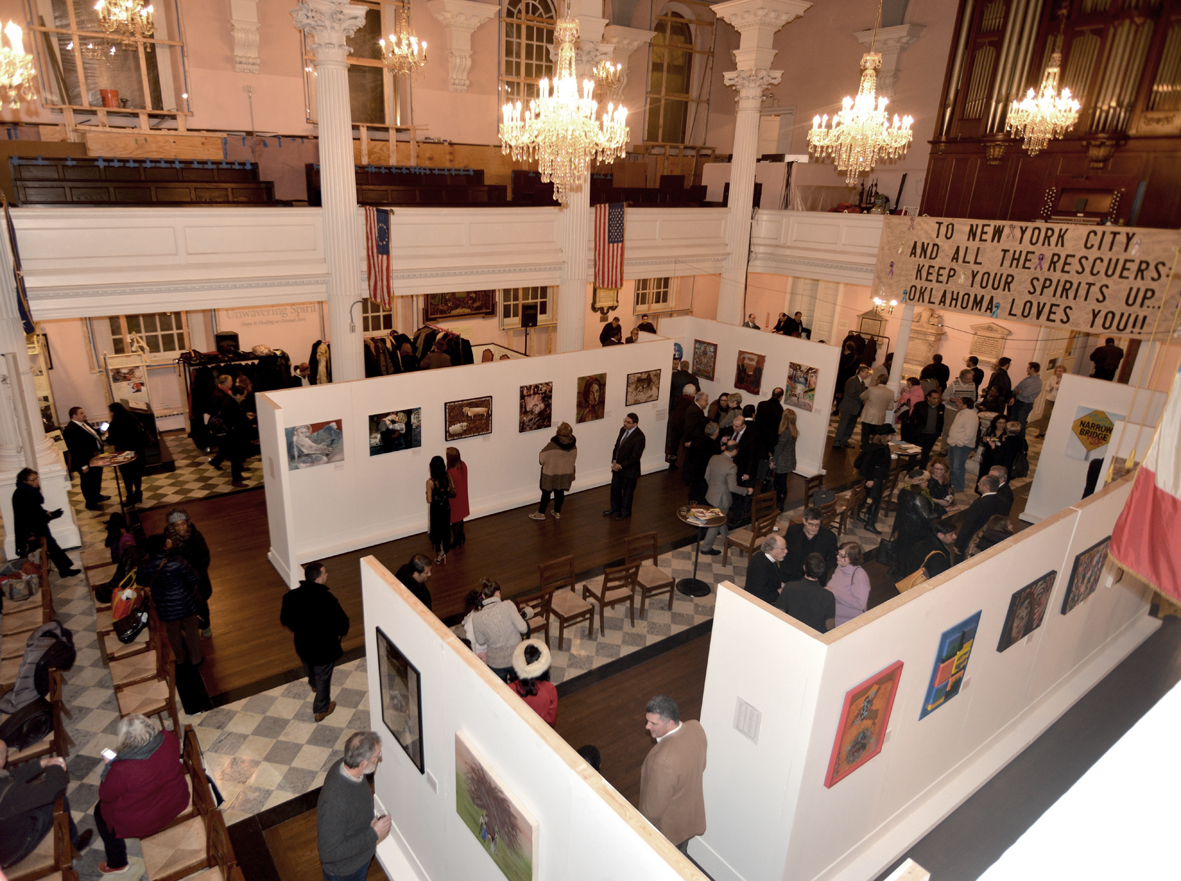
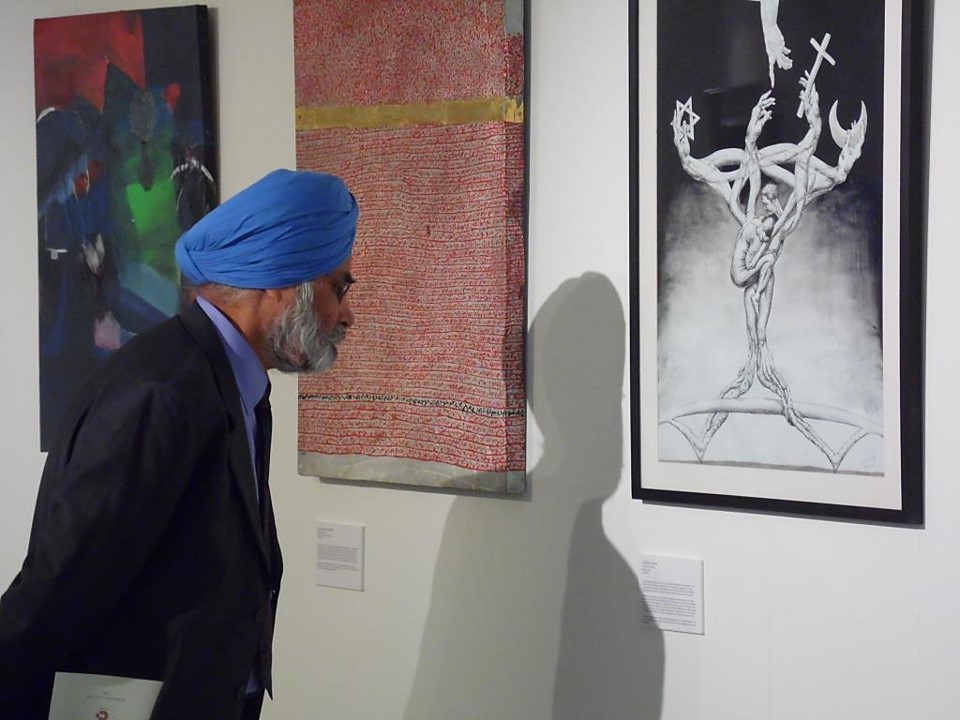
It opened in Paris, just after the Charlie Hebdo tragedy, and over the next 18 months it was exhibited in key venues in London, UK, Metz, France, Cairo, Egypt and in the United States (New York, Chicago, Spokane, Portland and throughout the state of Wyoming, considered at that time the most anti-Middle Eastern and anti-Muslim state in the US). As the exhibition toured, it spread a fundamental message of intercultural and interreligious harmony. We had participating artists present wherever the exhibition was held, allowing people to meet and experience the “other,” those they might never normally encounter, as we are all changed and shaped by our experiences.
Art can create a safe and equalizing space in which to begin real conversation and dialogue.
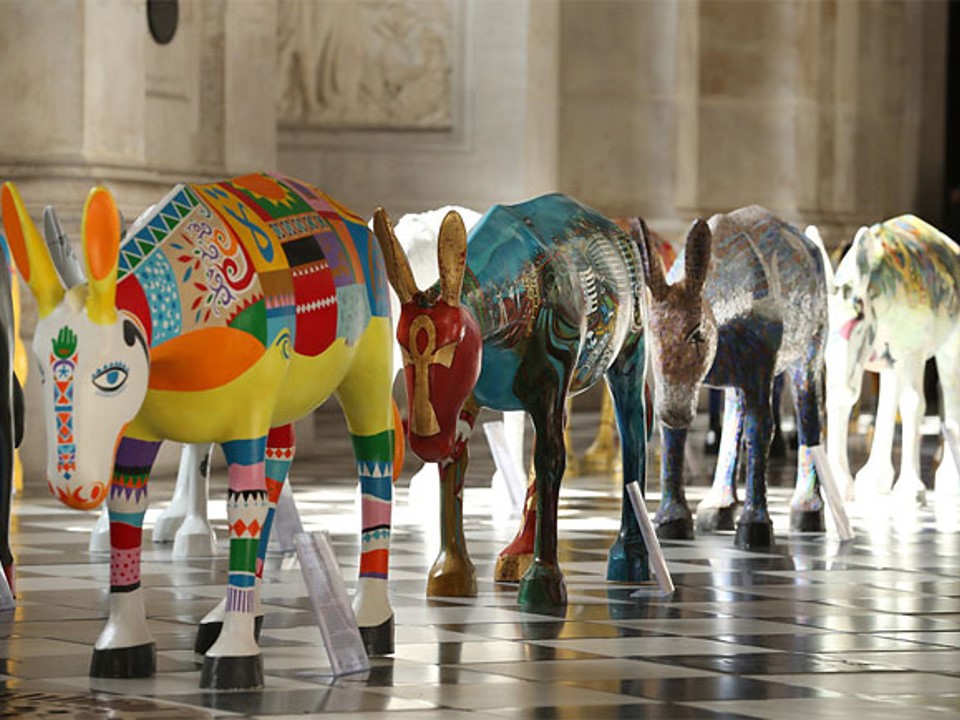
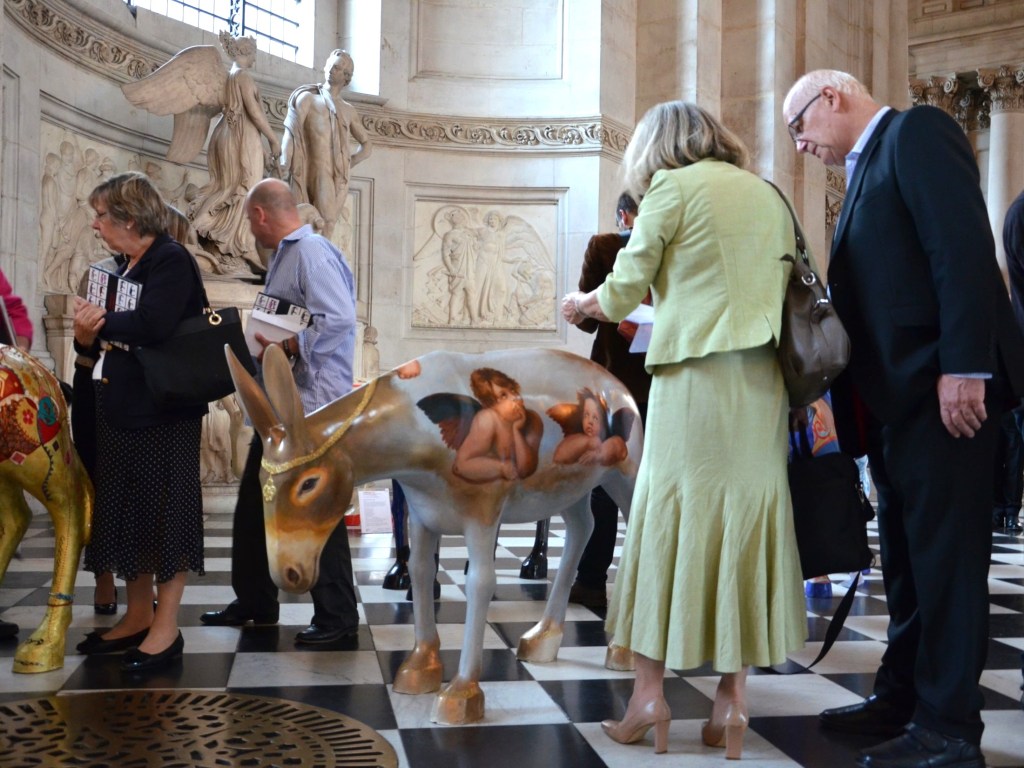
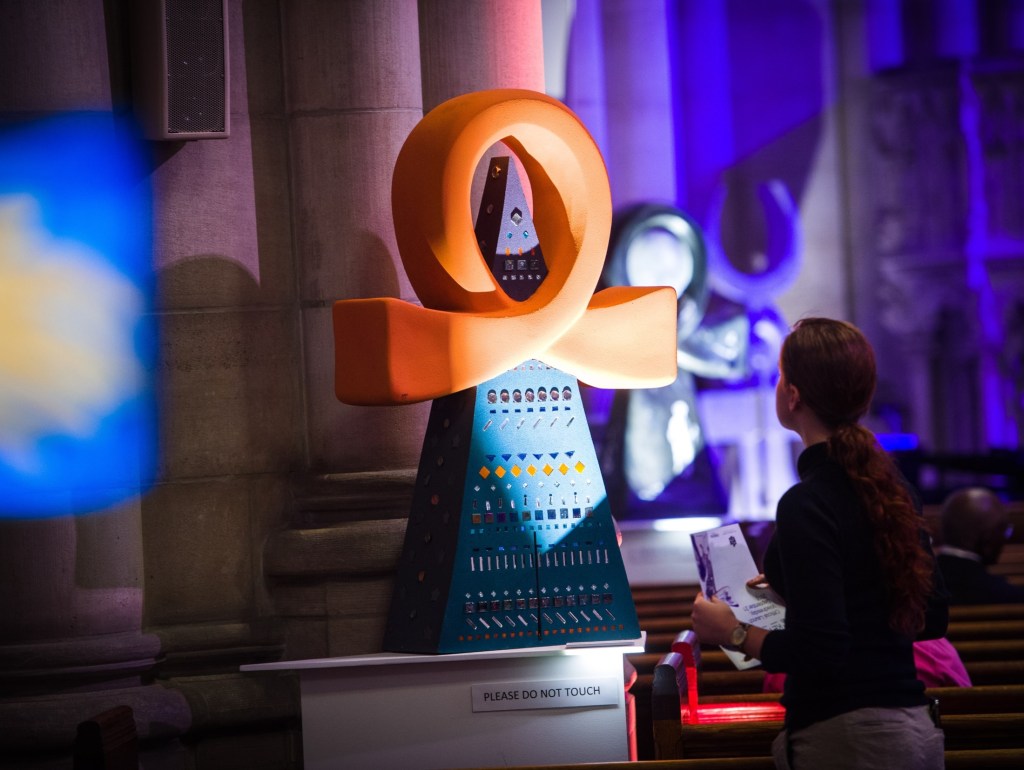
Another example is an installation exhibition titled THE KEY in 2016-2017, that used the globally recognized ancient Egyptian symbol of the “ankh” as the canvas for a contemporary message of hope for a harmonious, peaceful and tolerant world. The exhibition showcased the work of 40 premier and emerging Middle Eastern and Western contemporary artists, focusing on a modern three-dimensional fiberglass portrayal (1.20 meter in height) of the ancient “Key of Life,” the Ankh, the Egyptian hieroglyph that means “life,” which is seen as the oldest known symbol of pluralism, tolerance and harmony in the world. The exhibition addressed “the key” to living in a peaceful and harmonious world, and it served as a powerful means to unite people of different ethnic, cultural and religious backgrounds. THE KEY opened in Cairo, Egypt in 2016 and was then showcased in London, England and New York City, USA.
A current exhibition that is on show in Washington, D.C. is GROUNDED, an artistic exploration that seeks to inspire our imaginations about our need to be “grounded” in our relationship with all of creation: the earth and its wildlife, each other and ourselves. GROUNDED brings together an inspiring group of 15 award-winning Native American contemporary artists from Indigenous American tribes traditionally based in and around the Great Plains region of the US. These Native American creative expressions remind us that our world itself is calling for restoration, from within and without, and serve as a visual representation of the worldview, wisdom and learnings of their ancestors; its message is needed more than ever as we imagine the way we live in order to heal our world. The exhibition has been on tour for 18 months and ends its tour at the American University Museum in Washington, D.C.

Through these various diverse exhibitions, there are numerous inspiring stories that have resulted, where people’s views of those different from themselves have changed dramatically. These artistic initiatives become “encounter points,” that bring people together that would normally never come together. One of the secrets of using the medium of the arts for purposes of transformation, is that art is “indirect” in its approach to addressing very challenging issues. And as a result, the all-too-often defensive walls are not raised. Art can create a safe and equalizing space in which to begin real conversation and dialogue, and sensitively addresses difficult topics, expand worldviews, as well begin needed healing.
What are some of the most impactful partnerships your organization has formed with artists around the world, and how have these collaborations advanced your mission?
One of CARAVAN’s objectives is to provide a platform that gives artists a voice towards bringing about transformation in various ways. And our artistic initiatives have resulted in unprecedented partnerships with renowned and emerging artists from all over the world. We are continually identifying artists that resonate deeply with the transformational potential of their gift of creativity. And I should also say that we see our exhibitions as an opportunity to allow some emerging artists to exhibit alongside premier artists – so we make sure to include that dimension as well.
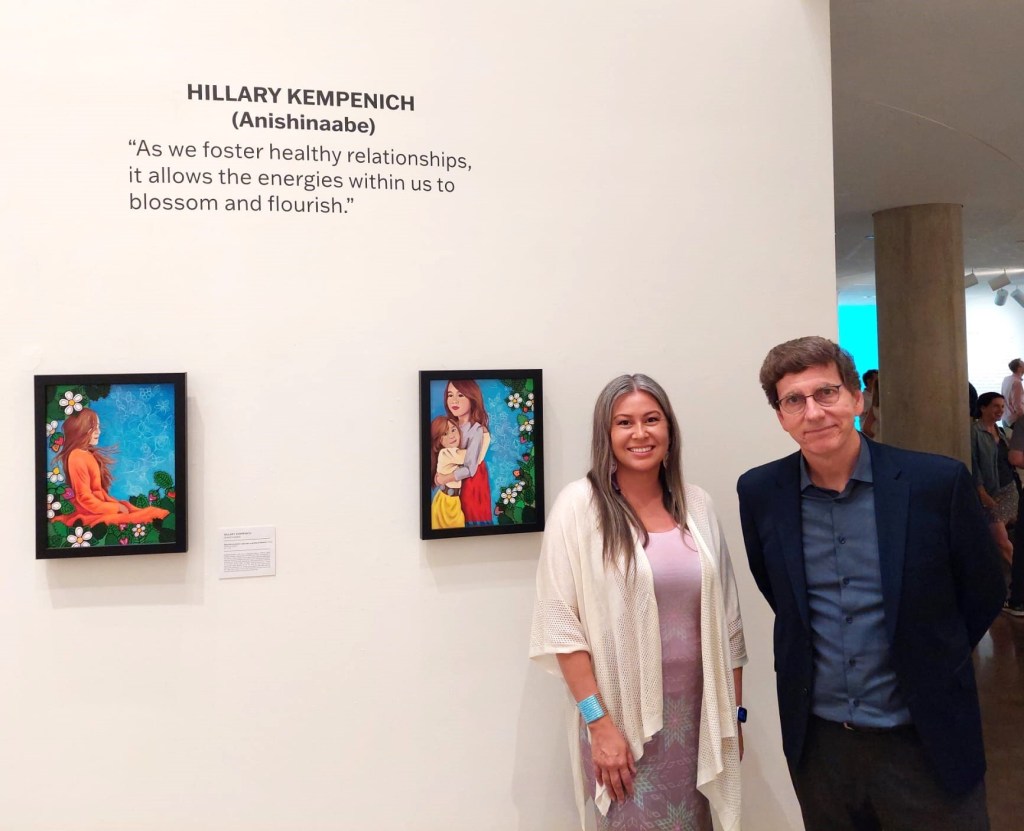
In each of our group exhibitions, there would typically be a noted “lead” artist, who resonates with CARAVAN’s mission, and who is deeply committed to helping and mentoring emerging artists. Often, they serve as a co-curator of the exhibition itself, and help introduce us to gifted artists in their respective countries or communities that might be a fit for a CARAVAN exhibition.
In what ways do you see the relationship between spirituality, faith, and the arts evolving, and how does CARAVAN Arts aim to nurture this relationship?
As I responded briefly above, CARAVAN is also committed to exploring and nurturing the relationship between spirituality, faith and the arts, with the objective of enhancing our experience and understanding of both the transcendent and of each other.
There is something “transcendent” about art. Art creates a new pathway of understanding that transcends differences, having the power to strike us on a deep, subconscious level. As Kahlil Gibran, the early 20th century mystic and poet-artist, and author of The Prophet, so powerfully wrote: “The mission of art is to bring out the unfamiliar from the most familiar, from nature to the infinite.” He goes on to say, “Art is one step from the visibly known toward the unknown”. Art can really take one into that deeper dimension, echoing how Anish Kapoor, the renowned British-Indian sculptor describes his work when he said, “I am attempting to dig away at . . . the great mystery of being.” Kapoor goes on to say, “We live in a fractured world. I’ve always seen it as my role as an artist to attempt to make wholeness.”
Art invites us to re-imagine ourselves, our situations, and our internal narratives. And while art is not a cure, it is a focal point. Art can offer a pause, a moment of reflection. Art can motivate and inspire. Art can remind us of what makes us most human. The intersection of the arts and spirituality was a curatorial focus within our current GROUNDED exhibition, featuring premier Native American contemporary artists. The exhibition is essentially focused on today’s need for a “sacred harmony” – an awareness of a new balance between ourselves and the earth, and with all of life upon it.
In this regard, we believe there is a tremendous amount to learn from the Indigenous cultures of our Native American sisters and brothers, who can teach us about maintaining a sacred balance with the earth and all that is upon it. Native American traditional beliefs see everything on the earth as living in a relationship. Hence, they understand today’s environmental and humanitarian crises as affecting everyone and everything – geologically, physically, emotionally and spiritually. Their spiritual wisdom is therefore essential to developing a “sacred harmony” between all peoples and the earth. As GROUNDED toured, it took with it the fundamental message of respecting a new Creator’s artwork, this earth and all of life upon it. . . toward restoring it to Creator’s intended beauty. The exhibition reminds us of inspiring words by Black Elk, the early 19th century Oglala Lakota holy man: “Let every step you take upon the earth be as a prayer.”
I would love to see CARAVAN work with Senegalese artists in the future.
What are your future plans for CARAVAN Arts and are there any upcoming projects or initiatives you’re particularly excited about?
One of the exhibitions that CARAVAN is in the midst of curating that I am looking forward to is focused on climate change and environmental sustainability. This is an issue that Senegal is having to address as well. The exhibition is titled NOAH: A Future Hope, and it will feature three premier contemporary artists from the faith traditions of Islam, Christianity and Judaism on the importance of caretaking the earth inspired by the story of Noah, the ancient flood narrative found in all three Abrahamic faiths.
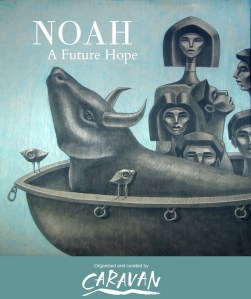
The world’s most well-known epic flood story, will serve as a catalyst and platform for engaging discussion, inspiring action and effecting change regarding our responsibility as agents in the preservation of life on earth. The exhibition will feature three celebrated contemporary artists: Hady Boraey (Egyptian Muslim), Brian Whelan (Irish Christian) and Yona Verwer (American Jewish). The objective of NOAH: A Future Hope is to be a creative catalyst that inspires a brighter path to a promising future, offering a message of hope for future generations. Our plan is that it will tour for two years, beginning in early 2025 – likely in the Middle East, Europe and North America.
Do you see potential for collaborative projects in Senegal? If so, what kind of initiatives might you consider?
I would love to see CARAVAN work with Senegalese artists in the future. I believe that Senegal itself, her culture and people, have a tremendous amount to teach our world at this time. And what better way to do that than through the arts. At this time, we are in an explorative mode, so it is too early to know what shape this may take. However, for the moment we are certainly wanting to continue to learn about the Senegalese art scene, as well as the West African art scene.
One area we hope to begin focusing on at this early stage is seeking to draw more international attention to Senegalese artists through Artist Spotlights that we are doing. For example, we will soon be publishing an interview we have done with artist Alioune Kebe, an artist from Saint-Louis, Senegal. I should also say that I am really impressed with DakArtNews and what you are doing to draw attention to artists in Senegal. Publishing your articles, spotlights and interviews also in English, as you are doing, broadens their reach globally.
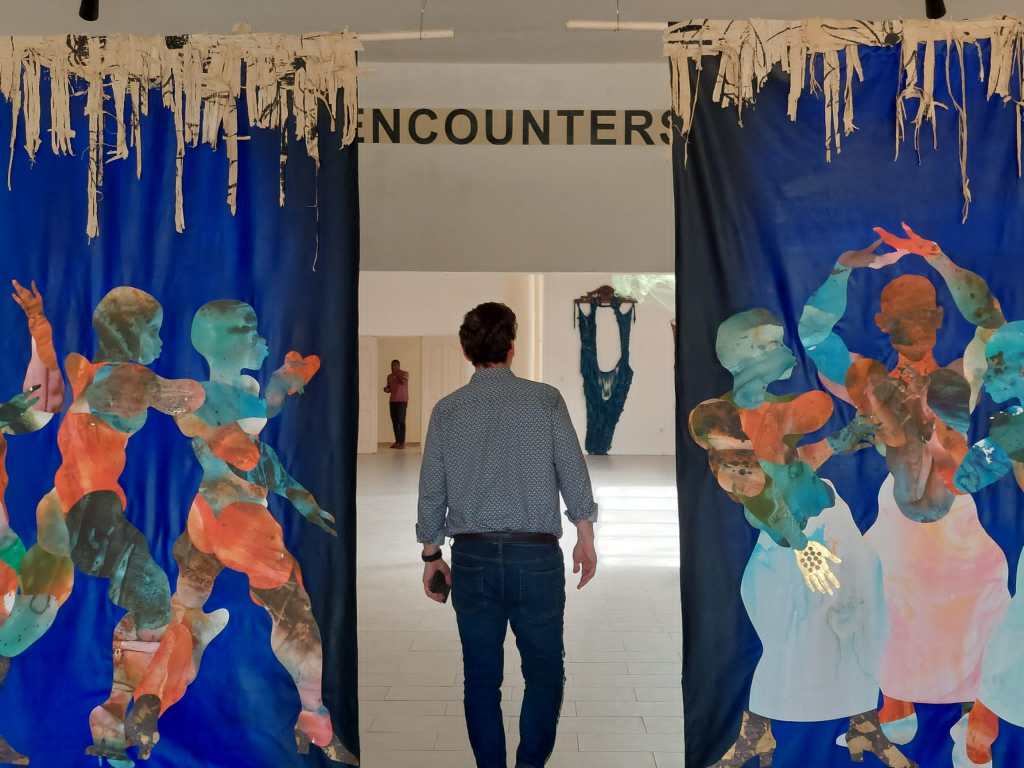
At Centre Culturel Blaise Senghor in Dakar, Senegal
What advice would you give to young artists or cultural activists who want to make a difference through their work?
First, I would say to young artists and curators that I profoundly believe that artists can lead the way in our time. With their embrace of greater tolerance, artists provide new pathways of understanding that transcend borders and how we see the “other” and the critical issues of our day. For as long as conflict has torn the human family, art has allowed us to see similarity within difference, offering a mode of reconciliation.
Art is a universal language that has the ability to dissolve the differences that divide us. I am reminded of the words of the late Nobel Prize Egyptian novelist Naguib Mahfouz; “Art is the language of the entire human personality.” So, I would counsel them to be courageous, knowing that their art can play a real transformative role in our world. I strongly believe that it could not be timelier for the arts to play a central role in addressing today’s local and global challenges.
Secondly, I would encourage them to seek to be truly authentic to who they are, and to “speak,” meaning to “create,” with their own distinct voices, focusing on whatever they are personally passionate about, and to use their gifts for deep purposes whenever possible. Each artist and art professional has their own unique light to shine on our world, and the world needs each and every one of those creative lights. Every artistic voice matters! I love the optimistic and visionary way in which Theaster Gates, the noted multidisciplinary artist and activist in Chicago, sees his artistic vocation; “I am invested in illustrating the possible.”
Thirdly, I would encourage them to seek out like-minded partners – from galleries, art institutions, NGOs, patrons, key individuals, etc. – that value both their unique creative gift and how they wish to use it in our world. Too much time and energy is often spent in the art world going against the grain, or of knocking on closed doors. So, my encouragement is to follow the direction that naturally unfolds, whenever that happens, and spend energy on developing their own unique artistic voices.
The artistic calling as a vocation is in my opinion one of the highest of callings, a calling that reflects the image of the Divine Artist from whom we all originate. I find the recent words of the writer Adam Gopnik in The New Yorker magazine a profound reminder to all artists: “The arts are not subsidiary places of secondary sensations but the primary place where we go to recall feelings of wholeness, of harmony, not just with ‘Nature’. . . but with existence itself.”
BIO
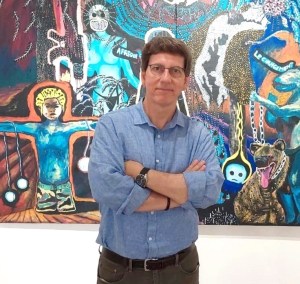
Paul G. Chandler is an author, art curator, NGO executive, peacemaker, and an authority on the Middle East and Africa. He grew up in Senegal, West Africa, and has lived and worked extensively around the world in senior leadership roles within publishing, the arts, relief and development and the Anglican Communion. He is the Founding President of CARAVAN, an international arts NGO that uses the arts for transformational purposes. He is recognized as a global leader in using the arts to further our quest for a more harmonious future, both with each other and with the earth. He has organized and curated major art exhibitions internationally – in sacred spaces such as St. Paul’s Cathedral in London and National Cathedral in Washington, D.C. and at notable art venues like the National Gallery of Fine Arts in Amman, Jordan, the American University Museum in Washington, D.C., Vanderbilt University Fine Arts Gallery, Museum of Modern Art in Cairo, Egypt, as well as at reverential memorial sites like Ground Zero in New York.
He was awarded by the Archbishop of Canterbury the Hubert Walter Award for Reconciliation and Interfaith Cooperation, the highest international award for outstanding service in the work of reconciliation and interfaith dialogue within the Anglican Communion. He is a Canon of All Saints’ Cathedral in Cairo, Egypt. He is also author of four books, including his most recent book titled IN SEARCH OF A PROPHET: A Spiritual Journey with Kahlil Gibran, which focuses on the all-embracing spirituality of the early 20th century Lebanese born poet-artist Kahlil Gibran, often best known as the author of The Prophet. You can learn more about him at: www.paulgchandler.com
For more information about the work of Caravan Arts, please visit their website: https://www.oncaravan.org/
*The photos were provided to us by Paul Chandler.
 Bridging Africa and The World Through Contemporary Art
Leave a comment