

Diama Thiam, a 33-year-old biochemist turned multi-talented artist, is the creator of the brand Ndati. Diama bridges the gap between science and creativity, excelling in fashion design, photography, and painting. In our exclusive interview, she shares her story of resilience, from working in a biomedical lab during the Covid-19 pandemic to finding solace and expression through art. Learn about Ndati, which champions African craftsmanship, and explore the profound themes in her work, from women’s rights to environmental issues. This interview is part of the What is Art Series, a series that gives artists a platform to reflect on their practice.
—
My name is Diama Thiam, a biochemist by training and an artist by passion. I have had the opportunity to practice photography and art in general, as I am also a painter. In addition, I am a fashion designer with a brand called Ndati, which is truly a concept. The idea is to promote African craftsmanship and traditional African fabrics.
How did you transition from biochemistry to the arts?
I worked in a biomedical laboratory. During the Covid-19 pandemic, I was part of the team that was highly exposed during this period. My mother contracted Covid-19, and I almost lost her. I saw many people die at that time. This affected me greatly and led to depression. That’s how I decided to leave the medical field and needed to do something different. In the meantime, I was already painting and doing photography. When I left the medical field, I launched the Ndati brand. I started doing more painting and fashion design. I must say that I had been drawing since I was a child, but I never received support from my parents, who preferred a career behind a desk for me.
How did your passion for painting begin?
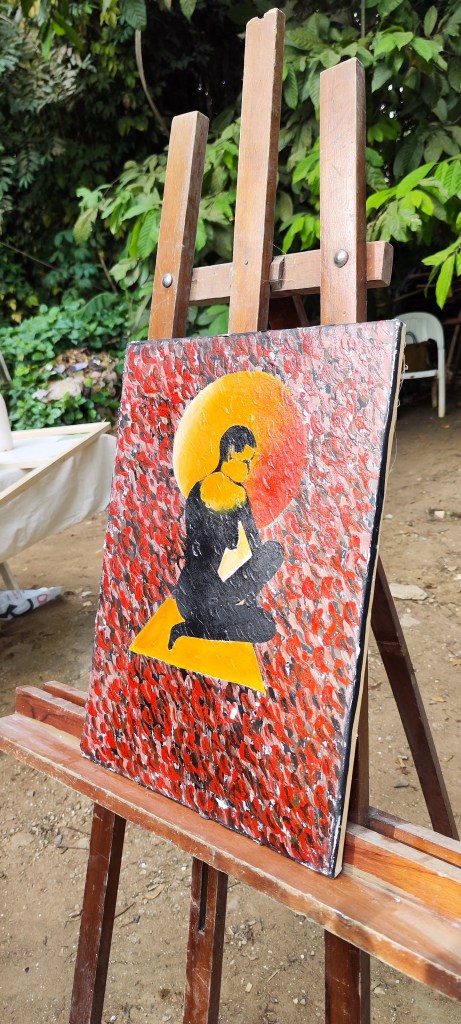
I started taking painting classes in 2017. I didn’t have the ambition to become a painter at that time as I was pursuing a Master’s in Chemical Engineering. It was in 2023, after an exhibition in Abidjan, that I decided to seriously dedicate myself to painting. During that exhibition, I had a work on the theme of sunset to illustrate the idea of hope. Because when the sun sets, there is this beautiful light, and then there is nothing, and in the end, the sun rises with a beautiful light that gives hope.Apart from landscapes in my photography, I am interested in women and the environment.
Why do you create art?
Art gives me more freedom to express myself. I paint to release stress, daily stress, anxiety. When I feel a lot of tension and pressure, I paint. It allows me to free myself. It is a kind of therapy for me, but not just for me, also for the audience.
What does art mean to you?
For me, art is the ability to express what is inside oneself without any taboo. Through art, one can entertain, educate, and raise awareness. One can also fight against injustices with art. It encompasses humanism, expression, freedom, and courage.
How do you perceive your practice as a woman?
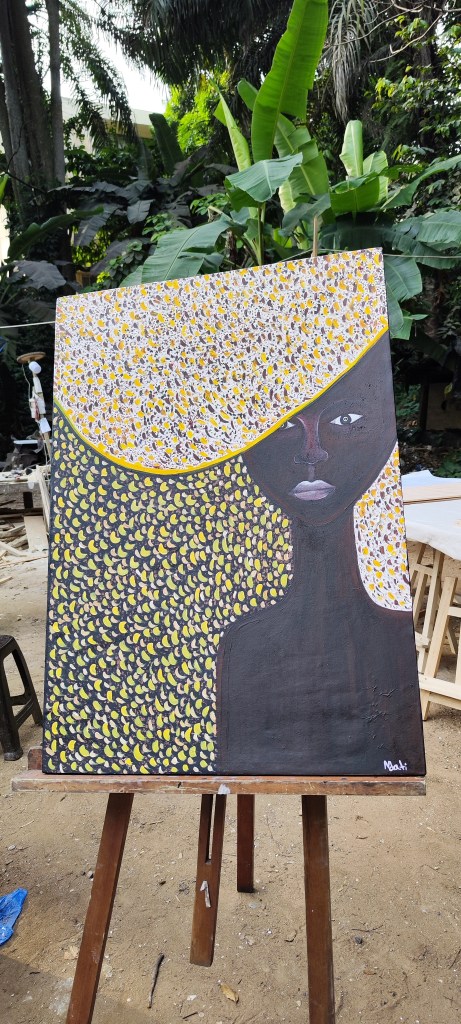
I consider myself a painter first. I am not a feminist; I am a humanist. When we talk about gender equality, we see that women experience many inequalities. So, I see myself as a voice for these women. My art allows women to express what they have inside that they cannot say. I consider myself an apprentice painter because I am always learning. But through my art, I give a voice to the voiceless.
What role does beauty play in your practice?
If beauty is highlighted and there is no message to communicate through it, art becomes merely decorative. I want my work, even if it decorates, to convey a message. It should educate, inform, and provide relief.
What makes your work unique?
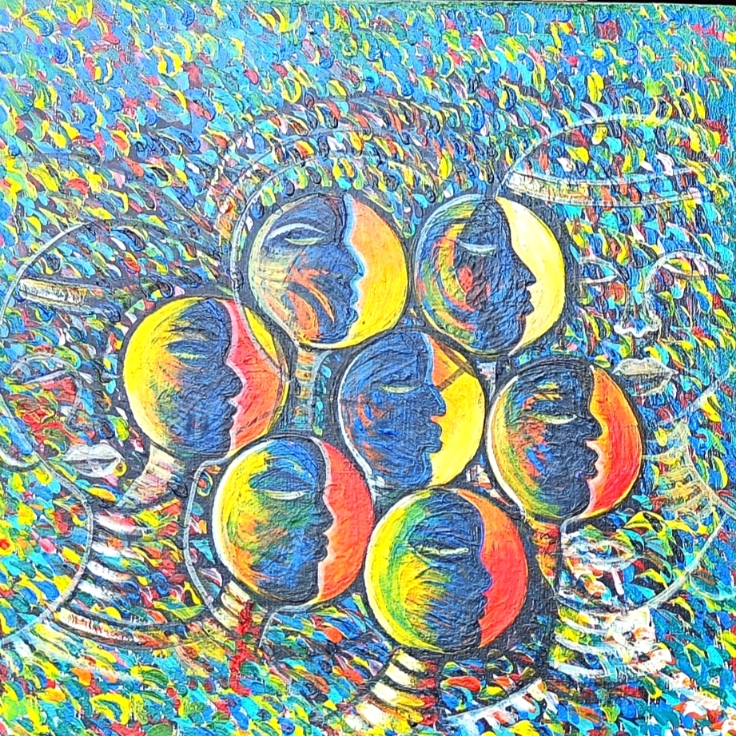
In my photography, I am touched by sunsets and the insistence on the sun’s colors. In my paintings, I have a unique touch that I call “the claw of the pen,” which is an extension of the comma-like marks I often make on my canvases. Beyond beauty, it is a way for me to mark my identity.
How do you see your role in society today?
Today, I cannot just lead a life working and going home to sleep, knowing that things around me are not going well. My role is to denounce, raise awareness, have empathy, and be a source of inspiration for those around me.
Who inspires you?
Many people inspire me, but particularly the Nigerian artist Mama Nike, whom I met. She made me realize that I have a role to play and that I must not fail. Thanks to her, I had the courage to do what I do. Before, I wondered if I should choose between being a fashion designer, a painter, or a photographer… I thought it was too much and that I should focus on one aspect. But Mama Nike helped me understand that I am an artist and that I should follow my artistic path according to where my inspiration leads me.
What are your current projects?
Currently, I am working on a collective exhibition for the upcoming Dakar Biennale, which will be held at Maison Hapsatou. My project will focus on the theme of women and menstruation. Today, I have an association called “Mes menstrues, mon quotidien,” where I give women a voice to share the injustices and stigmatizations they experience during their periods. For example, when we are in a bad mood, people say, “Oh, you must be on your period.” Often, we do not communicate enough because we are ashamed to say certain things, even though it is natural. So, my project will allow women to find themselves. I will present photographs and paintings to show that beyond the “impurity” as society sees it today, menstruation is something divine and spiritual. In some of our African traditions, it is seen as purity.
 Bridging Africa and The World Through Contemporary Art
Leave a comment