
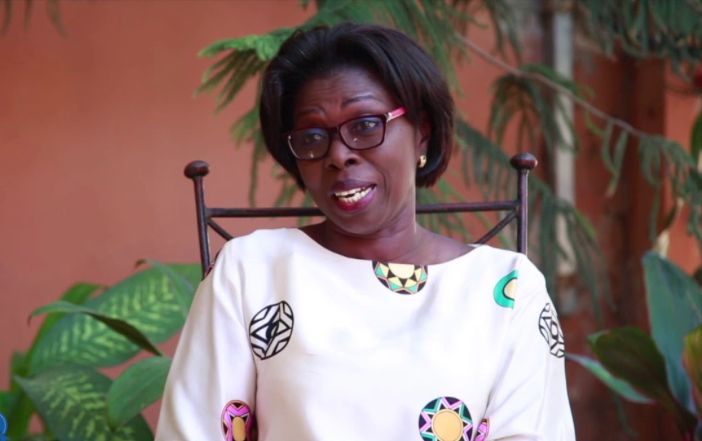

DakartNews met with Andrée Diop Depret, the first female architect to graduate in Senegal, on the sidelines of a conference on the valorization of Senegalese built heritage, organized in Dakar by Senegalese architect Nzinga Mboup and the Canadian Centre for Architecture. Since 1980, Diop-Deprey has tirelessly worked to conserve and rehabilitate the architectural gems that tell the political and economic history of the country. Trained at the École de Dakar, in a cultural environment shared with artists and urban planners, she developed a particular sensitivity to architecture as a reflection of a nation’s soul. She has participated in the rehabilitation of several iconic historical buildings such as the House of Slaves on Gorée Island, the Dakar and Rufisque railway stations, the Sandaga Market, and many others. In this interview, she shares her thoughts on the importance of preserving Senegal’s built heritage, the European influences that have shaped Dakar’s architecture, and the urgent need for coordinated action to safeguard these silent witnesses to history.
——————————————-
How does Senegalese architecture tell the story of the country?
I believe that Senegalese built heritage serves as a reference point to understand the economic and political history of Senegal. By looking at buildings like the Chamber of Commerce, the Ministry of Foreign Affairs, hospitals such as the Hopital Principal, which was the European Hospital, and Dantec, which was for the the natives, a whole story unfolds in downtown Dakar. Some buildings still stand, although many have been demolished, allowing us to trace the history of Senegal and the creation of Dakar. During the colonial era, Dakar was a center. Even in the 1950s or earlier, cities like Abidjan, for example, did not have a downtown like Dakar did at that time. This was made possible, in part, by Blaise Diagne being a deputy in the French National Assembly and Léopold Sédar Senghor’s involvement in the country’s political life alongside the French. Thus, Dakar took on the character of a city in motion from the time of colonization.

What are the main historical influences on these buildings?
The influence is European, very French. While the architecture of Saint-Louis or Gorée has Portuguese influences, that of Dakar is more French, with arcades and columns.
What should be done with all these old buildings? Should they be left to decay and replaced with new constructions, or should we invest in their preservation?
I believe we should preserve what we have and re-examine what lies behind these buildings. I’ll give the example of a city like Washington, where all the facades are old. They have just built behind them in such a way that a pedestrian only sees the old facades because they don’t have enough perspective to see what’s being constructed behind. I think this is a very good initiative. I believe we should preserve this heritage that we have because it is starting to be erased from the history of Senegal. For what reason? Why are we ashamed of what the colonizers left behind? In Dakar, heritage is being destroyed. In other cities, it’s mainly the train stations that are being left to decay until their inevitable demise. We once had the most beautiful staircase made of wrought iron, which has disappeared. It was near the Kermel market. They demolished the building and the staircase along with it, even though it was an architectural jewel. I think we need to take stock, catalog all the historic buildings, and set up a conservation committee.

You have worked on the rehabilitation of certain buildings. Can you tell us if you found any old art objects during your work?
My firm collaborated with Eiffage on the renovation and rehabilitation of the Dakar train station and the Rufisque station, which are the two emblematic stations we worked on with Eiffage. As for old objects, the only thing I discovered during my work was a mill at the Victoria Albis House in Gorée (18th century). This mill, which was used to grind grain, was found during the excavations. And in the same space, we also found an oven.
What monument would you recommend for someone visiting Dakar for the first time?
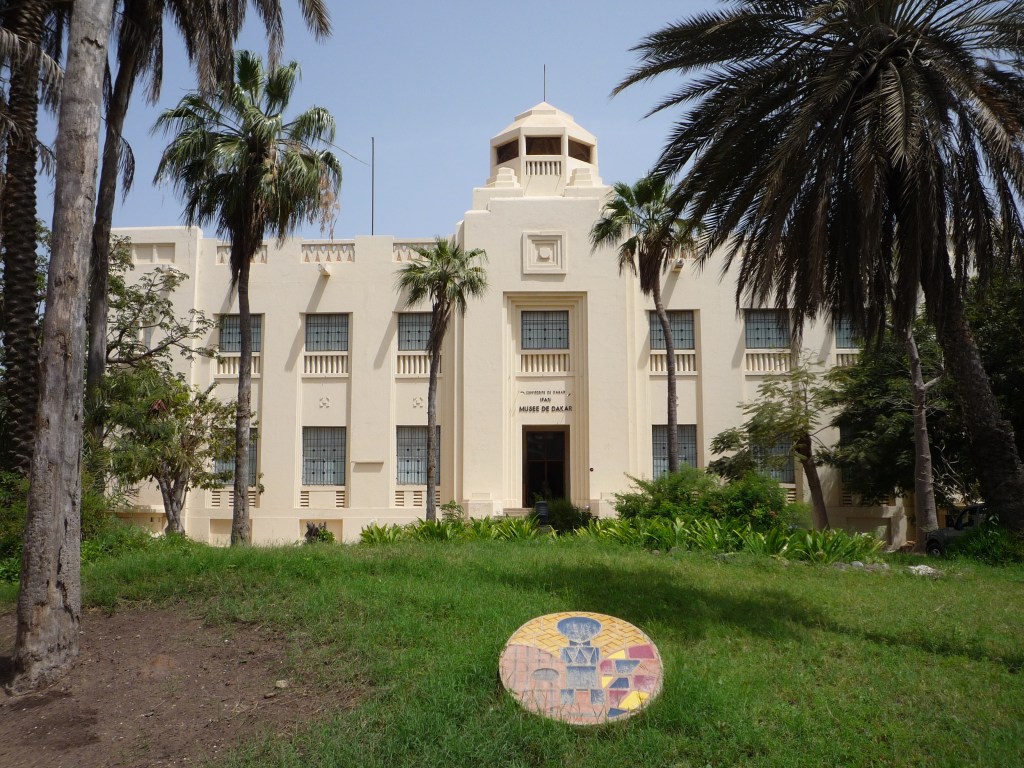
There are many, among them the Ministry of Foreign Affairs, the IFAN Museum, or the Chamber of Commerce. The Chamber of Commerce has a rather intricate architecture with designs, especially with moldings and Articulations. Even back then, they made them in the colonies, which you don’t find in Portuguese architecture and others.
And you, personally, is there a building in Dakar that you have a soft spot for?
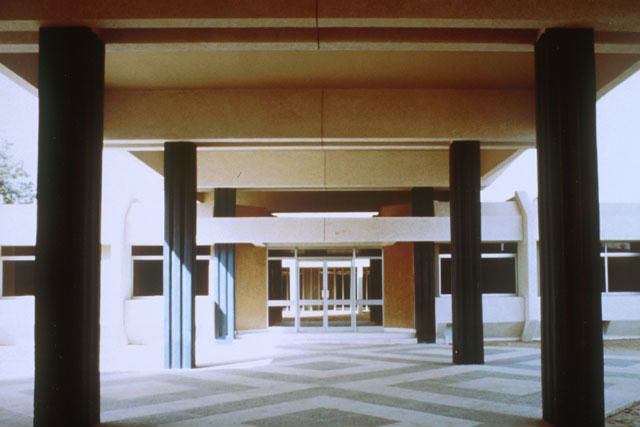
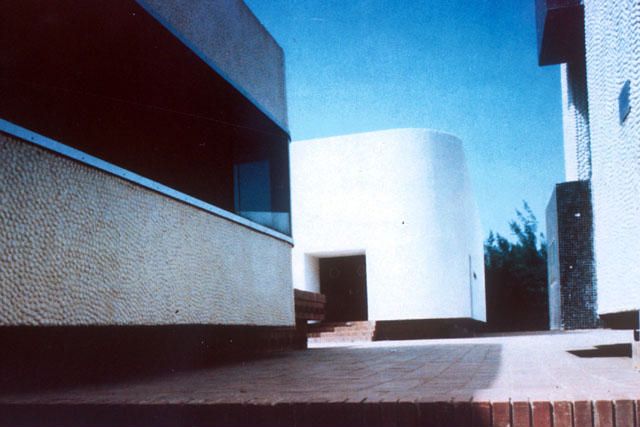
I really loved the architecture of the amphitheaters at the University of Dakar. They were made with shell coverings. For this building, stone, shells, basalt, laterite, among others, were used. It’s extraordinary to see all the shell cladding. The architecture is rectangular, with all its angles rounded. This was done in the late 1970s. What’s interesting is the use of materials we have at hand. The shell, for example, can be found along the coast.


 Bridging Africa and The World Through Contemporary Art
Leave a comment