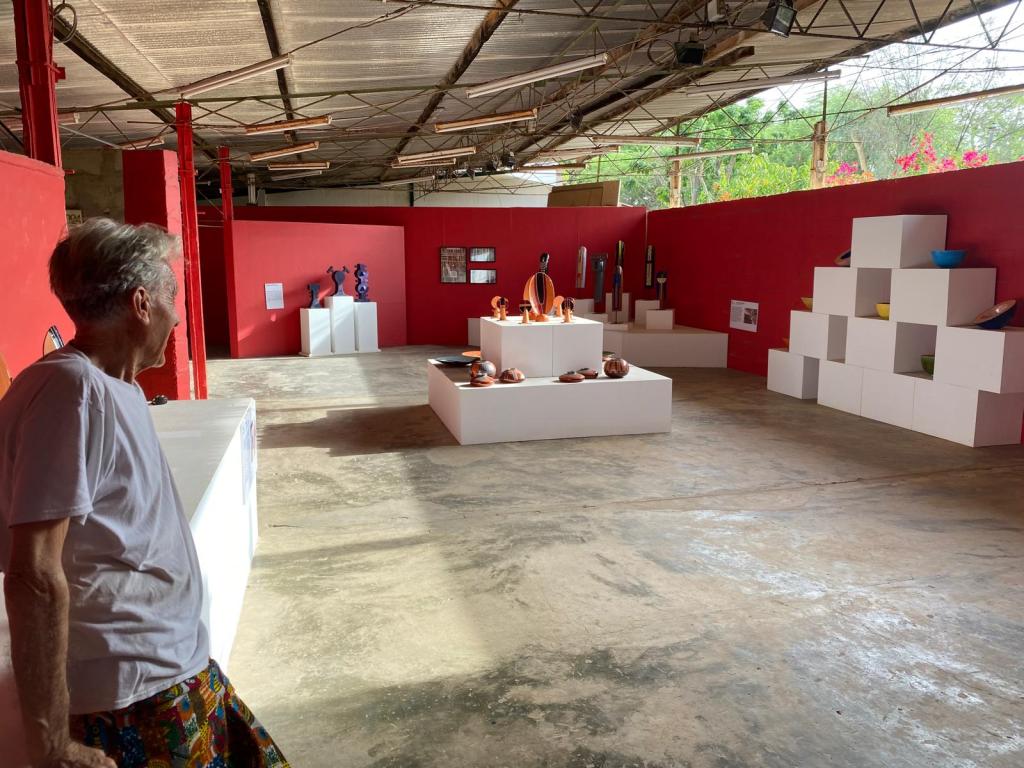

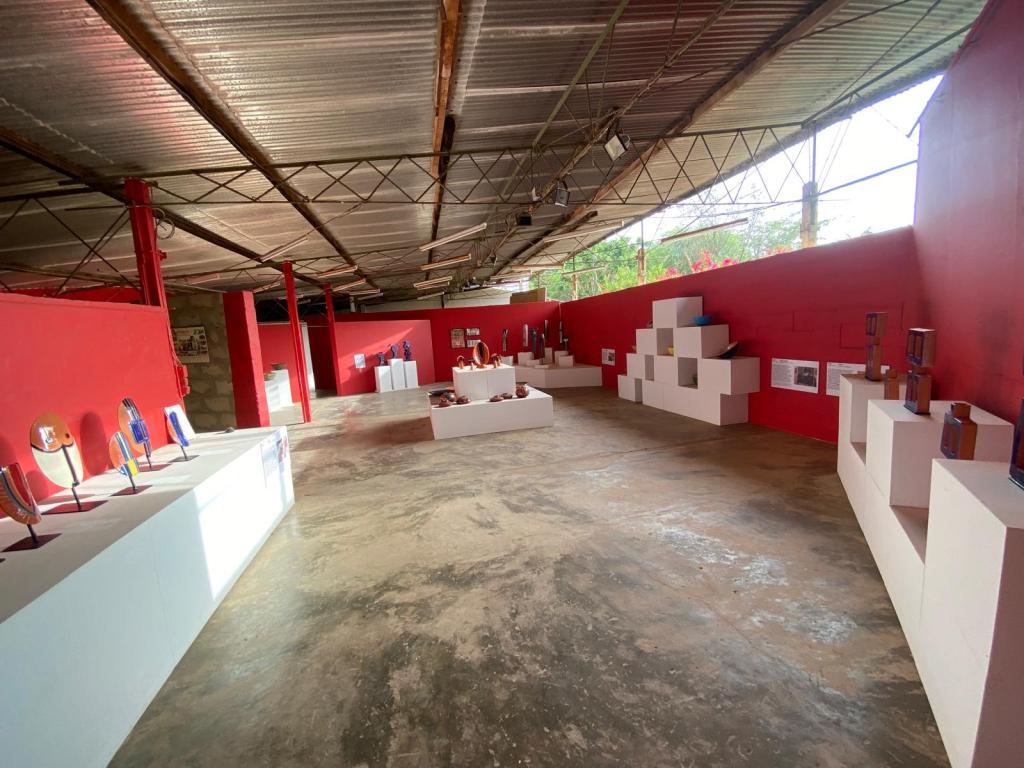
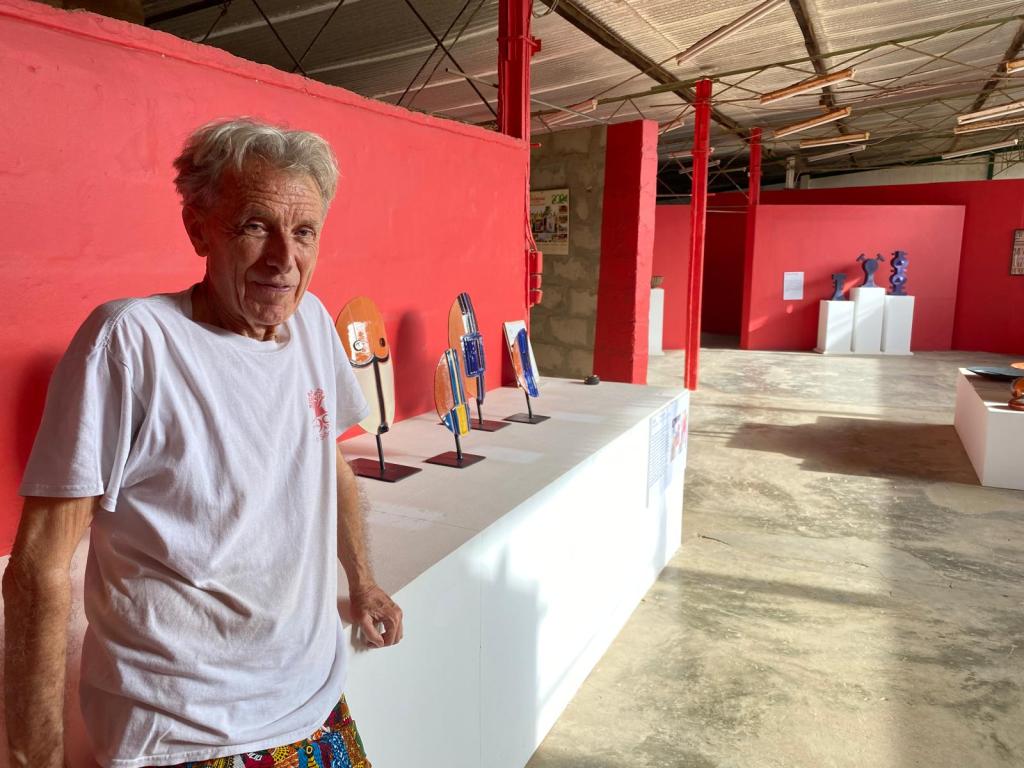
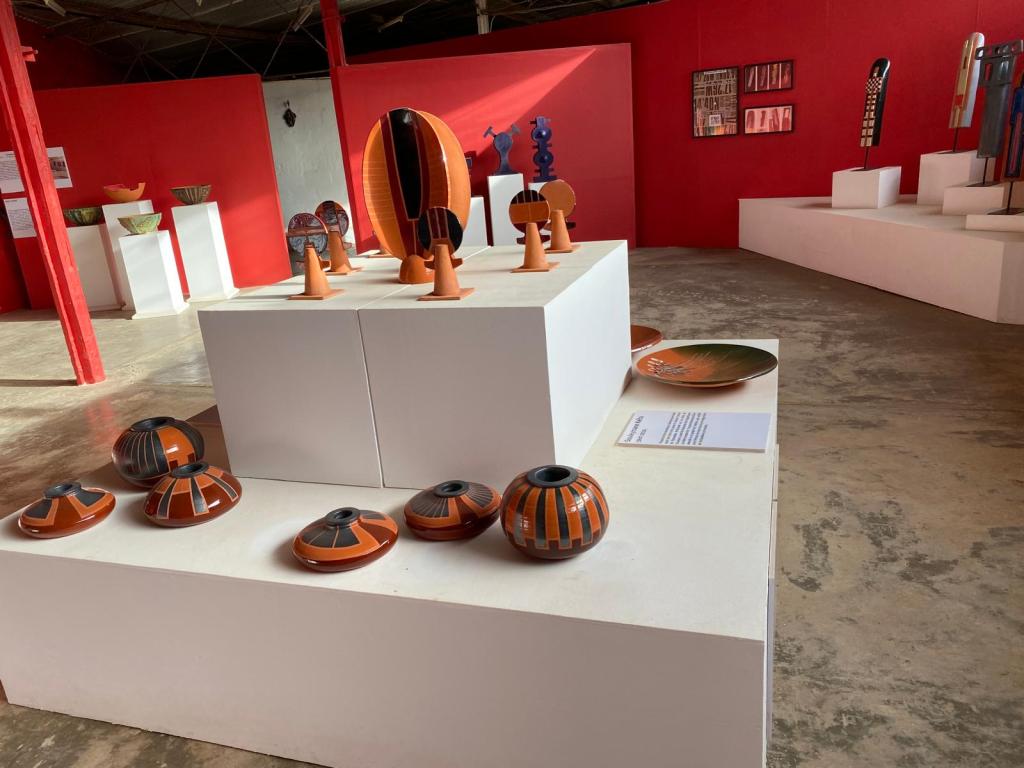
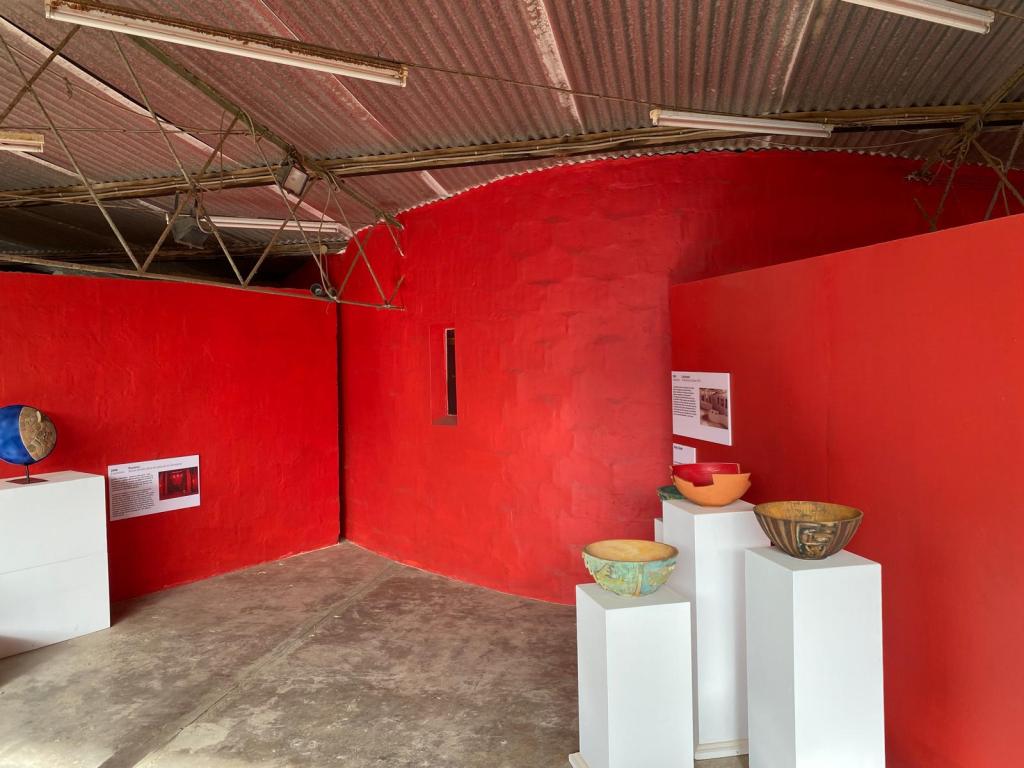
Dakartnews is pleased to meet an artist whose career spans over 40 years in Dakar. If you have visited the city, you have likely seen Petroni’s works adorning the streets, as he has significantly contributed to its decoration by renovating heritage objects. He has lived in Almadies, where his studio is located, since 1983, when the area was still just a bush. In 1991, he held his first exhibition at his ceramic workshop, where he also hosted Dakartnews. In this space, he presents the second part of the exhibition “Petroni 40,” featuring eight collections created between 1990 and 2010 in collaboration with other artists. Committed to promoting art, he co-founded the artistic initiative Partcours in 2012, and played a vital role in the evolution of the OFF of the Dakar Biennale.
When asked to sum up our conversation in one word, he says, without hesitation, “Partage” (sharing), with a smile. This word also sums up the life of this Italian ceramist, who humorously states that he was “born for Dakar in 1983,” even though he is actually 79 years old. “Sharing”, like his many collaborations with artists from Senegal and elsewhere, has marked his artistic career. The “Petroni 40” exhibition is intended to provide a retrospective overview of all his collaborations, during his 40 years spent in Senegal.
Soly Cissé, Moussa Traoré, Cheikh Diouf, Souleymane Keita, Amadou Sow and Cheikh Diouf, to name but a few, are among the artists with whom he has organized exhibitions in his Almadies studio since 1991. The artist recalls these shared creative experiences with a touch of nostalgia, sometimes melancholy, as he alludes, for example, to those among them who are no longer with us.
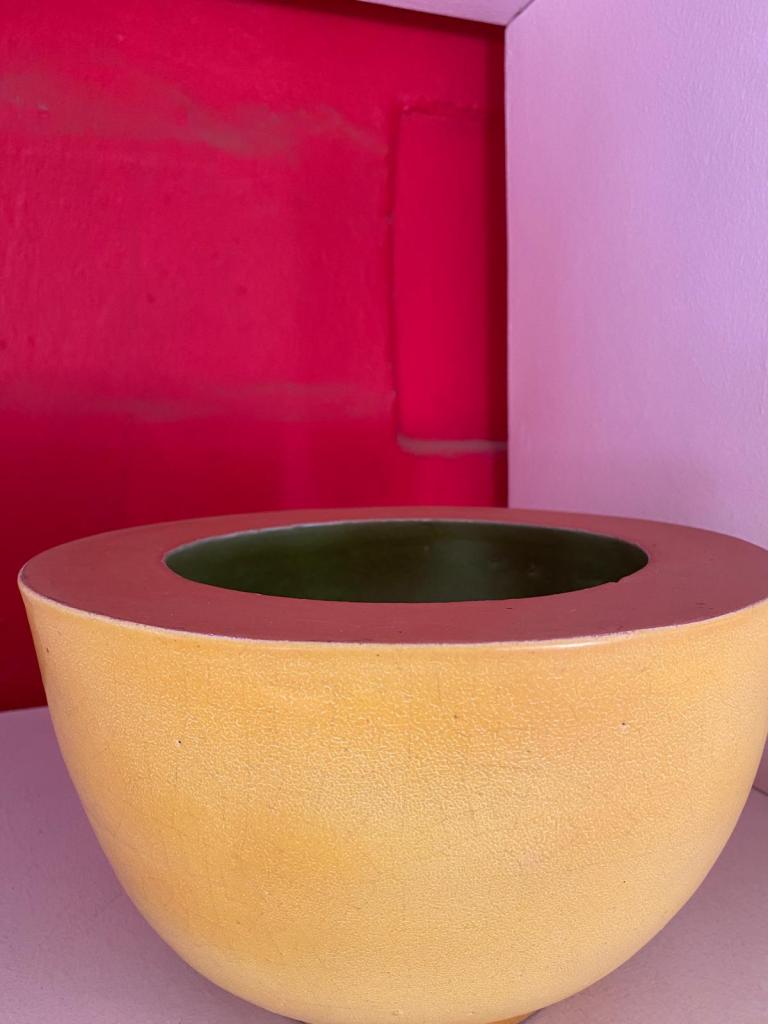
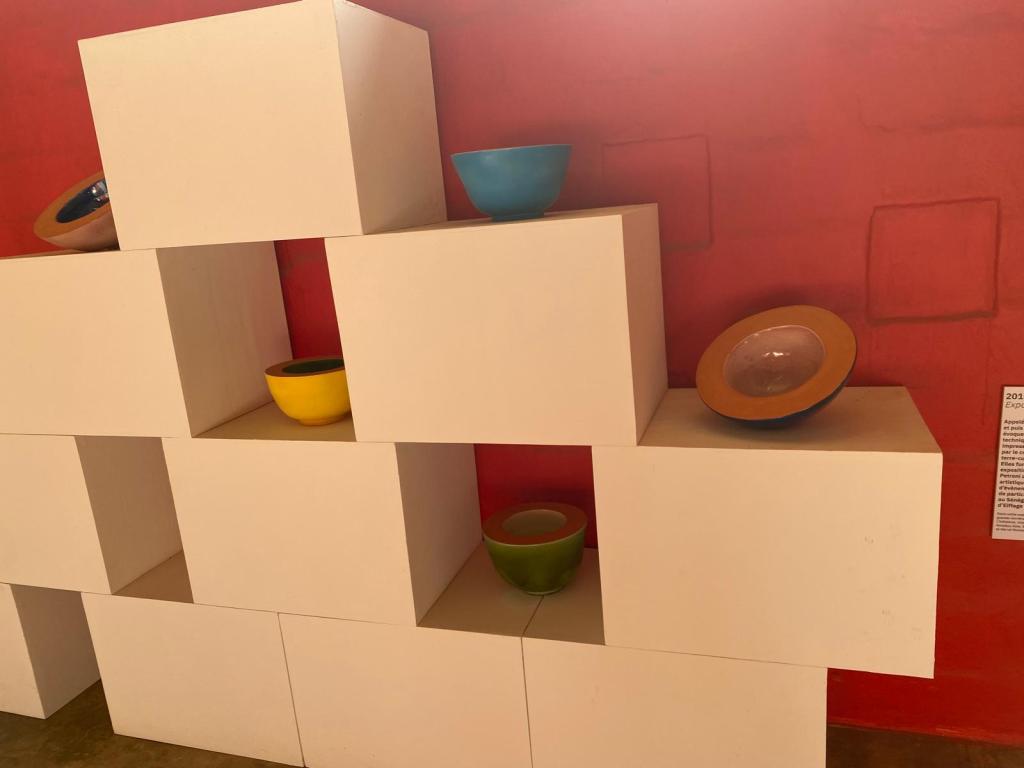
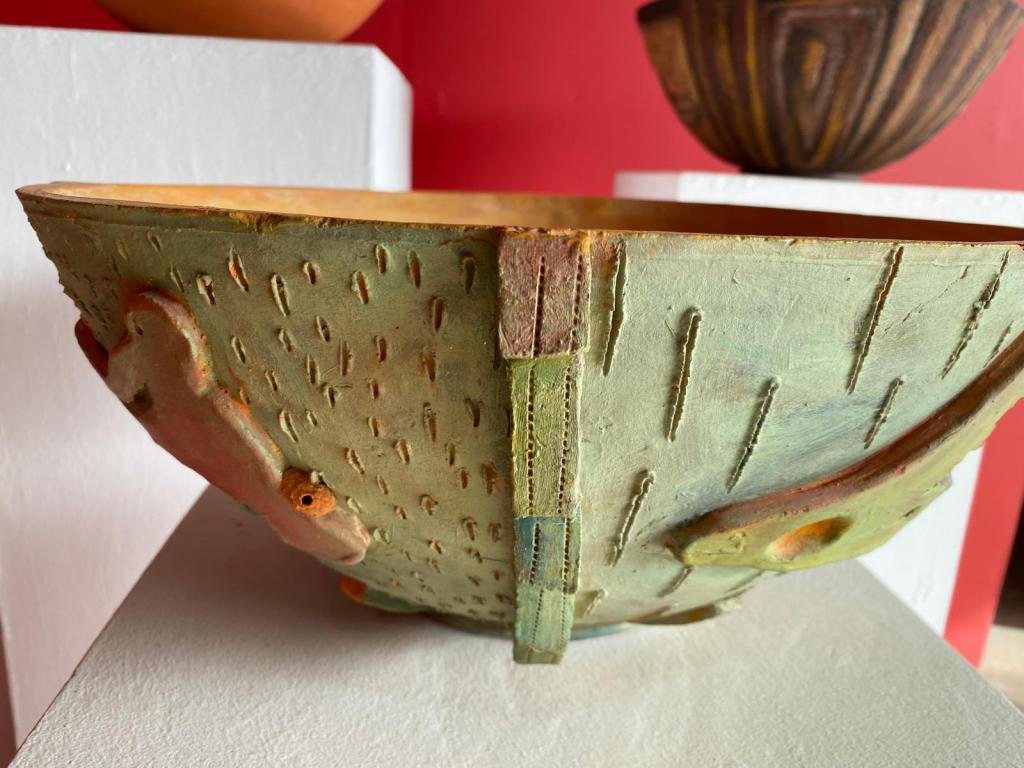
What strikes one in Petroni’s clay work is the finesse of his detailing, testifying to the mastery of an art whose creation process is tedious. The smooth, tactile finish of the pieces from the “Fruits coupés” exhibition in February 2010 is evidence of this.
And how can one not mention the colors? These vivid colors reenchant our current world, giving it a veneer of cheerfulness, tranquility, joy and even optimism. Sylvain Sankalé, an art critic and friend of Petroni’s, writes:“Even if these works are very colorful, they have a formal rigor that gives them their austere beauty”, emphasizing that, like his master Frapolli, he has managed to maintain a certain sobriety.
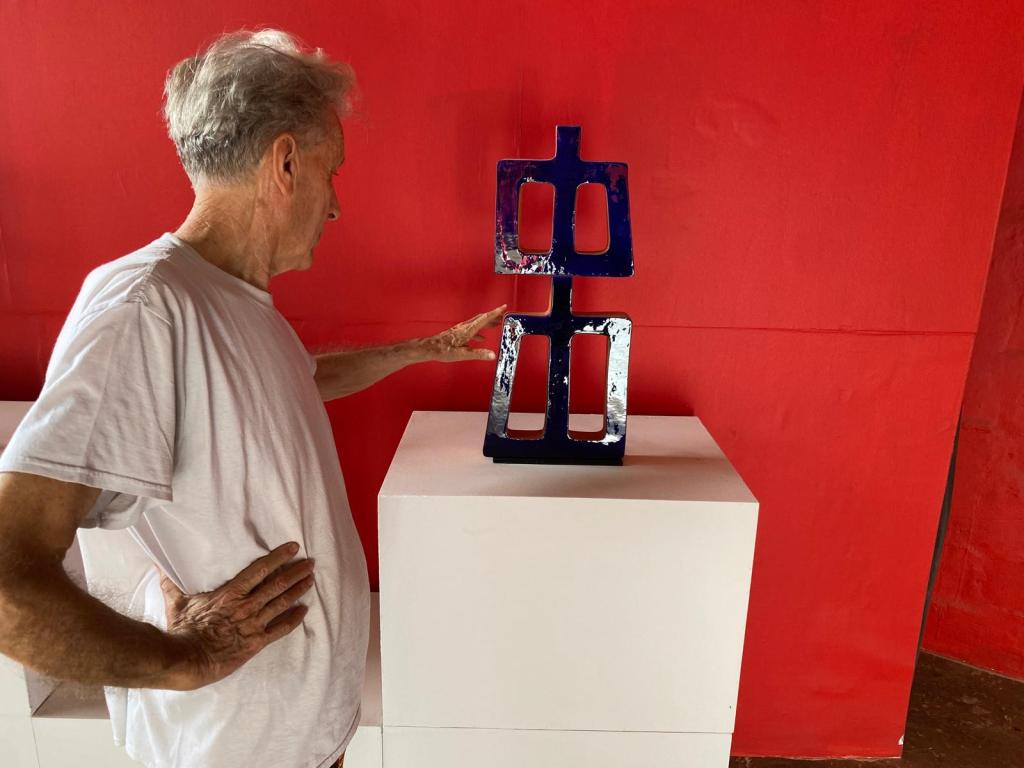
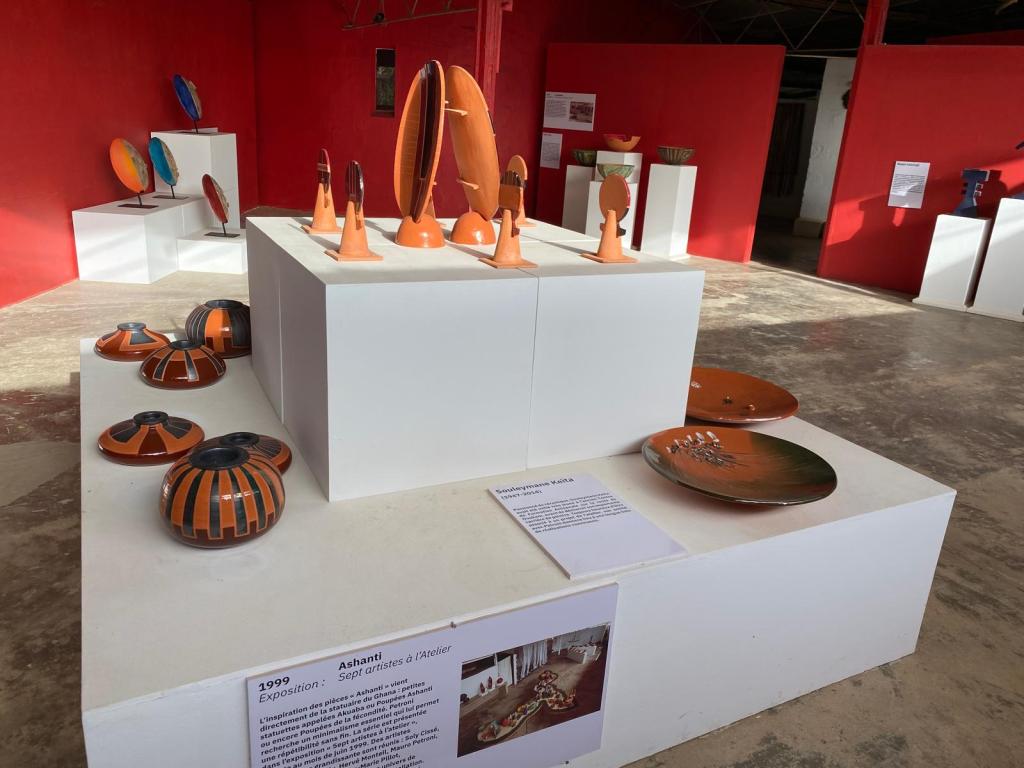
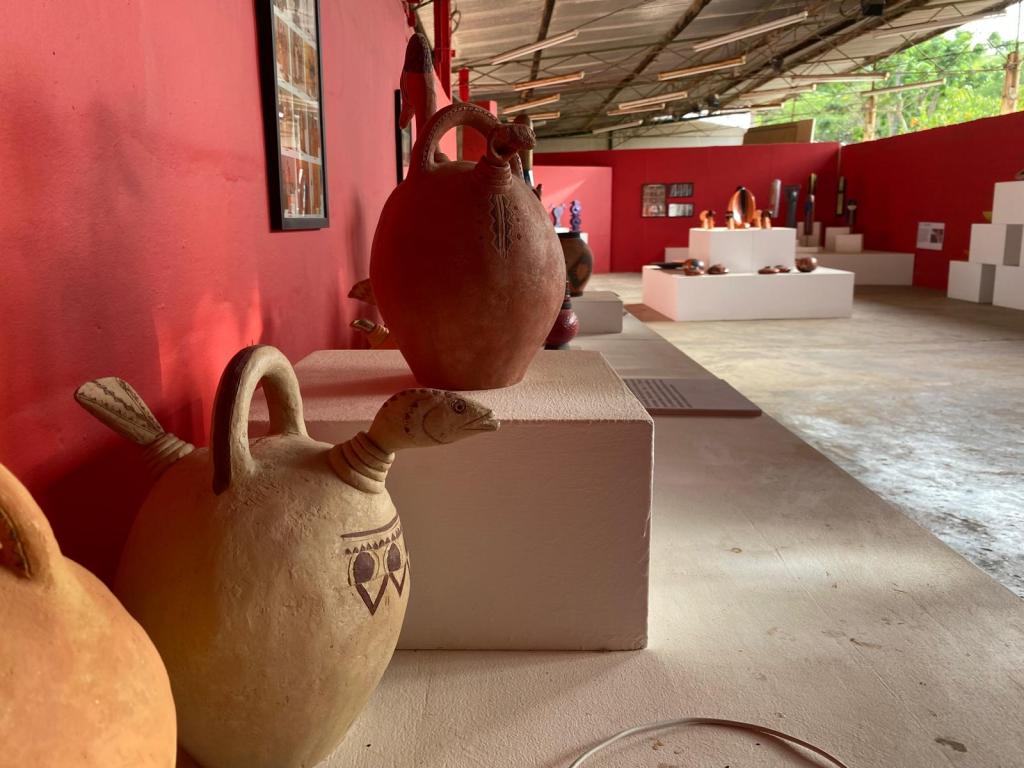
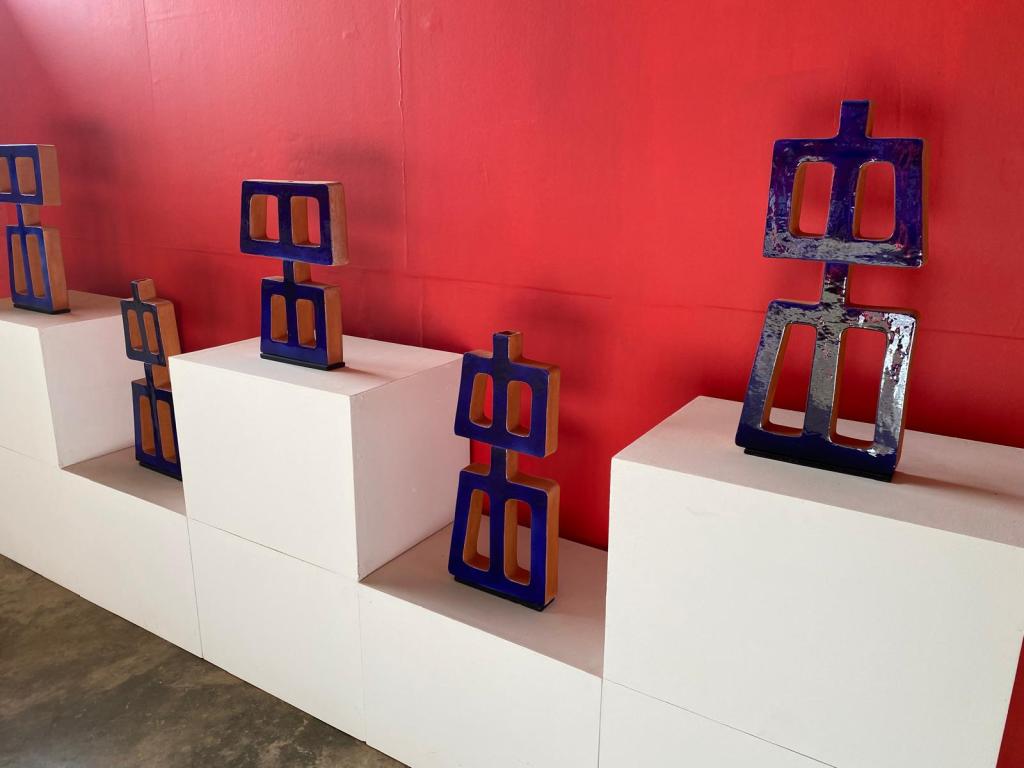
Petroni’s practice not only re-enchants our contemporary world but also contributes to reviving the traditions of his adopted homeland, Africa. His 2010 collection, inspired by Dogon symbols from the Bandiagara cliffs, his 2000 exhibition centered around calabashes, and the Ashanti exhibition in 2003, where he revisited Ashanti dolls alongside seven other artists, are perfect examples of this.
“I wanted to find elements of the local culture to blend with my ideas, my style, my design,” he says, dismissing any notion of cultural appropriation.
In 2003, the native of Lucca in Tuscany offered his own reinterpretation of traditional African masks during his Masques exhibition. Mauro Petroni transcended mere imitation of the mask: he proposed a contemporary vision by playing with simplified, stylized motifs, minimalist compositions, and a bold color palette, such as bright blues and intense reds.

Drawing from African traditions, Petroni establishes a dialogue between past and present, between ancestral craftsmanship and contemporary artistic exploration. His work can be seen as a bridge between cultures, where local African influences are interpreted through a modern European sensibility, reflecting on heritage, identity, and globalization. He reinvents the mask not only as a cultural object but as an autonomous work of art, bearing a universal message.
How much does African art, particularly masks, influence your work?
When I arrived here, I wanted to find elements of the local culture to mix with my ideas, my style, and my design. As you can see with the piece that resembles the Akwaba statuette, this is part of my exploration. It’s an innocent quest that doesn’t aim to appropriate elements from another culture but rather to appreciate them and try to express them in my own language and through the medium of clay. Working with clay is very accessible at first because it feels like you can do anything with it. However, there are technical constraints that come into play.
Why did you choose Senegal and decide to stay for so long?
I had traveled a lot in Africa and loved the ease of relationships with people, the hospitality. Before coming to Senegal, I traveled through Morocco and Algeria. There is a great tradition of ceramics there, particularly beautiful Arab ceramics. Here in Dakar, I found this magical place: an 800 m² warehouse near the sea. Additionally, there are personal reasons that led me to stay longer. When I came here, I worked for Ndiouga Kébé, a wealthy businessman who was visionary and started to build some iconic structures in Dakar, like the Hôtel des Almadies, which is now being demolished. I also have personal stories with artists. I worked extensively with Eiffage, which has always supported me, particularly in the renovation of two emblematic monuments: the Kermel Market and the railway station façade in Dakar.
What is your most cherished memory in the artistic field over the past 40 years?
My history with the Dakar Biennale is truly moving for me. The OFF was not something we invented; it existed spontaneously, with other actors proposing various initiatives. In 2000, I was part of the orientation committee for the Biennale, and I realized the importance of promoting these initiatives. So, I came up with the idea to organize the communication for the OFF during its launch, and I managed it until the last edition. It’s a very demanding job, and I felt a bit tired. We started with about thirty spaces, and it grew to 450 spaces. I saw that the OFF was organizing itself, and everyone wanted to hold an exhibition. I thought if we could organize it all and put it into a program, it could only help advance things. So, we created a guide with the number of all the events, a map to locate the venues, and a list of openings. It wasn’t easy because, at that time, the Internet was not as developed as it is today. I also undertook projects that I keep in fond memory. While participating in the renovation of historic buildings is significant for me, there’s still something special about passing by and seeing a plaque I created 20 years ago on a house. It always evokes something to revisit that small intervention. I also cherish the memories of all the artists who have passed through.

How has the Senegalese artistic scene evolved from the time you settled here until now?
A lot has changed. There is much more professionalism. There are many more opportunities to sell art now. Back then, there were a few expatriates buying art without even considering that it might be important works. It was less expensive, and people bought art for pleasure without the current awareness of the significance of certain artists. It was more innocent, less mature. There was less business and fewer artists overall, aside from the School of Fine Arts. Then, there was a turning point in the 1990s with Ndary Lô and Soly Cissé. Today, I would say that artists have more opportunities to exhibit elsewhere, and there is much more mobility. The market has opened up, and there is a desire to establish galleries here to sell art, whereas previously the goal was to sell elsewhere.
What is art in your view, and why did you choose to be an artist?
Art is a desire for expression. There are 10,000 different answers to that. It can be a social, political, or economic phenomenon. It’s impossible to give a single answer. For me, it represents openness and receptivity. Ceramics is considered a form of artisanal art. I enjoy the method and precision of it. I like the workshop environment. I am alone today, but I usually work with three people. It’s also a realm that brings people together. This environment resonates with me and gives me reasons to live. My personality aligns with these collaborations. Some artists prefer to work in isolation, in silence, without interaction, and that’s perfectly fine. But here, it’s a place of gathering.
Your pieces are stylized and elegant; is beauty something that drives you?
When I create something, I try to make something that pleases me and that may also please others; if that’s beauty, then so be it. I can appreciate a work in black and white, but I love color. I use color, but my works remain quite sober. I try to put people who look at my work at ease. I try to give them pleasure. My work is not something troubled or dramatic. Rather, it’s something decorative, which can have a life, and which can participate in a world, mine first, and possibly that of the person who acquires the object.

What makes Dakar such a unique place for art?
Today, some people try to forget or even denigrate Senghor’s role in culture. But beyond his persona, creating an art school after independence is extraordinary. That’s where it all began. Then came the biennale. There has been a positive evolution, perhaps less so in business but more so in culture.
What do you want to leave behind?
Unfortunately, in ceramics, the challenge is that young people find it somewhat difficult. They seek something that can be realized easily and yields quick results. A small piece can take two months to create. Then it must be sold, which can take months. I sometimes sell pieces that have been there for four or five years. So, sadly, it’s very difficult to find young people who want to come and work. I believe that the artists with the most value are those who have worked the hardest. My advice for young artists is to have patience, to observe the work of others—not to copy it—but to avoid isolating themselves in their work without looking at what is happening around them.
How do you want people to remember you in 10 or 20 years?
I’ve had a wonderful experience. My life can be an example of how to make a living from your art and how to evolve. I’ve lived well, I’ve progressed well.
————-
Selected Pictures of the Exhibition "Petroni 40"





 Bridging Africa and The World Through Contemporary Art
Leave a comment