

Ko Sy, whose real name is Colette Diallo, is a self-taught Senegalese artist whose journey into painting began unexpectedly during the Covid-19 pandemic. With a background in fashion design, she spent two decades in the fashion industry in France before settling in Senegal. Her artistic path is marked by spontaneity, freedom, and a deep connection to creativity.
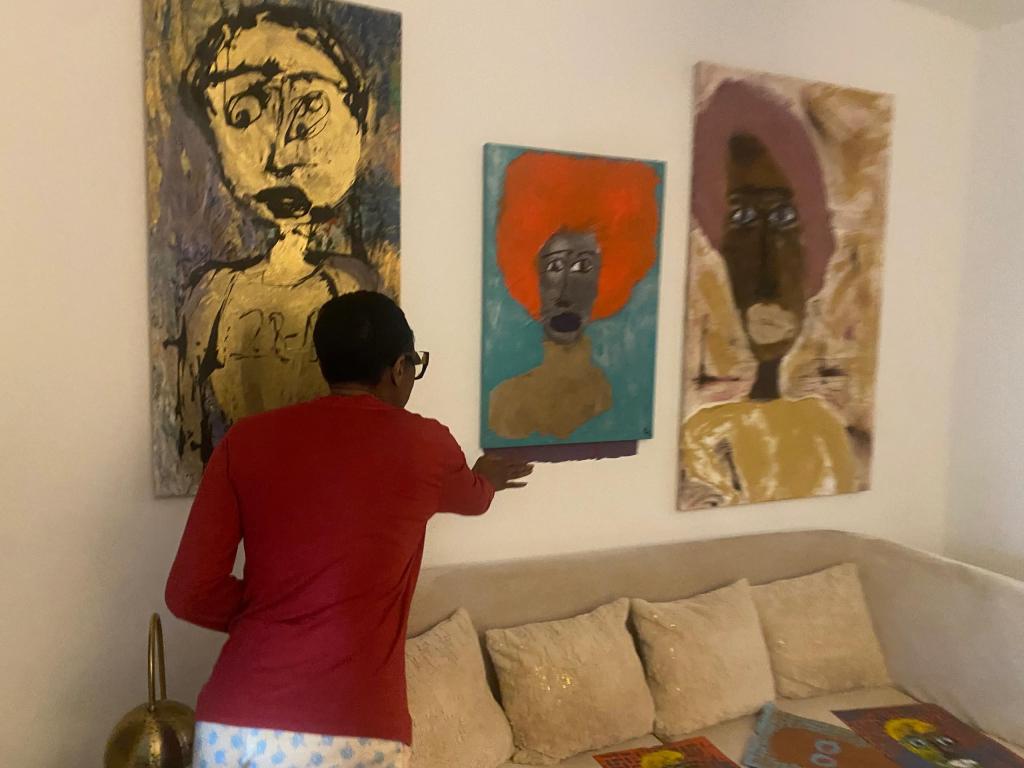
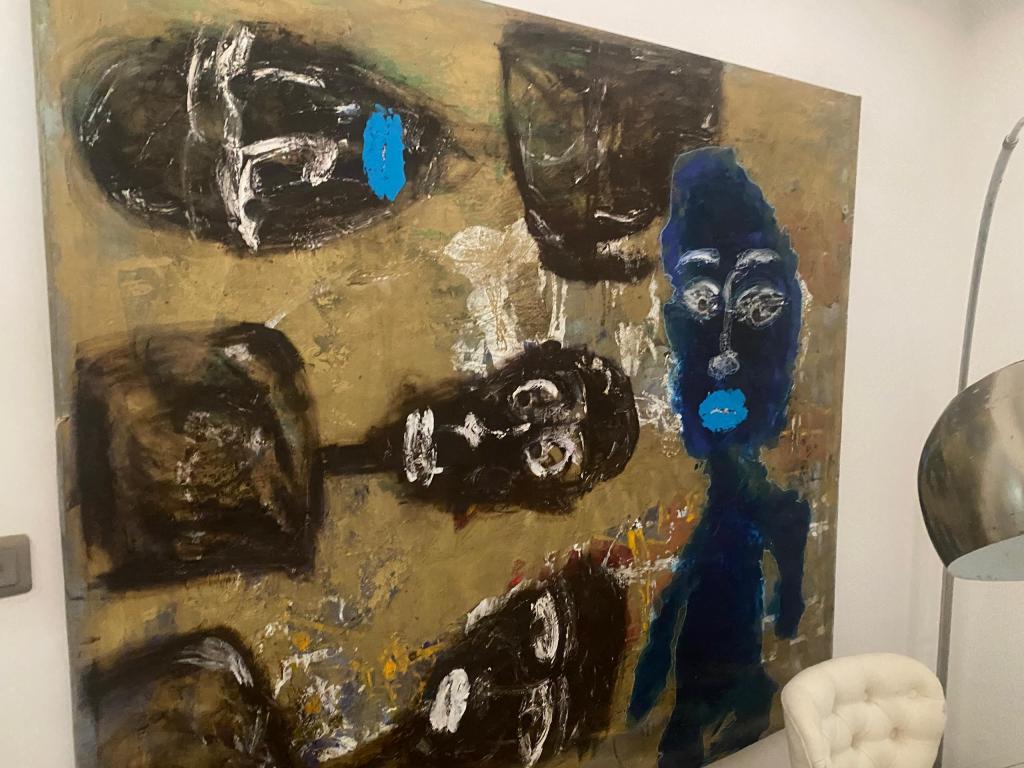
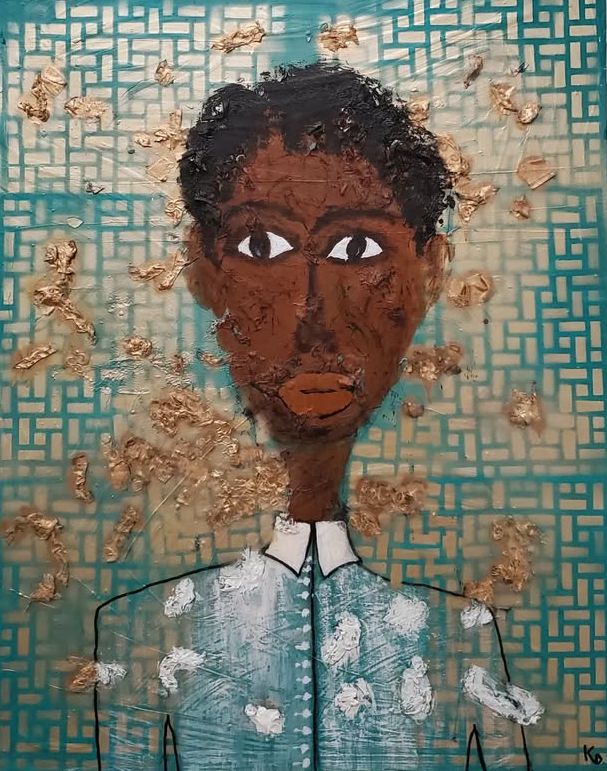
Ko Sy explores human expression through stylized busts, where color becomes a language in itself. The gold tones that often dominate her backgrounds give her works a sense of timeless elegance, while touches of orange, violet, and other vibrant hues add a refined, almost design-like sophistication. Far from mere figuration, her portraits embody a sensitive form of abstraction, where material and light interact to evoke both familiarity and mystery. Her latest exhibition took place at the end of 2024, during the 15th edition of the Dakar Biennale, where she participated in a collective exhibition.
In this conversation with DakArtNews, she opens the doors of her home in Dakar to share insights into her artistic process, inspirations, and aspirations.
Can you introduce yourself in a few words?
My name is Colette Diallo, but I go by the artist name Ko Sy. I’m in my early fifties and a mother of three. I completed my education in France before moving to Senegal about fifteen years ago. I am self-taught and started painting during the Covid period. Originally, I studied business and later fashion design, which led me to work in the fashion industry in France for twenty years.
So Covid was a turning point for you?
Yes, absolutely. During the lockdown and curfew, evenings were long, and we found ourselves with little to do. I have always been drawn to painting and often visited major exhibitions in Paris. But the real trigger was a painting my mother owned that had started to deteriorate. She asked me to restore it. As I worked on it, I ended up altering the piece. I added my own touch. I found it fascinating and, the next day, I bought a canvas to try painting myself. Encouraged by my loved ones, I organized my first exhibition at a restaurant in Dakar, which was a great success. I sold almost all my works, which gave me the confidence and motivation to continue. I’ve also been encouraged by artists like Pascal Nampémanla, Daouda Ndiaye, and Serge Correa. With each exhibition, I’ve seen my painting evolve. When I look at my early works, I no longer like them as much as before.
What do you aim to express through your paintings?
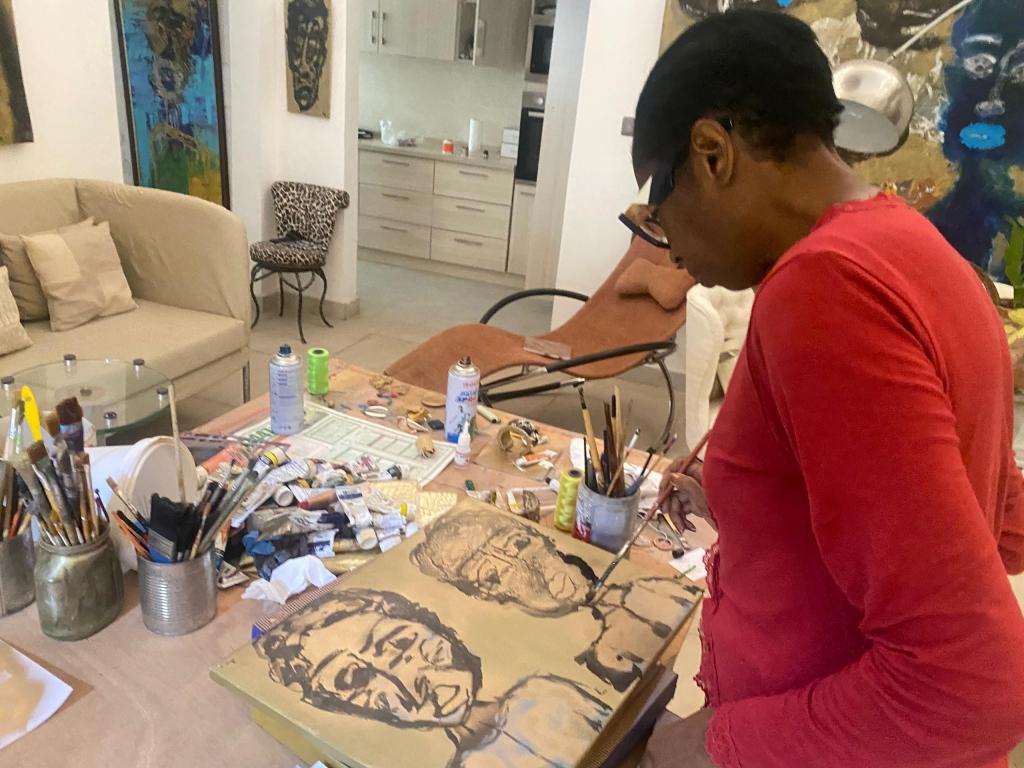
I don’t seek to convey a particular message. My work is mainly focused on faces and busts. Inspiration comes from a film, an image on television, or a magazine I flip through. The characters I paint are usually imaginary. I primarily use acrylics, sometimes with a touch of aerosol and oil paint. I paint directly with my hands, working flat, without sketches or preliminary drawings. My surfaces vary between canvas and wood.
What motivates you to paint if you’re not trying to convey a message?
Painting brings me well-being and fulfillment. When I finish a large canvas and say to myself, “Wow, I did that!” it’s a true satisfaction. Ten years ago, I would never have imagined being capable of this.
Are there any artists who have influenced you?
Not really. I’ve never asked myself that question. I do admire artists like Douts Ndoye, Babacar Kébé, Mor Faye, Aboudia, and more recently, Arébénor Bassène, whom I’ve just discovered. But I don’t directly draw inspiration from them.
You lived in France for a long time. How do your Senegalese roots influence your work?
The faces I paint are African. It’s not a conscious choice; it’s just what naturally emerges.
Gold seems to be a recurring color in your work. Why is that?
I love gold, especially in the background. It adds a radiant and lively touch to my compositions.
To which extent do you think your training in fashion design has influenced your art?
I know how to draw a garment, a shirt, and this stylistic precision sometimes appears in my work. My fashion training taught me how to use markers, pencils, and refine my eye. Perhaps if I hadn’t studied fashion design, I would never have become a painter.
Do you consider yourself an artist?
Yes, of course. To me, an artist is someone who creates, regardless of the medium. Before painting, I created jewelry and clothing. An artist is someone who imagines and brings to life something that can be contemplated or worn.
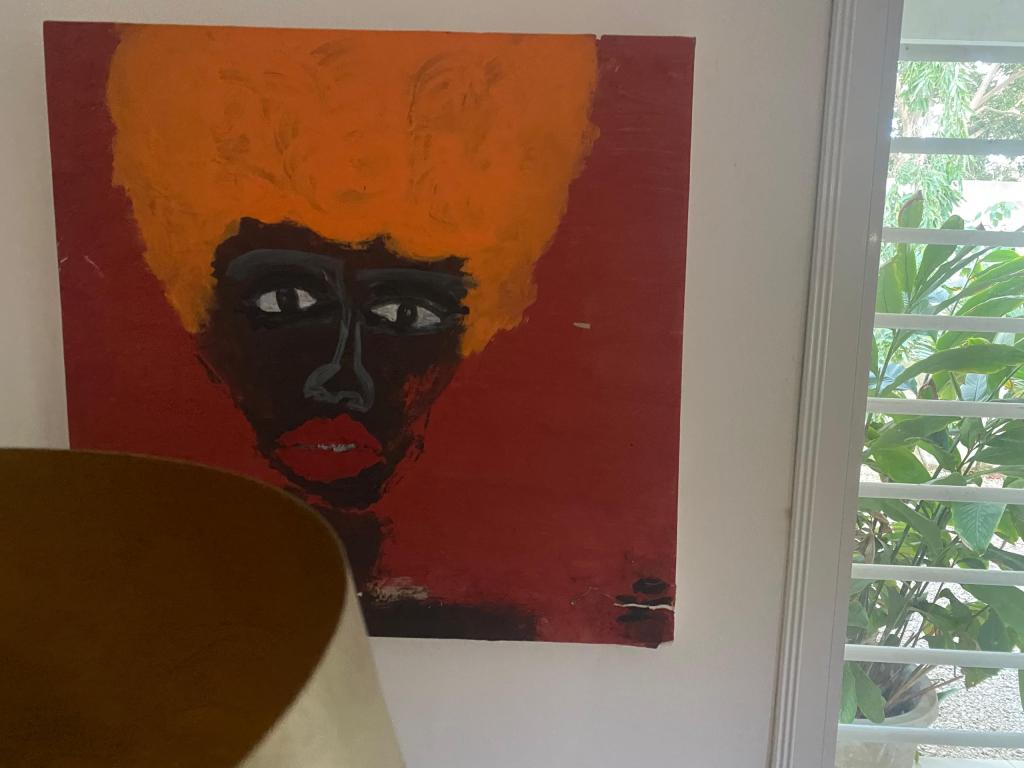
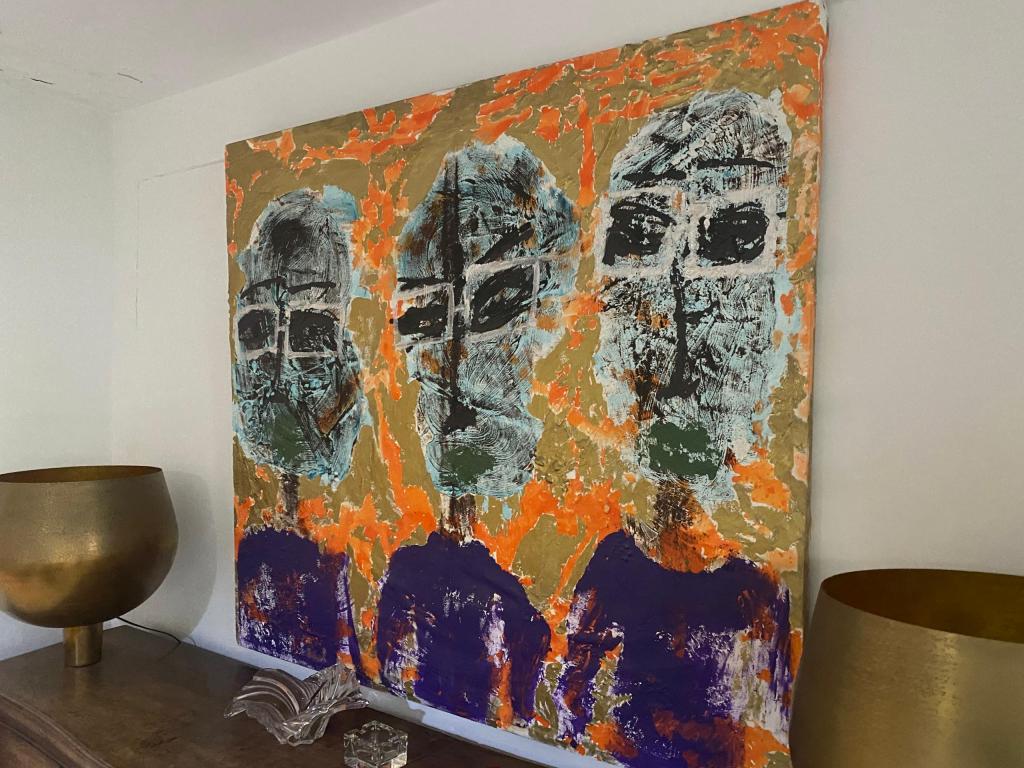
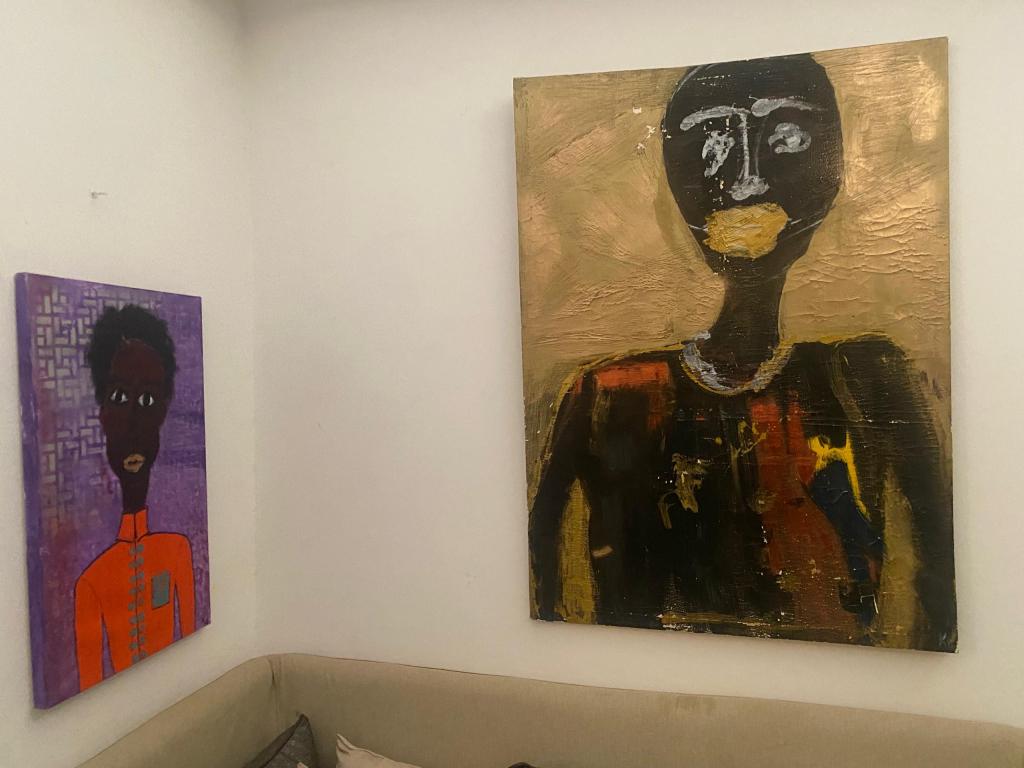
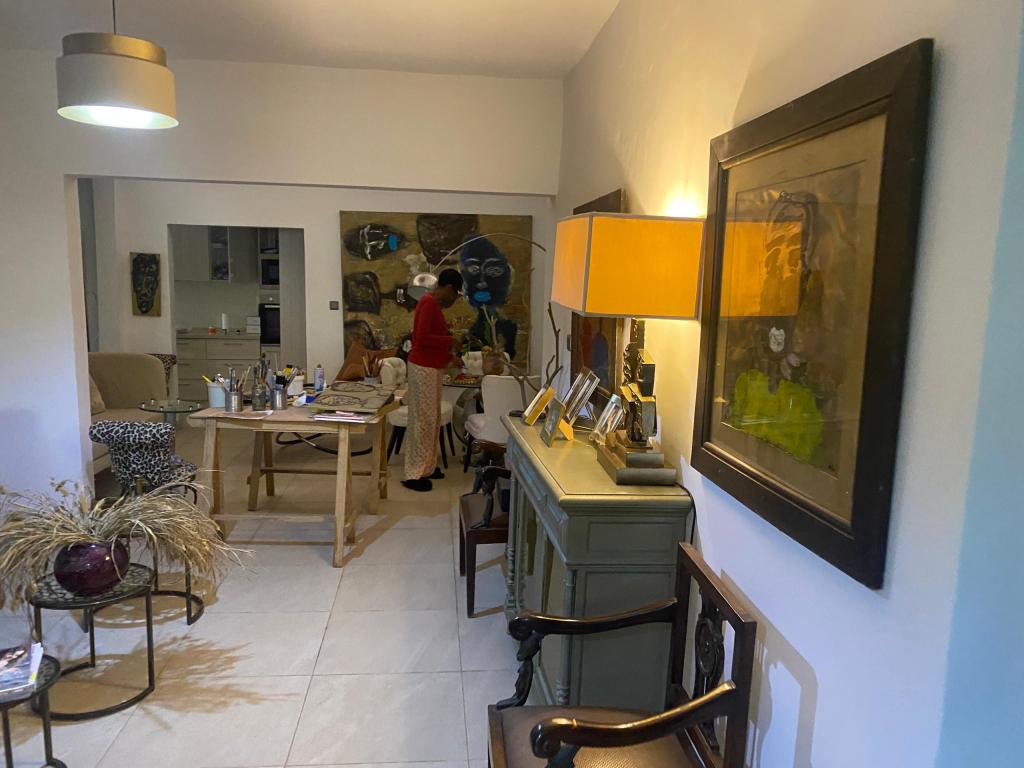
“A beautiful painting for me is a painting that I like.”
What is the difference between your life as a fashion designer and that of a painter?
None. I find as much fulfillment in painting as I did in creating jewelry or other artistic forms.
Does your art show an assertion of your femininity?
No. I simply paint. I don’t want to be categorized as a “female artist.” My art is not meant to make a statement. As a woman, I can fight for causes like women’s rights, but that’s not what I express through my painting.
Are you obsessed with the pursuit of beauty?
I am not obsessed. What matters is that I like the painting. My definition of beauty isn’t necessarily the same as others’. What counts is my own perception of my work.
How do you define a beautiful painting?
A beautiful painting is one that I like, one that satisfies me when I finish it. It’s not about proportions or academic rules because I don’t necessarily follow them. Perhaps the fact that I didn’t study in an art school allows me to be completely free in my creation.
Do you have artists in your family?
Yes, but that’s not what pushed me to paint. My mother grew up with a French woman who was passionate about art, so she knew many great painters. My aunt was a tapestry artist and worked at the tapestry manufacturing in Thiès . I also have an uncle who is a filmmaker and director. Art has always been part of my environment, but my own artistic journey came later.
What is the philosophy that guides your work?
My philosophy is “zero constraints.” I can’t stand constraints or anything that disrupts my environment. I do what I love, which is why I make a living from my art.
How do you envision your art in ten years?
What I’d love is for my art to cross the Atlantic and the Mediterranean, to be seen elsewhere, beyond borders. That’s one of my dreams.
Read also
Ousmane Ndiaye Dago: A Pictorial and Sculptural Photography
From Geneva to Dakar: David Brolliet, a Collector of Art and Encounters
Why Dakar Stands Out in the World of Art! A Conversation with Wagane Gueye
 Bridging Africa and The World Through Contemporary Art
Leave a comment