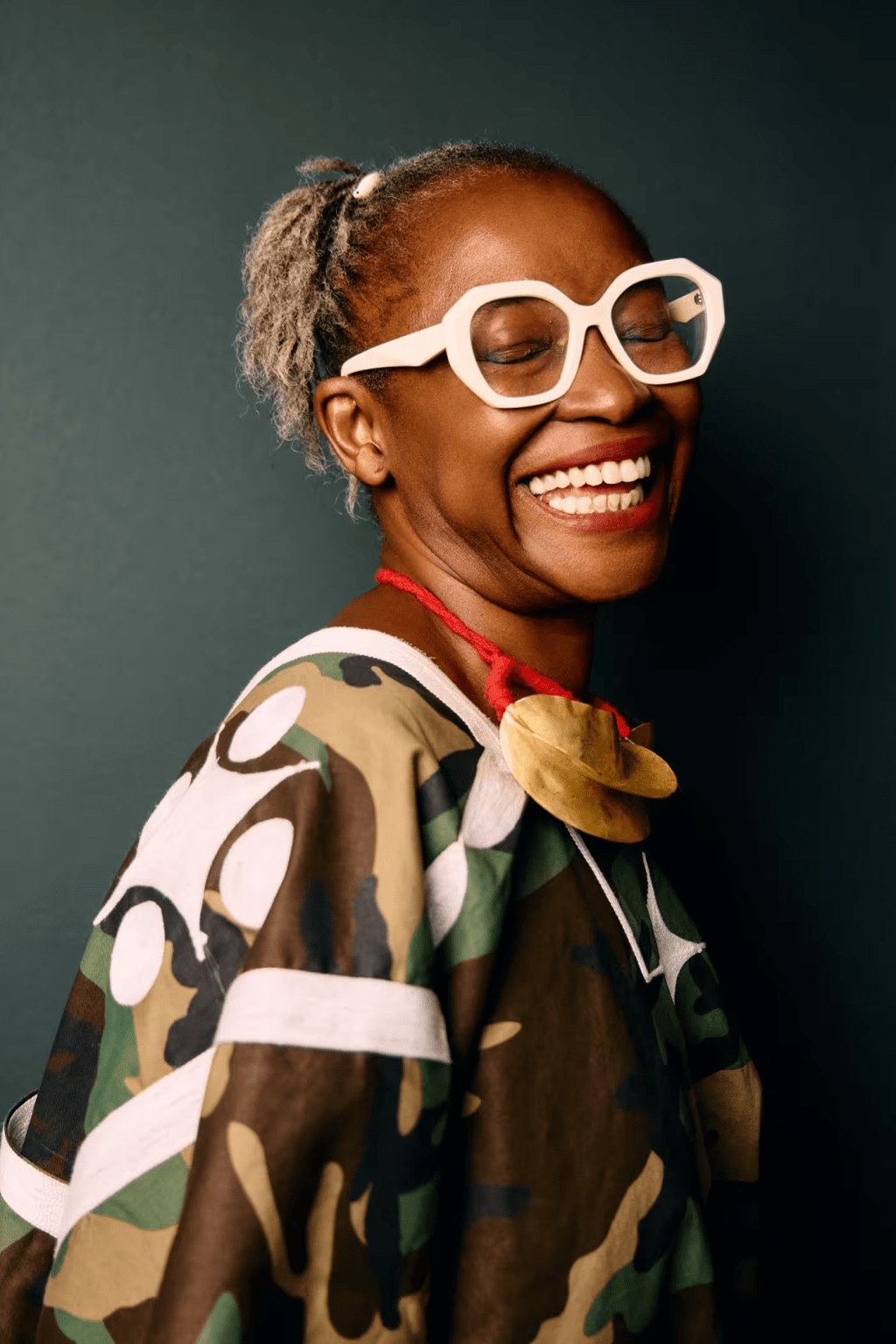

On June 14, 2025, RAW Material Company will host a day of celebration in honor of its founder and visionary curator, Koyo Kouoh, who passed away on May 10, 2025. A leading voice in contemporary African art, Koyo left an indelible mark on Dakar’s cultural landscape and beyond by creating a unique space where art, critical thinking, and civic engagement converge. To reflect on her enduring legacy, DakArtNews sat down with two women who worked closely with Koyo and who today embody the continuity of her vision: Marie Hélène Pereira, curatorial advisor and former Director of RAW from 2019 to 2022, and Fatima Bintou Rassoul Sy, current Director of Programs. Together, they revisit the foundations Koyo laid, the values that shaped RAW from its inception, and how the institution continues to navigate the present while carrying her mission forward. Internationally recognized, Koyo also served as Executive Director and Chief Curator of Zeitz MOCAA in Cape Town and was selected to curate the 2026 Venice Biennale—a project that will carry forward her editorial line In Minor Keys, affirming the lasting relevance of her vision.
This interview offers a dialogue shaped by memory, transmission, and unwavering commitment—a testimony to Koyo Kouoh’s profound impact and the living legacy she entrusted to those who follow.

Koyo Kouoh founded RAW Material Company in 2008 with a clear vision of a space for art, knowledge, and society. How would you describe the personal imprint she left on RAW’s identity and mission, and how does this influence your work?

Marie Hélène Pereira: Koyo settled in Dakar in the 1990s, where she began developing her practice as an independent curator. She built strong connections with the local art scene, particularly with one of its most influential figures, Issa Samb, known as Joe Ouakam. Alongside him, Koyo explored the impact of his artistic practice on Dakar and Senegal as a whole. This helped her understand what was possible and what needed to be done. Issa Samb, along with other artists, founded the Laboratoire Agit’Art*, a space to reflect on art’s role in society, foster close ties between artists and communities, and elevate artistic practice beyond aesthetics. Koyo witnessed these developments from the 1990s until her passing. For her, curatorial work had to be rooted in proximity, in dialogue with artists, whom she saw as the heart of all art and culture initiatives. Founding RAW Material Company was not just a necessity but a natural progression. It was necessary because she wanted to anchor her work in this context. As an independent curator, she led significant projects, but she recognized the fragility of independent practice—projects would end, followed by periods of silence that disrupted momentum. Continuity was essential, and creating a dedicated space was her way of ensuring that her work, and that of artists, could endure. In 2008, she launched RAW Material Company as a project, and in 2011, it became a physical space. As for its influence, RAW has been a school for me. My entire interest in art and curating was born at RAW. From 2011 to today, it has been a school and a laboratory, both intellectually and humanly.
*Note: Laboratoire Agit’Art was a pioneering Senegalese art collective founded in the 1970s, known for its experimental and socially engaged approach to art.
Is there a specific project or exhibition she led at RAW that particularly stood out to you?
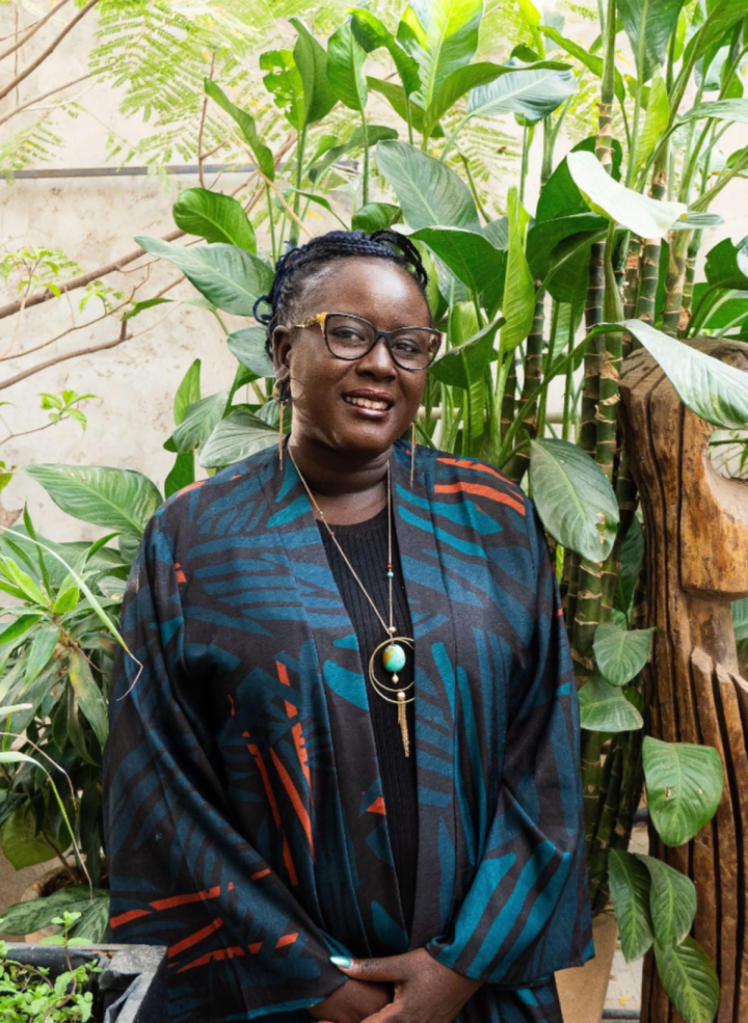
Fatima Bintou Sy: Every exhibition Koyo created, shared, and built with us was significant. An exhibition isn’t just about presenting a project; it’s about the learning process you go through. This includes successes, mistakes, and the lessons learned at every stage—conceptualizing, meeting artists, and collaborating. You don’t just learn about the content; you learn how to live and work together. There’s a human dimension in everything she did. Beyond the projects we undertake at RAW, what matters most is the journey we share to shape the future. Our relationship with artists is fundamentally human, rooted in care and listening to their vision. Beyond exhibitions, our programs also create spaces to expand thought and reflection.
Marie Hélène Pereira: When we talk about building an institution, it’s about creating a holistic space where exhibitions, symposiums, the RAW Académie* study program, and other pillars are equally important. What truly stands out is Koyo’s ability to create an institution that has endured in a context where independent cultural organizations often lack support.
*Note: RAW Académie is an educational program at RAW Material Company, offering residencies and workshops for emerging artists and curators.
Do you have a personal anecdote or specific moment shared with Koyo Kouoh that illustrates her passion for supporting African artists and giving them a voice globally?
Marie Hélène Pereira: There are many. One thing Koyo often said was, “Everything starts with the artist and ends with the artist.” She meant that our work exists to give artists space to reflect on society, envision new societies, and imagine futures. She used “artist” with a capital “A,” referring to anyone in society who can think differently, whether from the margins or the center. She also said that RAW isn’t a job; it’s a mission—a life mission you choose. After all, we’re in a sector that isn’t lucrative, even if there are opportunities for compensation.
Fatima Bintou Sy: Koyo always understood that our strength and the beauty of our work came from mutual support and creating opportunities, not just for ourselves but for others. She built community everywhere she went, forging lasting connections. For instance, with the Little Sun project*, we chose not to produce public art exhibitions ourselves, as that’s not our expertise. Instead, we invited local collaborators with whom RAW has a history. Koyo taught us to make space for others. That’s why Partcours was created—to foster mutual support and collective empowerment.
*Note: Little Sun is an initiative by artist Olafur Eliasson, involving solar-powered lamps, which RAW adapted to local contexts. Partcours is a collaborative platform in Senegal to promote shared cultural projects.
Koyo’s wish was for RAW to continue as a mission-driven institution, adaptable to its context’s needs.
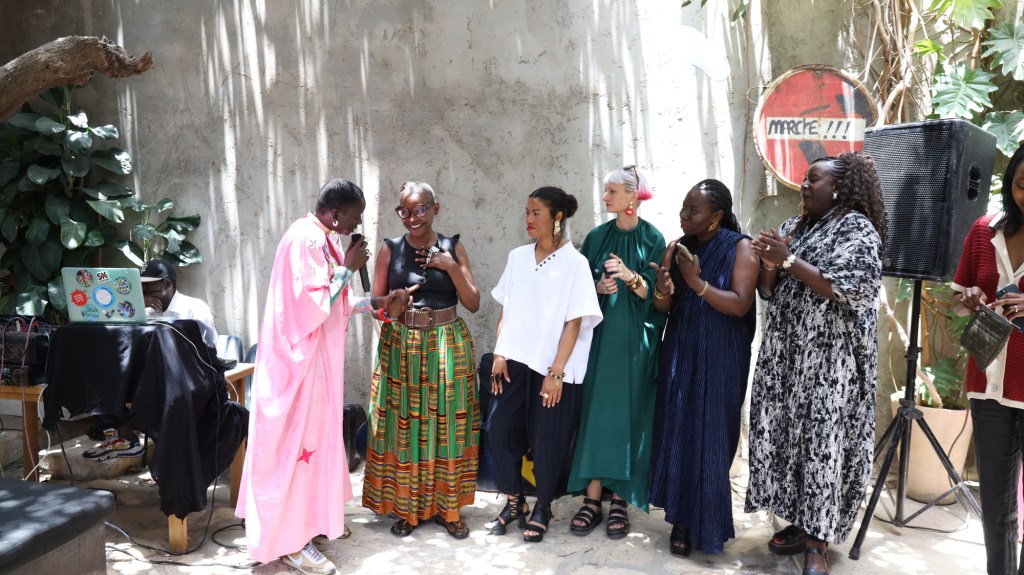
Photo credit: Sabali Inc, Djibril Dramé. © RAW Material Company.
The Body Talk exhibition (2015), presented in Dakar and internationally, marked a turning point by highlighting African women artists. What personal lesson did you draw from this bold curatorial approach, and how does it guide your engagement with artists?
Marie Hélène Pereira: Body Talk explored African women’s bodies as tools of resistance, showcasing artistic expressions that are often overlooked or misunderstood. It demonstrated Koyo’s commitment to promoting women’s work in the art world, both in Africa and globally. When she founded RAW, she created an institution entirely led by women, a practice in place since 2011. This wasn’t new for her; it was a continuation of her vision. She saw that most cultural institutions are male-led, so she wanted to show that women could lead in creating and running institutions.
Would it be fair to call her a feminist? It’s rare to see institutions run entirely by women.
Marie Hélène Pereira: I don’t think she would have called herself a feminist. The term carries connotations, misunderstandings, and misinterpretations. She was a woman deeply rooted in her culture and values, who knew how to claim her space and champion her ideas. Her impact speaks for itself. We shouldn’t box her into a label.
Fatima Bintou Sy: It’s rare to see institutions run entirely by women, like RAW, but it proves it’s possible. In Senegal, many organizations see women claiming their space. We live in a society where women are active, and we need spaces where they can think and create freely, unbound by constraints that don’t reflect our culture. Our culture doesn’t sideline women; it gives us the power to act, think, and build alongside others. Societies evolve through global contact, which makes our model seem innovative. But really, it’s a reclaiming of our cultural roots.
As individuals who worked in the shadow of such an influential figure, how do you balance carrying Koyo’s legacy with bringing your own perspective to RAW Material Company?
Marie Hélène Pereira: Koyo’s wish was for RAW to continue as a mission-driven institution, adaptable to its context’s needs. She built a system of transmission to allow different generations to sustain it. Many don’t notice, but she ensured RAW’s continuity, enabling her to move to Cape Town in 2019. I served as director from 2019 to late 2022. During that time, Fatima joined and took on programmatic leadership before I stepped down. There have been several transitions, but Koyo’s passing is the heaviest. We carry this mission together, enriched by her teachings and legacy. We’re committed to ensuring RAW continues its mission. Programmatically, Koyo’s pillars—artist residencies, RAW Académie, symposiums on the state of African arts, and publications—will remain. We’ll also reflect on how RAW can stay relevant in an evolving Senegal, Africa, and beyond. It’s a significant, heavy mission, but not impossible. We’re dedicated to it.
Reflecting on Koyo’s impact on your professional and personal journey, what advice or words from her continue to guide you in this mission?
Fatima Bintou Sy: “RAW is a mission.” When you first walk through the gates of this house, that’s what she tells you: RAW is a mission, how do you fit into it? What’s your vision for it? I truly understood this when Marie Hélène moved to Berlin, and the transition happened. You realize the responsibility and the importance of continuity. You know it’s not a mission you can carry alone—it takes a community. And you must nurture the next generation to carry it forward. At RAW, we know there’s an “after,” and you’re not meant to stay forever. I also see the mission in how everyone who’s passed through continues to support RAW, even when they’re no longer here. Koyo did that, carrying her part even from afar. One clarification: I wouldn’t say we worked in her shadow. She generously made space for everyone. Your ideas and vision for the program have room to shine and connect with the public. Each program reflects the generation that shapes it, bringing our stories, questions, and dialogues with the world we live in. That’s what she always embodied.
On June 14, RAW is planning a day dedicated to Koyo Kouoh. How was this celebration conceived?

Photo credit: Sabali Inc — Captured by Djibril Dramé
Marie Hélène Pereira: It was designed simply, with friends, colleagues, and long-time RAW collaborators from Senegal and beyond. Many coming from abroad are covering their own travel costs, driven by their connection to Koyo. They offered to contribute if needed, and that’s how we shaped the program. It will include commemoration, conversations, performances, and tributes through dance, words, and poetry. We’ll share a meal, as Koyo would have wanted, in a setting that’s both intimate and public.
The Venice Biennale 2026 has decided to retain the editorial line In Minor Keys, conceived by Koyo Kouoh. Marie Hélène, as a curatorial advisor and part of her team for Venice, how did you receive this news?
Marie Hélène Pereira: It’s wonderful news. It’s the greatest recognition of her work and the urgency of her vision. We avoid calling it a “tribute,” as that feels tied to the past. The Biennale’s decision to continue her vision affirms its relevance. We’ll be there to carry forward her work.
*Cover image was taken by Trevor Stuurman
Read also
The State of Contemporary African Art Today: Dr. Ibou Diop’s Critical Perspective
Contemporary African Art Takes Center Stage at Basel’s Newest Fair
The World of Senegalese Contemporary Art Through Sylvain Sankalé’s Eyes
 Bridging Africa and The World Through Contemporary Art
Leave a comment