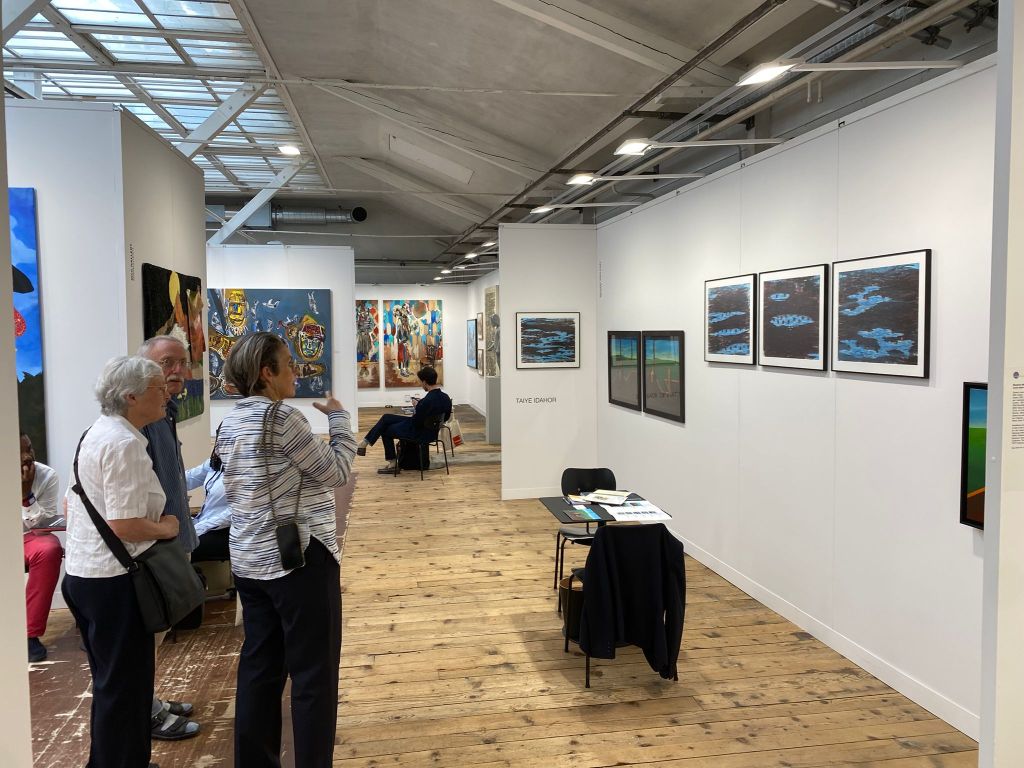

From June 18 to 22, 2025, Africa Basel, a fair dedicated to contemporary African art and its diaspora, transforms Basel’s Ackermannshof into a vibrant creative space during Art Basel week. With 18 international exhibitors, the inaugural edition—launched with a Curious Cat-themed VIP Preview on May 16—places African visual cultures in dialogue with the global art market.
Africa Basel capitalizes on the surging global interest in African contemporary art, offering a focused platform in Basel, the epicenter of the international art market. Barbara Kokpavo, founder of Gallery Soview, established in Accra in 2019, calls it “a powerful platform” that highlights the “vibrant, underrepresented African art scene.” Soview presents Ghanaian artists Dela Quarshie and Enoch Nii-Amon. Barabara Kokpavo underscores its unique position: “There are great fairs like 1-54 and AKAA, but having a fair focused solely on African and diasporic art in the heart of contemporary art, here in Basel, is a real opportunity.”
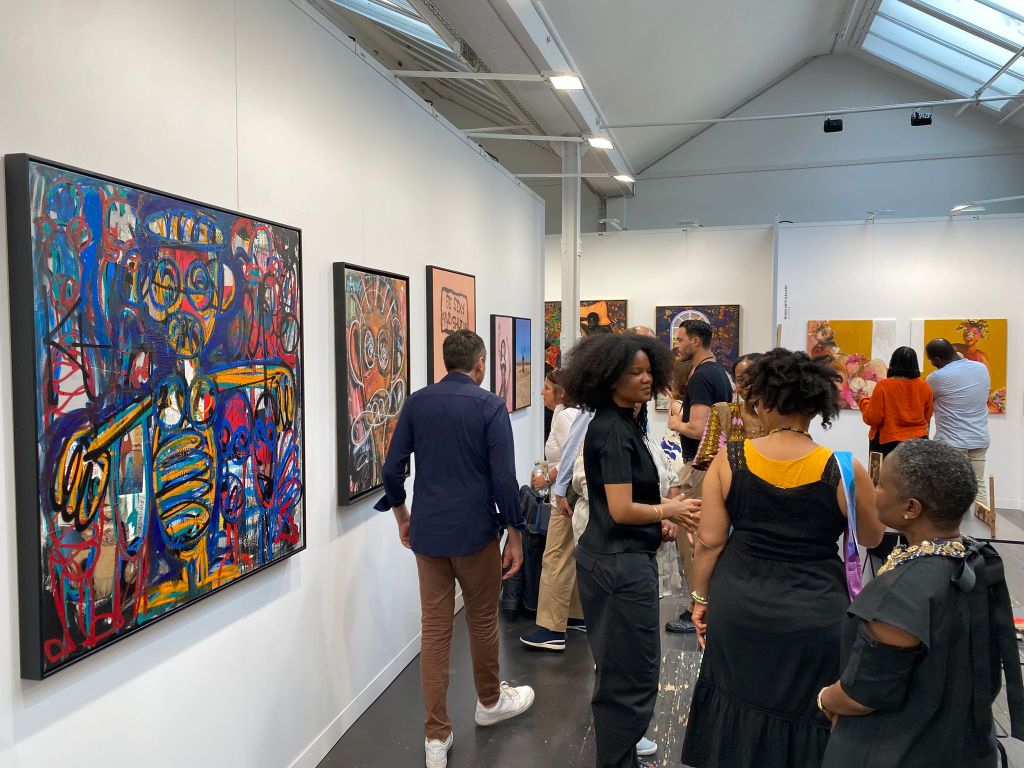
Fihr Kettani, director of Galerie 38, with spaces in Casablanca, Marrakech, and Geneva, shares this enthusiasm: “We’re very happy to participate in this first edition of Africa Basel. It felt natural for us, as we’ve created a permanent space in Switzerland, and the creation of this fair is a logical continuation given the international enthusiasm for the African contemporary scene.”
Representing Cameroonian artist Barthélémy Toguo, South African artist Kendell Geers, and emerging Moroccan artist Yacout Hamdouch, Galerie 38 brings a diverse perspective. Kettani adds, “We have the impression this fair was made for us. We’ve been defending the African scene for over 15 years, and we feel we have something to contribute.”
Basel is the Mecca of contemporary art.
Sarah Hachi-Duchêne, founder of Unx-Art, based in Nigeria with a physical gallery in Freetown, Sierra Leone, marks her debut with the exhibition Held in Memory, Forged in Form. Featuring Togolese painter Clément Gbegno and Nigerian artist Helen Nzete, the show explores memory, healing, and transformation. Hachi-Duchêne notes, “Basel is the Mecca of contemporary art. Having a fair dedicated to the African scene here is a chance.” She emphasizes contextualizing each artist’s work: “We want the public to understand the artist, their journey, their intentions.”

Artistic Practices: Personal, Political, and Material
Africa Basel showcases a spectrum of artistic expressions, with painting reigning supreme.

At Soview, Enoch Nii-Amon repurposes discarded cow horns into striking installations, merging ecological consciousness with aesthetic innovation. “He’s fascinated by the material—its texture, its tonal variations from black to pearly nacre—and its symbolic depth,” says Barbara Kokpavo. Using natural horn and nylon fishing line, Nii-Amon composes intricate puzzle-like works, revealing hidden hues and emotions. In contrast, Dela Quarshie’s vivid paintings explore Ghanaian identity and visual storytelling.
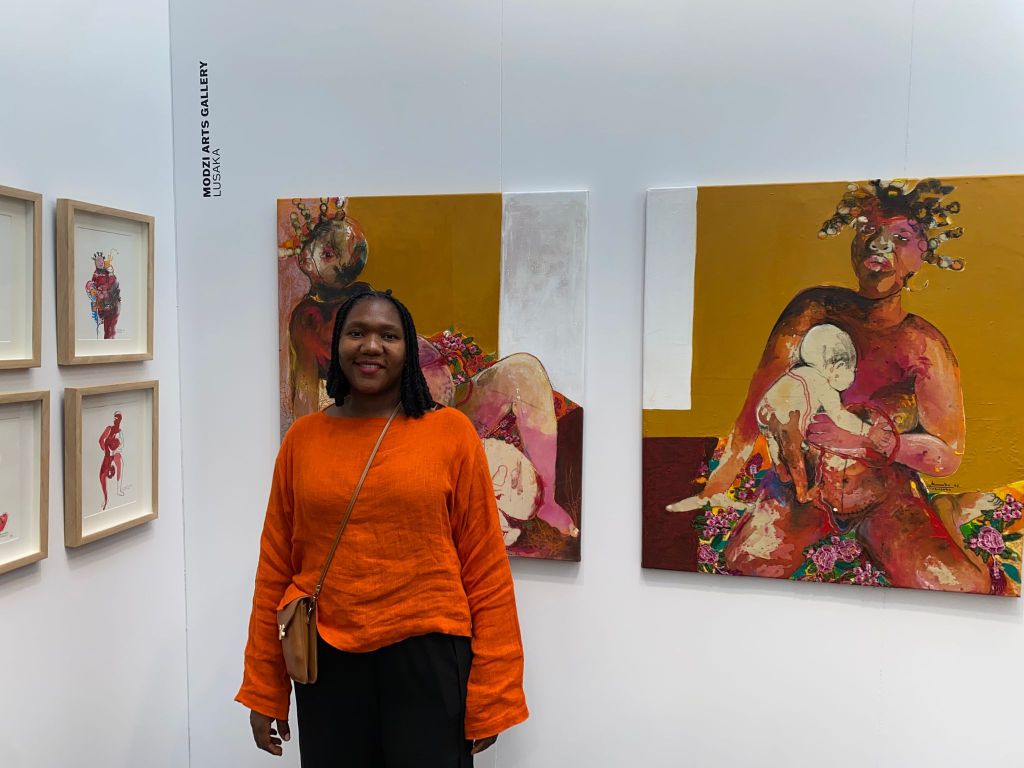
Represented by Modzi Arts, zambian artist Mwamba Chikwemba presents deeply personal reflections on motherhood and postpartum experience. “I’m a new mom,” she shares. “My work opens up conversations about postpartum depression and the emotional shifts women experience.” Her canvases create space for dialogue around themes often overlooked in global discourse.
Galerie 38’s artists bridge abstraction, politics, and cultural commentary. Toguo’s works engage with migration and identity, Geers offers conceptual provocations through layered compositions, while Hamdouch draws on Moroccan visual traditions to craft a contemporary language.
Unx-Art presents The Year of the Knot by Helen Nzete—bas-reliefs where knots become metaphors for trauma and healing—and Clément Gbegno’s dreamlike paintings of intertwined bodies and cords. “We live in an era where many knots must be untied,” reflects Hachi-Duchêne, highlighting the universal resonance of care, memory, and repair.
Fostering Connections and Conversations
The Curious Cat VIP Preview on May 16 drew an engaged crowd, as Kettani notes: “We’ve met very interested, attentive, and curious people. We have a good feeling—it feels like this will work for all galleries.” Lidija Kahchatourian of AKKA Project, with a decade of promoting African artists in Venice, emphasizes, “It’s a good opportunity to talk about art and the deeper message of our artists.” For Lidija Kahchatourian, Basel’s collector-rich environment amplifies African art’s impact.
Chikwemba sees the fair as a gateway to broader exposure: “It’s about networking and taking this conversation to a wider audience.” Janvier aims for “visibility” and hopes Soview’s artists enter strong collections. Hachi-Duchêne adds, “The participation in Africa Basel is a major step: international visibility, dialogue with institutions, collectors, and art lovers.” She envisions African voices entering “museums, galleries, collections—where the world’s artistic memory is shaped.”
Yet, critics warn that dedicated spaces like Africa Basel risk pigeonholing African artists, framing them as distinct from the broader art world and limiting their integration into mainstream fairs. Addressing this, Ben Füglister, co-founding director of Africa Basel, told DakArtNews, “I hope, in 10 years from now, people won’t even remember that there were different times, but it should feel just natural that African art is included organically in the art world. If we—all working in African art in Basel—manage to get more artists and galleries from the continent into non-African art fairs, then we’ve achieved our goal.”
Despite a 12% drop in global art sales in 2024, driven by a 39% drop in high-end auction sales and economic volatility, Africa Basel taps into rising interest in African art.
—————
*DakArtNews expresses sincere appreciation to the Fondation Oumou Dilly for its steadfast support, facilitating comprehensive coverage of Africa Basel.
 Bridging Africa and The World Through Contemporary Art
Leave a comment