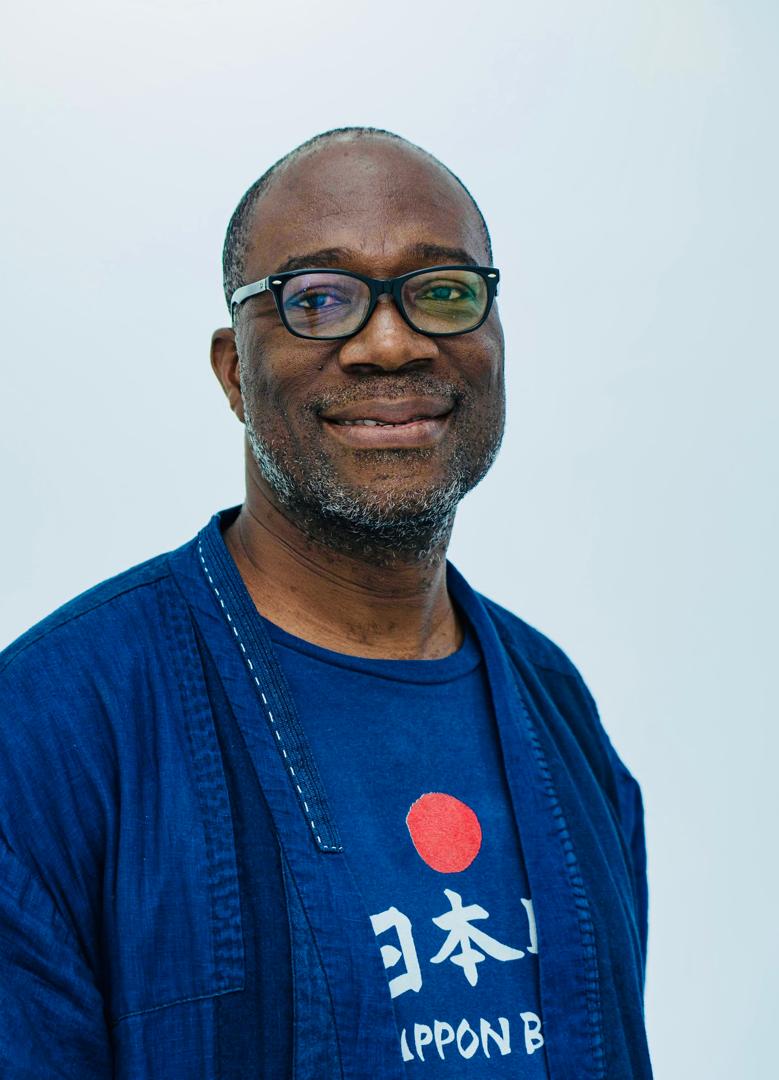

In October, Ivorian multidisciplinary artist Jacobleu was in Dakar as part of preparations for the upcoming first edition of West African Festival of Arts and Culture (ECOFEST), a regional initiative supported by ECOWAS and UEMOA. His role in the organisation involves contributing to several artistic programmes and working closely with cultural actors across the region. His visit also offered an opportunity to reflect on broader issues raised in this conversation: the need for stronger collaboration among African artists, the responsibility of cultural practitioners within society, and the challenges and opportunities shaping contemporary art scenes in West Africa. In this interview, DakArtNews speaks with Jacobleu about the role of the artist as witness and agent of change, the relationship between creation and social issues such as migration and peace, and his perspective on the evolving artistic landscapes of Dakar and Abidjan.
You’re in Dakar at the moment. What brings you to Senegal?
I’m here for a major regional initiative supported by ECOWAS and UEMOA: the West African Festival of Arts and Culture (ECOFEST), which opens at the end of November 2025. I’m overseeing the Creativity Salon, the Heritage Salon and the exhibition-competition that features painting, sculpture and photography. The festival brings together performances, music, traditional dance and professional encounters from fifteen countries. On a more personal note, I’m also presenting a solo exhibition at VEMA, near the Dakar ferry terminal. It runs from November 28 to December 14 as part of PARTCOURS, with an opening scheduled for Friday, November 28 at 7 pm.
How do you see your position within the broader dialogue among African artists?
Collaboration has become essential. At my gallery in Abidjan, I make a point of opening the space to artists from different backgrounds. I already collaborate with Senegalese agents, curators and gallery owners to help artists from Dakar exhibit in Côte d’Ivoire. Africa can no longer afford to work in isolation. We need solidarity. African artists are gaining international visibility—in London, Paris, New York, Venice—and we must build on that momentum together.
Your book Artists and Society explores the relationship between artistic creation and social life. In your view, what is the role of the artist today?
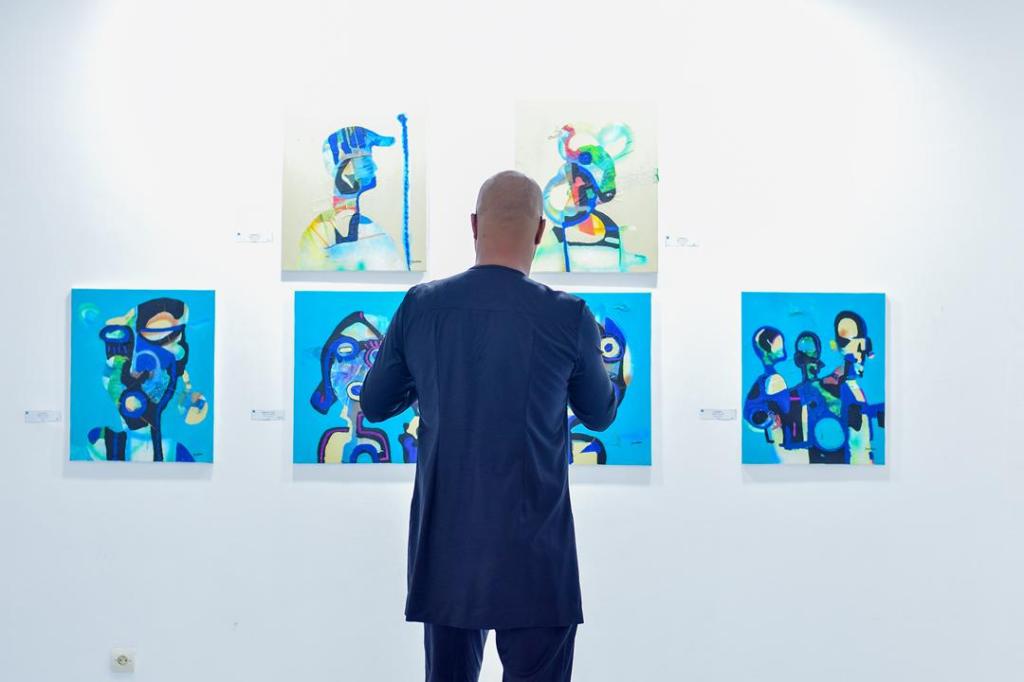
The artist is part of society. We absorb what surrounds us—its tensions, its stories, its fractures. Even an artist who claims not to be political inevitably expresses a point of view. Someone who paints street children is already drawing attention to a societal issue. Someone who explores their cultural heritage contributes to its transmission. Art communicates through forms and colors—sometimes even before words. In the early 2000s, I created a series called Cataclysm. People wondered why I was depicting conflict in a country considered peaceful. A few months later, crisis erupted. Artists often have an intuition, an ability to sense things long before the rest of society.
If the artist is a witness or messenger, do you believe they can also drive change?
Absolutely. Artists can raise awareness, challenge politicians, prompt reflection. But their engagement must not fuel chaos. Being an independent artist means expressing what you feel without letting yourself be used. Some say they are “engaged” but only create division. For me, the artist’s mission is to serve the collective good. Independence is essential—even if the road is longer.
When we think about issues like identity, migration and social cohesion, what can art contribute today?
A great deal. Art can be a force for peace. After Cataclysm, I explored migration. I even produced a sound piece using recordings from actual journeys—desert winds, the sound of water, human voices. It was a way to convey the hardship of those seeking a better life. Later, I created The Colors of Peace. Because you cannot create or even live fully in times of turmoil. Without peace, nothing is sustainable—not for artists, not for families, not for society. Artists are the chroniclers of their time. Our works become documents for the future. When historians look back on this era, they will find traces in our canvases and installations. Think of Picasso’s Guernica: born out of conflict, now a universal symbol. Art preserves memory. And with that comes responsibility—to testify, to enlighten, to inspire hope.
What is your impression of the Senegalese art scene today?
Senegal has always been a creative powerhouse. Dakar especially is vibrant—artists are constantly moving, showing, producing. The Dakar Biennale played a huge role in shaping this energy. It has given international visibility to many artists and positioned Senegal as a key hub for contemporary African art. But the real question is whether this dynamism truly benefits local artists. There’s a lot happening—projects, exhibitions, festivals—but does it translate into economic stability? I hope so, because artists must be able to live from their work and attract serious collectors.
There’s a saying: “Dakar has the taste, Abidjan has the money.” What’s your take on that?
(laughs) Yes, I’ve heard it. I’m not sure it’s completely accurate, but it’s true that in Abidjan, collectors tend to buy more readily. When someone has the means and loves art, they invest. It creates a more fluid market. I don’t have precise data for Dakar, but I believe things are also evolving here.
How would you describe the art scene in Abidjan?
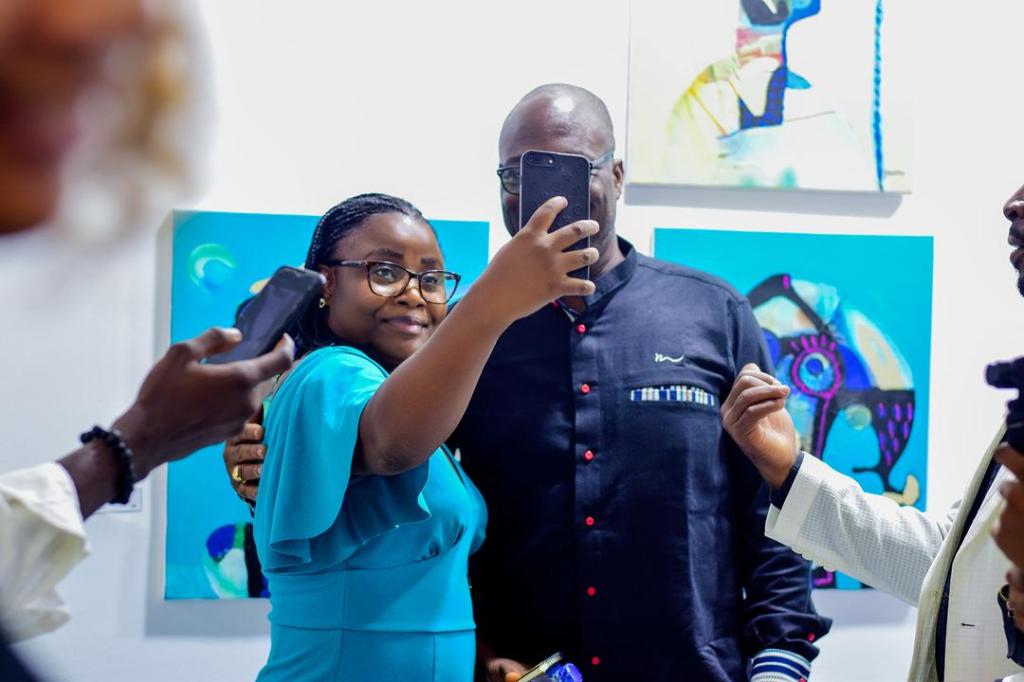
Extremely dynamic. You can’t go a month without two or three openings. Galleries are multiplying and becoming more professional. Curatorial standards are rising. Artists are pushing themselves to produce strong, well-presented work. There’s also a promising new generation. I recently curated The Baptized, featuring ten young artists—my former students—each of whom I gave an artist name as they entered the professional world. It was a symbolic rite of passage.
What led you to create the Jacobleu Art Gallery?
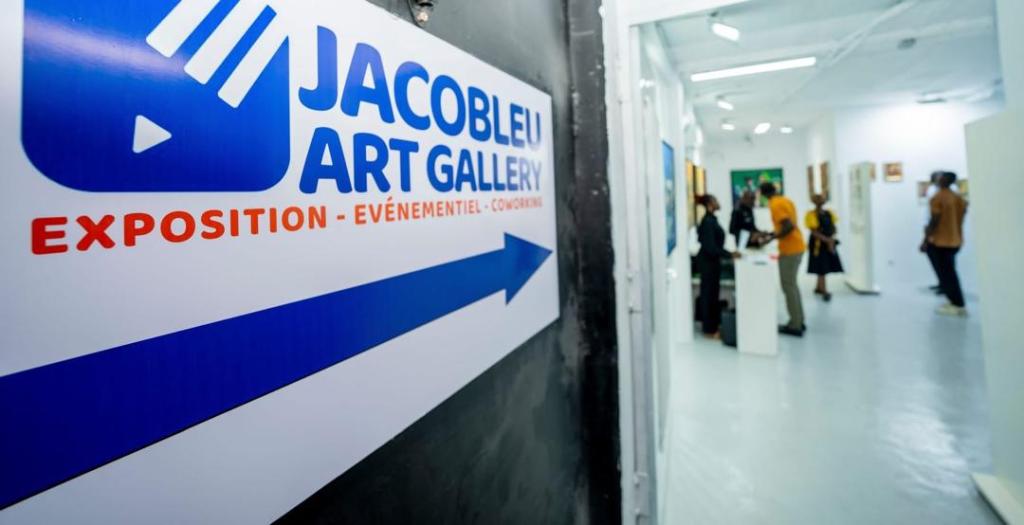
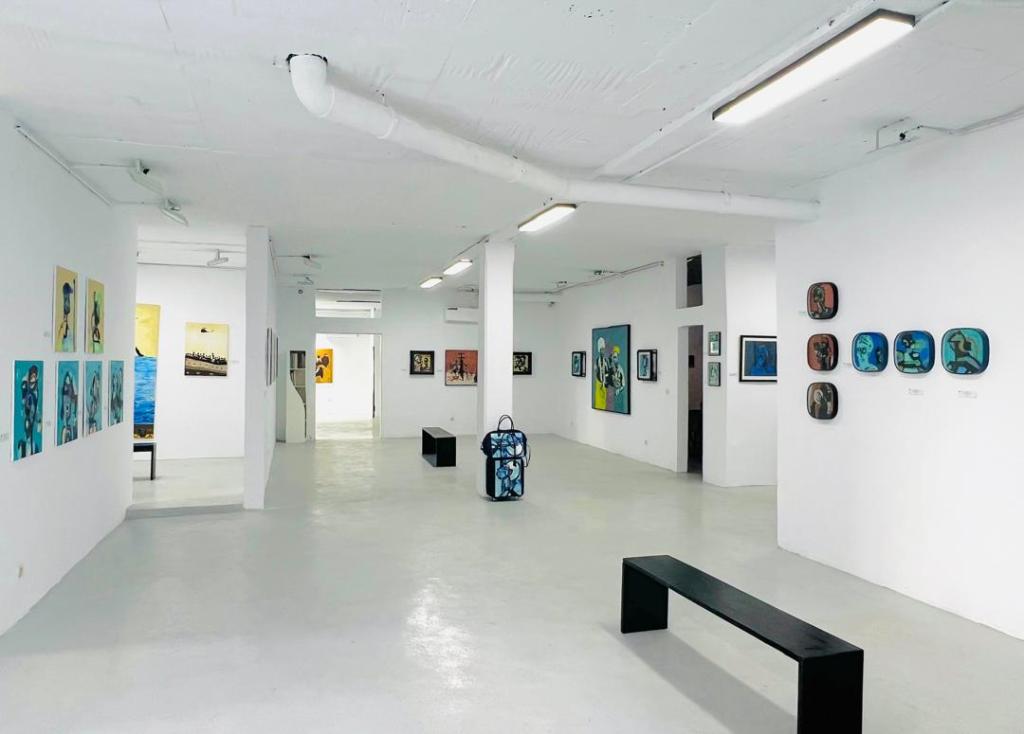
I’ve worked with galleries for over two decades. Traditional spaces only represent a limited number of artists, so I wanted to build a place that could serve as a springboard. That eventually became the Jacobleu Art Gallery, one of the largest in Abidjan today. It includes four exhibition rooms, a conference and performance hall, a shop, coworking spaces and a café-bar. It’s both a platform for other artists and a personal space where I show my own work.
What is the philosophy behind the gallery?
Openness. Circulation. Exchange. Artists from Senegal, France and elsewhere are welcome. We offer two possibilities: we can curate the show ourselves if the project aligns with our vision, or we can simply provide the space depending on the artist’s means and our schedule. It keeps things accessible while maintaining a professional standard.
What kind of artists do you wish to represent, and what is the gallery’s ambition?
We look for artists with a minimum level of experience—not necessarily established names, but creators with a thoughtful, intentional practice. When the work is exceptional, we’re happy to support emerging talent. We also welcome recognised artists who simply need a space to express themselves. Our aim is to maintain a balance between emerging and established voices. What matters is coherence, research and a contemporary approach. Technical mastery is important, but so is the conceptual thread. Ultimately, our ambition is to offer a rigorous yet open platform where African artists—from Abidjan, Dakar or elsewhere—can meet, converse and gain visibility.
 Bridging Africa and The World Through Contemporary Art
Leave a comment