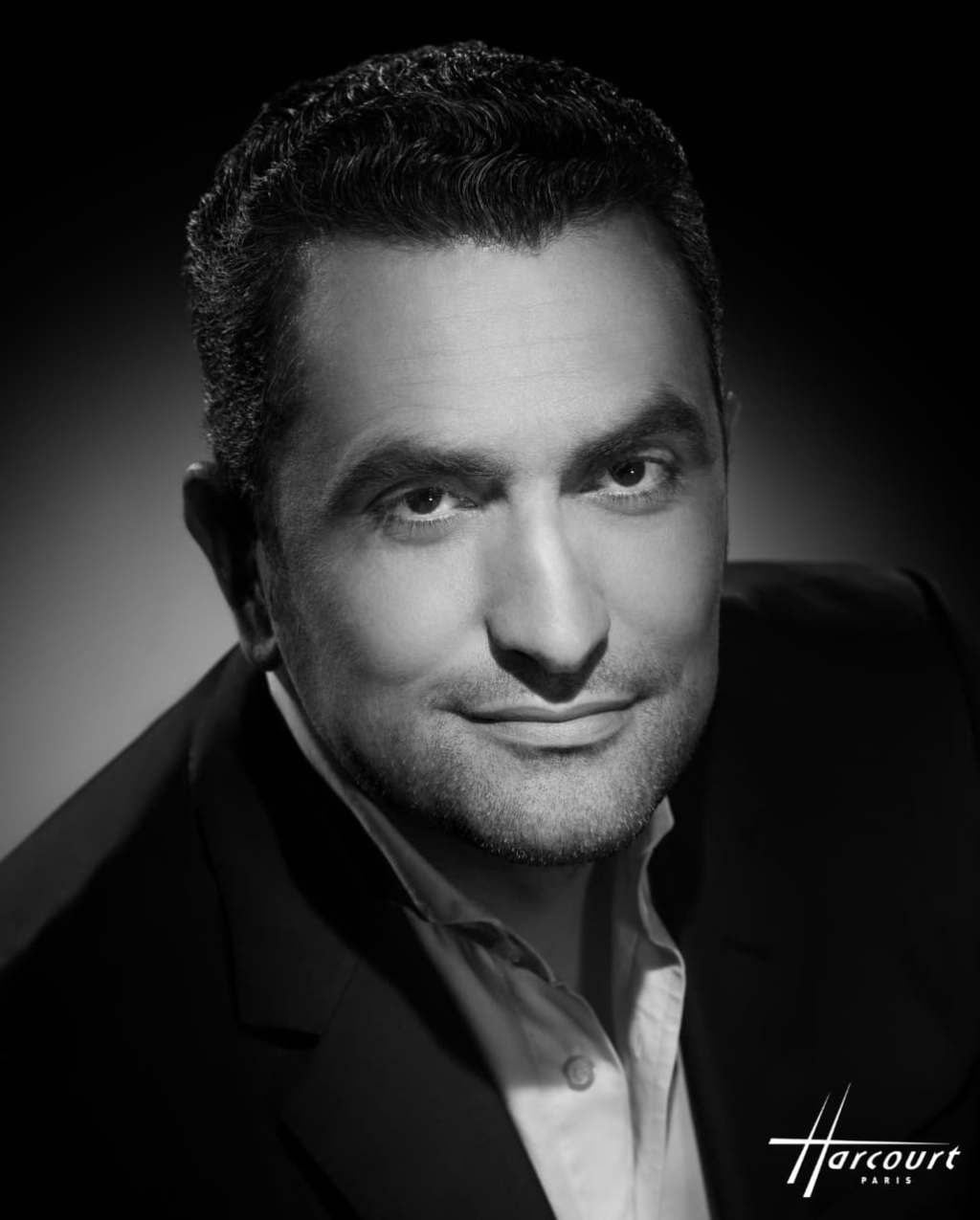

For thirty years, the Moroccan designer and interior architect has built a language that fuses African heritage with global modernism. A graduate of the Académie Charpentier in Paris, Lahlou is regarded as one of the leading figures in contemporary African and Arab design — a pioneer who helped place the continent on the international map long before the world was ready to listen. This year, as he celebrates three decades of creation, Lahlou unveils “Constellations — Back to the Future”, an exhibition that looks both backward and forward: a poetic mapping of collaborations, memories, and new beginnings. Between Rabat and Paris, Dakar and Dubai, his work traces invisible lines that connect people, materials, and cultures across continents. When he speaks of design, it is with the conviction of someone who has spent a lifetime proving that form is never separate from meaning. “Behind every piece,” he says, “there’s a story — and a soul.” What follows is a conversation with a designer whose vision continues to challenge how we see Africa, and how we imagine the future.

Your current exhibition “Constellations: Back to the Future” celebrates thirty years of your career. What connects the different stars of your journey?
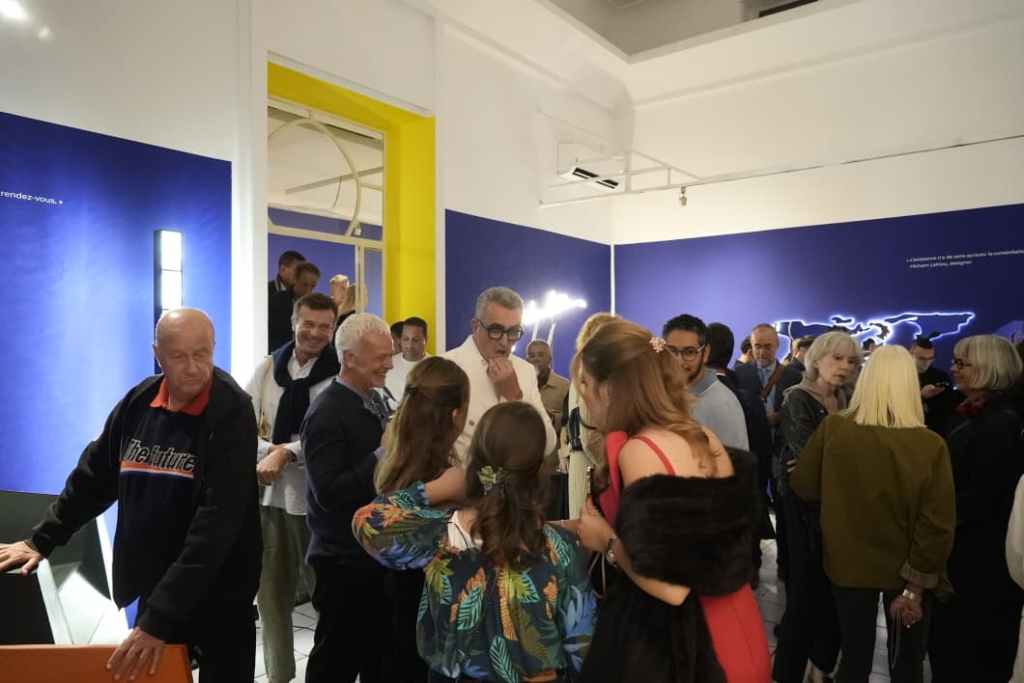
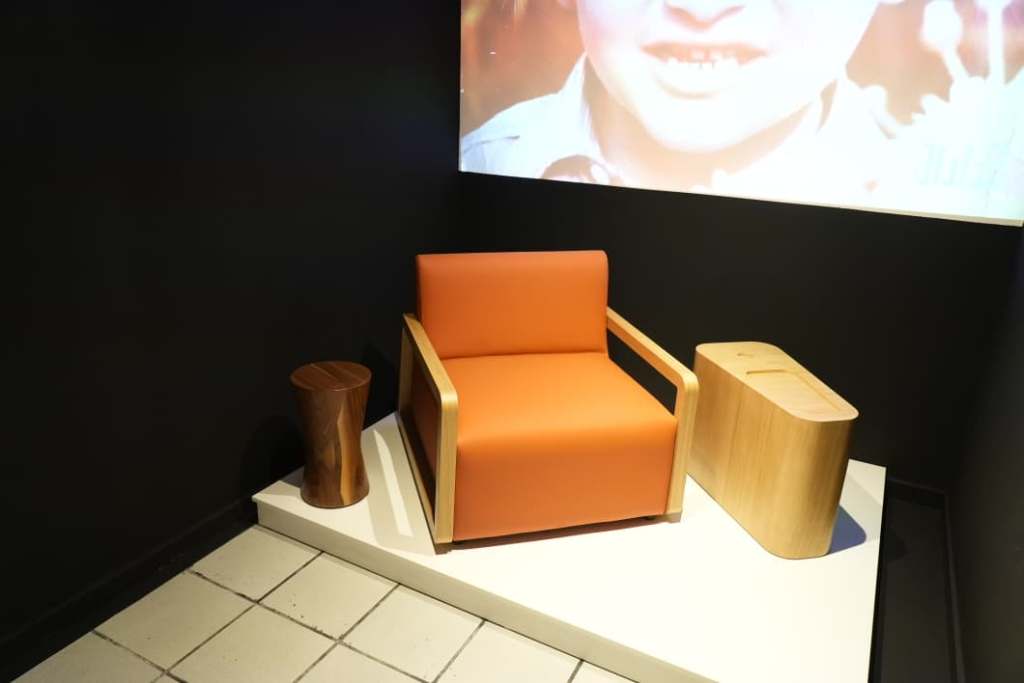
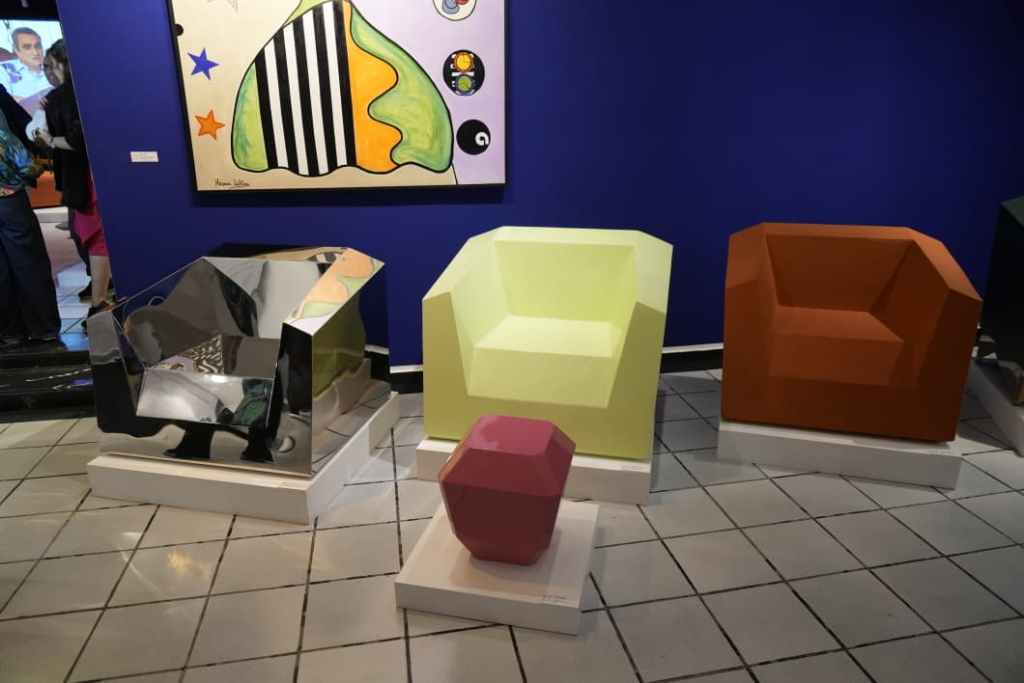
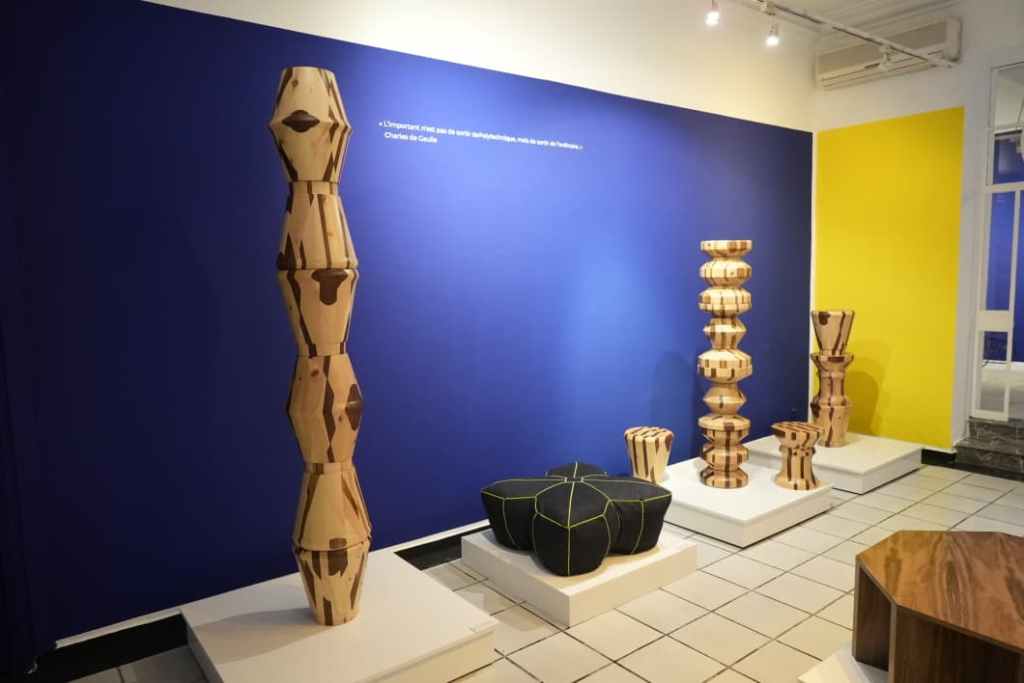
The word Constellations came naturally. It reflects the way my path has been shaped — by encounters, travels, and collaborations across continents. The first spark came from a project I created in 2019 with DAUM, a historic Maison de Savoir-Faire in France that has worked with artists like Dalí, César, and Matta. I suggested to them: “Why don’t we create something between art and design — a four-handed collaboration with another African designer?” They loved the idea, and that’s how I worked again with my friend Cheick Diallo, whom I’ve known for over twenty-five years. When the Institut Français du Maroc invited me to stage an exhibition, I wanted to build on that idea — a constellation of collaborations, memories, and new creations. I didn’t want a nostalgic retrospective, but rather a dialogue between past and future. That’s why the subtitle is “Retour vers le Futur” — Back to the Future. Eighty percent of the works are brand-new sculptures, installations, and pieces that open toward new directions in my practice.
How has your vision of design evolved from your first object to this exhibition?
That’s a beautiful question, because people often think a designer only makes objects. But I’ve always been both a designer and interior architect. Over the years, I’ve designed villas, cafés, offices, hotels, concept stores, watches, water bottles, luxury pieces for Daum in France and Citco in Italy — even large public structures. For me, design is not about one object; it’s a philosophy that connects everything. When I started in 1995, I had dreams but no clear idea how to become an “international designer.” It wasn’t easy, especially living and working from Africa. You face double, even triple challenges compared to those in Europe. But I kept moving — exhibiting, traveling, speaking at fairs, and meeting people. Curiosity was, and still is, my driving force. I remember reading a French magazine back in 2000 called Stratégies. I was fascinated. It made me realize that before creativity, there must be strategy. Since then, my mission has been to build not only my own signature but also an ecosystem for design — one that can empower nations. Because countries that embrace design as a discipline in their universities, industries, and public policies become stronger. Design is power. And this is how I started to understand that I have to continue to be me, my DNA, my identity, my signature. Because if you want to be somebody good in design globally, you have to build your own identity.
Creativity is not a job — it’s a way of being.
What defines your DNA as a designer?
My DNA is deeply rooted in my heritage and my values. I was born and raised in Morocco, educated in Europe, and shaped by both worlds. My work reflects that balance — between modernity and tradition, between the global and the local. People often tell me they can recognize my style immediately. And that makes me happy — not out of ego, but because it means I’ve built a language that speaks both of where I come from and where I’m going. Young designers often write to me saying they’ve followed my work for years and that it inspired them. That’s the best reward.
Why do you design? What keeps you creating after thirty years?
I design because it’s in my blood. Creativity is not a job — it’s a way of being. We create because we must, because we’re alive. For me, design is about passion, but also about humility. I haven’t held a solo exhibition in eight years, so Constellations was important — a way to show that I’m still evolving, still curious, still creative. I wanted to move beyond the labels: “He designs watches”, “He designs objects.” No — I’m free. I can design a sculpture, an installation, a hotel, a bicycle, a highway canopy, or a door handle. There are no limits.
How do you define beauty in design today?
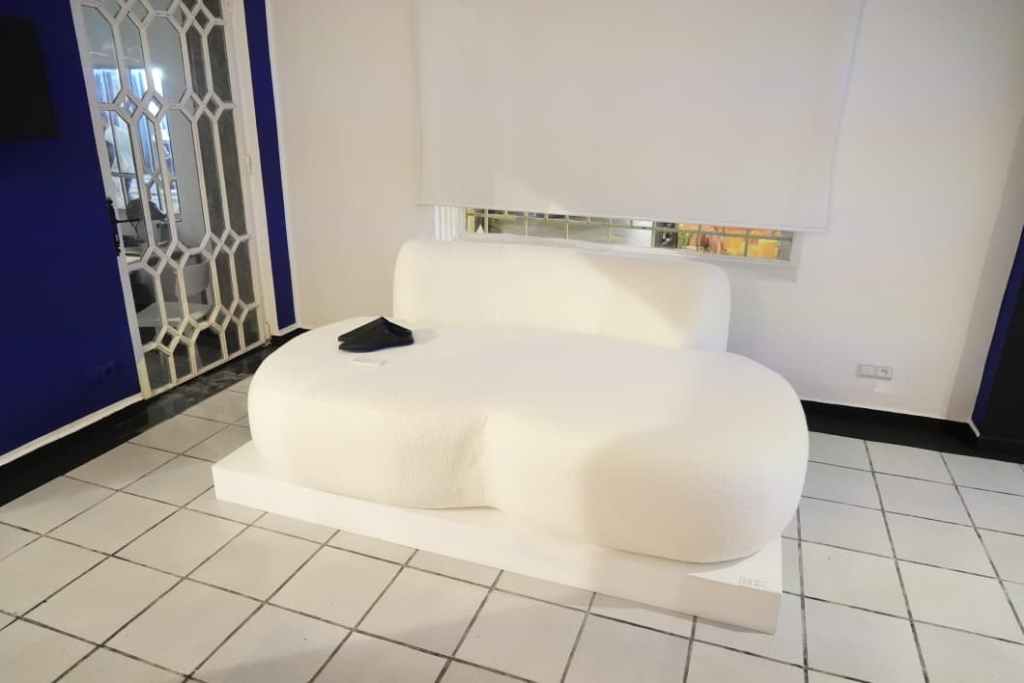
Beauty is magic. It’s inspiration. It’s emotion. A beautiful design must first work — it has to be functional, ergonomic, and stable. But once those foundations are set, beauty is what makes it sing. It’s texture, color, and emotion — the message behind the object. Africa itself is a continent of knowledge and emotion. When you walk through the design spaces in Dakar, for example, you feel something powerful. You can’t just look — you experience. Each designer carries his or her background and culture, yet there’s an invisible thread connecting us all. That’s the magic of African design.


Africa has always contributed to universal culture, long before colonization.
You said that your work is deeply rooted in your Moroccan heritage. How do you transform those roots into a contemporary design language without losing their soul?
The soul is mine — and it’s from here. When I create, it’s the continuity of my soul through the gesture of my hand. I still draw a lot. I’m quite academic in that sense. The computer is useful, but drawing connects me directly to my inner rhythm, to music, to memory. I’m inspired by sound — sometimes it’s classical music, sometimes it’s the Kora, that magnificent African instrument. My soul is linked to my heritage because I grew up surrounded by it: Moroccan tables, poufs, tea rituals, family gatherings, laughter. But also with influences from across Africa — dishes from Senegal, stories from cousins returning from there. All those textures and scents formed my imagination. There’s a sentence I love: “You must know where you come from to know where you’re going.” My education, my travels, my encounters — they all helped me open to the world without ever forgetting my roots. When I studied and lived in Europe, of course I missed Moroccan food, Moroccan colors, that warmth. But that distance helped me understand my own culture better. That’s the beauty of heritage — it becomes alive again each time you reinterpret it.

What does it mean today to carry a Moroccan & African identity within global design circles?
It means carrying plurality. Morocco, for example, has always been a crossroads — African, Arab, Amazigh, Mediterranean, Jewish, Saharan, and European. From Tangier, you can literally see Spain; from Tarifa, you can see Africa. That proximity defines us. I often say that being Moroccan means being a bridge culture. Our Amazigh roots are African; our history includes Andalusian influence from the Moors; our craft traditions reflect centuries of exchange. So when I speak about African design, it’s not in opposition to the world — it is the world. Africa has always contributed to universal culture, long before colonization. When you read thinkers like Cheikh Anta Diop or Amadou Hampâté Bâ, you realize the depth of that contribution. Every designer from the continent carries a fragment of that collective memory. You can place ten African designers side by side, and you’ll feel ten different identities — yet a shared energy connects them. That’s our richness: diversity as strength. When I speak to young designers, I always tell them: not to fall into copy-paste. Don’t reproduce motifs mechanically. Let the pattern pass through your own soul first. It takes time to find your own language — but once you do, it becomes timeless.
African cities like Dakar, Marrakech, Lagos… are gaining recognition as creative hubs. What can they teach the design world about creativity?
They can teach the world resilience, authenticity, and collaboration. But we need the ecosystem to follow — governments, institutions, and private partners who believe in design as a driver of development. Take Dakar, for example. The Biennale has been instrumental in bringing design back into the conversation, thanks to people like Ousmane Mbaye. But organizing design events in Africa is still a struggle — finding sponsors, convincing stakeholders, building networks. I know that challenge well from my own experiences with Africa Design Days and Africa Design Award. What we need now is curiosity — from both inside and outside the continent. People must come, see, exchange. My exhibition Constellations is open in Tangier until December 1st. Friends have come from Marrakech, Switzerland, Spain, France — because when you truly believe in creativity, you show up. Supporting each other is how we build continuity.
You mentioned the Biennale of Dakar. How do you see your place among the pioneers of African design?
I was very touched by what Ousmane Mbaye did at the last Biennale — he brought together pioneers and emerging designers in the same space. When he came to me, he said something that moved me deeply: “Hicham, thank you. It took me time to understand, but everything you did for design in Africa laid the groundwork for what we’re doing now.” He reminded me that I was the founder of the Africa Design Award, Africa Design Days, and Africa Design Week — the first initiatives of their kind on the continent.
Back then, the only design event that existed was Design Indaba in Cape Town, which was a commercial business fair. Our approach was different: more cultural, more inclusive. Today, we have new design weeks, awards, and even the Dakar Biennale embracing design again — which had almost disappeared. That, for me, is beautiful. From the beginning, I’ve believed in moving forward together. Alone we can work, yes, but together we can push further. That’s why I always invite emerging designers to share space with me. Collaboration has been my mindset since day one.
If time were a material, how would you design it?
I would stop it. (He laughs.) Just to tell people: slow down. Take it easy. Send good vibes. We’re all running like crazy, but time is precious. I’d love to freeze it, even for a moment, just to breathe.
After thirty years, what do you hope will remain — the objects you’ve created, or the ideas behind them?
Definitely the ideas. The meaning behind each creation. When people visit an exhibition, they see beautiful lighting, refined displays, harmonious forms. But behind each piece lies months — sometimes years — of doubt, work, and collaboration. Design is never a solitary act. It’s the work of teams, artisans, curators, sponsors, institutions — people who believe in you. Without them, it’s impossible. Every exhibition is like a symphony: each element, each person plays a note that must resonate with the others. When visitors leave Constellations, I want them to feel something — emotion, connection, curiosity. If they carry that with them, then I’ve succeeded.
How do you imagine African design in 2050 — poetic, political, planetary?
All three. I hope design will become a key for development — human, social, industrial, digital, cultural. When governments and private leaders understand that design is not a luxury but a strategy, everything changes. Nations that embrace design gain power — not only economically but also intellectually and spiritually. By 2050, I dream of an Africa where design is taught in every university, practiced in every industry, and celebrated as a central force of innovation. Because design, in its essence, is the art of imagining better futures.
Do you have a quote that guides you in your work?
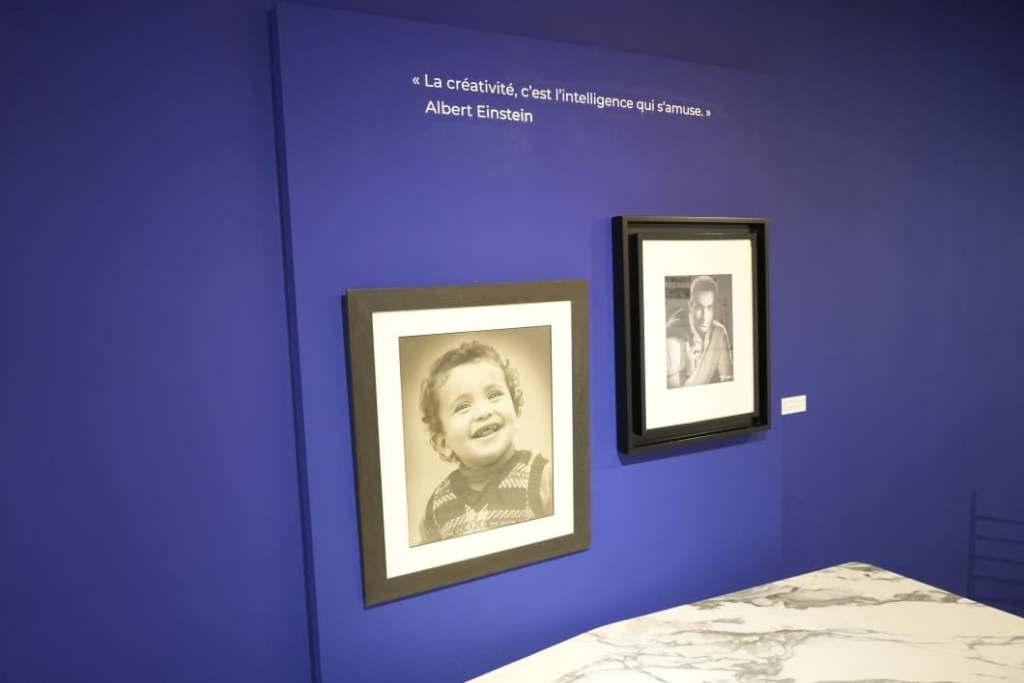
I have many. (He smiles.) “Creativity is intelligence having fun”, from Albert Einstein is one of them.
 Bridging Africa and The World Through Contemporary Art
Leave a comment