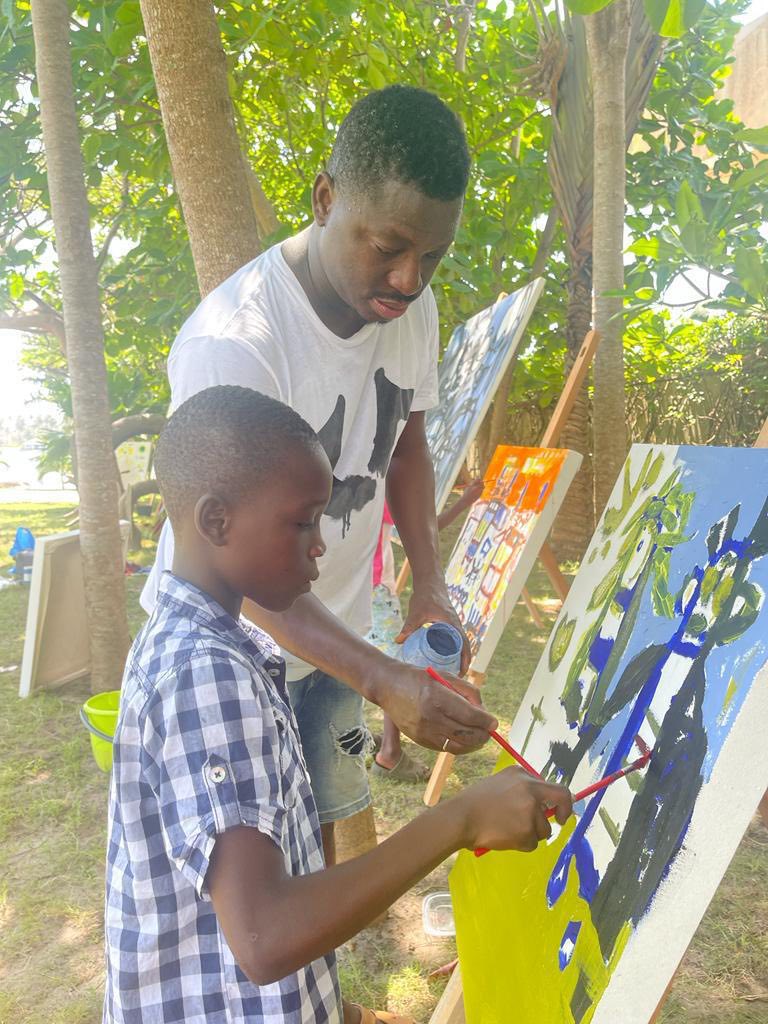

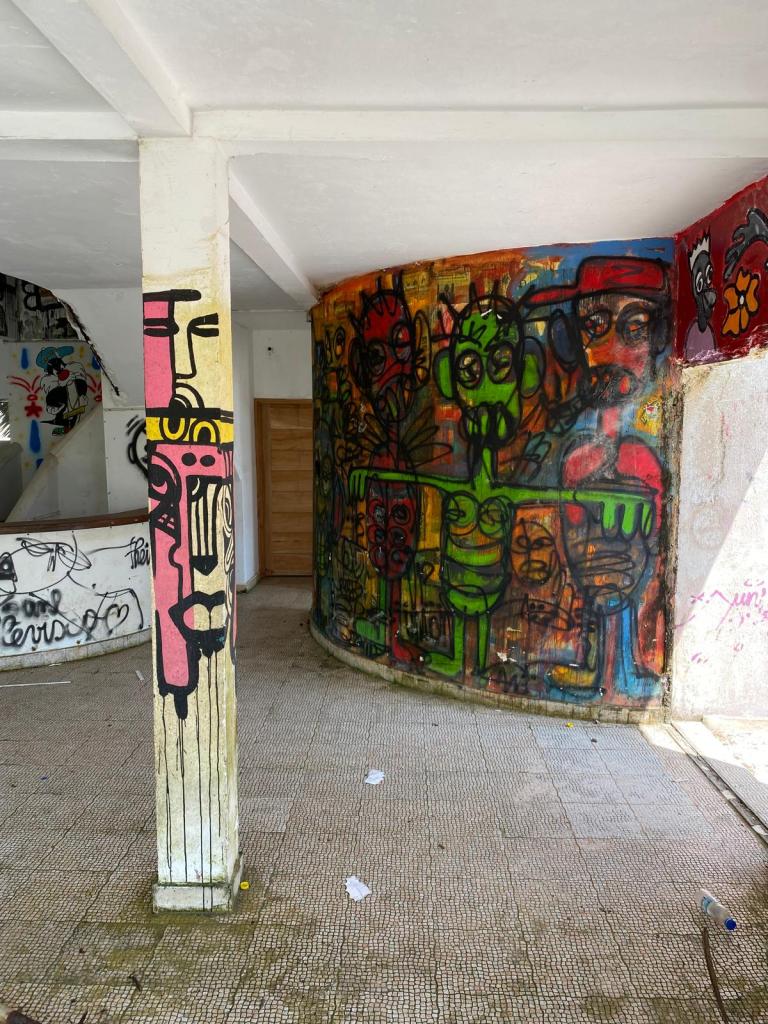
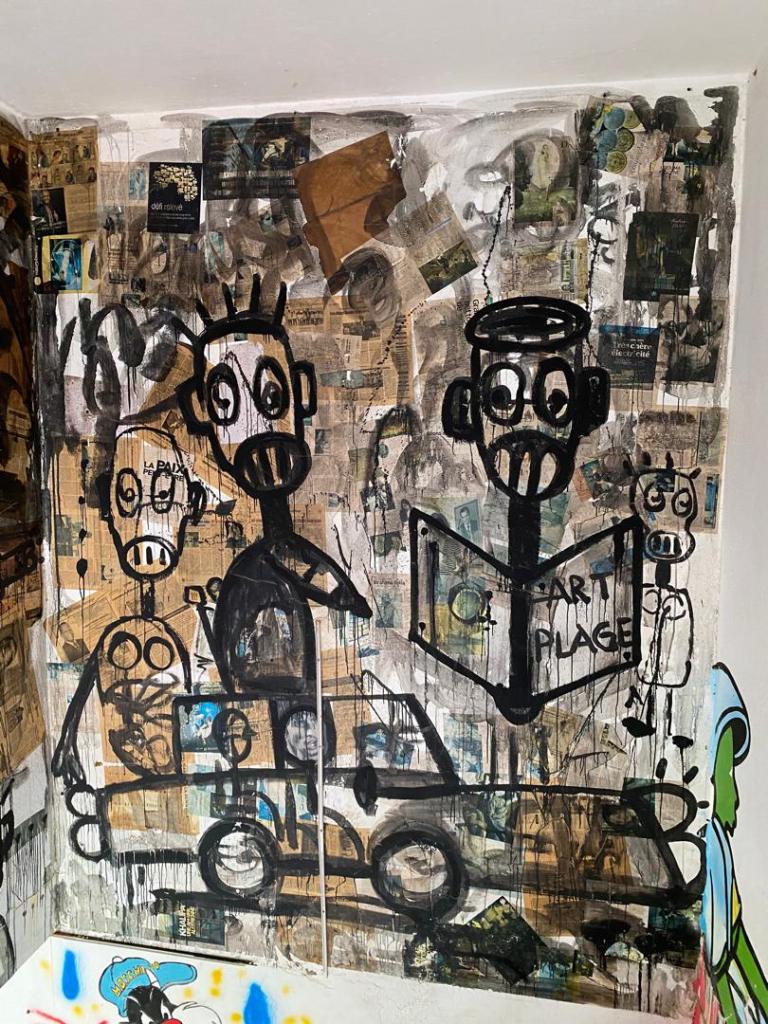
For more than two decades, the Ivorian artist Aboudia has painted the faces, symbols and urgent markings of childhood onto large canvases that now travel the global art circuit. Frequently compared — fairly or not — to Jean-Michel Basquiat, and shown at major international art fairs, he has built a visual language rooted not in theory, but in observation.
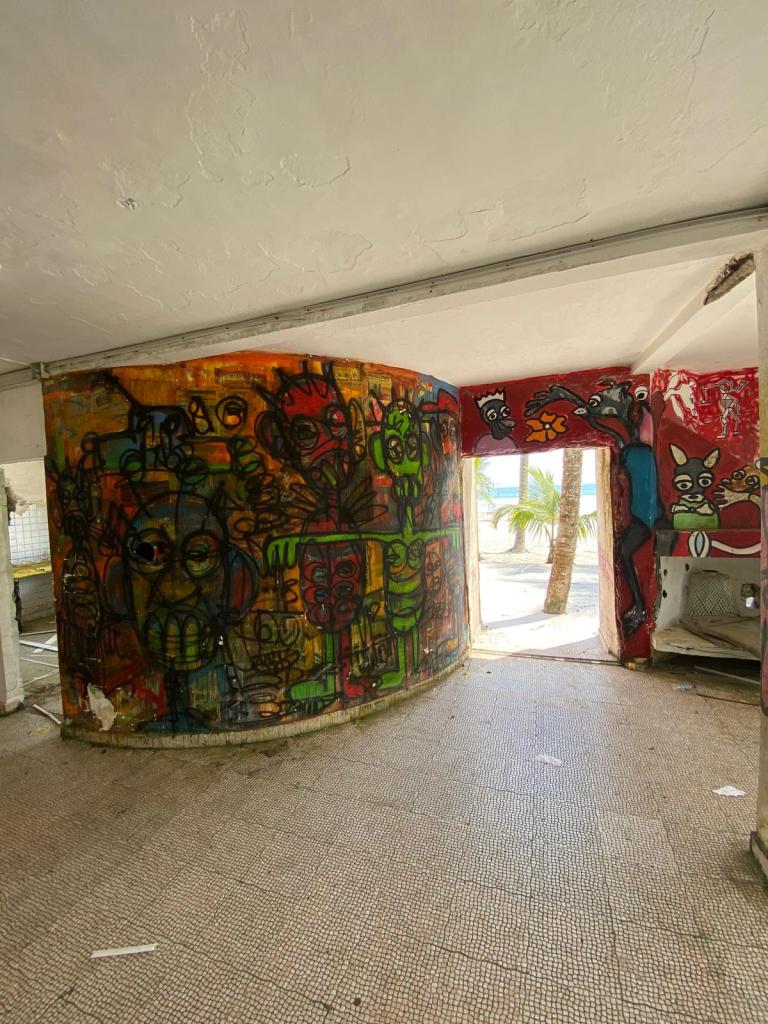
He calls it “nouchi,” borrowing from the urban slang of Abidjan. Its origins lie in the streets, where children once drew their aspirations on concrete walls — doctors, soldiers, imagined futures. Aboudia watched for years before translating those drawings into paint. Today, through his foundation, he returns to the same children, insisting that art is not only an aesthetic practice, but a gesture of transmission.
In conversation with DakArtNews, he reflects on identity, influence and the responsibility of giving back.
Your visual language, which you call “nouchi,” has evolved since your early works, where we saw collages, masks, and superimpositions. How would you define it today?
Today, I speak more about integrated painting: structure, collage, material. But for me, painting has no fixed identity. It is global. It is multicultural. It has no borders. It is a portal, a window. Several cultures meet and open a passage into the world of the other.
In the art world, people speak of “contemporary African art.” Is that a way of ghettoizing artists?
No. Being reminded that you come from Africa is not an insult. I come from Africa. That’s a fact. Everyone has the right to identify someone by their origin. It doesn’t bother me if people say “African artist.” I come from there. And I go forward to defend my culture, to show my culture, to exhibit it. I am an African artist, a contemporary artist, a global artist.
You are often compared to Jean-Michel Basquiat.
When I started painting, I didn’t even know who Basquiat was. My style comes from elsewhere. It comes from the street. It comes from children who draw their dreams on the walls. Children who portrayed themselves as doctors or in other professions. Many people look at those walls without seeing them. I looked. For years. I spent ten years observing, sketching, searching. People think it came suddenly. No. It was research work. I invented nothing. I took what the children were drawing and placed it onto canvas. That is why today I give back to them through my Foundation.
How do these children continue to inspire you?
The drawings on those walls continue to inspire me in a positive way. The drawings they made before are not the same as the ones they make today. So I continue to draw inspiration from that. I keep the same perspective, but every time we work, we must move forward and improve what we do.
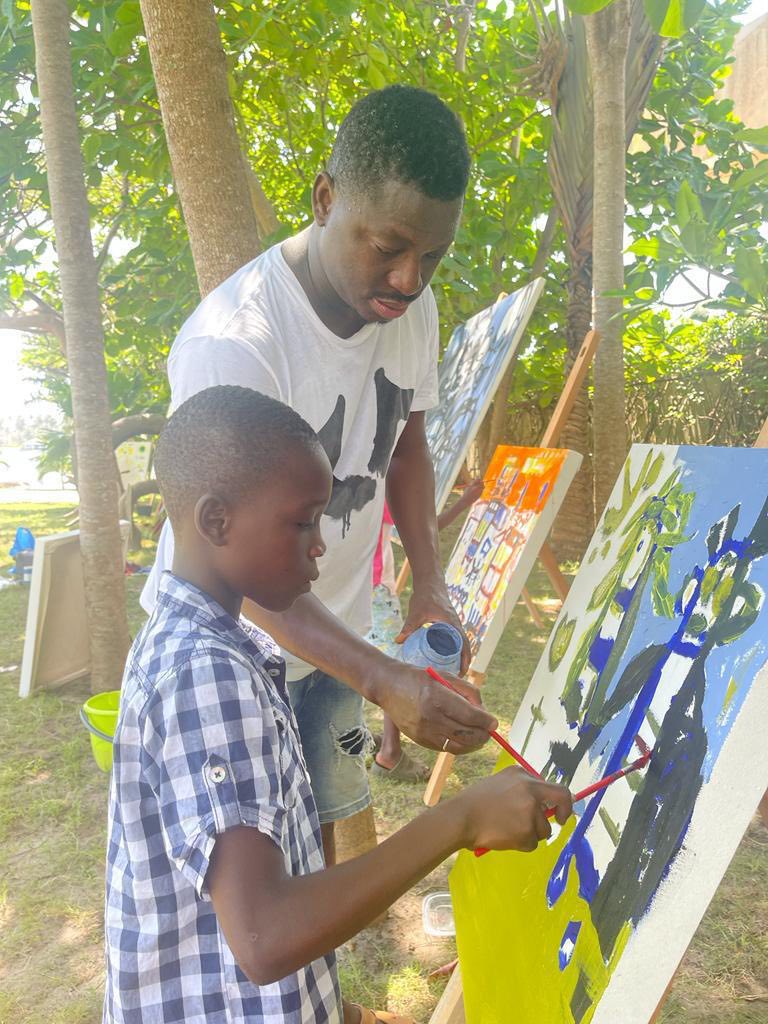
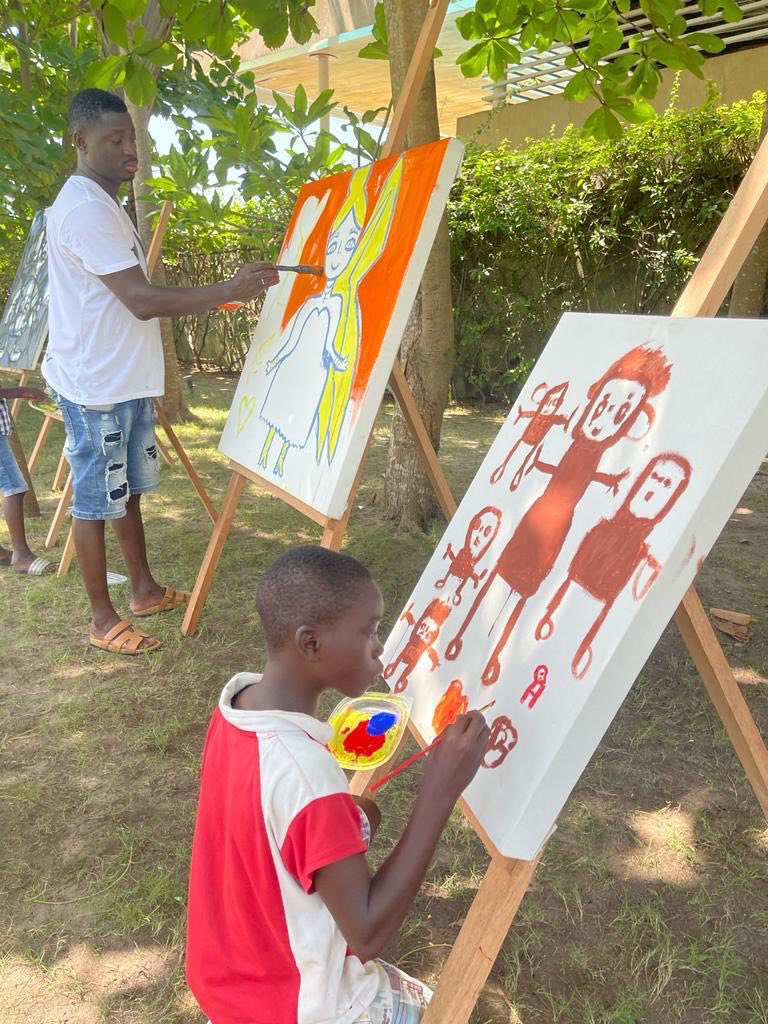
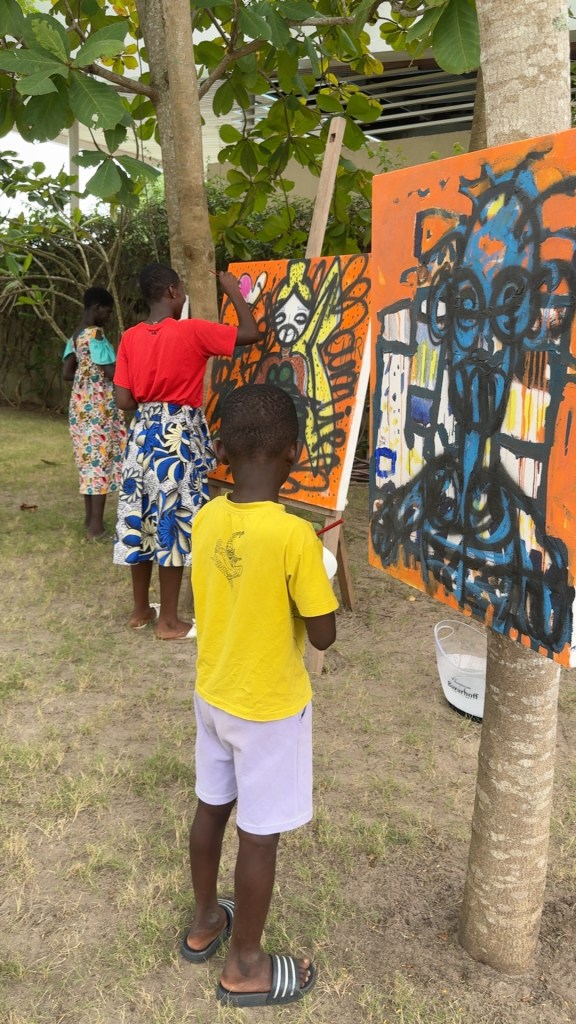
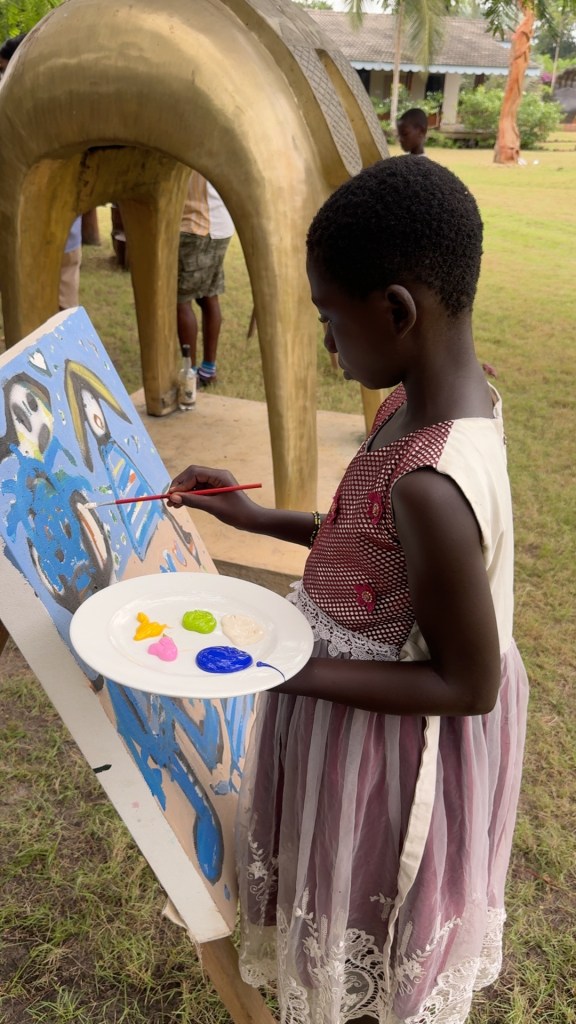
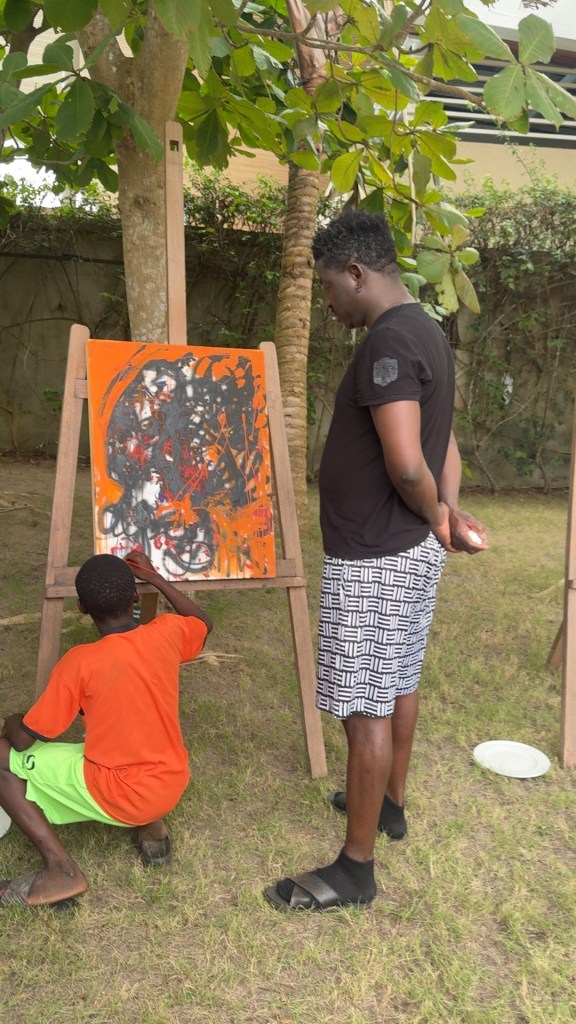
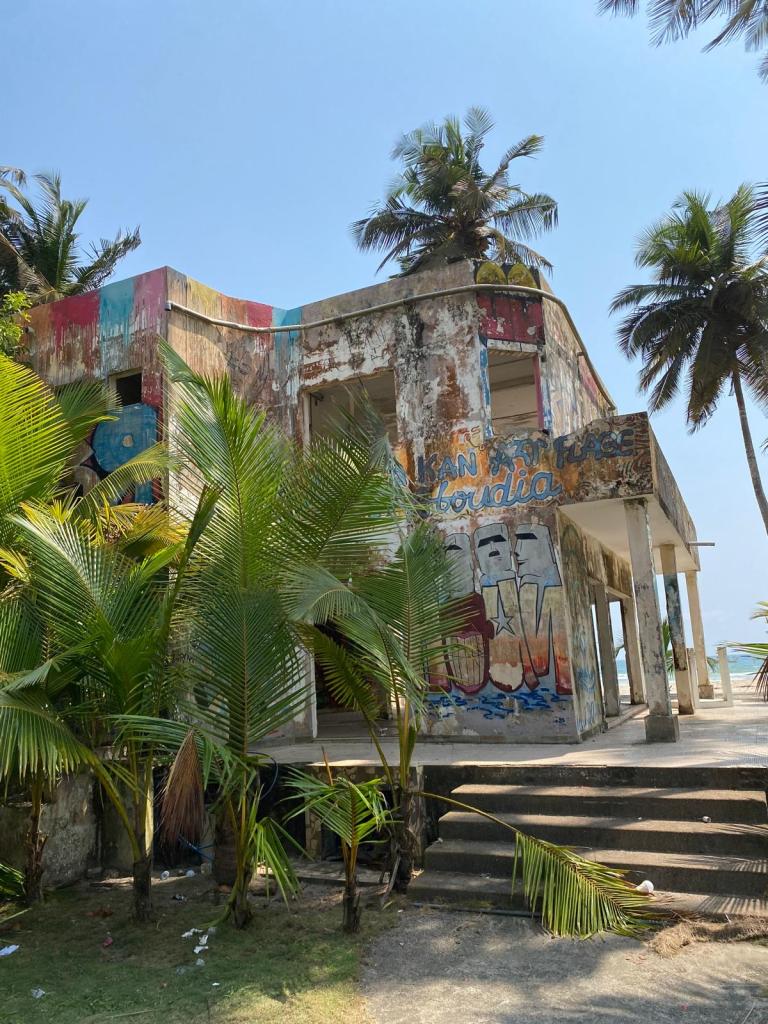
Speaking of transmission, through your foundation, in partnership with the École du Beau in Assinie, you regularly organize workshops for children. Are you trying to transmit a profession or a sensitivity to art?
We have the duty to transmit, but not the duty to decide for those to whom we transmit. We give. After that, each person does what they want with it: a profession, a hobby, a passion. When we train street children, we hope to give them a profession. But can we decide for them? No. We organize workshops with painters, sculptors, graffiti artists. The children come, paint, experiment. We guide them, but we don’t force them. Some return every year, others don’t. It’s their freedom. The only thing you cannot take away from someone is their freedom.
How do the children respond to these workshops?
They’re happy. They don’t even want to go back home. There is a freedom of expression there that is real.
Has the Ivorian society’s perception of the artist’s profession changed?
Art has always been a profession. But do we want our child to become an artist? That’s the real question.
When you want to become a painter, people say you’ve failed. Yet Africa is one of the oldest continents in the field of art. Art was born in Africa. But today, with certain painters who have managed to make a living from their work, perceptions are evolving. People understand that it is a real profession. A good profession.
Do you feel you were born an artist, or did you become one?
I was born for this. Since I was very young, I drew everywhere. At school, I scribbled in my notebooks. When a lesson had to be illustrated on the blackboard, I was the one they called. If we wrote “banana,” I had to draw the banana. The teachers knew there was something there. It wasn’t a conscious decision. It imposed itself.
In Abengourou (210 km away from Abidjan), I passed every day in front of the Regional Conservatory of Arts and Crafts on my way to school. I would always stop at the window. Sometimes I stayed all day watching the students draw, paint, work. I could spend an entire day just observing. In the evening, I would go back home. I already knew that was it. There was no doubt.
I can’t explain how you know. You just know. I think I was already painting in my mother’s womb with her intestines.
You are now internationally recognized and present at major art fairs. How do you manage success?
There’s nothing to manage. When you work, you hope something positive will come. If it comes, it comes. There’s no need to control. Trees grow without being controlled. The wind blows without being directed. I work. The rest follows.
And if you hadn’t become an artist, what would you have been?
An artist.
 Bridging Africa and The World Through Contemporary Art
Leave a comment