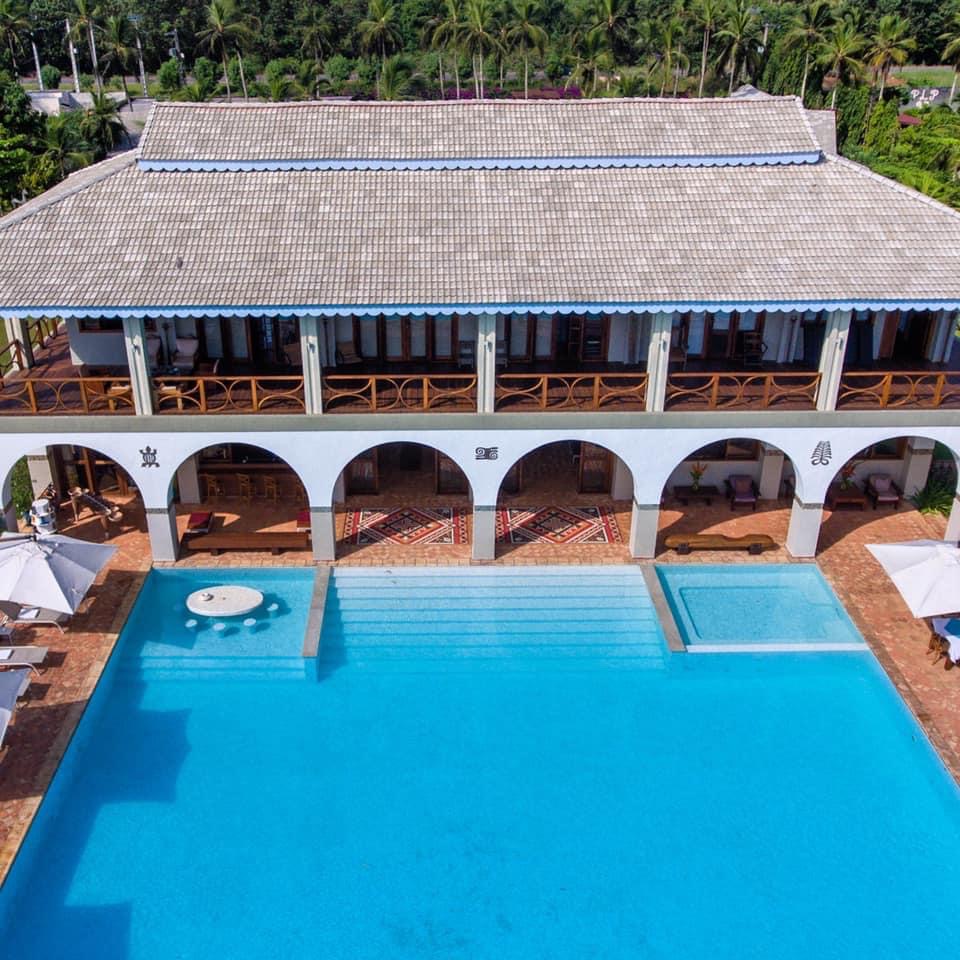

About 80 kilometers east of Abidjan,Ivory Coast, along the Atlantic coastline, Assinie has long been known as a seaside retreat. But beyond its beaches and resorts, a different kind of landscape is quietly taking shape. For DakArtNews, this visit reveals a space where art extends far beyond exhibition.
At Maison d’Akoula, monumental sculptures rise among tropical gardens, murals unfold on weathered walls, and artistic gestures seep into everyday life. Conceived by French entrepreneur and art patron Renaud Chauvin-Buthaud and his wife, Jocelyne Akoula Amon, the initiative moves beyond the codes of hospitality to become a living ecosystem — where art, space and transmission intersect.
From open-air installations to experimental sites by the sea, Akoula redefines how art can be encountered: not as an object to contemplate, but as an experience to inhabit.
It appears almost without warning, emerging between two trees, resting on a lawn bathed in light. Standing over three metres tall, the elongated silhouette stretches skyward. The body, reduced to essential volumes, is supported by four long, almost animal-like cylindrical legs that give it an uncanny stability. The smooth, rounded torso captures the light, while the oversized head dominates the composition. The stylised face features a prominent nose, half-closed eyes, and a monumental headdress that hovers between mask and architecture.
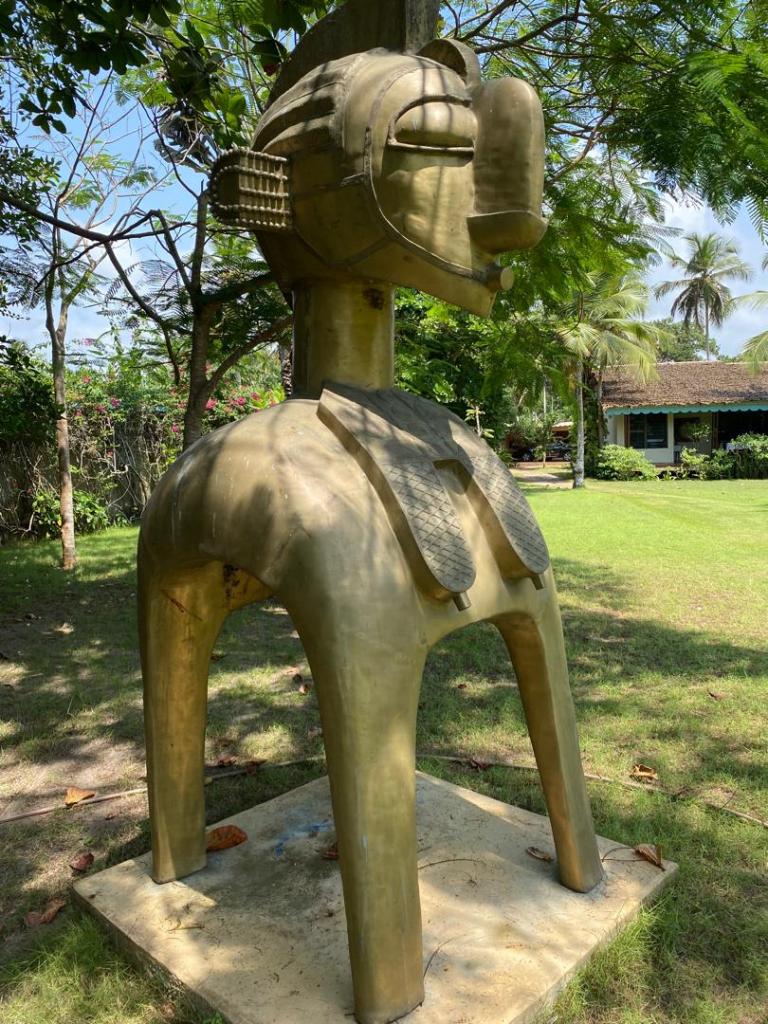
Sculpted by Burkinabè artist Salif Dermé, this bronze Nimba — the goddess of fertility — feels both ancient and strikingly contemporary, suspended between memory and invention.
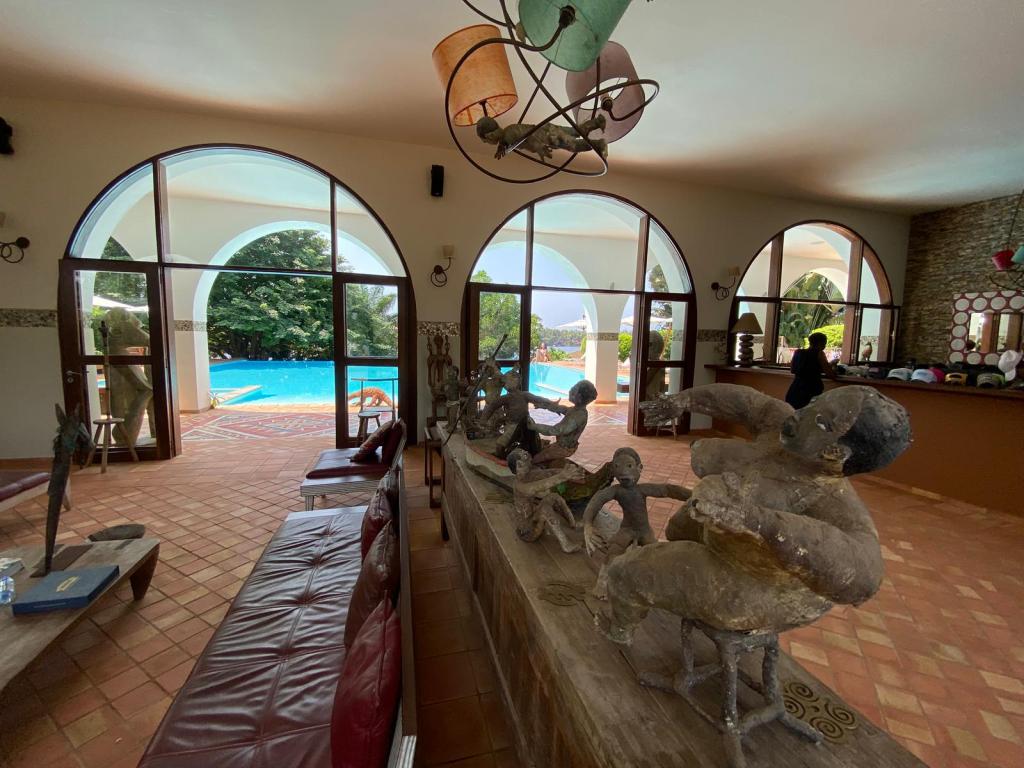
Further on, beneath the thick branches of a pagoda fig tree, the scale shifts. Small, discreet silhouettes emerge, almost hidden among the foliage. These tiny human figures, fragments of bodies, and hybrid forms — created from recycled materials by Ivorian artist Ballo — seem to literally inhabit the tree.
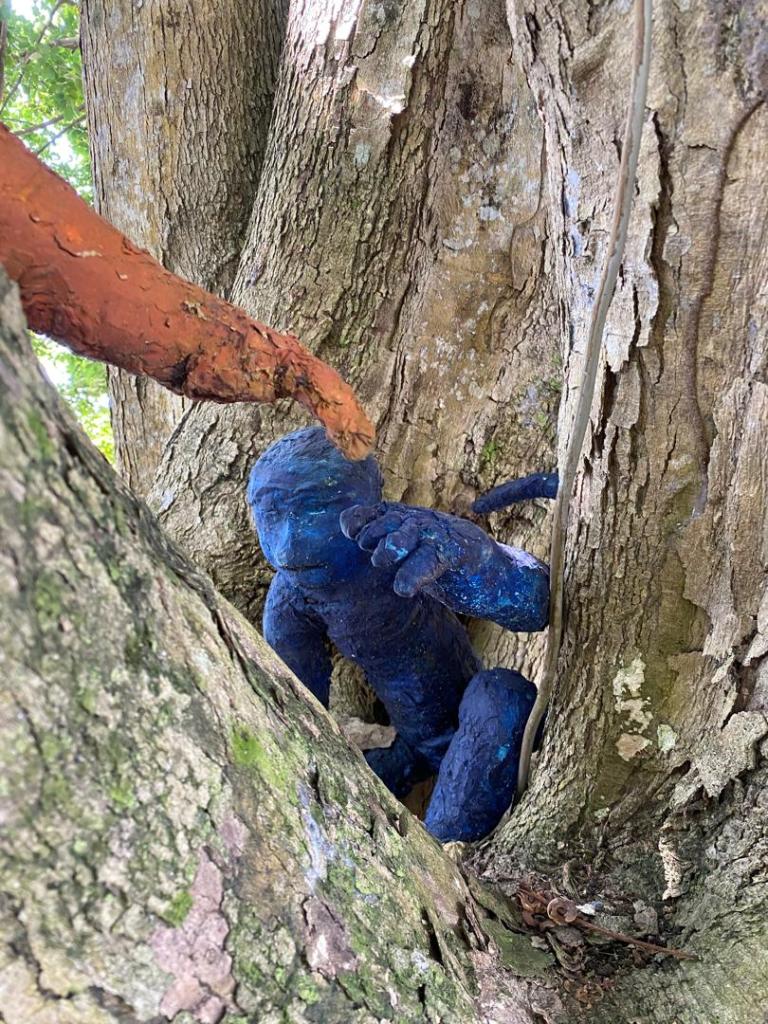
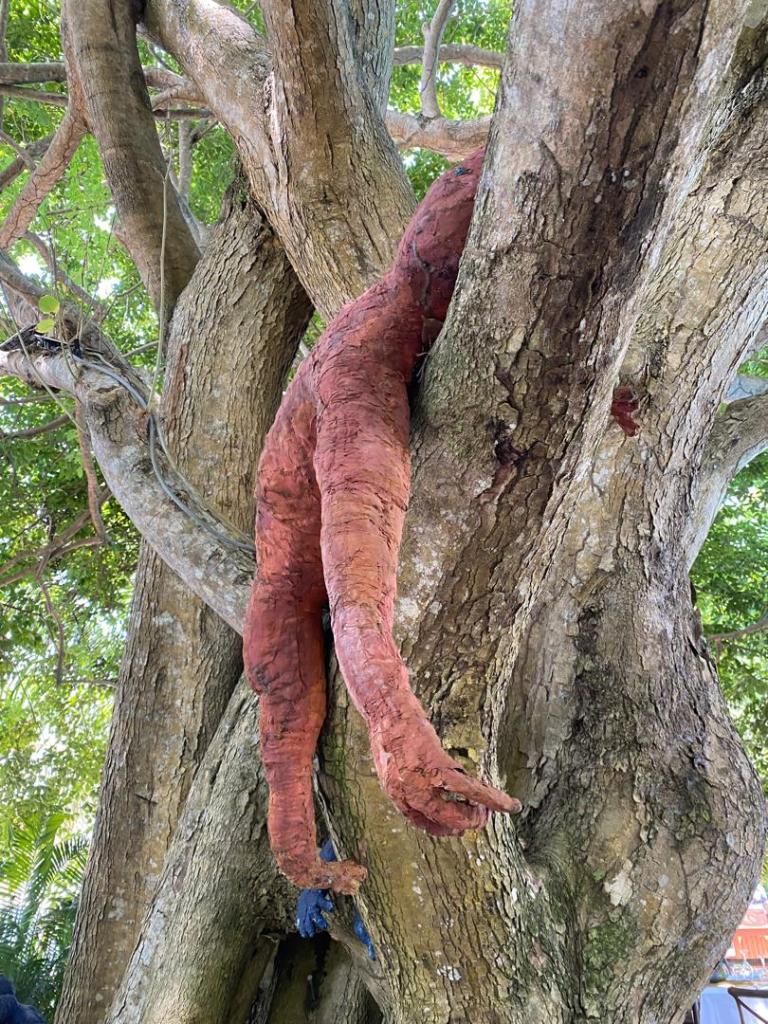
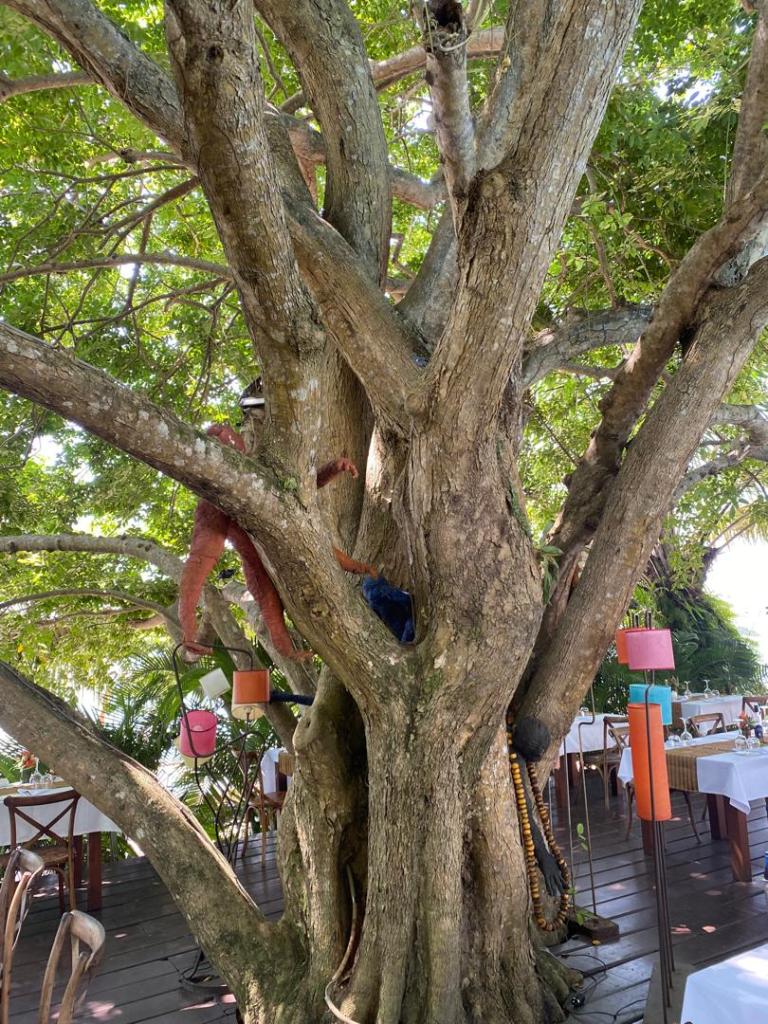
Some cling to the trunk, others slip between the branches, as if they had always belonged there. One must look up, draw closer, and search. The work does not reveal itself immediately; it unfolds gradually. Under this tree, visitors lunch, sip drinks, and gaze at the lagoon. A few metres away, the swimming pool offers a cool refuge from the humid heat.
“Beauty must be available to everyone”
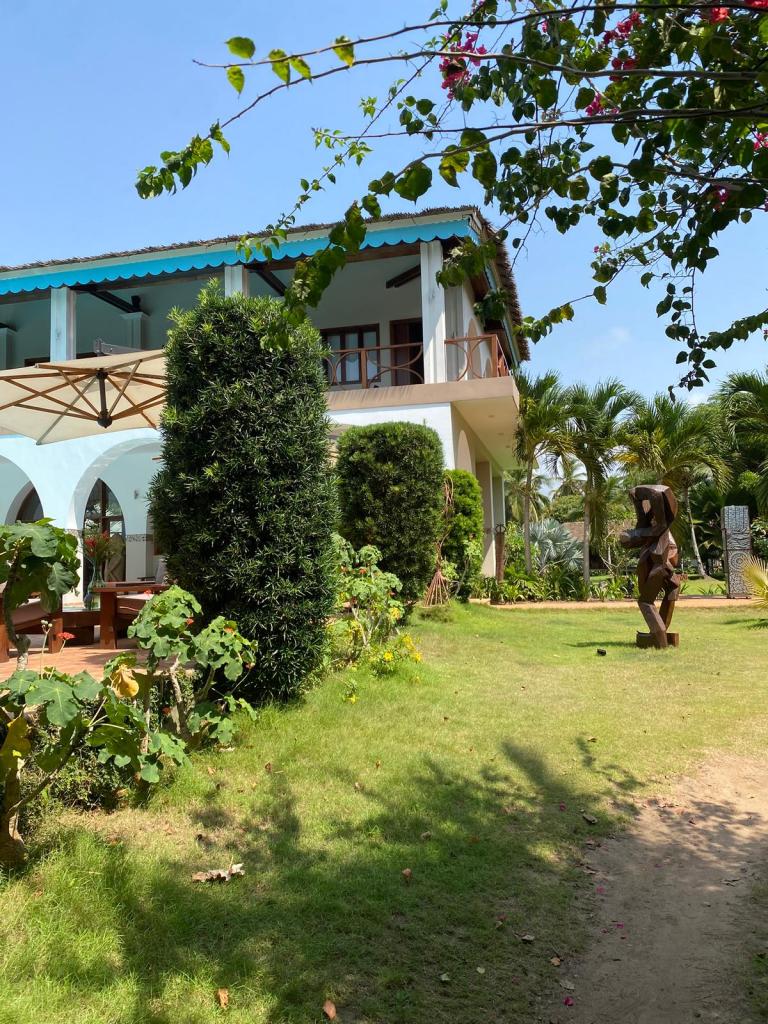
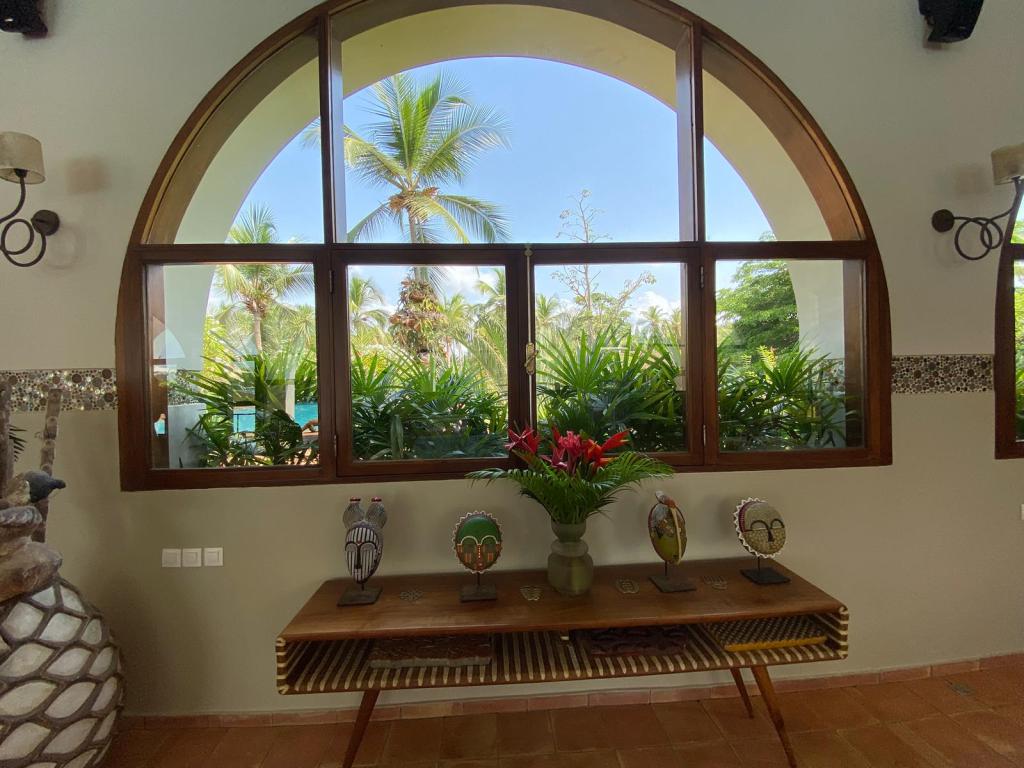
So far, the eye has wandered on the landward side, through the palace grounds, among monumental sculptures and subtle presences. It is on the other side, facing the sea, that the experience truly begins.
This is one of the different sites that make up the Akoula universe: the place where Renaud Chauvin-Buthaud and his wife, Jocelyne Akoula Amon, have chosen to live.
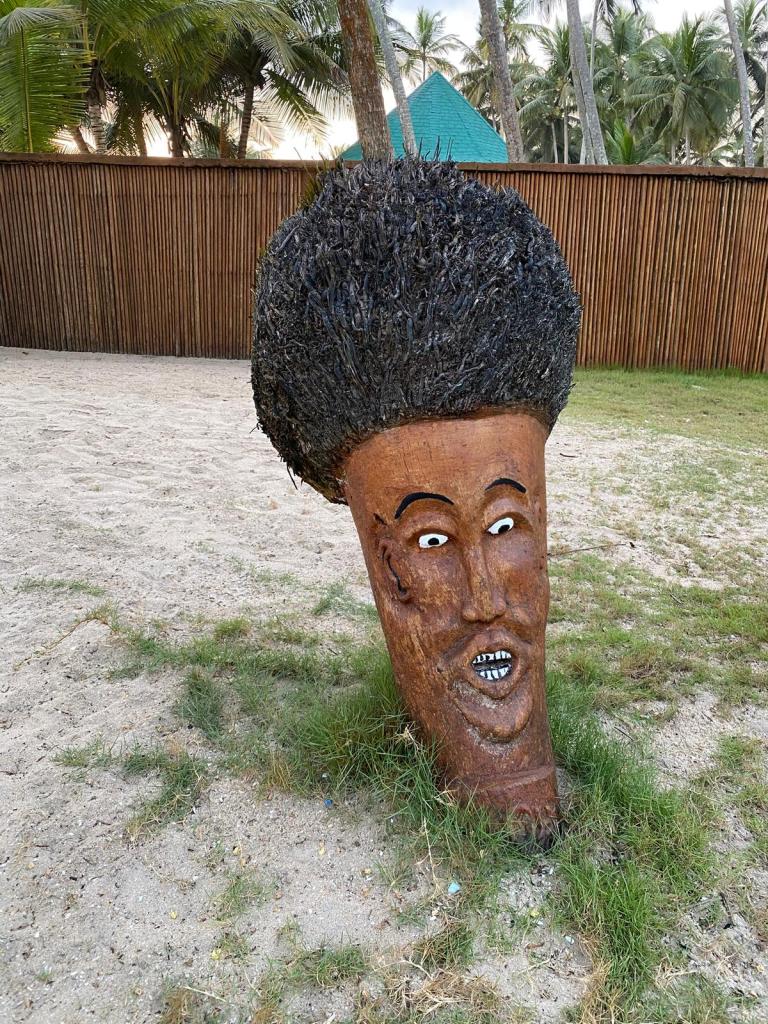
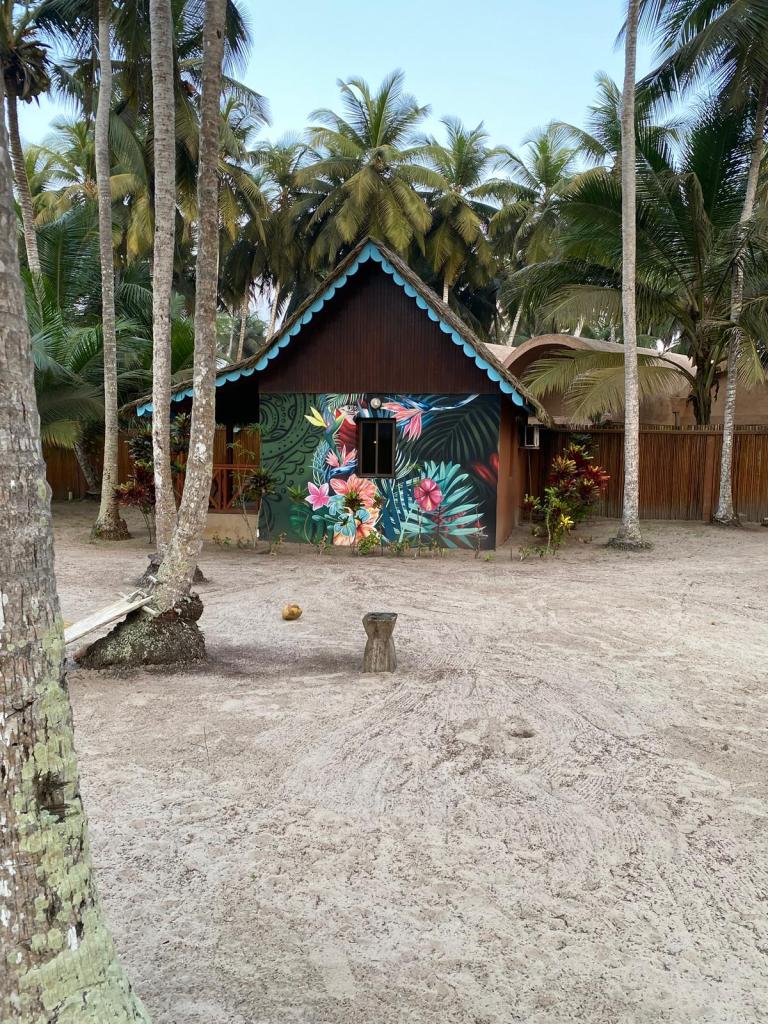
Named La Cocoteraie (Coconut grove), this space extends the Akoula universe while redefining its contours. Nestled among coconut palms, six suites have been created for guests seeking retreat, silence, and intimacy.
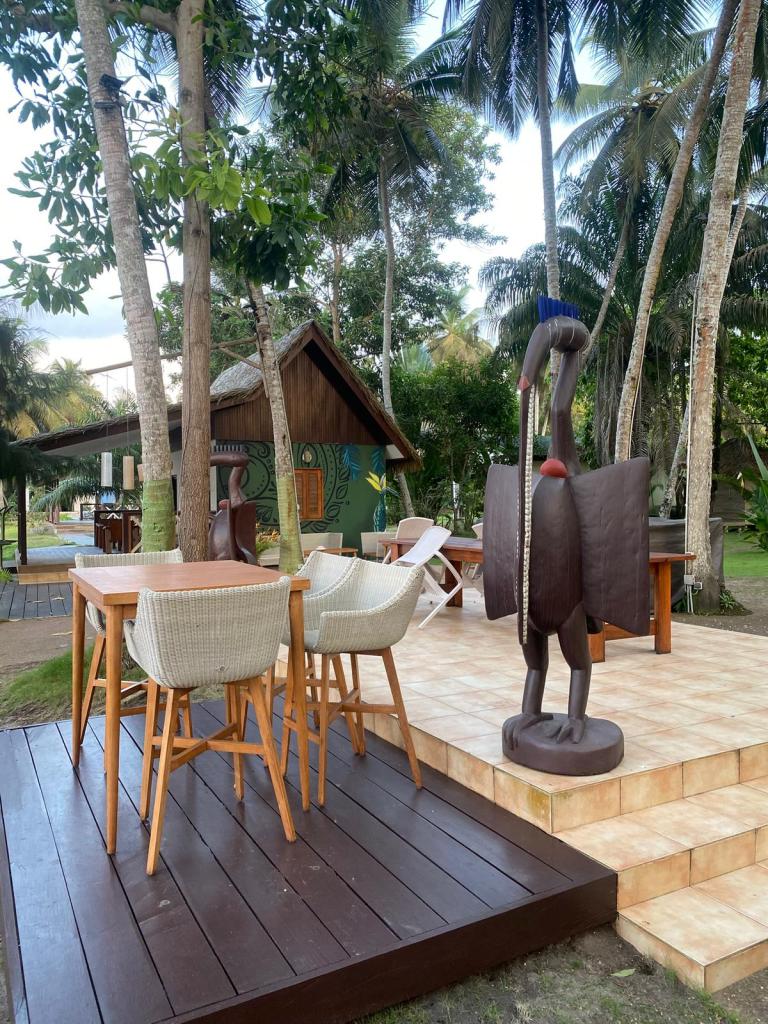
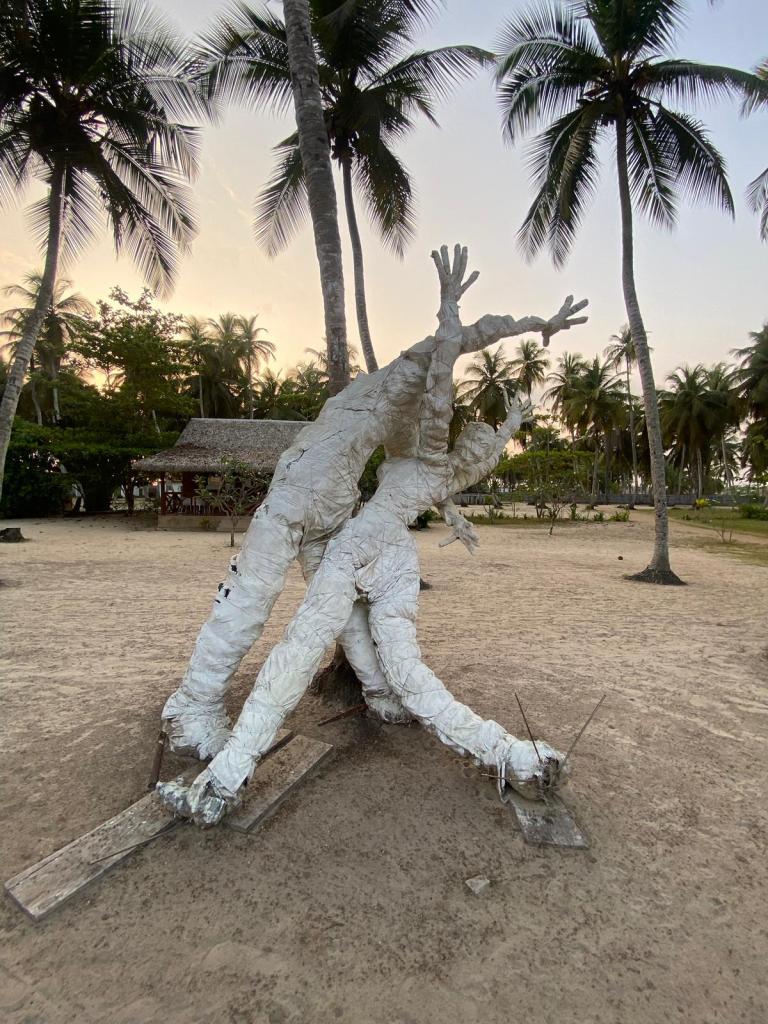
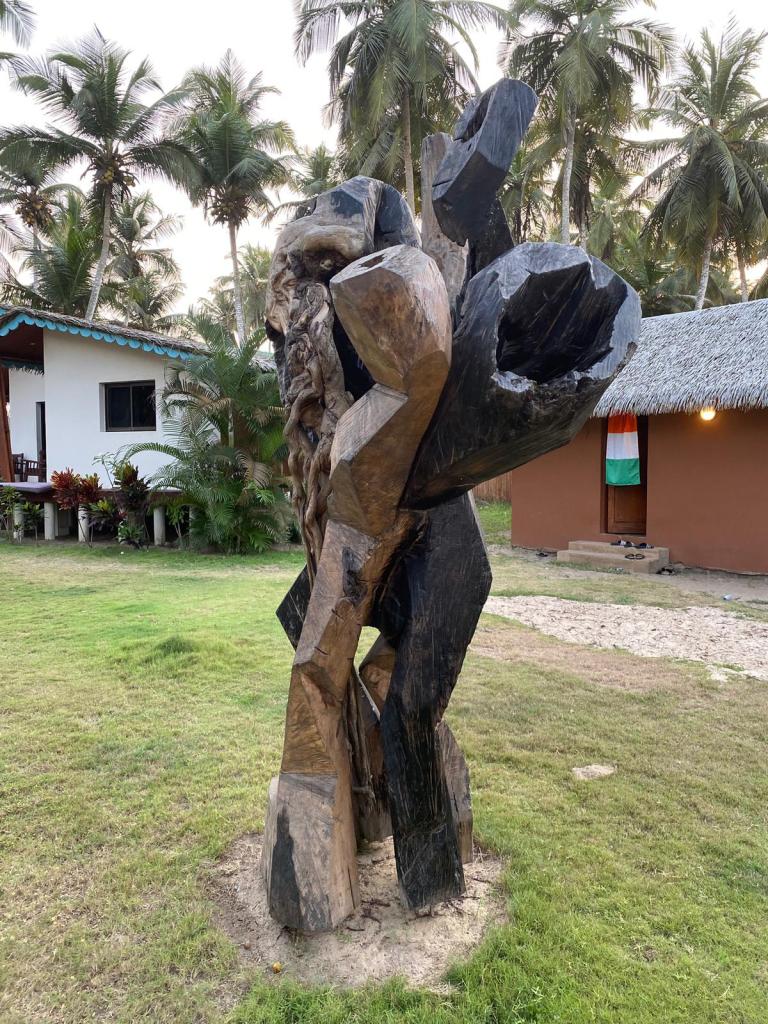
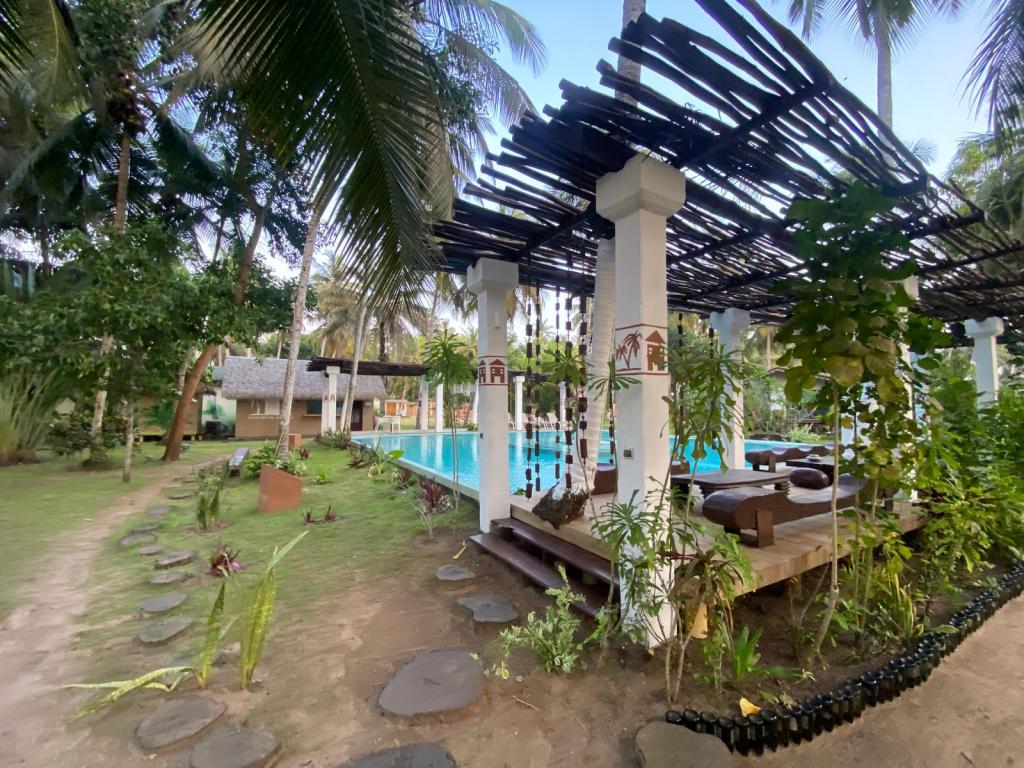
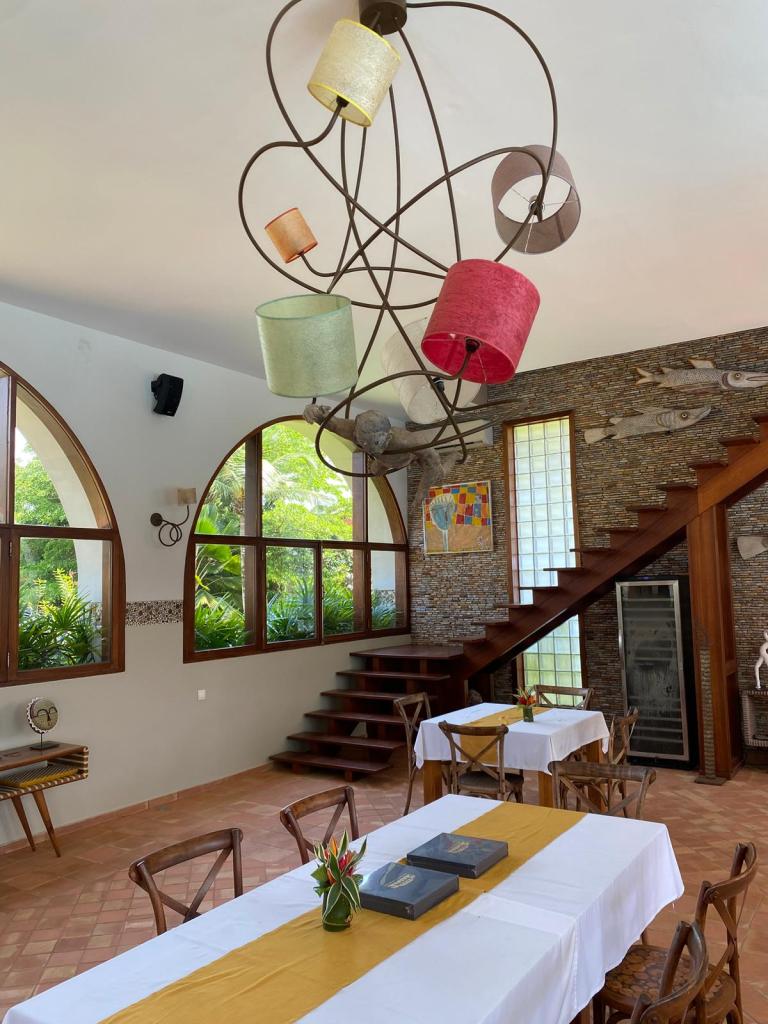
In shorts, shirtless, seated facing the ocean, Renaud Chauvin-Buthaud speaks of the hotel as something self-evident. La Maison d’Akoula, he explains, was never conceived as a mere hotel. From the beginning, the project slipped elsewhere. “We turned it into something of an open-air museum,” he says. The idea was never to impose a framework. There are no marked paths, no explanatory labels, no symbolic threshold to cross. The place remains open, traversable, freely appropriated. “Beauty must be available to everyone, ” he adds.
This openness has quickly shaped the site’s identity. Today, the vast majority of visitors do not come to stay. They come to see, to walk, to observe. “98% of the people who come here are not guests,” he notes. They stroll as if in a public park, take photos, pause before a work, and leave.
This free and unpredictable flow has transformed the place as much as it has tested it. The intimacy sought by some paying guests has sometimes clashed with this total openness. From that tension arose an extension of the project, with other spaces designed to welcome visitors differently — without abandoning the original spirit. Yet at the heart of this evolution, one constant remains: the relationship to beauty.
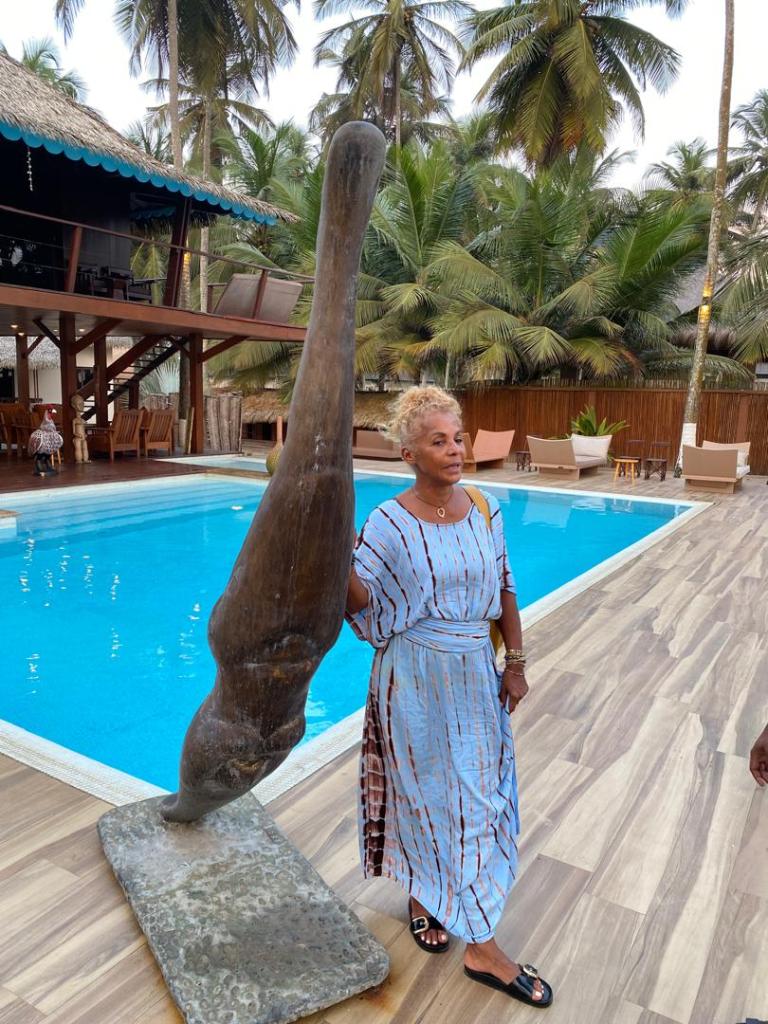
For him, it is neither a concept nor a discourse, but a way of being in the world. “Everything is beautiful,” he affirms. Nature, bodies, gestures. The artist’s role is not to create beauty, but to reveal it, to transmit it. “Art is a tool for transmission,” he adds.
Still, the economic dimension is never entirely absent. Renaud Chauvin-Buthaud acknowledges it frankly: “If there is one thing I know how to do, it’s business.” A former industrialist, he claims this skill while keeping it at arm’s length when it comes to art. “I do everything except business with art,” he insists. It is a tightrope he willingly walks: using the resources of the economic world to support, accompany, and nurture creation — without reducing it to a commercial logic.
Transmission as a Philosophy
This idea of transmission does not stop at the artworks or the encounters it provokes. It extends into another, more discreet but essential dimension of the project.
Through the École du Beau (School of Beauty), the couple is developing a training space where art becomes a tool for learning how to see. The project relies on collaborations with several artists, including ivorian best-selling artist Aboudia, whom he has supported from his early days and with whom he has built an almost filial relationship over the years.
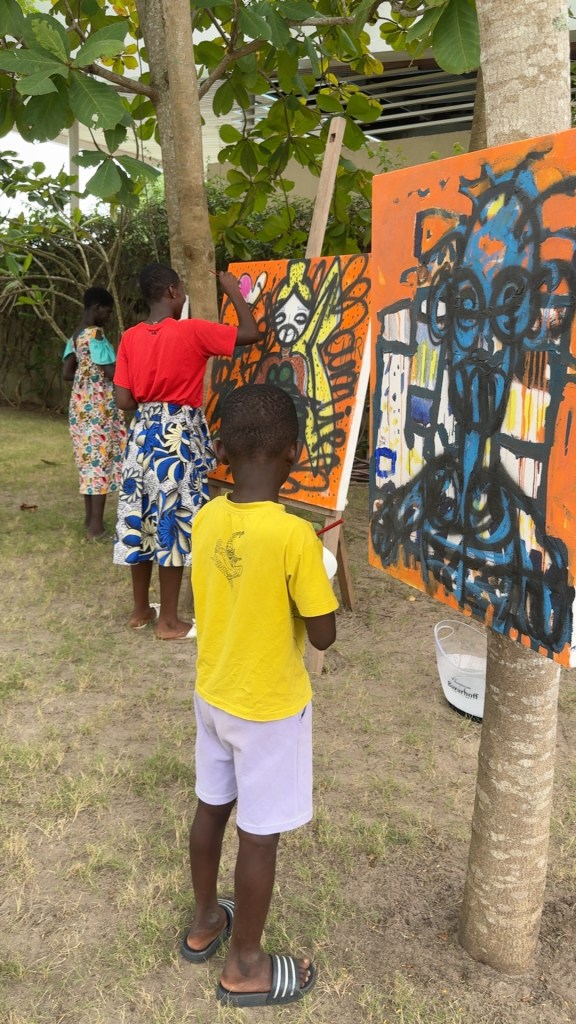
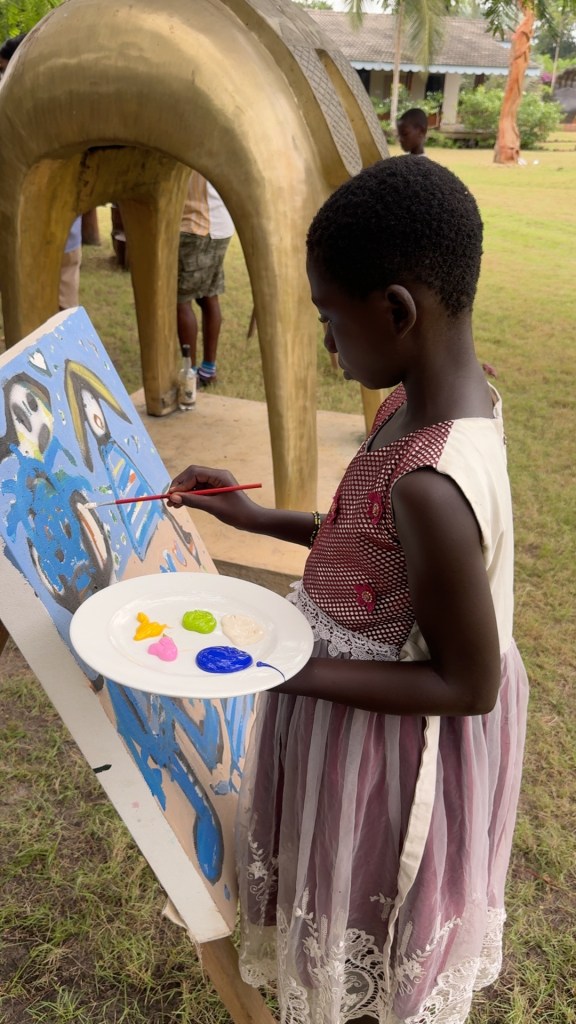
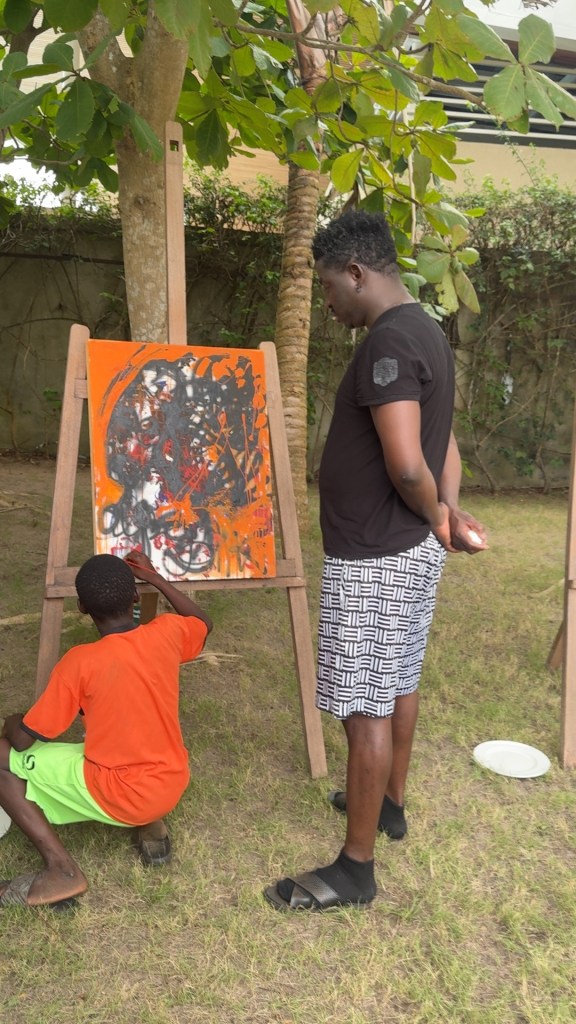
Workshops, exchanges, initiations: the aim is not to train artists in the academic sense, but to transmit a sensitivity — a way of relating to forms, colours, and materials. Alongside this artistic approach, the space also serves as a training ground for hospitality professions, extending the logic of transmission into everyday practices. “Art is a tool for transmission,” he repeats. At Akoula, this phrase takes on a very concrete dimension.
Art Plage: Raw and Open
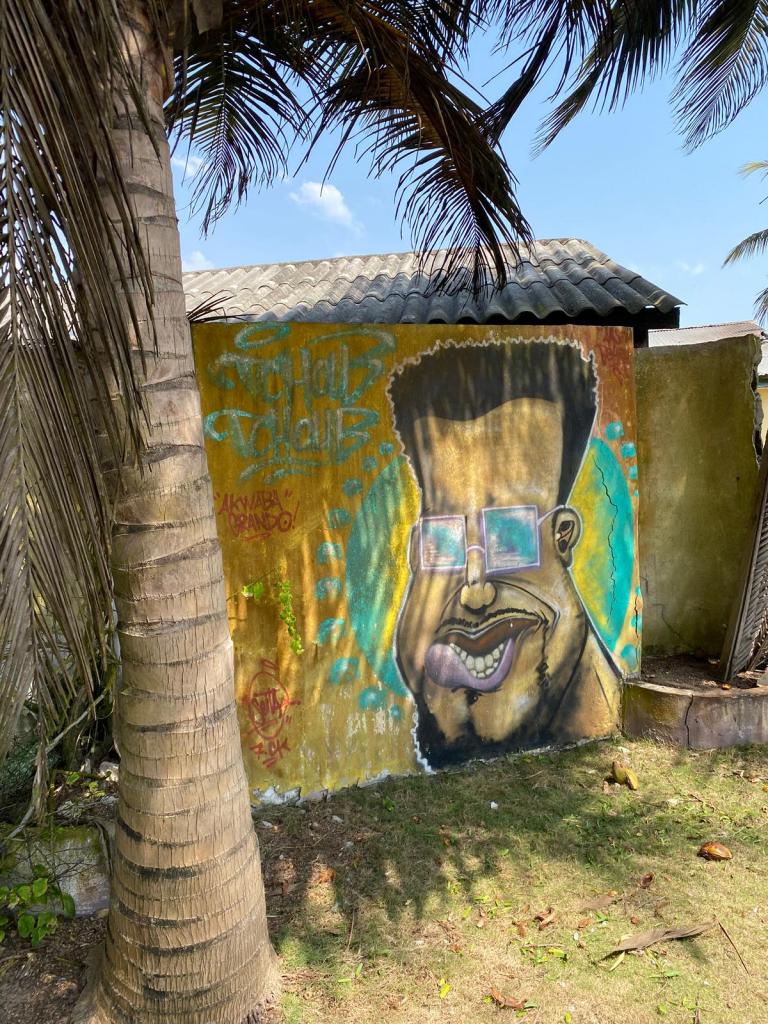
This deployment of art in outdoor spaces is also expressed through initiatives such as Art Plage, which extends the artistic experience to the shoreline. Here, the atmosphere changes once more. The setting is rawer, more open, almost like a permanent construction site. Located by the sea, away from the more structured areas of the palace, Art Plage features walls covered in layered, overlapping, and evolving graffiti.
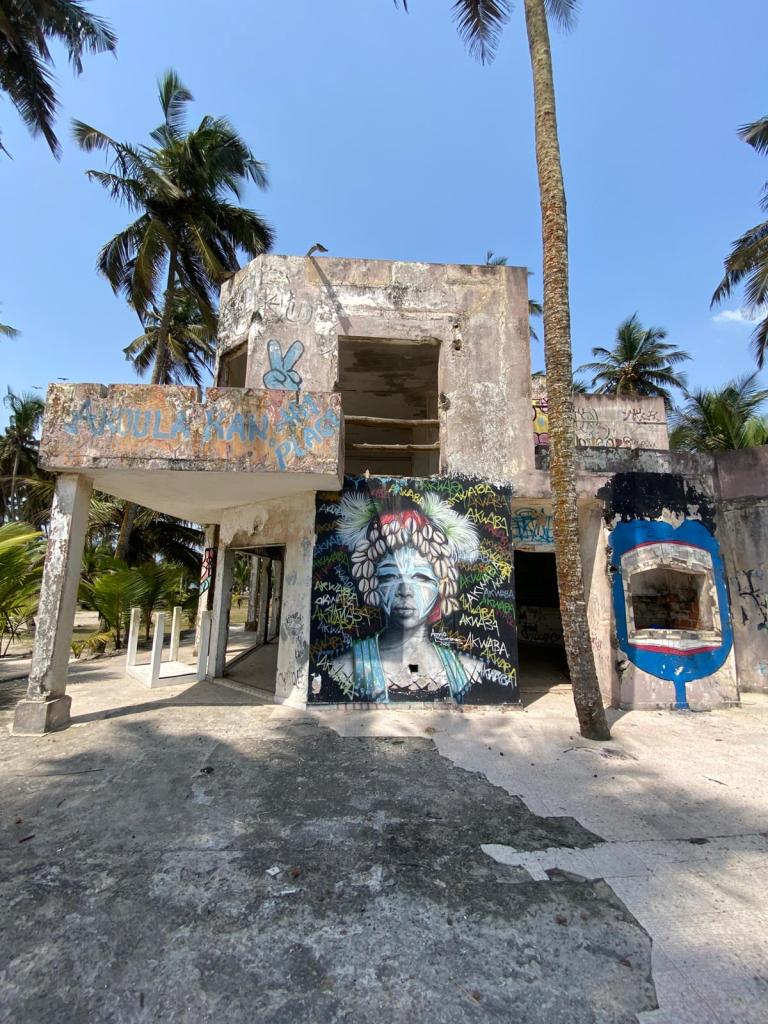
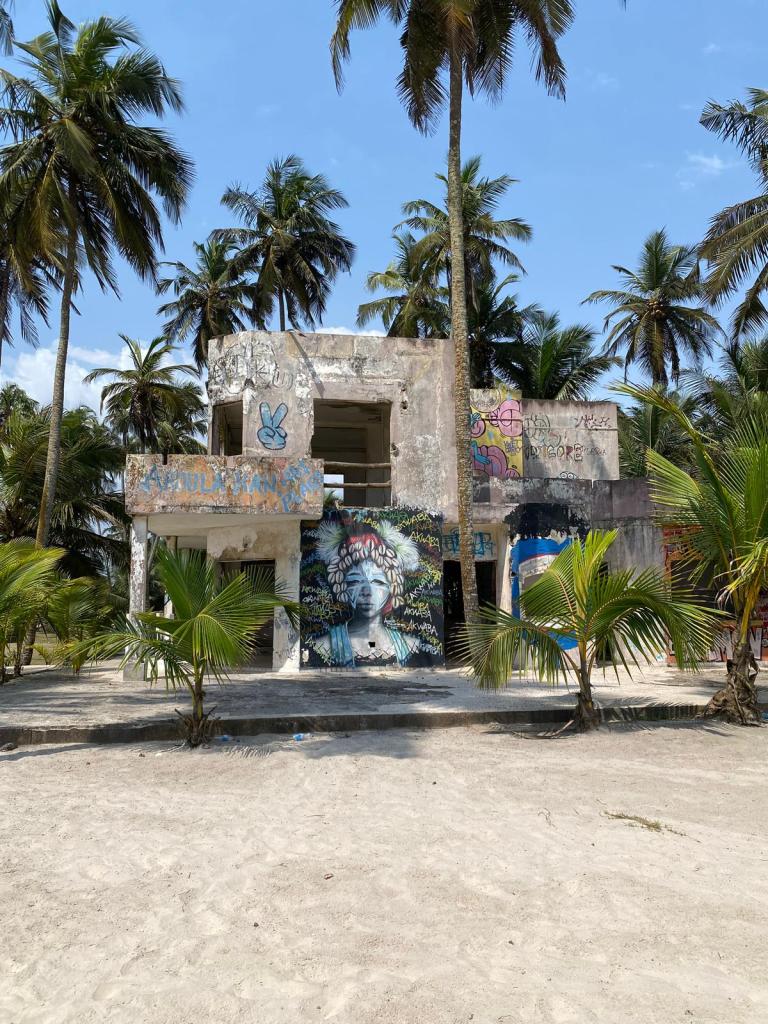
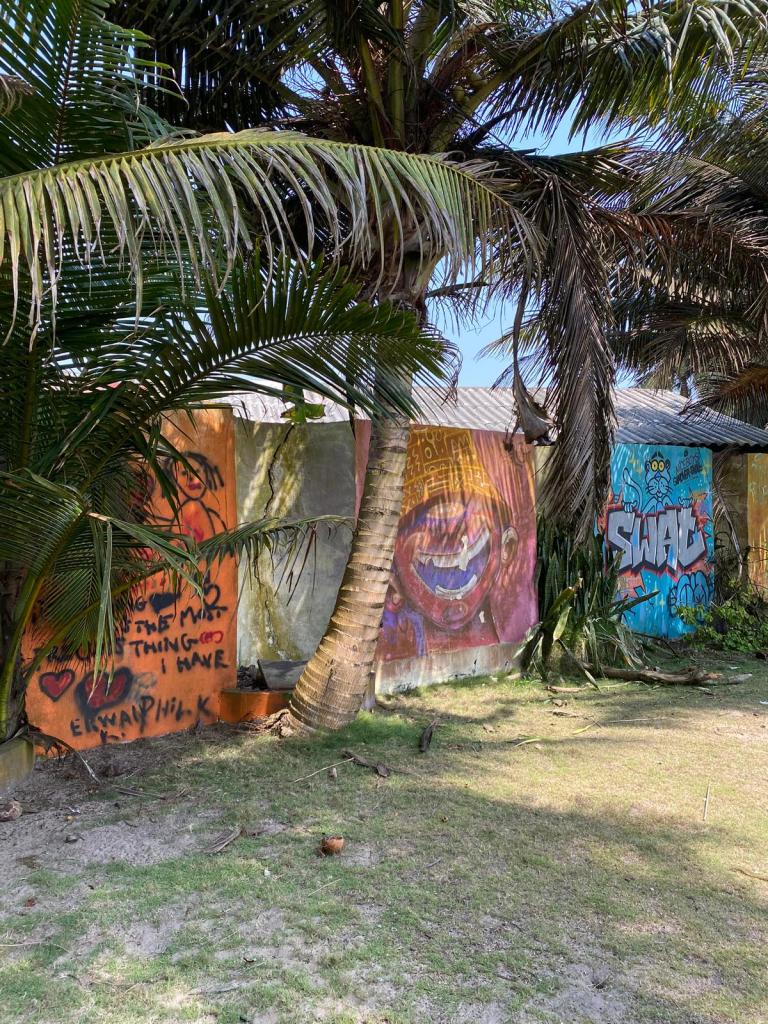
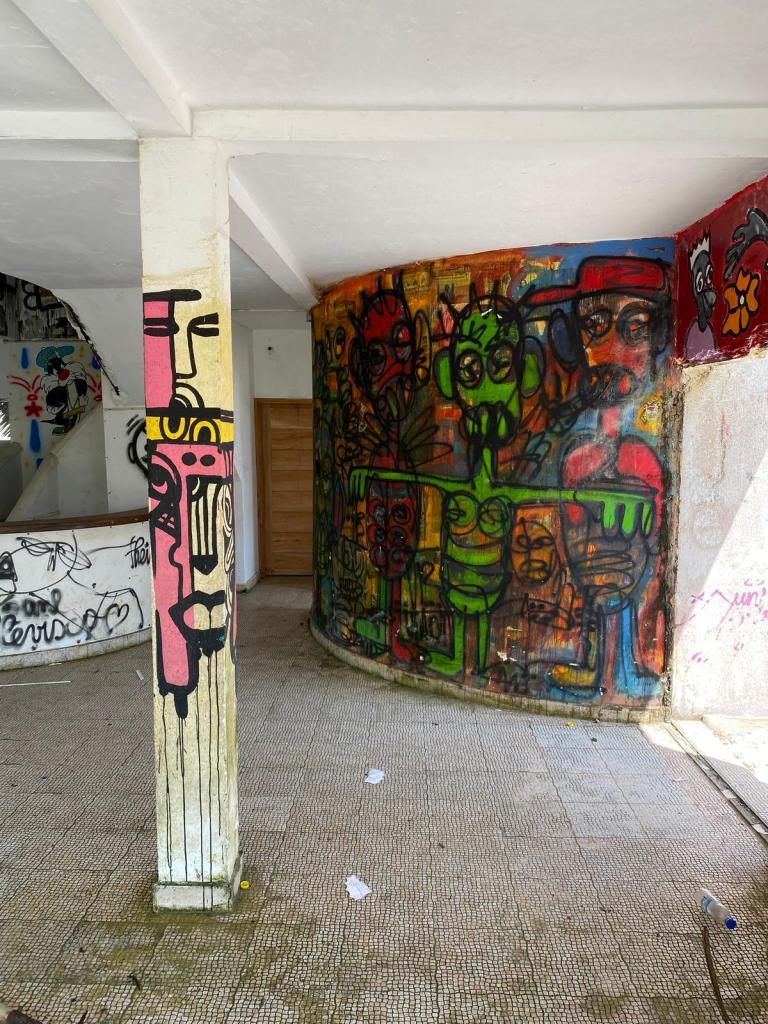
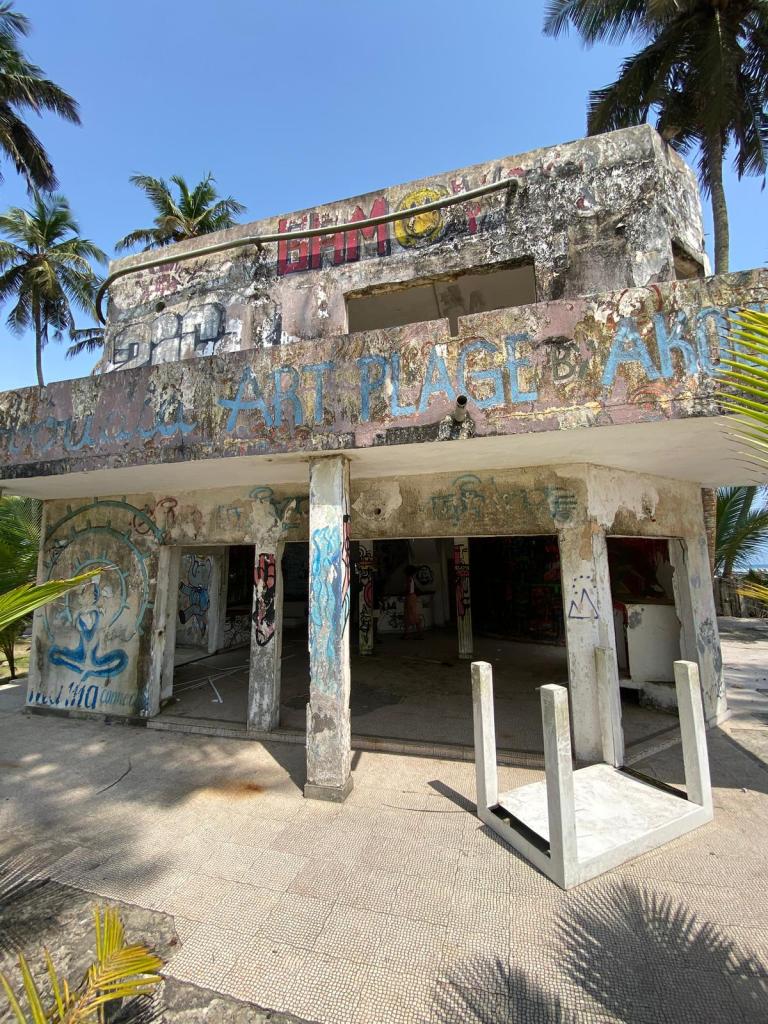
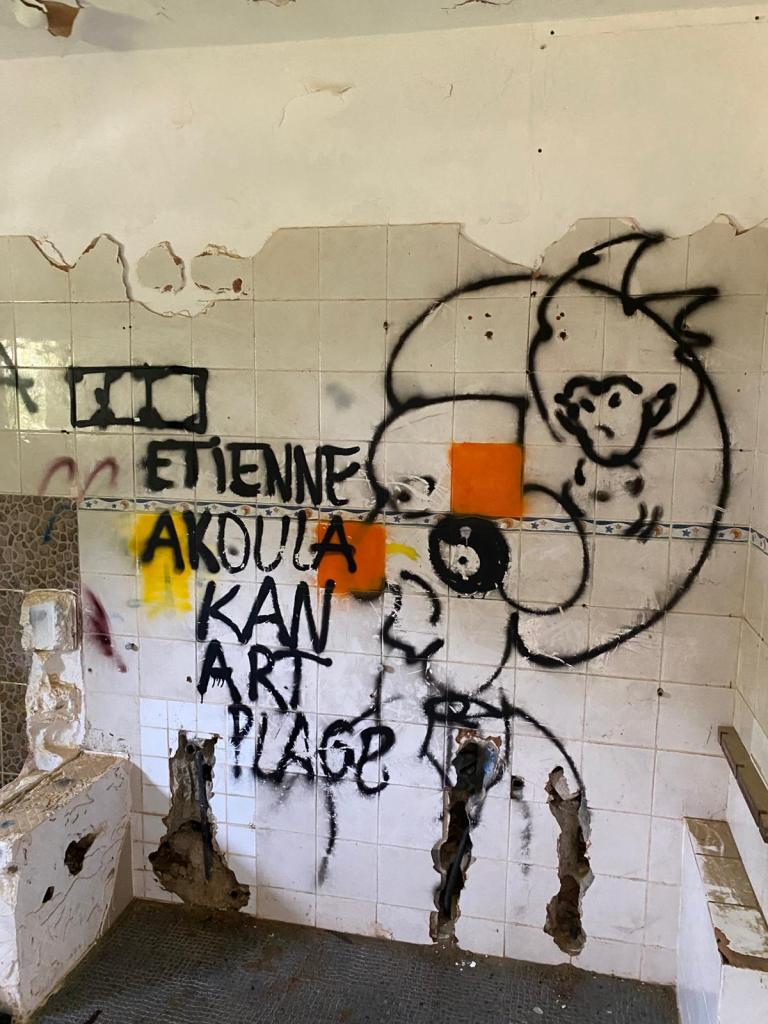
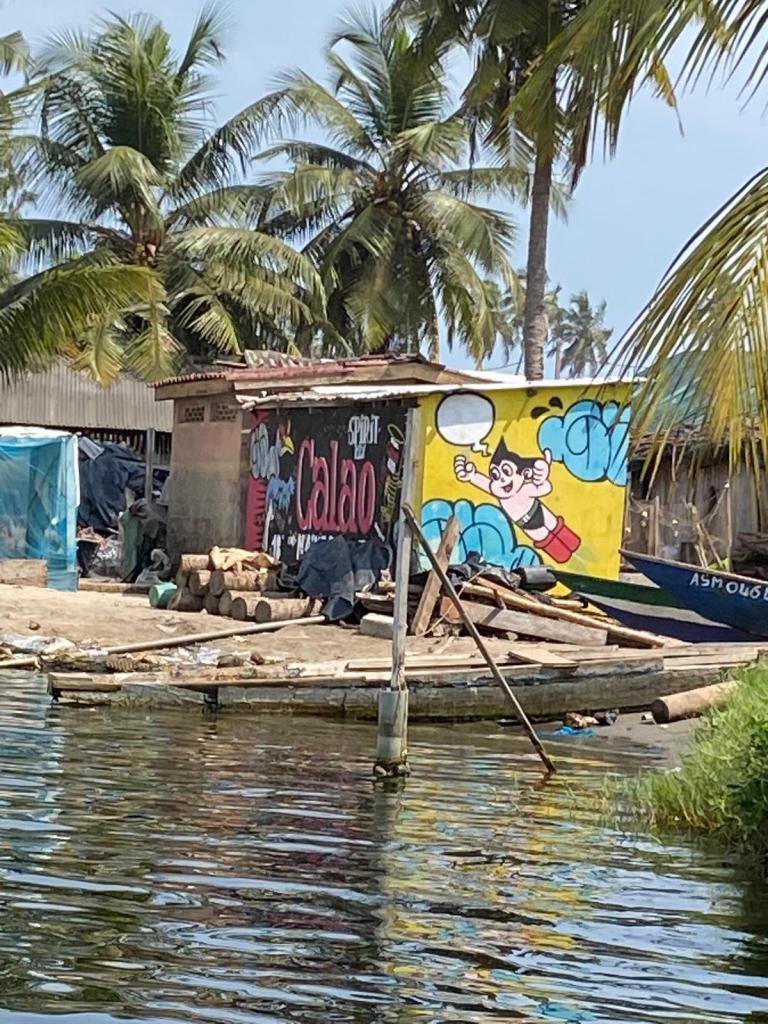
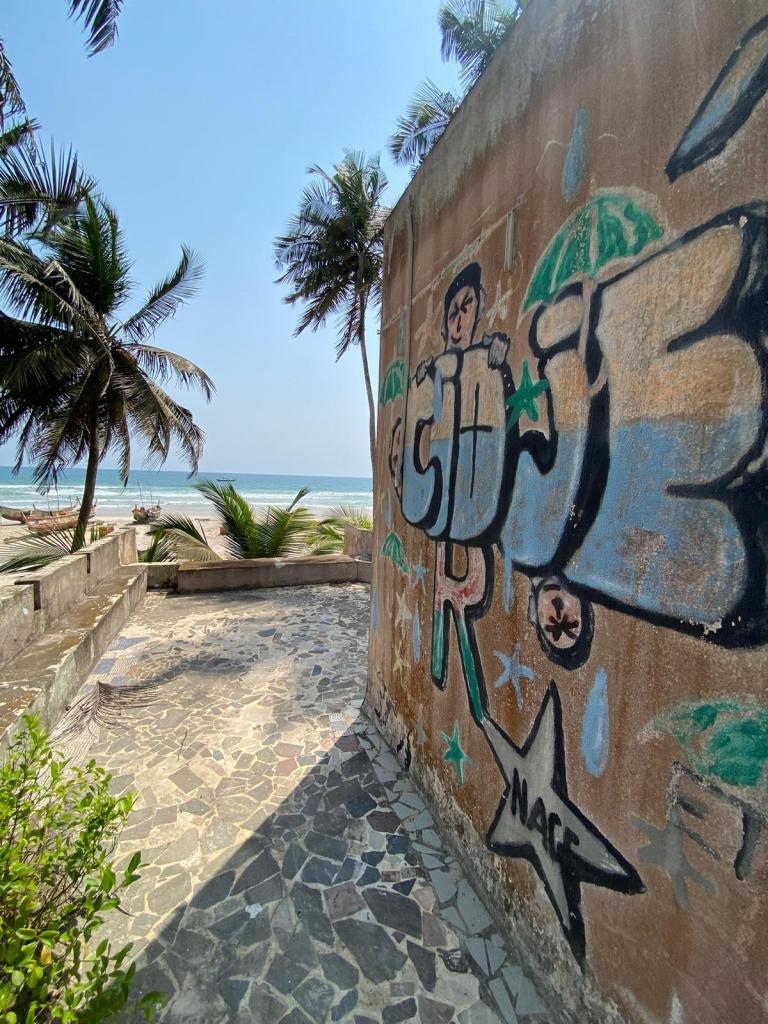
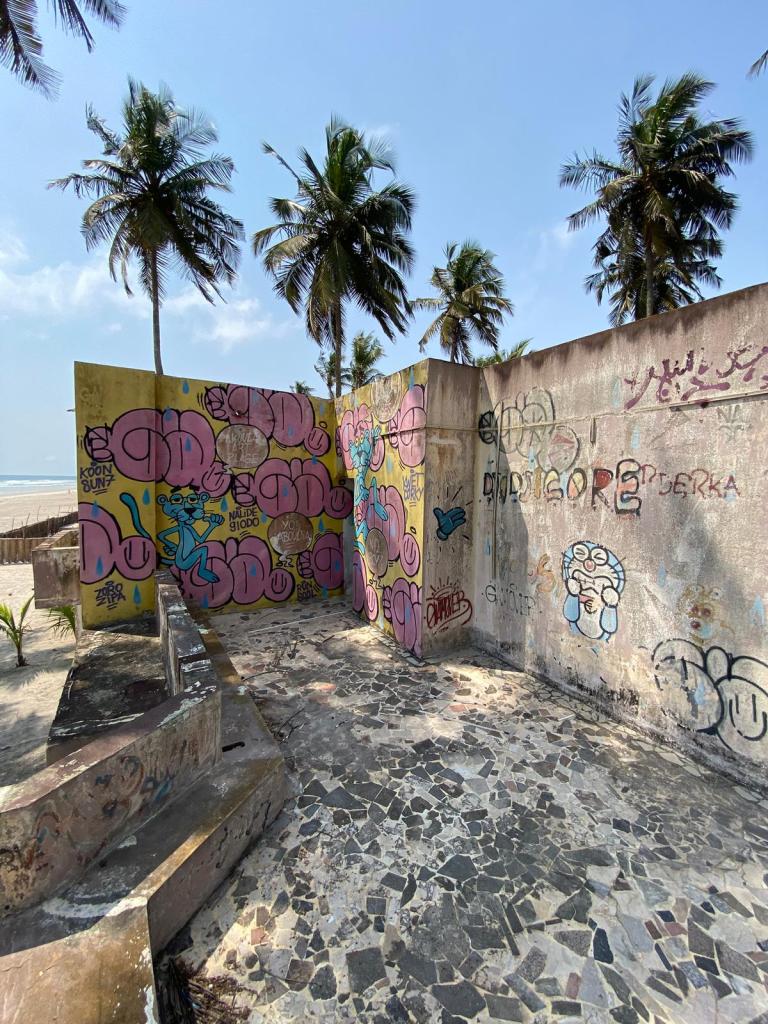
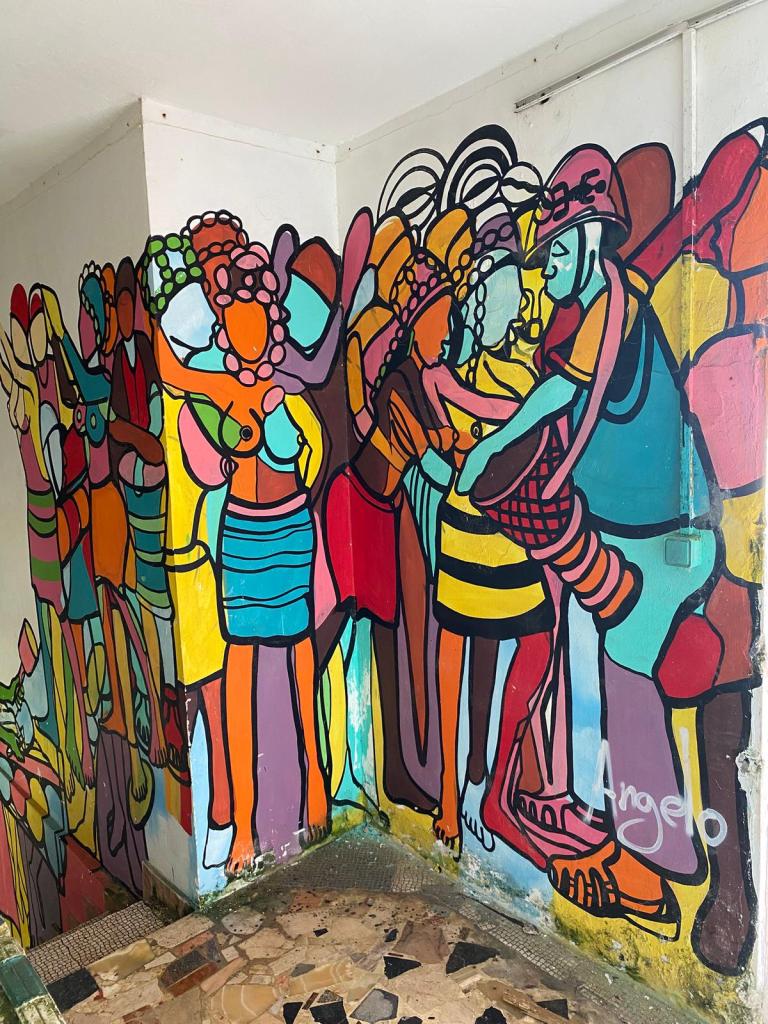
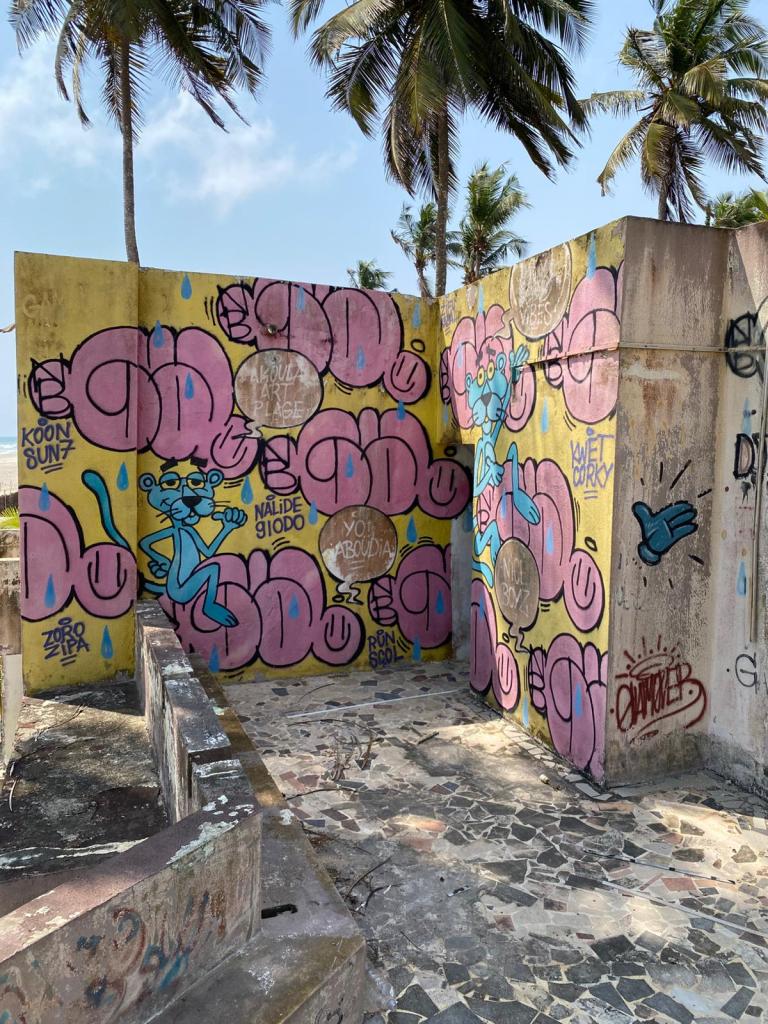
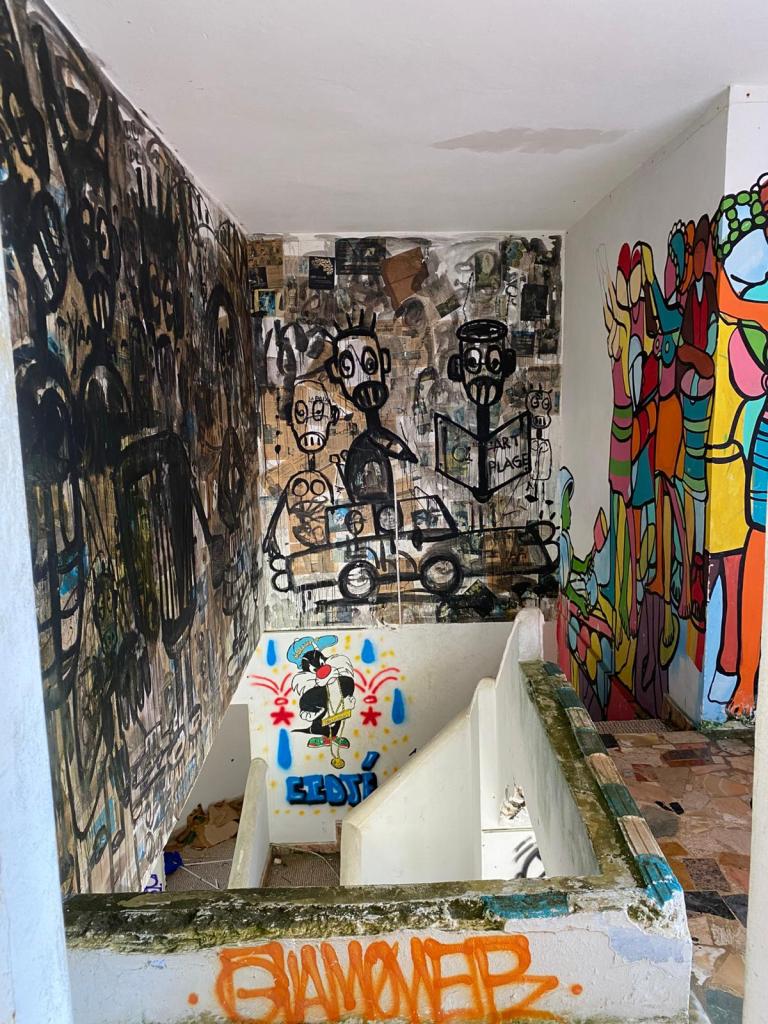
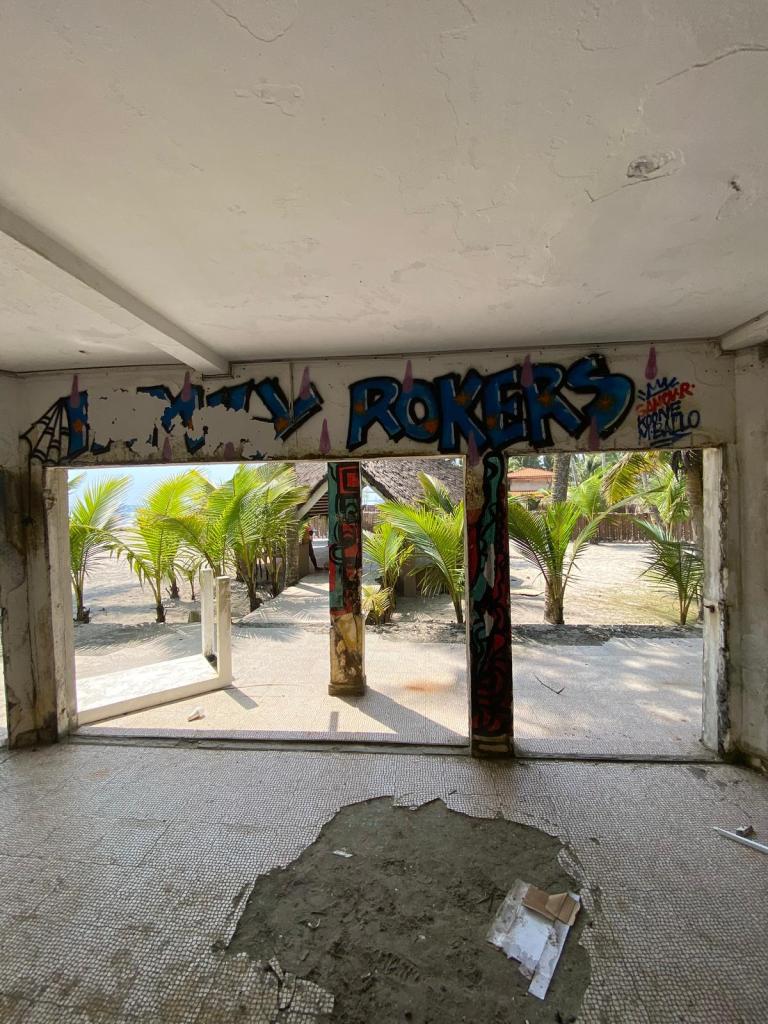
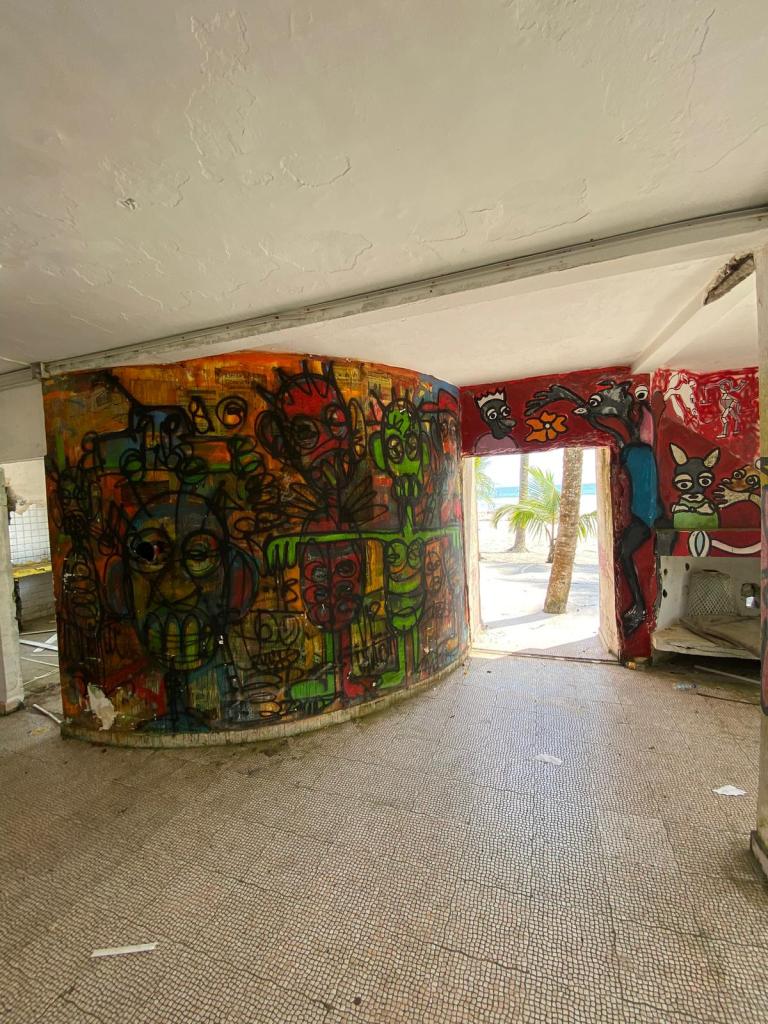
At its centre stands an old, dilapidated building preserved as a living surface, offered up for intervention. Inside, on three large walls, a monumental fresco by Aboudia commands attention. In his instantly recognisable style, the artist unfolds his figures of children — fragmented silhouettes, multiple faces saturated with signs and vibrant colours.
Since the couple acquired the site a few years ago, other Ivorian and African artists have left their mark. Interventions by Angelo Nguessan, the graffiti artist Zifu, or Zoro Zipa form a constantly evolving ensemble. Art Plage thus functions as an experimental space, where works are neither fixed nor hierarchical.
A city in search of its cultural voice
At the scale of Assinie-Mafia, this artistic initiative does not go unnoticed. For the mayor, Pierre Magne, Akoula has become a reference. Not only for the quality of its offerings, he says, but for its ability to move beyond the traditional boundaries of hospitality.
“It is not the role of a hotelier to promote artists, but they accept to do it. As mayor, I appreciate this because they go beyond their activities, and they bring added value to the municipality”, he notes. Supporting creators, opening spaces for expression, investing in training — all of this, he argues, contributes to raising the overall standard of the sector.
In a municipality where a genuine cultural policy is still being structured, this private initiative serves as a valuable anchor. A dynamic that could, in time, help redefine Assinie’s identity — long perceived merely as a seaside destination.
His ambition now is to go further: to bring tourism and culture into dialogue, and to position the territory within a broader trajectory that values both contemporary artists and local traditions. A perspective still in development, but already carried, in part, by places like Akoula.
Akoula Brunch: The art of celebration
On Sundays, the rhythm at Akoula shifts once again. The Sunday brunch has become an unmissable event, drawing a stylish crowd from Abidjan and elsewhere who come as much for the experience as for the setting itself. Music, lively conversations, and the fluid movement of bodies create an atmosphere that gently evolves into a refined, almost choreographed celebration.
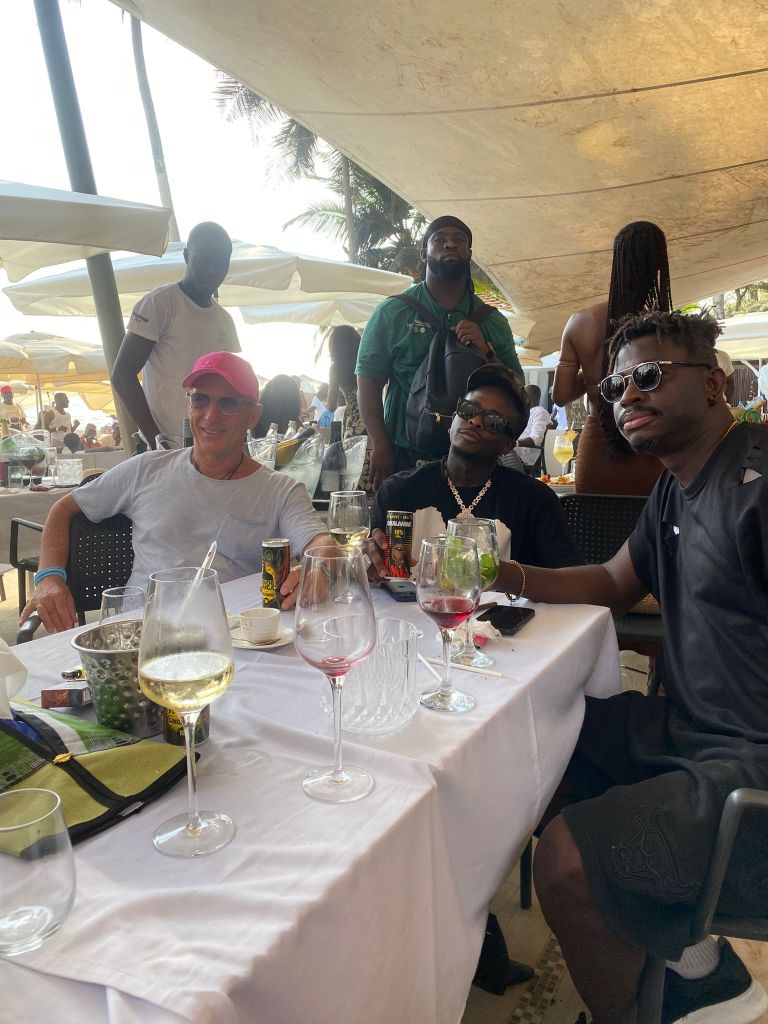
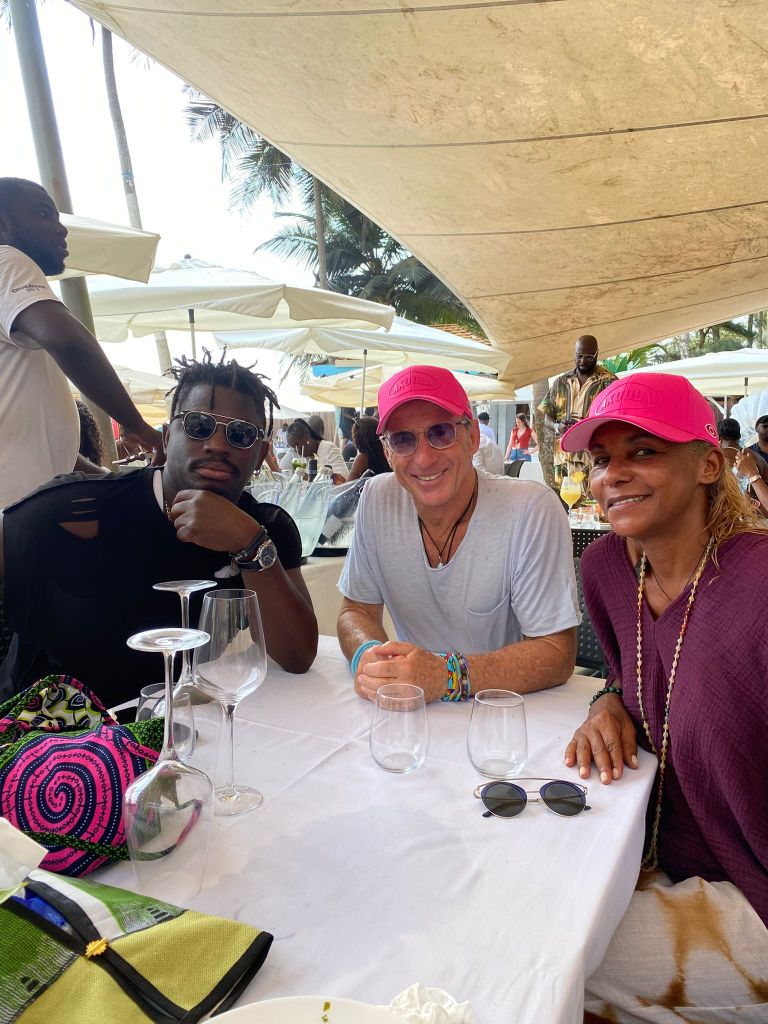
Renaud Chauvin-Buthaud makes no secret of his inspiration: he often speaks of the years he spent observing Ibiza’s unique blend of music, pleasure, and aesthetics. Assinie, he believes, holds similar potential — provided it forges its own identity, deeply rooted in its territory and cultures.
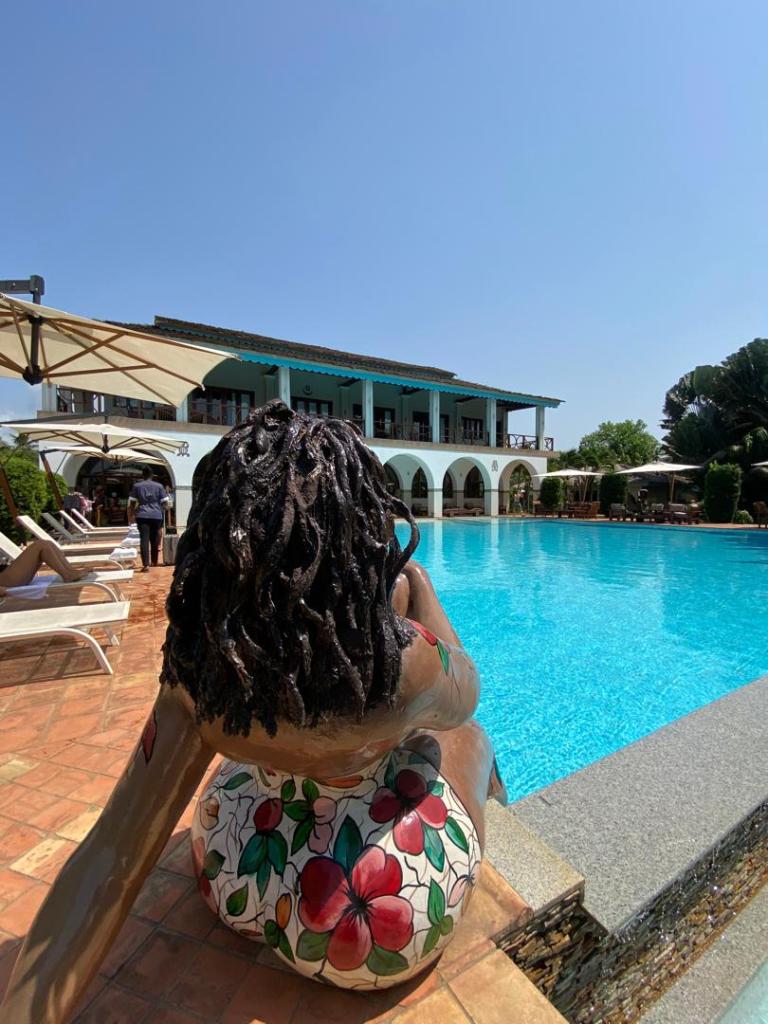
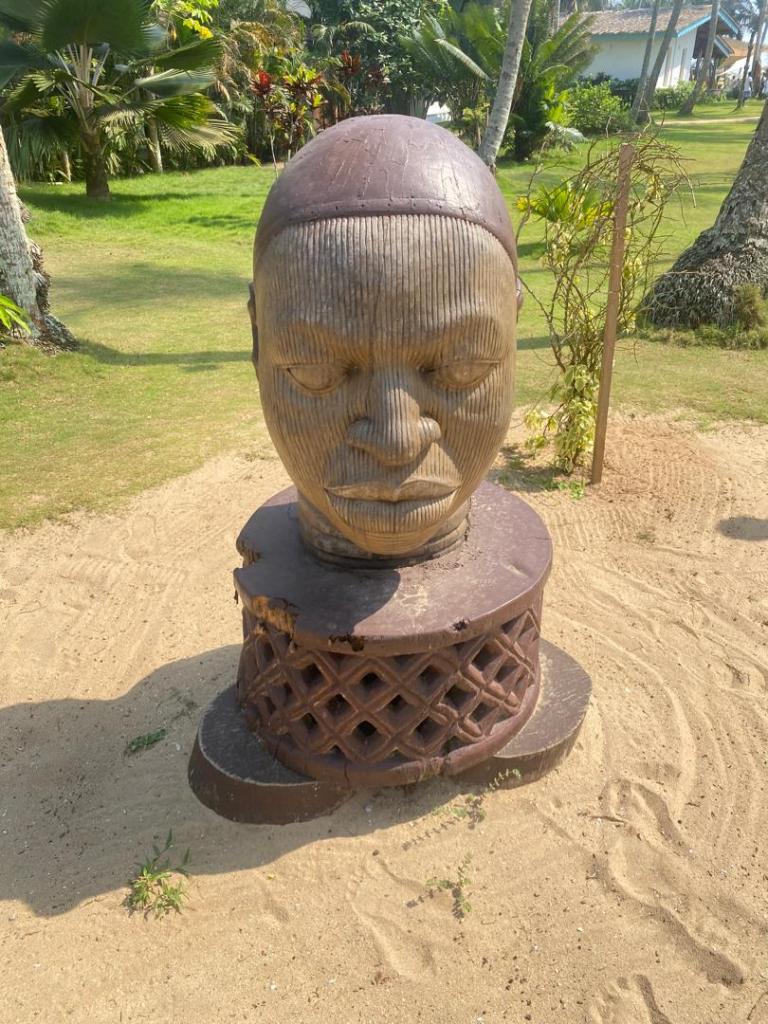
Upon arrival, art sets the tone. A wooden sculpture by Léon Amani N’Guetta, inspired by Nigerian Ife Yoruba masks, welcomes the brunch’s guests. Further on, the bold, colourful monumental forms of Aya Konan extend this dialogue between revisited tradition and contemporary expression.
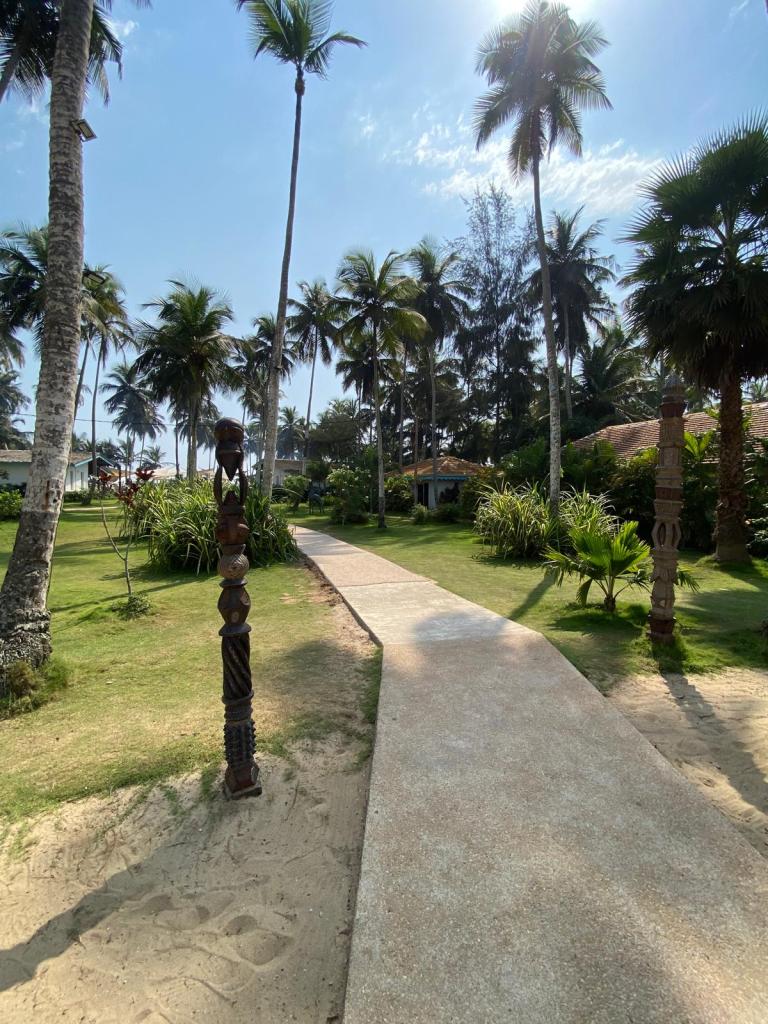
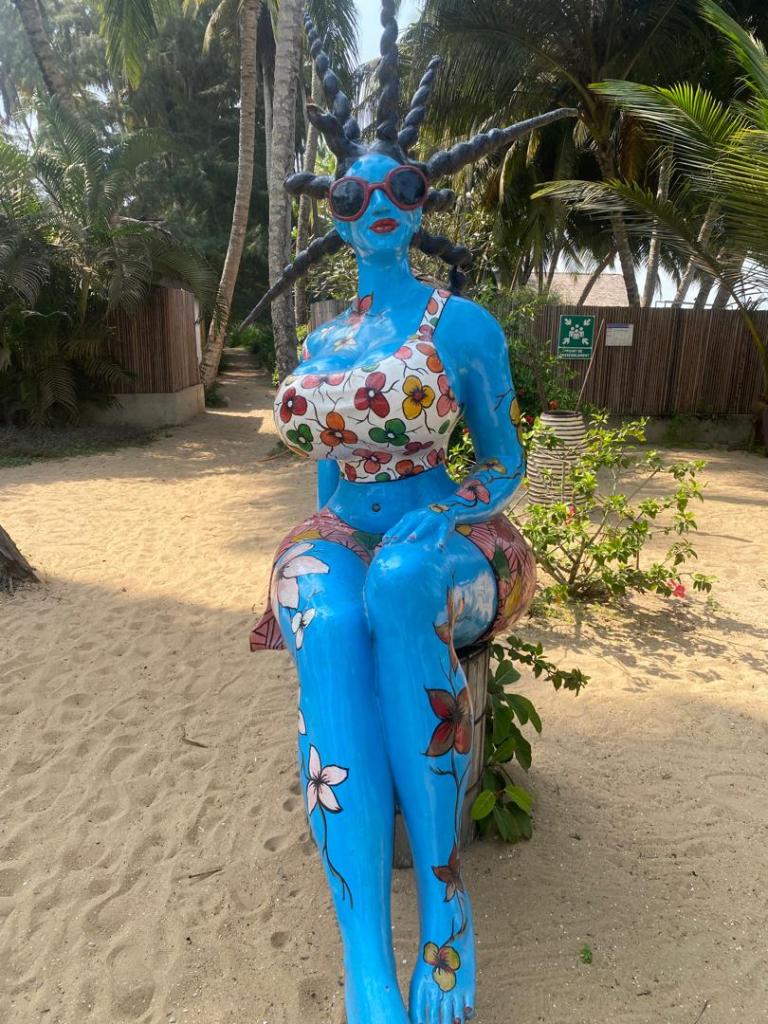
Here too, in the heart of this festive scene, art does not fade into the background. It observes, accompanies, and engages. Just as in the gardens or at Art Plage, it circulates freely, without hierarchy, weaving itself into moments, gestures, and encounters.
As one moves through the site, a clear truth emerges: Akoula is far more than a place or a single function. It is a living system — a carefully articulated ensemble of practices where creation, hospitality, and transmission intersect.
Business, art and transmission. A triptych that the Akoula couple has skilfully woven together, never fully separating one from the others.
 Bridging Africa and The World Through Contemporary Art
Leave a comment