
The announcement, in late January 2025, that the 16th edition of the Dakar Biennale would take place from November 19 to December 19, 2026, brought a sense of relief commensurate with the concerns that had preceded it. For months, the possibility of another postponement—or even a deeper weakening of the event—had fueled discussions within Senegalese artistic circles and far beyond.
Yet beyond these uncertainties, one fact remains: Dak’Art stands today not despite its fragilities, but through them. Despite recurring criticism, it remains one of the most resilient artistic events on the African continent.
This relief, however, should not obscure the persistent weaknesses surrounding the Biennale. The late postponement of the 15th edition (initially scheduled for May 2024, then delayed to November 2024) left a lasting impression. The shift from May—a period during which the Biennale had long been anchored within the international art calendar—to November now raises further questions, particularly regarding its ability to maintain its appeal among international art professionals.
Another source of concern is the absence, to date, of an officially appointed artistic director, leaving the future appointee with an extremely limited timeframe to conceive and organize an event of such scale.
A Biennale Under Pressure
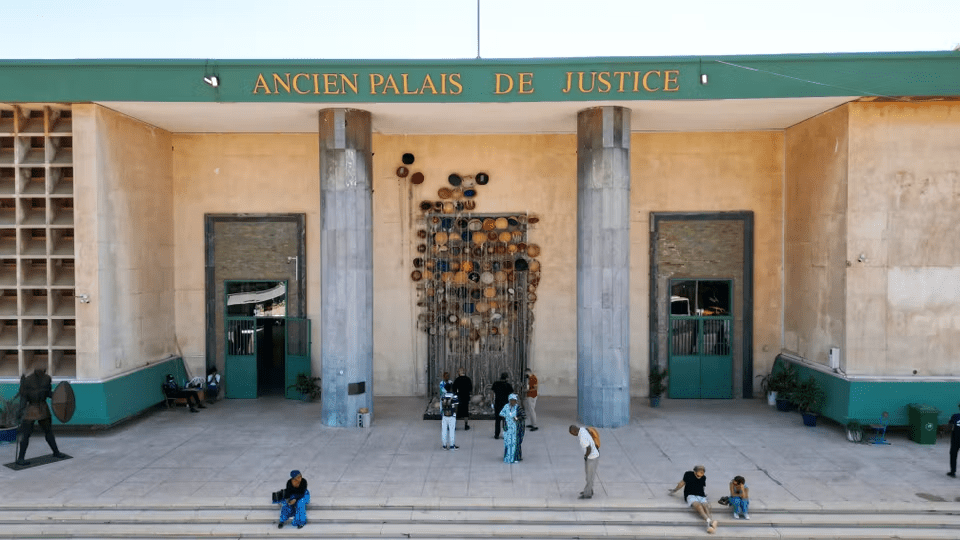
Beyond these immediate constraints, it is the very organization of the Biennale that continues to be called into question. During the 2024 edition, the massive and poorly managed influx of young visitors at the former Palais de Justice—the main venue of the international exhibition since 2016—resulted in the damage of several artworks, exposing shortcomings in security and audience management. Similar dysfunctions had already been observed in 2022 (14th edition), prompting the creation of a collective that denounced serious “logistical, technical, security, managerial, and communication failures.”
At times, Dak’Art seems to generate more debate about its dysfunctions than about the artworks it presents. What appears as dysfunction may in fact be the condition of its persistence.
These criticisms are legitimate. But they also reveal something else: the high level of expectation placed upon an institution that, precisely, still matters.
A History of Tension
Should this be taken as a sign of decline?
Such a reading would overlook a crucial dimension: these tensions are neither new nor accidental. From its very first edition in 1992 (held at IFAN, the Institut Fondamental d’Afrique Noire), the Biennale was already marked by strong criticism.
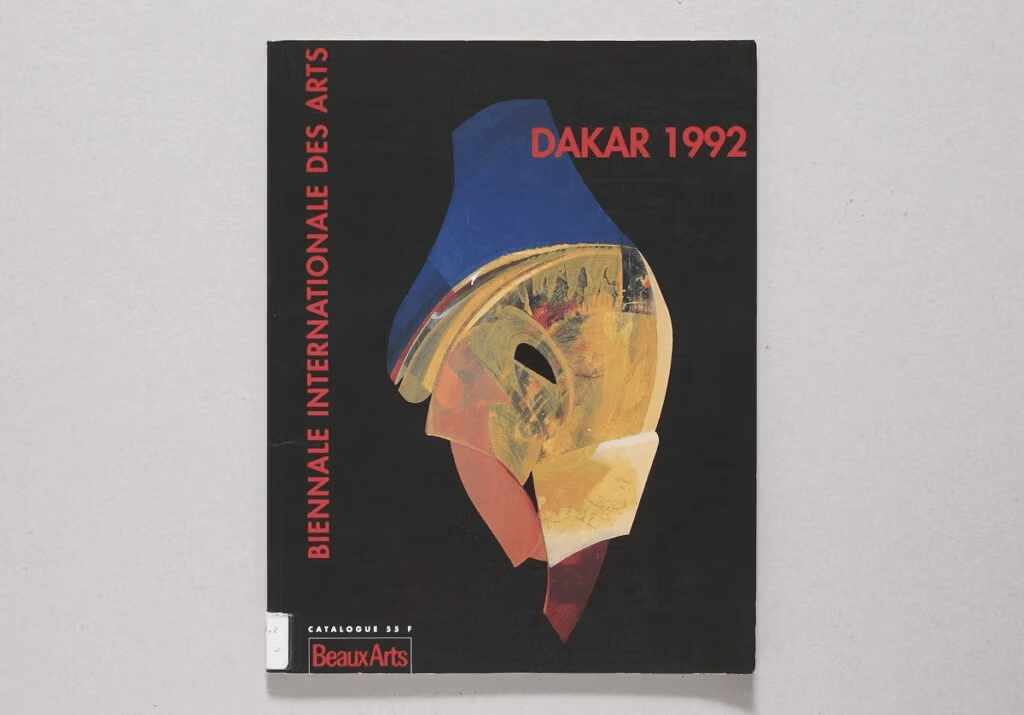
The artist Souleymane Keita protested the conditions under which his triptych Étude des Signes was displayed, relegated to a passageway. Major figures such as El Hadji Sy and Joe Ouakam refused to participate, while Iba Ndiaye, co-founder of the École de Dakar, did not receive his airline ticket and was absent from the event. In an electoral context in Senegal, some observers also pointed to political instrumentalization.
Subsequent editions were not spared: artworks arriving after the opening, delays in per diem payments, recurring logistical issues.
In other words, the current fragilities of Dak’Art do not stem from a recent drift; they are intrinsic to its history.
And this is precisely what makes its trajectory remarkable.
Resilience in an Unstable Landscape
Despite these recurring difficulties, the Dakar Biennale has endured. More than that, it has persisted over time where many comparable initiatives across the continent have disappeared. The Johannesburg Biennale (1995–1997) did not survive beyond two editions. The Marrakech Biennale (2005–2016) ceased operations due to a lack of funding. Others, such as the Bantu Biennale of Contemporary Art (1985–2002), failed to withstand the test of time. Even older institutions, such as the Alexandria Biennale (founded in 1955), experienced long interruptions, notably between 2011 and 2019. The Cairo Biennale (founded in 1984), once one of the region’s leading artistic events, also faced a significant hiatus after its 2010 edition before returning in 2019.
Within this unstable landscape, Dak’Art stands as an exception: it is preparing to hold its 16th edition without ever having experienced a major interruption. Its last significant disruption occurred in 2020, due to the global Covid-19 pandemic.
This continuity is no coincidence. It is rooted in a second, often underestimated characteristic: its capacity for adaptation.
Since its inception, the Biennale has undergone profound transformations. Initially open to artists of all origins in 1992, it became, as early as its second edition in 1996, the first biennale dedicated exclusively to contemporary African art. It gradually incorporated new disciplines, including design and textile (1996), followed by photography (1998). In 2000, its duration was extended to a full month, compared to just one week previously.
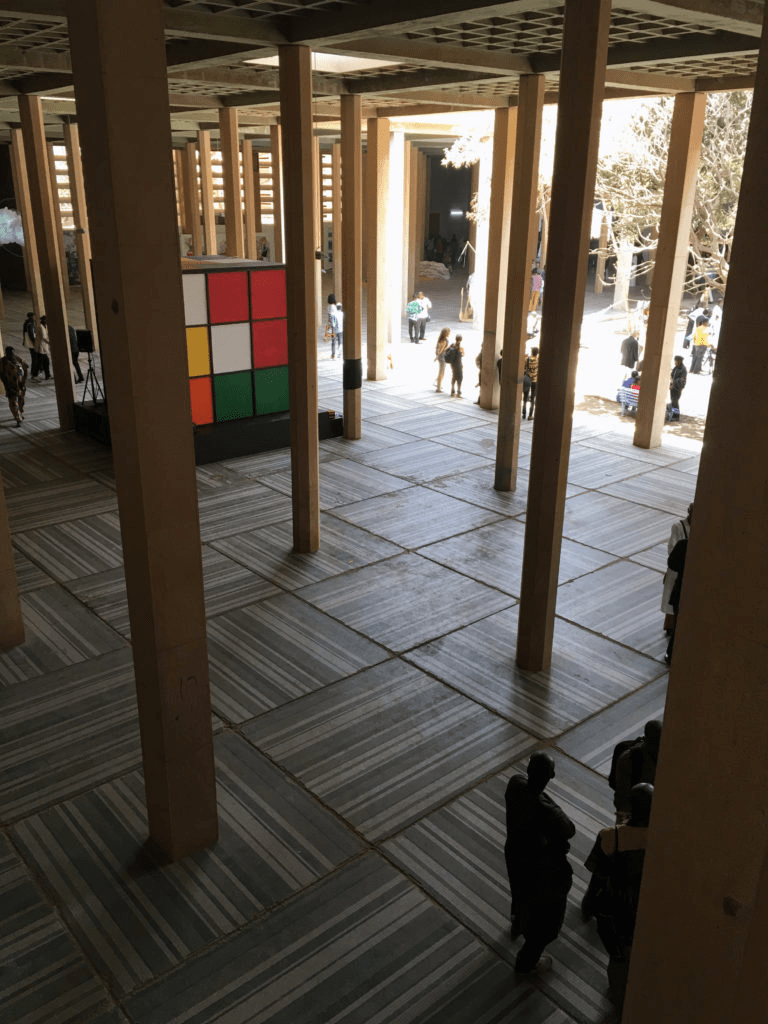
Faced with the growing vitality of parallel events, the Biennale also institutionalized the “OFF” in the early 2000s, granting visibility and legitimacy to independent initiatives that have since become central to its identity. Changes in international exhibition venues have allowed for a greater number of artworks and visitors.
The appointment of its first artistic director in 2006, the Ivorian philosopher Yacouba Konaté, marked a decisive step in its structuring.
In other words, Dak’Art has never been a static institution. It has evolved through criticism, negotiation, and adaptation.
This plasticity is what explains its longevity.
Why It Still Matters
But the central question remains: why does Dak’Art still matter today?
First, because it continues to function as a space of validation. For many artists, exhibiting there remains a form of recognition anchored in a specific history and territory.
Second, because it engages a broader issue: the localization of the gaze. As contemporary African art gains visibility on international stages—within fairs, galleries, and Western institutions—the risk grows that its value becomes defined primarily outside the continent.
This dynamic is already at work. Today, some collections of contemporary African art are being built in Europe and North America without their initiators ever having engaged directly with African artistic scenes.
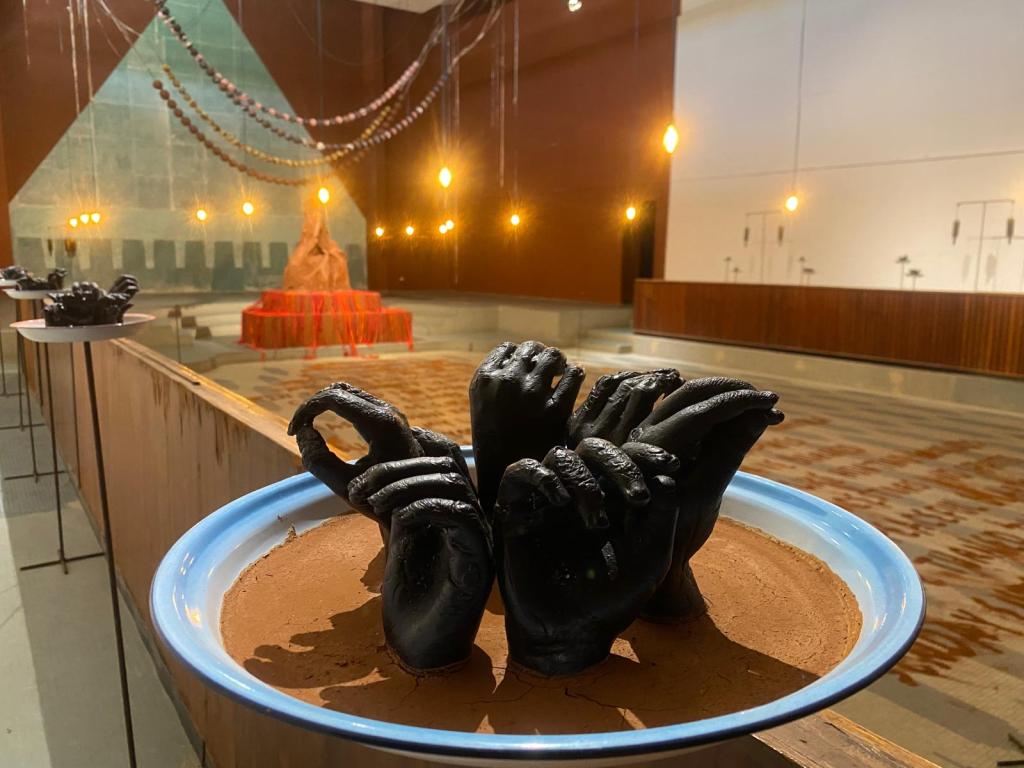
In this context, the Dakar Biennale plays an irreplaceable role. It provides an anchoring point—a space where artworks, artists, and audiences encounter one another within a context that is not external to them.
For many artists from the diaspora, it is also a place of return and reconnection—a site where identities and narratives are renegotiated.
Dak’Art matters, ultimately, because it re-centers the narrative of contemporary African art.
Beyond Resilience
Yet acknowledging its importance also implies a responsibility. Its persistence cannot continue to rely solely on resilience.
If Dak’Art is to remain credible, it must now consolidate what has long been fragile: clearer governance, stronger institutional continuity, and greater attention to the conditions in which artworks and audiences are received.
Strengthening the Biennale requires moving beyond a purely administrative logic and ensuring that the cultural actors are meaningfully involved in its orientation and development. The challenge is no longer simply to endure, but to structure. No longer merely to exist, but to operate at the level of expectation it generates.
 Bridging Africa and The World Through Contemporary Art
Leave a comment