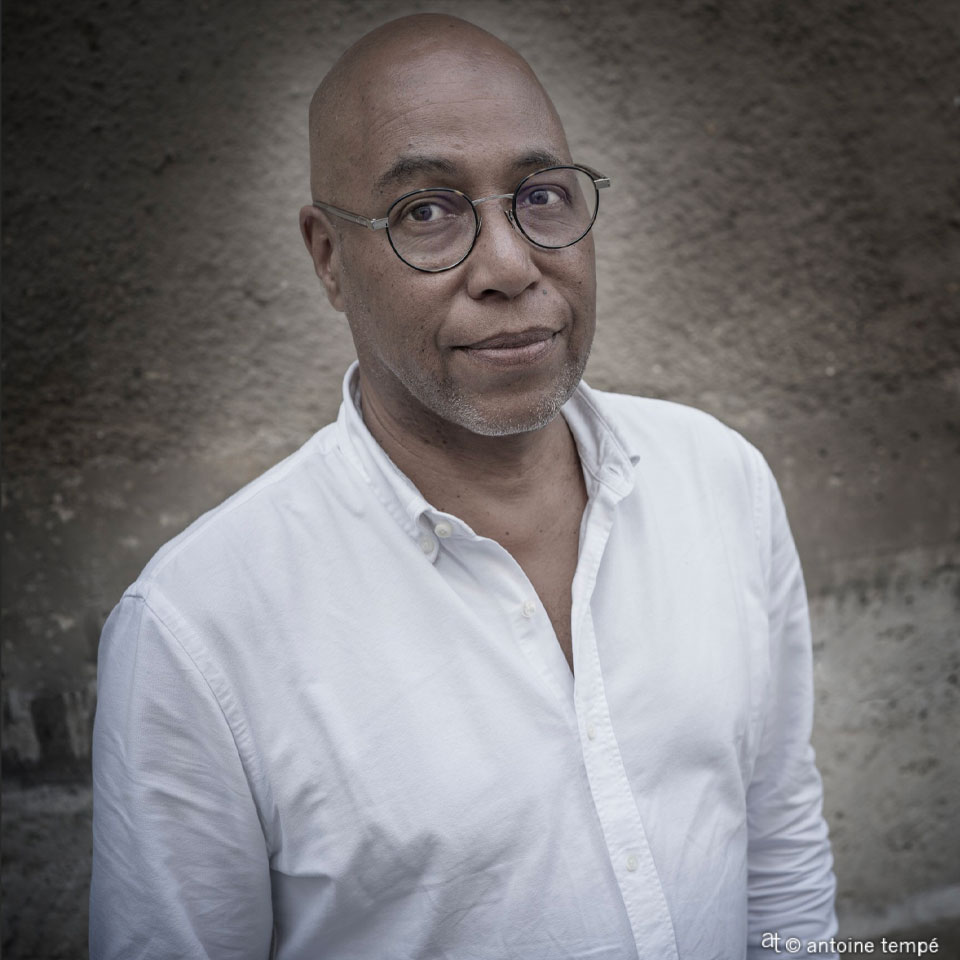

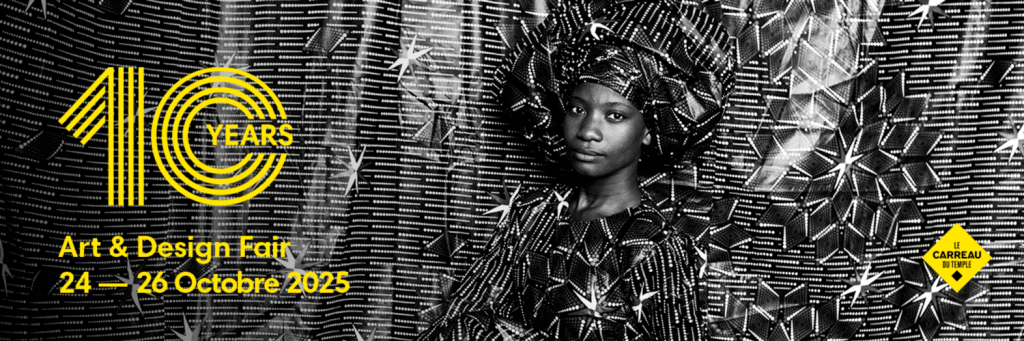
His name is inseparable from African cultural history. As the grand-nephew of Léopold Sédar Senghor — poet, philosopher, and first president of Senegal — Sitor Senghor carries a legacy deeply tied to art and intercultural dialogue. Now, as he takes the helm of AKAA (Also Known As Africa), Paris’s leading fair dedicated to contemporary African art, he brings a renewed vision rooted in beauty, balance, and artistic excellence. From October 24 to 26, 2025, while Art Basel sets up across town, AKAA will mark its 10th edition — and perhaps its most ambitious yet. In this conversation with DakArtNews, Senghor shares his vision and curatorial choices. He speaks candidly about the legacy of his grand-uncle, the growing maturity of the African art market, and his determination to position AKAA as both a commercial platform and a space where beauty meets meaning.
You’ve been appointed Artistic Director of the 2025 edition of AKAA, which will celebrate its 10th anniversary this October. What does this mean to you?
This appointment marks a new stage in my career. For about ten years, I worked as a gallerist in Paris, mainly representing artists from the African continent. I stopped this activity for personal and financial reasons, as being a gallerist has become economically very demanding. I then focused on curating exhibitions and artistic direction in Italy and France. The opportunity to join AKAA appealed to me because it represents a real challenge. I never participated in AKAA as a gallerist—I had favored the 1-54 fair in London, New York, or Marrakech—so I see this role as a chance to renew the fair’s vision and strengthen its positioning.
How did you develop the artistic direction for this edition?
The guiding principle is to bring beauty back to the forefront—because for me, that is essential. I want to return to the foundations of art. Beauty, in my view, is undeniably ever-present. People may say beauty is subjective, but I disagree. Beauty creates a vibration, an emotion, a force that is undeniable. This is the ideal I want to highlight. And, for a fair like AKAA to be viable, galleries need to make sales. Without this economic balance, the event loses its meaning. For this edition, I formed a new selection committee with a diverse group: Mamadou-Abou Sarr, a Senegalese-Beninese collector based in Chicago who works in finance; Eve Therond, a French art advisor living in New York who has contributed to major African art collections; and Andy Amadi Okoroafor, a Nigerian filmmaker working between Lagos and France. I’m not saying the cultural aspect doesn’t matter—but if it’s only cultural and doesn’t lead to sales, it won’t work. I would say that in a single year, it’s hard to transform everything and create a whole new fair. But I believe that the new team Victoria Mann has built around her is dynamic, collaborative, and committed to injecting fresh energy into the fair while maintaining a strong cultural foundation.
Can you clarify your curatorial vision for this special edition? Is it a return to aesthetics?
Yes, aesthetics are central, but they come with a stricter choice of galleries and artworks. I’ve emphasized a harmonious scenography for the booths, supporting galleries in how they show their displays. Additionally, the fair will include two major sections that I’m personally curating. The first focuses on African ceramics—a medium rarely highlighted but very current—especially since two other ceramic fairs are happening in Paris at the same time. I’ve selected works from galleries, including those without a booth at AKAA, to create a dialogue around this medium. The second section will feature works by established artists whose galleries may not be at AKAA because they are participating in Art Basel or 1-54. This will help attract collectors looking for big names and boost the fair’s appeal in the years to come.
“I regret the small number of African-based galleries…
Which “established artists” are you referring to?
I prefer not to reveal them just yet, but they will be announced soon. These are artists who typically exhibit at Art Basel or 1-54, and their presence at AKAA will attract collectors and institutions such as the Centre Pompidou or Tate. We’ve established partnerships with these museums and their patrons, especially through museum friends associations, to guarantee their engagement.
How did you select the galleries? Most participating galleries are based outside the African continent.
We’ve retained the historic galleries that have been loyal to AKAA, while also attracting young gallerists who actively promote African artists. Some were hesitant to join art fairs, preferring to focus on their gallery spaces or online sales. Their participation is a promising sign. Yet, I do regret the few African-based galleries, due to financial constraints and visa issues for gallerists and artists. Even though we support these efforts, visa refusals remain a major obstacle, as seen also at Art Basel and other fairs. I hope this edition will convince more African galleries to join us in 2026.
Is the cost of a booth—ranging from €6,000 to €20,000—a major barrier?
Yes, the cost is a factor, but there’s also a perception that AKAA attracts a public more curious about African culture than actual buyers. That’s why I’ve steered this edition in a more commercial direction—to ensure gallery sales and encourage greater participation in the future. If galleries sell, artists are happy, and that creates a virtuous cycle for the fair.
Isn’t this related to the geography of the African art market, which is dominated by London?
Indeed, London has played a pioneering role, largely thanks to the Nigerian and Ghanaian diasporas, who began supporting their artists as early as the 2000s. This momentum helped structure the market, especially with the creation of 1-54 in 2013, followed by AKAA in Paris in 2015. These initiatives opened the door to major international fairs for African artists. It’s clear that London remains a powerful hub, with collectors who have significant purchasing power.
What is the current state of the contemporary African art market?
The African art market is now going through a phase of adjustment. There was too much speculation and artificial inflation of artists’ market values. Some prices are dropping, and a kind of cleanup is taking place. The African art niche was the last unexplored segment of the global market, and everyone saw huge profit potential in it. Now the market is maturing, and a natural sorting is occurring. The truly strong artists will remain.
In your view, what aesthetics are attracting collectors interested in African art today?
We’re seeing a return to more traditional forms, with greater attention to material and narrative content. When contemporary African art first gained attention in the West, it stood out for its cultural depth—unlike much Western contemporary art, which had become overly conceptual. We were fortunate to have much richer cultural expressions. But we gradually lost that in the rush to break into the market, to sell fast, to mass-produce. Now there’s a move back to more thoughtful work.
Is this what collectors are looking for, or do you aim to educate their gaze toward something new?
Certainly, I want to educate. No matter the art form, the market tends to dictate what artists should produce. That’s where galleries, curators like us, and art fairs play a crucial role—guiding collectors on what to buy and helping artists stay true to their vision, rather than always following market demands.
Isn’t it a balancing act to aim for both a commercial fair and public education? Don’t you risk confusing collectors?
I don’t think so. The artists featured this year are strong, far removed from purely speculative trends. This quality should reassure collectors. Moreover, we’ve partnered with the Ettore Fico Museum in Turin—one of the few Italian museums to regularly show African artists and with a significant collection. It will showcase part of its collection at AKAA and give an award to an artist. This partnership will build trust among collectors and show galleries what institutions are seeking. But I’m aware of the many challenges ahead. It’s not easy—especially in a struggling market—which means we have to make compromises.
“What led me toward the art world was also the pride of carrying the name Senghor…”
The theme chosen for 2025 is “material.” Why this choice?
I chose “material” because I wanted to return to the basics—color, handwork—rather than the overly conceptual side of much contemporary art. But it’s not a mandatory theme; it’s more of an invitation, a direction I wanted to set. The ceramic section is a natural extension of this idea. And it’s not just about the exhibition—there will also be talks and events.
How many artists will join?
About 80 artists, represented by roughly 30 galleries. One highlight will be a monumental work by Cameroonian artist Serge Mouangue, blending Cameroonian and Japanese influences. Unique dialogues—like between an Ivorian artist and a major German artist—as well as contributions from the Institut Français of Libreville, will enrich the fair.
You are the grand-nephew of Léopold Sédar Senghor—poet, president, and fervent advocate of Négritude and universalism. How does this symbolic and personal legacy influence your view of contemporary African art, and your direction at AKAA in particular?
He was my grandfather’s younger brother. I grew up immersed in culture, thanks both to the legacy of my great-uncle and to the many countries I discovered through my father’s diplomatic postings. Art has always been a part of my life. And yet, after my studies, I began working in banking—a career that lasted 18 years. Then I changed direction. What led me toward the art world was also the pride of carrying this name, and of associating it with an artistic path. When I think of all that Léopold Sédar Senghor did for African art—his deep desire for intercultural dialogue—I feel a need to carry that work forward, whether people like it or not. He was sometimes criticized, misunderstood, but his message was clear: he wanted to enrich African culture through outside influences, especially French ones, to create a stronger synthesis. But his message could be hard to grasp, because his writing is complex.
The year 2025 is marked by numerous exhibitions on African art across Europe. How do you explain this?
It’s a recognition that’s long overdue. For a long time, institutions were hesitant to showcase cultural expressions from the continent. That’s now changing—as shown by the late Koyo Kouoh’s appointment to the Venice Biennale—and it goes hand in hand with shifting mentalities. There are indeed countless “African” exhibitions across Europe today. But it’s also a response to the rise of extremist politics—in reaction, cultural institutions are spotlighting African art. This movement is not just a passing trend, but a lasting shift. AKAA supports this recognition by offering VIP tours to these exhibitions throughout the year, reinforcing its presence beyond the October fair.
Read also
Africa’s Artists Deserve a Bigger Stage. Basel Is Just the Start
‘Paris Noir’: 300 Works Stir Black Pride
The State of Contemporary African Art Today: Dr. Ibou Diop’s Critical Perspective
 Bridging Africa and The World Through Contemporary Art
Leave a comment