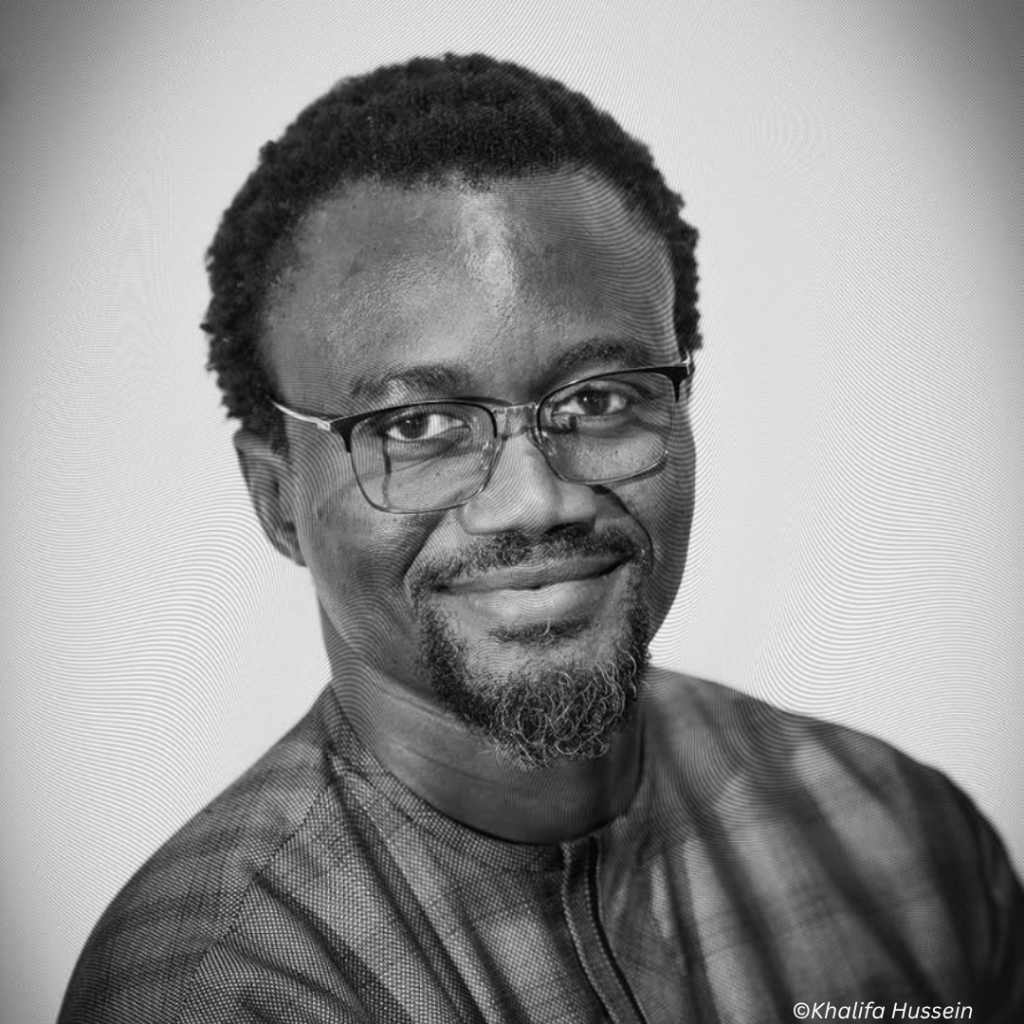

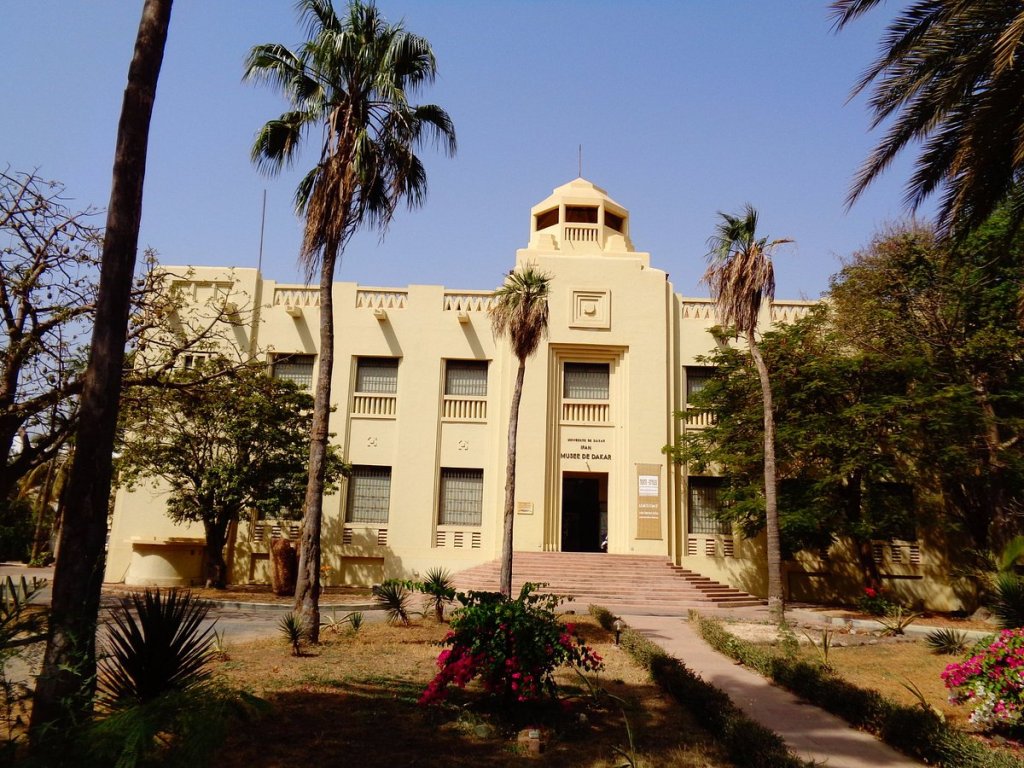
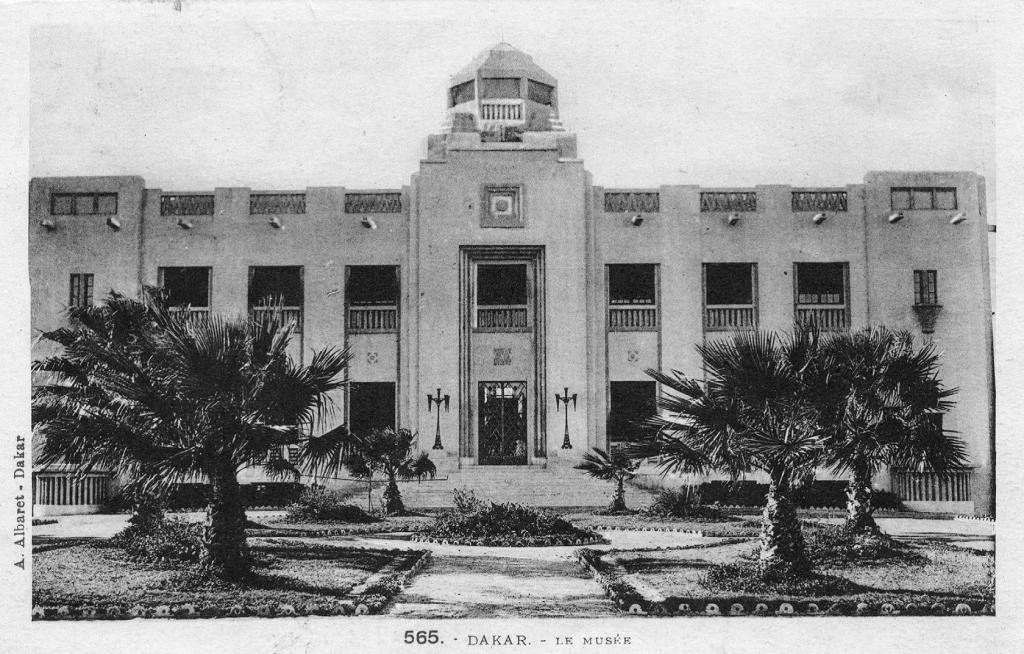
The Théodore Monod Museum of African Art was never meant to tell Africa’s story on its own terms. Founded in 1936 as part of a colonial ethnographic project, its mission was once to display African objects as curiosities of a vanished world — distant, exotic, and frozen in time. Today, the institution houses a collection of more than 9,000 objects, and the man in charge of it is working to rewrite its purpose from the inside out. El Hadji Malick Ndiaye is not just a museum curator. He is a trained art historian, a university professor, and was the Artistic Director of the 14th edition of the Dakar Biennale of Contemporary African Art, as well as a leading voice in the movement to decolonize African heritage institutions. With a PhD focused on contemporary African art and postcolonial critical discourse, and a background that bridges rigorous academic training in France and deep roots in Senegal, Ndiaye is uniquely positioned to rethink what a museum in Africa can — and should — be. Since taking the helm of the museum in 2016, he has launched bold initiatives that invite contemporary artists to interact with historical collections, blur the line between archive and creation, and make space for living African narratives. In this conversation with DakArtNews, he reflects on what it means to decolonize not just objects, but knowledge itself — and why the museum must become a site of experimentation, transmission, and transformation.
You began your academic journey in literature, later shifting to art history, with a PhD focused on contemporary African art and postcolonial critical discourse. How have your studies and personal experiences shaped your approach as both a curator and a researcher?
My background in modern literature laid the foundation for everything. I studied at Cheikh Anta Diop University in Dakar, from my first year through to a DEA (a postgraduate research degree). Even in high school, I was an avid reader, fascinated by writing in all its forms. Alongside that, I was deeply passionate about drawing and painting, which I pursued semi-professionally. At university, I specialized in aesthetics during my literature degree—a field we shared with the philosophy department. That’s where I began thinking about art intellectually, particularly through image semiotics. My Master’s thesis focused on Form in the Visual Language of Ousmane Sow: A Study in the Aesthetics of Sculpture, which was quite pioneering for someone in modern literature at the time. I continued that work in my DEA, diving deeper into Sow’s Battle of Little Big Horn series, which I interpreted as a symbol of Third World resistance to imperialism.
In 2003, I attended a symposium on art criticism in Dakar, where I met Jean-Marc Poinsot, then head of studies at France’s National Institute of Art History (INHA). He later became my PhD advisor. In 2004, I received a research grant from INHA and began work on my doctoral thesis at the University of Rennes 2, focusing on contemporary African art. Toward the end of my thesis, I enrolled in the National Institute for Heritage (INP) to train as a curator. In 2011, I defended my PhD dissertation: Contemporary African Art and the Stakes of Postcolonial Criticism: Artistic and Discursive Cartographies between Paris and Dakar (1966–2006). The following year, I earned my international heritage studies degree and officially became a heritage curator. In 2013, I pursued postdoctoral research at Labex CAP, developing a personal project on cultural policies in Africa.
After that, I chose to return to Dakar and put everything I had learned in France to use. I wanted to contribute meaningfully to the conversations around museum management, African heritage, and cultural decolonization. I was recruited by IFAN (The Fundamental Institute of Black Africa) at Cheikh Anta Diop University and soon appointed curator, and later head of the museum department. I also teach art history, museology, and African aesthetics at various universities.
And you officially took charge of the Théodore Monod museum in 2016?
I joined Cheikh Anta Diop University in 2015 and have been at the museum since April 2016. But it’s important to clarify: I’m not just a curator—I’m first and foremost a university professor and art historian. My curator training at INP allows me to bring this skill into IFAN, which oversees several museums. So I wear two hats: academic art historian and institutional curator.
We’re living in an age of deconstruction.
Contemporary African art is often described as elusive or difficult to define. Given your research on artistic exchange between Paris and Dakar and your engagement with postcolonial theory, how do you personally define it today?
I don’t try to define it—because it’s fluid, evolving, formless. What matters isn’t definition but the issues it raises: what artists represent, how they reinvent meaning, or the disillusionment they may provoke in response to our expectations of “contemporary art.” Some define it as “art created on the continent and in its diaspora,” but that’s problematic. It raises questions: Who qualifies for a contemporary African art biennale? A French artist living in Africa? A Senegalese born in France who’s never been to Senegal? Definitions quickly become traps.
Is that a refusal to engage with the concept?
Not at all. It’s about deconstructing the concept. I advocate for embracing its multiplicity and its very elusiveness. African contemporary art is inherently polysemous. And really—what is Africa? Is it Black? Is it White? Where do its borders lie? In the Middle East, for example, Egypt is not always perceived as part of Africa. In the geopolitical imagination, “Africa” does not align neatly with the geographic boundaries of the continent — just as contemporary African art cannot be reduced to the figure of an African living in the United States.
Can we better understand it through either its aesthetic qualities or its timeline?
The debate is as complex as the term itself. Is it an aesthetic? A time period? Likely both. Western art history evolved through epochs—medieval, Renaissance, modern, etc. Maybe we’re still building this narrative. Future generations will likely have more clarity. Right now, we’re living in an age of deconstruction—an aesthetic and a historical moment. What comes after “contemporary”? We don’t know. Terms like postmodern, hypermodern, or hyperrealist have surfaced, but they’re still variations of the modern era.
Decolonization as a continual process that transcends political independence.
Okwui Enwezor once suggested that Africa is better understood as an “idea” than a place. Do you agree?
Exactly that. In other words, it’s always something fluid, evolving, in motion. When Enwezor speaks of Africa as an idea, I believe he’s not trying to confine Africa within a geographic framework or a fixed definition. That’s precisely why he refers to it as an idea. And it’s this very notion — the status of being an idea — that explains why Africa resists being pinned down into a physical or closed definition. So when you say “Africa is an idea,” you’re opening the way for it to remain elusive, indefinable in rigid terms. Now, what is Africa? What does Africa mean? It is an idea. Given all the debates surrounding the concept of contemporary African art, I actually believe that trying to define it would do a disservice to its richness and dynamism. In my view, we must embrace the elusive nature of the concept of “contemporary African art.” That’s what truly honors it — because trying to define it would only impoverish the discussion. Even in aesthetics, defining art itself is already one of the most complex tasks: definitions change, evolve, and no single one can fully capture what art is.
Returning to your research on artistic cartographies, from 1966 to 2006, which highlights how artists respond to colonial legacies: How, in your view, do African artists engage with the postcolonial context?
It’s impossible to generalize, as the approaches, strategies, and pathways vary greatly. However, two major trends can be distinguished. Some artists approach the postcolonial as a historical period — marked by the departure of the colonizers, the liberation of territories, and the achievement of independence. Their work is rooted in a temporal dimension, linked to reclaiming geography. Others view the postcolonial as an idea — an ongoing struggle that transcends historical milestones. This second approach, which I personally favor, sees decolonization as a never-ending process, encompassing issues that precede and go beyond territorial independence.
What does it mean to “decolonize” in this sense?
Decolonizing ideas means rethinking methodology, especially in the sciences, in order to reorient the principles of interpretation and understanding. It involves a dual task: exposing the underlying ideologies and incorporating specific contexts, by valuing African endogenous knowledge systems that are often overlooked. For a long time, scientific understanding has been shaped by a particular civilization. To decolonize is to deconstruct that approach while multiplying frames of reference. In the field of heritage, this means acknowledging a diversity of perspectives beyond Western benchmarks. For instance, the World Heritage List favors European castles, reflecting a narrow vision in which African heritage productions are underrepresented.
We’re talking about decolonization. And yet, you’re at the head of a museum founded in 1936 during the colonial era — an institution that carries a complex legacy. How do you bring a contemporary dynamic to this space, to make it relevant for today’s African art and part of the decolonial movement?
It was essential for me to confront that history head-on and to open the museum’s collection to contemporary interpretations. We often talk about decolonizing knowledge or objects — but how do we actually go about it? Where do we start? What strategies can we adopt? And can we measure the impact of decolonization, particularly in terms of audience engagement?
My curatorial training proved invaluable here, especially the courses on public education, mediation, public management, and heritage economics. These tools enabled me to turn the museum into a reflective space — one capable of thinking for itself.
In concrete terms, what does a museum that seeks to be decolonial look like?
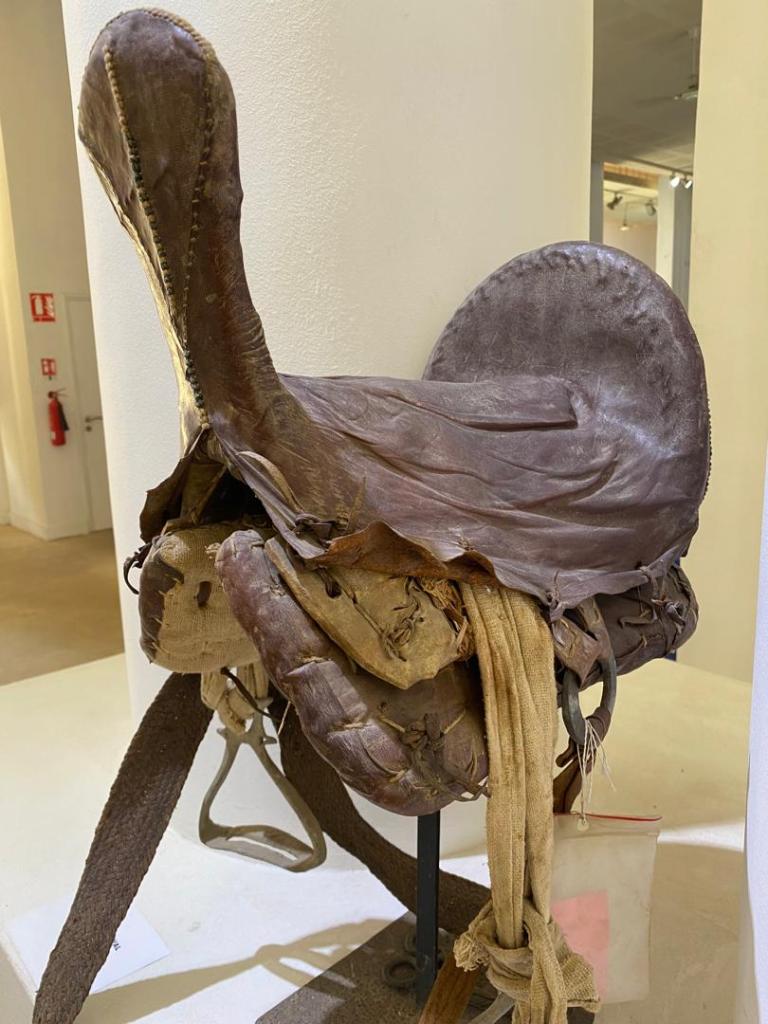
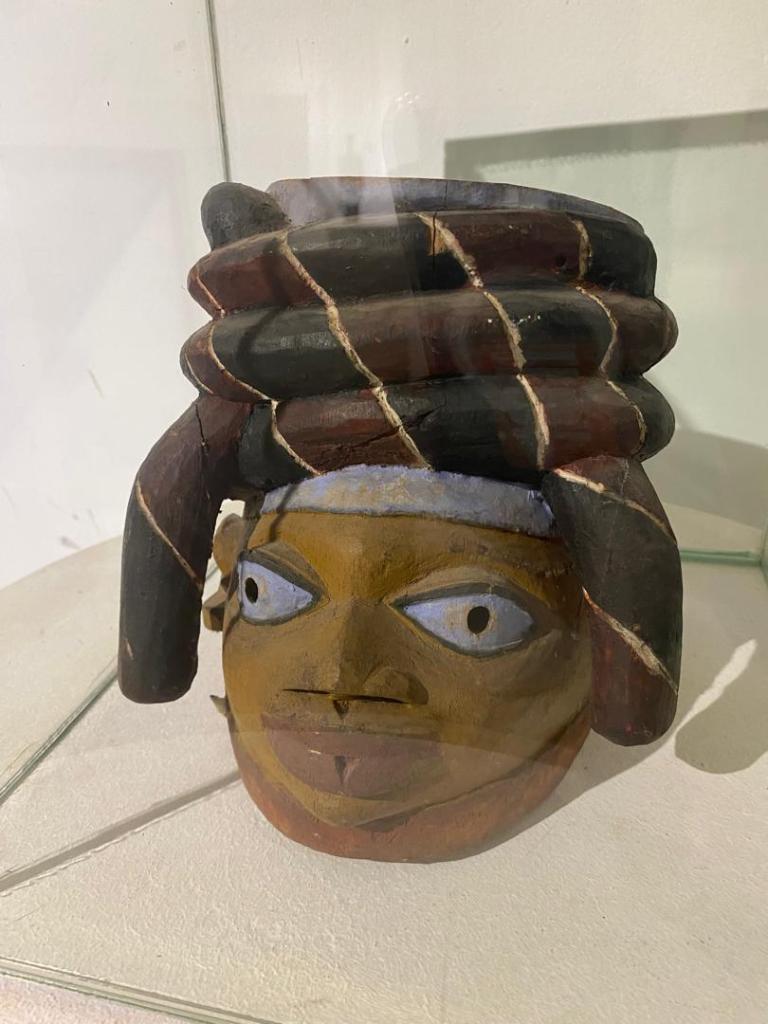
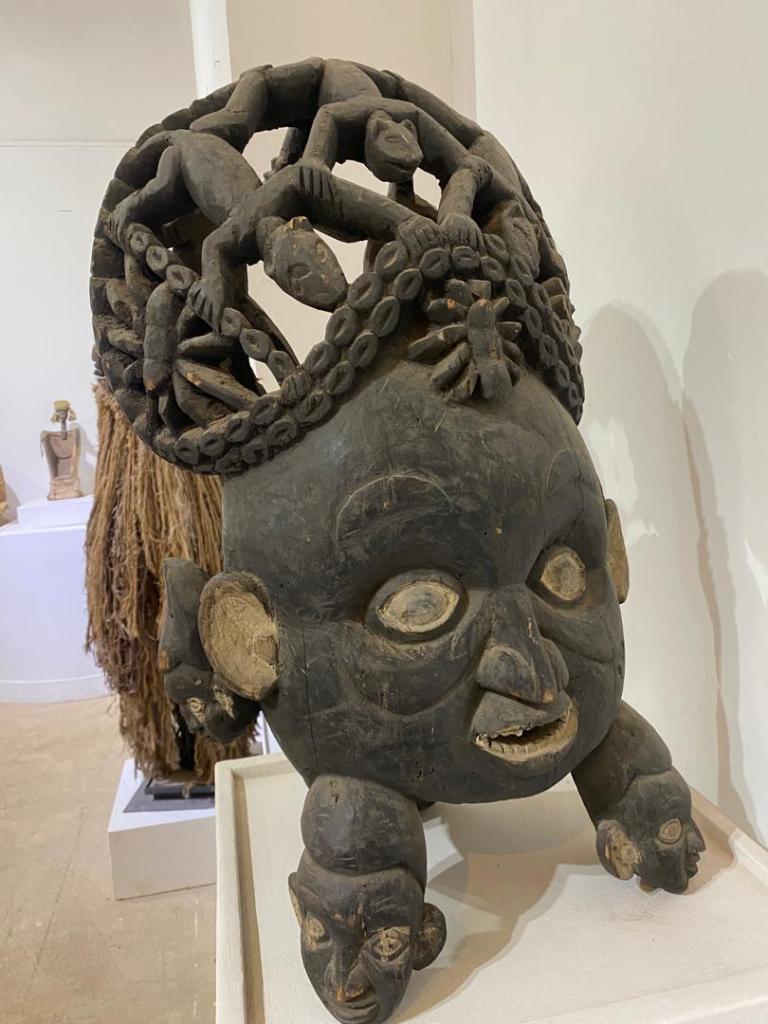
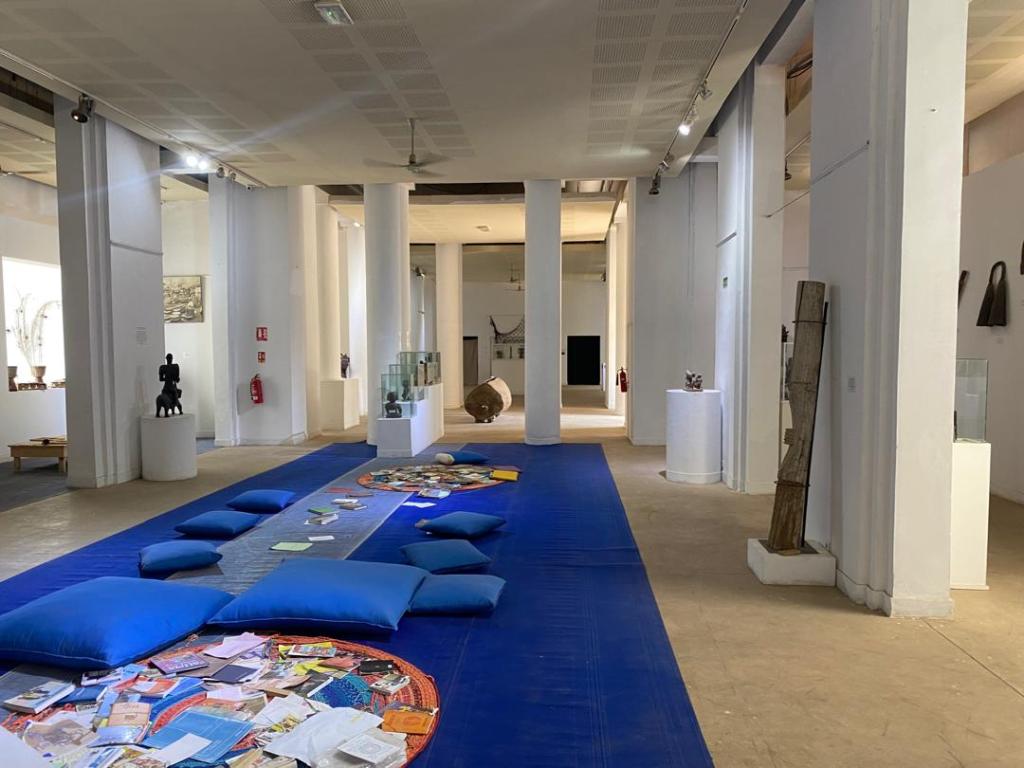
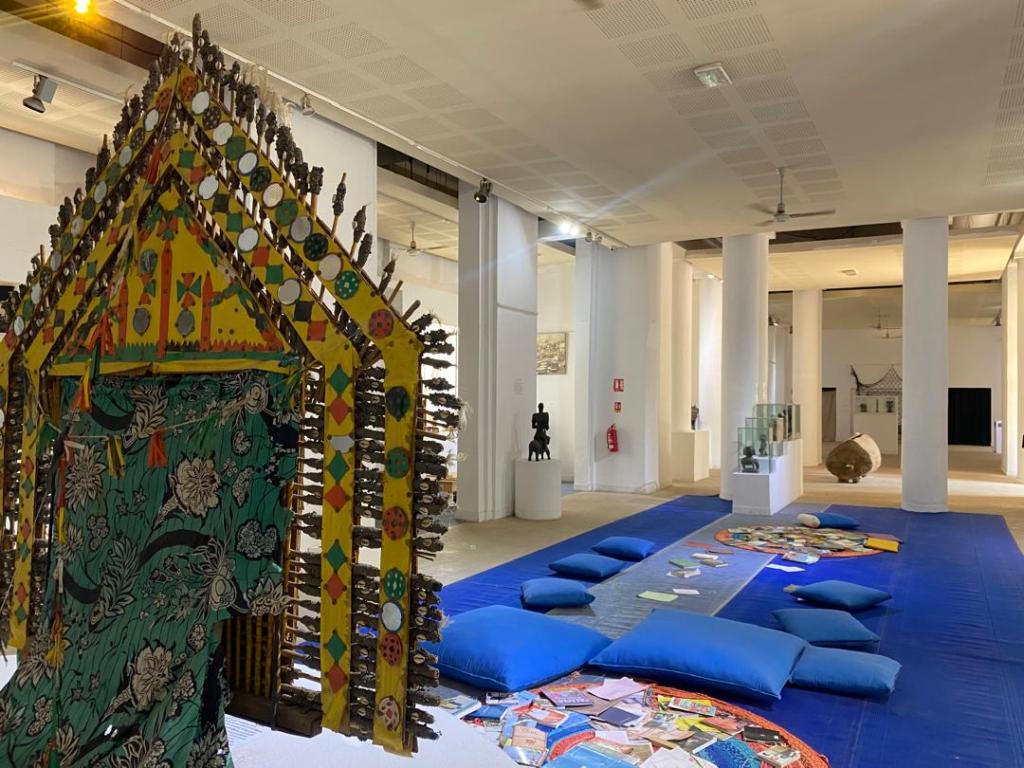
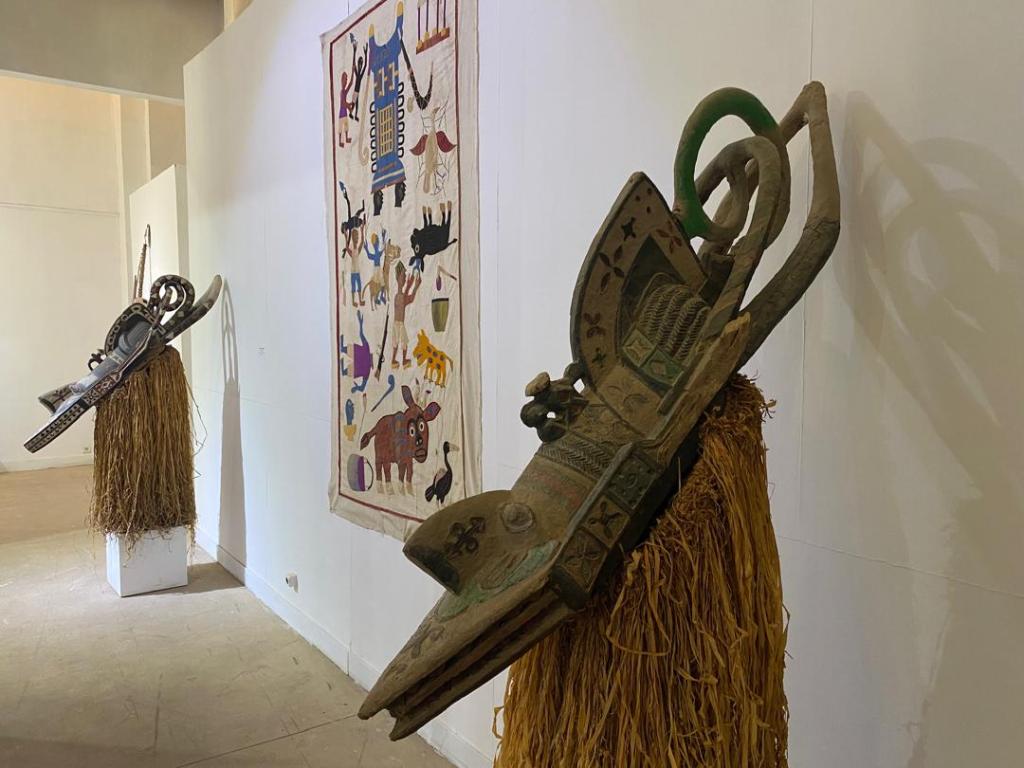
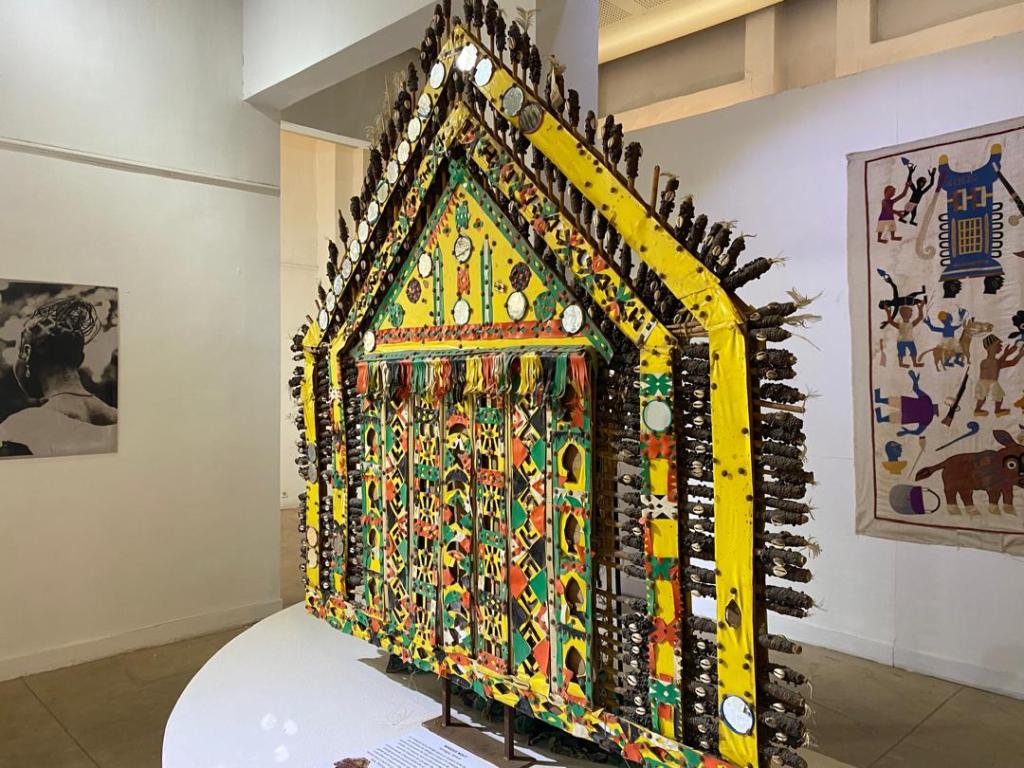
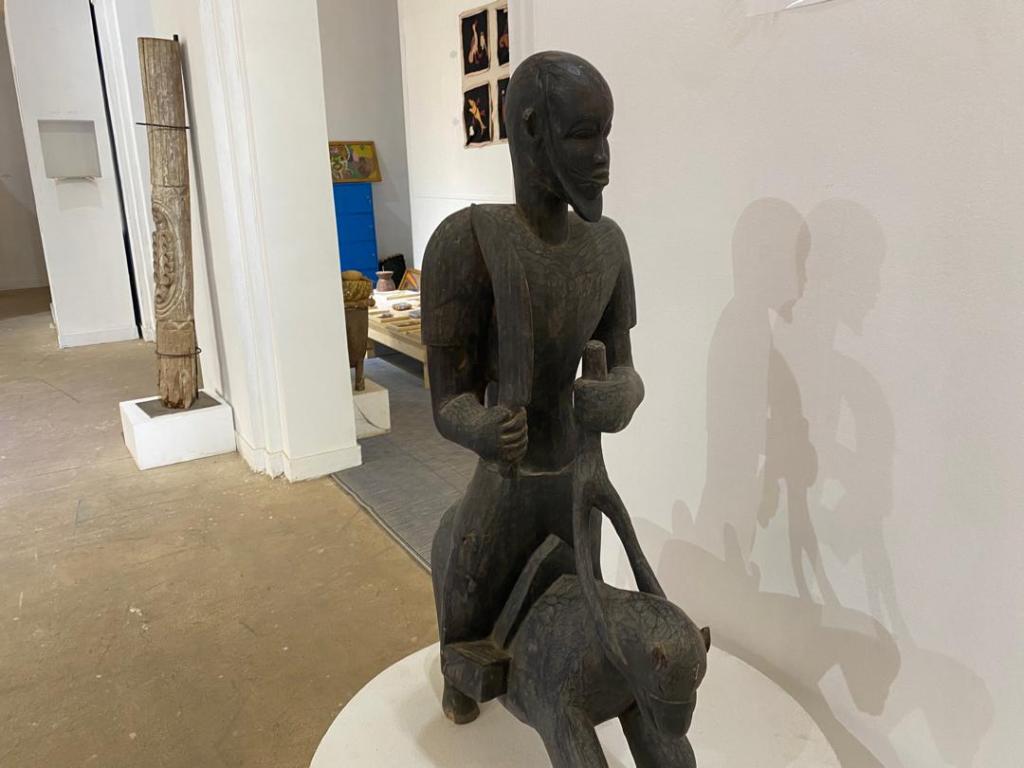
A museum operates through rational activity — it’s a thinking system. For instance, there are institutional principles embedded in the staff, passed down from generation to generation. In its early days, the museum displayed its collection through dioramas, which were replaced in 2010 with glass cases and a more modern presentation. We call it a “permanent exhibition,” but in truth, it’s static — eternal. Nothing moves. I wanted to understand why the public wasn’t coming. So, we conducted a study with university students on the museum’s visitors. The result was clear: over 80% of the visitors were tourists. Senegalese audiences weren’t coming to see the historical objects; they were drawn to contemporary art exhibitions instead. Under these conditions, the museum was not renewing itself in the eyes of the Senegalese public. I concluded that the only way to provoke a new reading was through a kind of violent rupture.
How do you explain this lack of interest from the local public in visiting the museum?
It’s a complex issue. First, these objects were not selected by the local population. Sociologically, the museum was associated with the colonizer, with foreign tourists, and the objects were perceived as belonging to “the other.” People have always observed the museum from a distance.
Islam and the taboos surrounding fetishes also contributed to keeping these objects at arm’s length.
So organizing contemporary art exhibitions was an effective strategy to attract the local public? When did you start doing that?
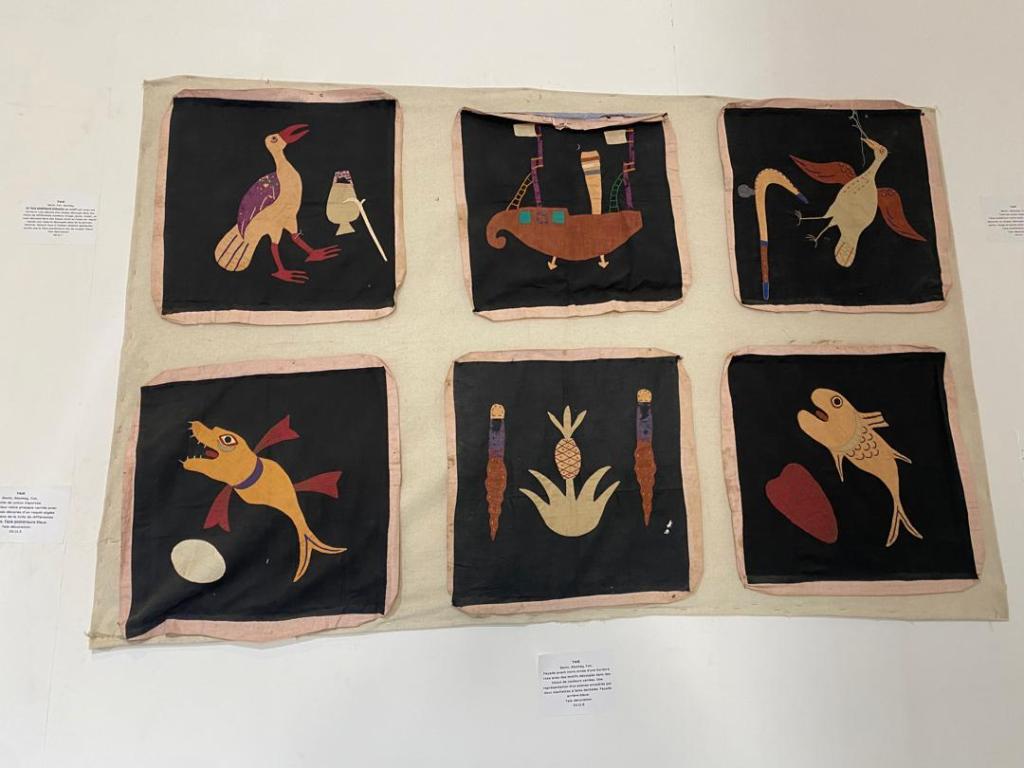
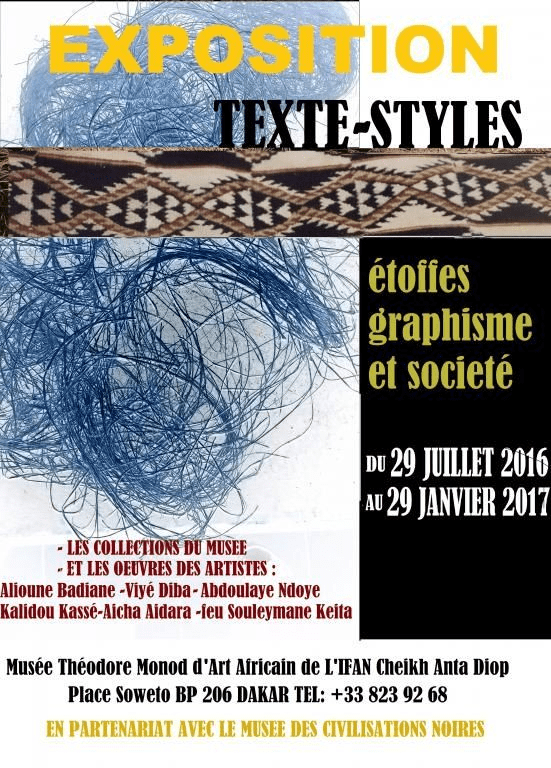
I started organizing contemporary art exhibitions as soon as I arrived, although not yet with such a deliberate strategy. In 2016, there was the planning conference for the Museum of Black Civilizations. Since thousands of people were invited, there needed to be an exhibition to show them. So, I put together a textile exhibition here at the museum with six contemporary artists: Kalidou Kassé, Viyé Diba, Abdoulaye Ndoye, Souleymane Keïta, Alioune Badiane, and Aïcha Aïdara. We displayed their works alongside the museum’s textile collection. At that time, it was still intuitive — linked to my postdoctoral work on Création Art Patrimoine, where I was studying contemporary artists interacting with African heritage.
So is that when you began establishing a real dialogue between contemporary art and heritage?
Yes, I initiated the Création Patrimoine program. The idea is to invite artists to engage with the collections in order to renew the gaze, re-enchant the objects, and give them new life. For the textile exhibition, we had featured the artists because their materials echoed those found in the museum. But they hadn’t had the time to truly immerse themselves in the collections. Now, we invite them to immerse themselves in the objects, to conduct research, and to create from them. It’s a dialogue between past and present, between heritage and contemporary creation. And to me, that’s essential to decolonial work: bringing artists and their knowledge back into the process.
What does the “Création Patrimoine” model look like in practice?
All our projects — including the recent Reconnecting Objects — follow a two-phase approach. With this Création Patrimoine program, the idea was also to bring together two types of knowledge: that of classical researchers, who study objects using scientific methods, and that of artists, who work with different approaches — more intuitive, sensory, and sometimes empirical.
Why this approach that links researchers and artists?
I came to understand that in certain sensitive contexts, researchers can face blockages: they’re constrained by methodological, ethical, or ideological limits. For example, they can’t afford to make anachronistic assumptions or speculate too broadly. Whereas artists can cross those boundaries. They can ask different questions, open up new pathways. This is what I call creative anachronism. And often, it’s where deeper questioning begins. I saw this very clearly in France, where in several museums (in Bordeaux, Nantes, etc.), curators were bringing in artists to help overcome the blockages related to slavery heritage. So I brought this same approach — aligning scientific work with artistic practice — here.
What impact has this had?
This approach has two major impacts. First, artists create contemporary artworks inspired by historical objects, which draws in a new audience.
Second, the perception of those objects changes, because they are reinterpreted and reactivated. For example, Hervé Youmbi worked on the Ejumba mask, putting it into resonance with the Grassfields masks of Cameroon and creating new artworks. Ibrahima Thiam drew inspiration from colonial photographic archives. Each project combines creation and reflection, generating artistic research that represents a different form of knowledge. To me, this is a concrete decolonial project: reconnecting society with its objects, giving them new meaning, linking tangible and intangible heritage, and passing that on to future generations through experimentation, mediation, and hands-on material engagement.
What would you say to directors of other ancient art museums in Africa who are also struggling to attract public interest? Would you suggest emphasizing the dialogue between heritage and contemporary creation?
That’s not the only solution. Mediation plays a fundamental role in transmission. Studying an object and conveying information about it is a first step, but transmission can go as far as enabling the public to recreate the object themselves. This perpetuation of heritage is based on the principle of transmission — particularly through the connection between past and present, which becomes visible in artistic creation. The central link is the material itself, which speaks through an empirical form of transmission — through the handling and manipulation of the object. My dual role as curator and theorist has allowed me to ground theory in concrete, observable cases on-site: the material, the tension between the artist’s body and the medium. Heritage transmission happens through this direct interaction — all the way into the mediation space.
Do you have a concrete example?
We recently received a kora that belonged to Soundioulou Cissokho. I often use the kora to illustrate the connection between past, present, and transmission. The one we exhibited was made with deer sinew. But when musicians began to travel — especially to Europe and the U.S. — they realized that the kora could only truly be played in Africa. In colder climates, the material would expand, and the sound would become heavy and dull. So they began to adapt the instrument, replacing the sinew with nylon fishing line, which responded better to climate changes. Later, the monks of Keur Moussa modified the kora again, introducing guitar tuners to make tuning easier. Today, the kora continues to evolve — but its use, its symbolism, its intangible heritage remains intact. This is an instrument that has crossed centuries, changing form and materials while staying fundamentally the same. Through educational workshops, children now engage with it and begin to reshape it in their own way. And that’s the essence of heritage transmission: the form may change, the material may change, but the knowledge, meaning, and memory endure.
What role does memory play in contemporary African art today?
Memory can take many forms — a concept, an image, an object — depending on the artist’s approach. But in all cases, it functions as a creative catalyst, whether treated in a conceptual or more tangible way. In Hervé Youmbi’s work, for example, the memory embedded in objects is central — such as the Ejumba mask dialoguing with Senufo masks. With Ibrahima Thiam, memory lies in the archive, which he reconstructs in his own way. Each artist engages with memory differently, but it remains a driving force in their creative process.
And what is at stake in the meeting between historical heritage and contemporary creation?
Above all, this encounter is about transmission. It reactivates history and memory while producing new knowledge — knowledge that is chosen, constructed, and shared. It also enables a deeper understanding of history itself. That’s why it was so important for me to explore this dynamic at the Théodore Monod Museum, which we’ve reimagined as an “experimental museum.”
Read also
In Southern Senegal, a Potter Preserves Culture One Sculpture at a Time
The State of Contemporary African Art Today: Dr. Ibou Diop’s Critical Perspective
The Evolution of Contemporary Art in Senegal: A Conversation with Bara Diokhané
 Bridging Africa and The World Through Contemporary Art
Leave a comment