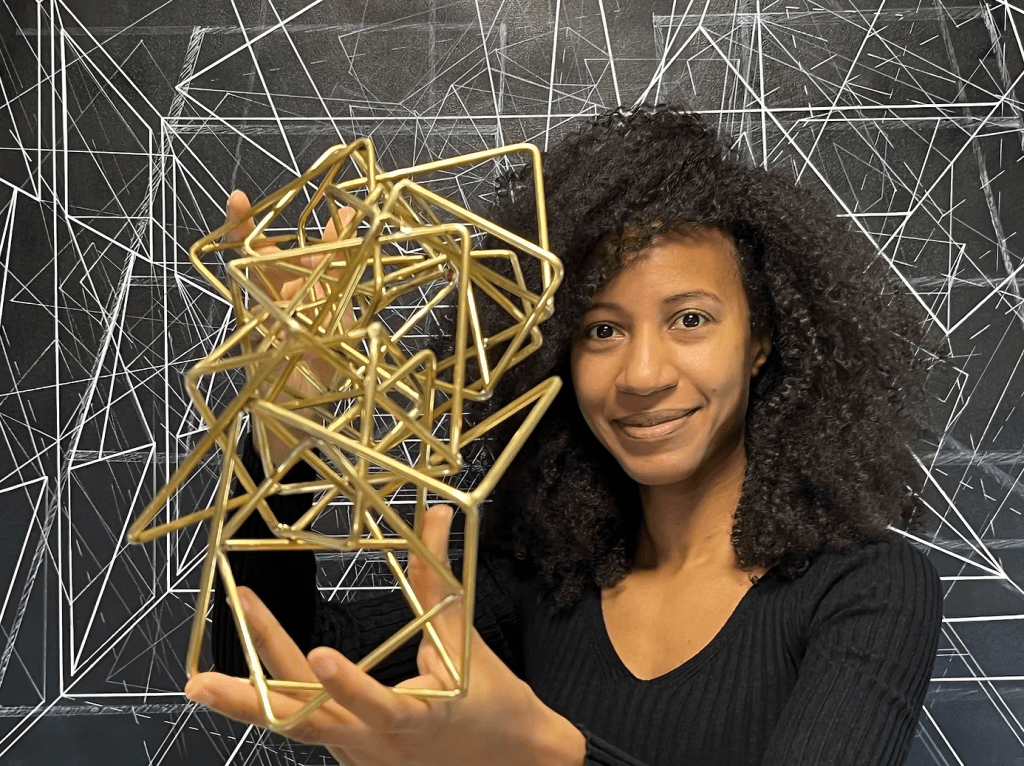

When the 61st International Art Exhibition of La Biennale di Venezia opens its doors on May 9, under the title In Minor Keys, Senegal will present its second official national pavilion. Curated by Massamba Mbaye, the pavilion features Caroline Gueye, a Senegalese artist whose rigorously conceptual work moves fluidly between the precise languages of astrophysics and the experiential realm of installation art. For her project Wurus — the Wolof word for gold — Gueye has created a spatial environment at Palazzo Navagero that uses gold not as literal material but as a point of departure to examine perception, power, and the constructed nature of worth. In this exclusive interview with DakArtNews, she discusses the origins of Wurus, what it means to represent her country on one of the world’s most important artistic stages, and why questions of seeing and spatial awareness remain central to her practice.
You will represent Senegal at the Venice Biennale 2026 with the project “Wurus” (gold in Wolof). How did this project come about, and what does it mean to you to represent your country?
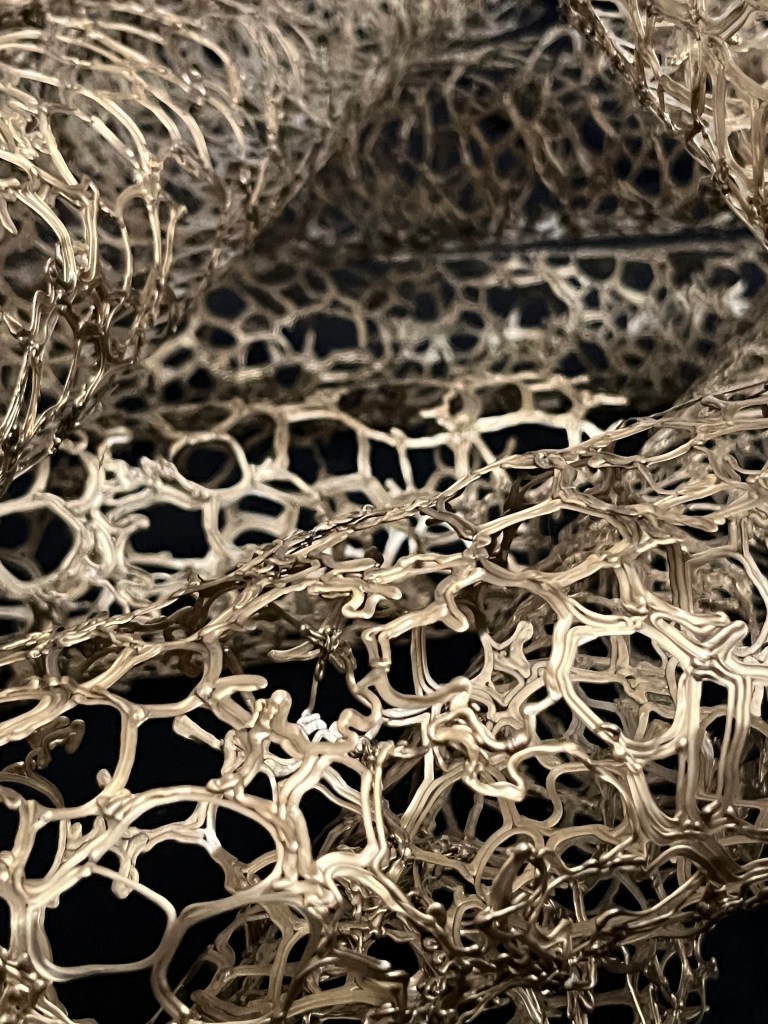
WURUS emerged from a long-term investigation into the conditions of value — how it is constructed, perceived, and circulated. To represent Senegal at the Venice Biennale is both an honour and a responsibility. It is an opportunity to present a work that does not aim to represent a predefined narrative, but to open a space of reflection through perception and spatial experience.
“Wurus” seems to connect astrophysics, African history, and contemporary issues. How do you articulate these different temporalities within the exhibition?
Rather than articulating different temporalities as separate layers, I approach them as coexisting. References to astrophysics, historical forms of value, and contemporary systems are not presented as narratives, but as underlying structures that inform how the work operates. The installation does not illustrate these temporalities; it creates a space in which they can be perceived differently.
Gold is both a cosmic material and a source of earthly power. What does this duality allow you to question?
Gold is interesting because its value appears self-evident, while in reality it is entirely constructed. Its presence across cosmic, historical, and economic contexts allows me to question how value is projected onto matter. In WURUS, gold is not treated as a subject, but as a point of departure to reflect on the mechanisms that produce value.
What do you hope the audience will experience or take away from the installation?
I do not expect a specific interpretation. What I hope is that the viewer becomes aware that what they see depends on where they stand — that perception is not neutral. If the work allows even a slight shift in this awareness, then it has already begun to operate.
Your trajectory is quite unique, bridging astrophysics and contemporary art. At what point did you feel these two fields could meaningfully intersect in your practice?
My trajectory did not shift from one field to another; it evolved through a continuous questioning of how we perceive and understand the world.
At some point, it became clear to me that both astrophysics and artistic practice are deeply concerned with perception — how we access what is not immediately visible, how we construct knowledge from partial information. This is where the intersection became meaningful. Not in terms of subject matter, but in terms of method.
Rather than illustrating science, your work draws on it in more complex ways. How do you approach the relationship between science and artistic creation?
I do not approach science as something to illustrate or translate visually. It functions more as a conceptual framework.
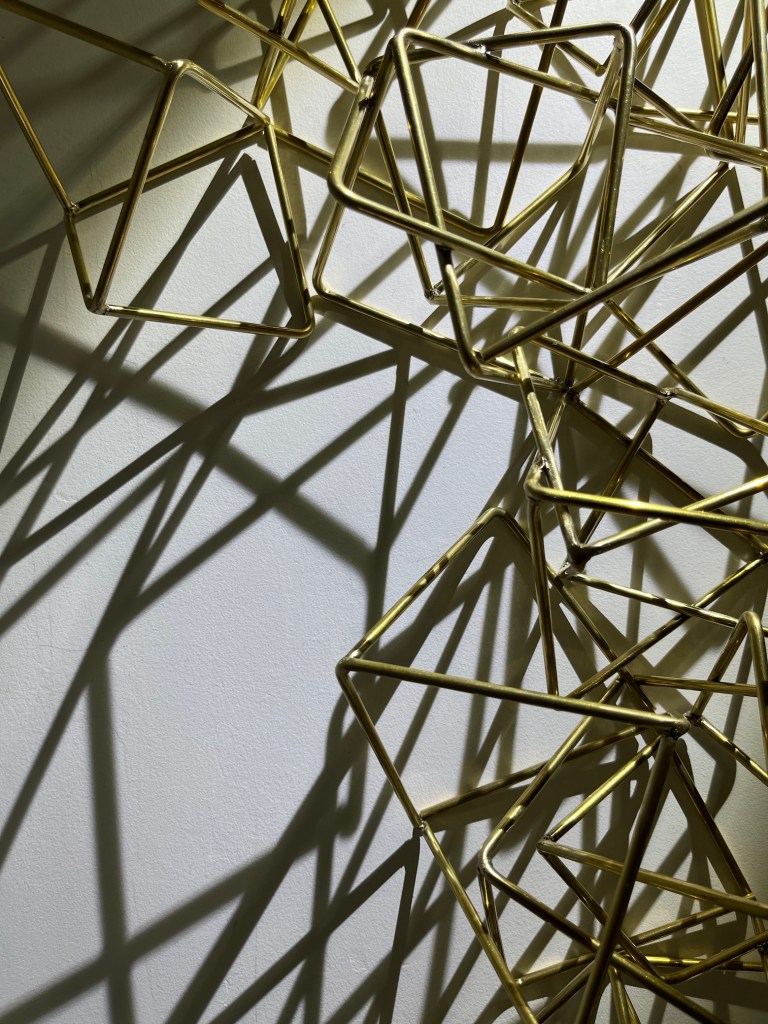
Scientific thinking allows me to consider space, position, and observation as active conditions rather than neutral givens. In my work, this translates into spatial systems that structure how things appear, rather than images that represent scientific ideas.
Much of your work explores perception, visibility, and spatial orientation. What interests you in destabilizing the viewer’s sense of perception?
What interests me is that perception is often assumed to be stable and reliable, whereas it is always constructed.
By destabilizing perception, I am not trying to disorient the viewer, but to make visible the conditions through which what we consider “real” emerges. This shift allows the viewer to become aware of their own position within the act of seeing.
Your installations often engage with notions such as thresholds, reflection, and distance. Are you aiming to disrupt, reveal, or re-educate the act of seeing?
I would say that I am interested in revealing rather than disrupting.
The work does not impose a reading; it creates conditions in which perception becomes active. Through thresholds, reflections, and spatial relations, what is seen is never fixed but continuously reconfigured.
 Bridging Africa and The World Through Contemporary Art
Leave a comment