
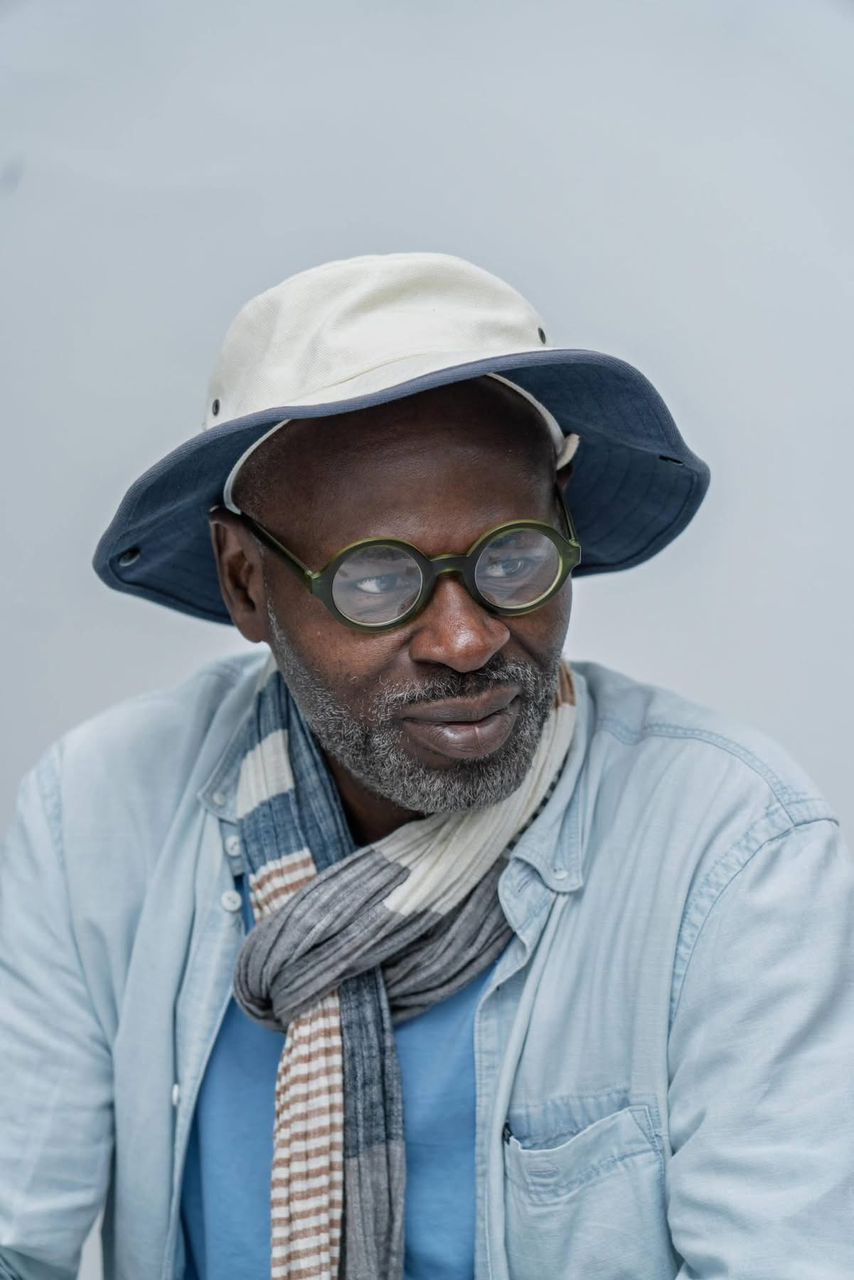

As African artists gain increasing international recognition, critical discourse on the continent often remains dominated by promotional writing rather than rigorous analysis. For Dr. Célestin Koffi Yao — Ivorian critic, artist, gallerist, author, and scholar — this imbalance reveals a deeper structural problem. Bridging artistic practice and theoretical reflection, he advocates for a more demanding form of criticism, one grounded in careful judgment rather than praise. To critique, he insists, is to put art on trial. In this conversation with DakArtNews, Dr. Koffi Yao reflects on the crisis of art criticism in Africa, denounces the culture of complacency, and explains why genuine judgment — even when uncomfortable — is essential for the development of a truly vibrant artistic scene.
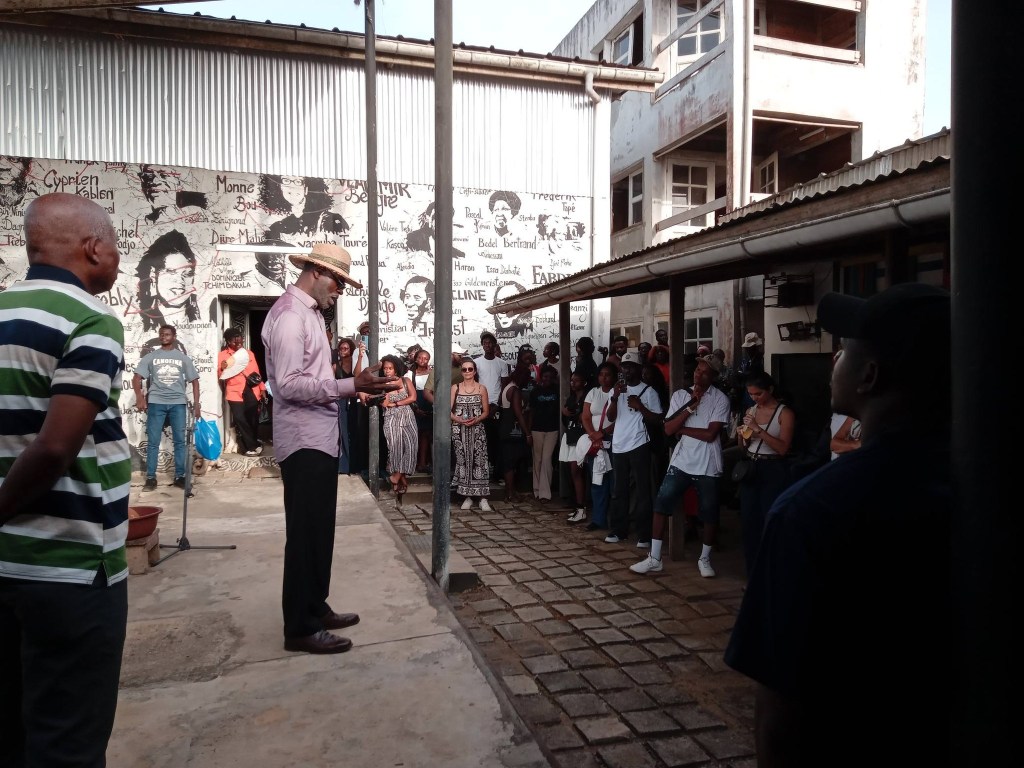
During the international symposium “Rethinking Art Criticism: Perspectives on Contemporary Creation in Africa”, held at the University of Bondoukou (Côte d’Ivoire), your presentation was titled “From Critique, or the Art of Putting Art on Trial.” How did you come to think of art criticism as a form of putting artworks on trial?
Putting art on trial means judging it in the literal sense, as one would bring an accused person before a court: analyzing it in depth in order to uncover the essences and truths it contains.
This terminology comes directly from my PhD supervisor, Éliane Chiron, who spoke of “the artwork on trial.” I am after all a visual artist, trained at the Fine Arts schools of Abidjan and Paris. When I wrote my thesis, I put my own artistic practice on trial. This involves poietics: not only judging the finished artwork, but all its stages and transformations — from its psychological roots to the choice of materials and their implications in the process of art-making.
This habit of putting my own art on trial naturally led me to compare my work with that of others, to situate it within art history in order to assess its originality and specificity. Once this requirement was internalized, it seemed logical to also put other artists’ works on trial, without emotional bias, even if this led to tensions and the loss of certain friendships.
For me, critical judgment must remain objective. It belongs to knowledge and epistemology. It should not be diluted by friendship or complacency. History shows that at the end of the modern period, some artists complained about being poorly judged and demanded only favorable criticism — a kind of “griot” who merely praises them. However, art criticism is not about flattering or pleasing. It can be uncomfortable, and that is often necessary.
What does this “trial” approach reveal that other methods do not?
There are different ways of putting art on trial: aesthetically, historically, sociologically. In Côte d’Ivoire, many critical texts adopt a sociological approach: they discuss society and events such as war or crisis, but often forget the artwork itself — its essence, its material construction, its technical choices, and its place in art history.
My approach is practical and rooted in artistic practice. My training at the Fine Arts schools allows me to master techniques such as oil painting, acrylic, collage, direct carving in wood or stone, photography in black and white or color, contrasts, and lighting. This sometimes allows me to act as a “co-author,” as Paul Valéry and Marcel Duchamp suggested, through my ability to deeply perceive an artwork. The critical viewer I become is therefore a “dangerous” one, as I scan the work and distinguish what is intentional from what is accidental or incidental.
Do you think one must have been an artist to be a more accurate art critic?
It is an asset. When someone looks at a work and immediately identifies a sculpture when it is in fact a painting, this already reveals a certain lack of understanding of the field. There is a gap in the comprehension of artistic practices. In my view, practical experience in artistic creation broadens the gaze, expands horizons, and deepens knowledge of artworks instead of remaining at the surface.
Do you share the observation of a crisis in art criticism in Africa?
Absolutely. This crisis first stems from the crisis of art academies. When they exist, they mostly produce teachers for secondary education, along with standardized curricula. Few students become professional artists, as salaried employment takes precedence: teaching offers financial stability that artistic practice does not. This discourages even the most talented and stifles creativity.
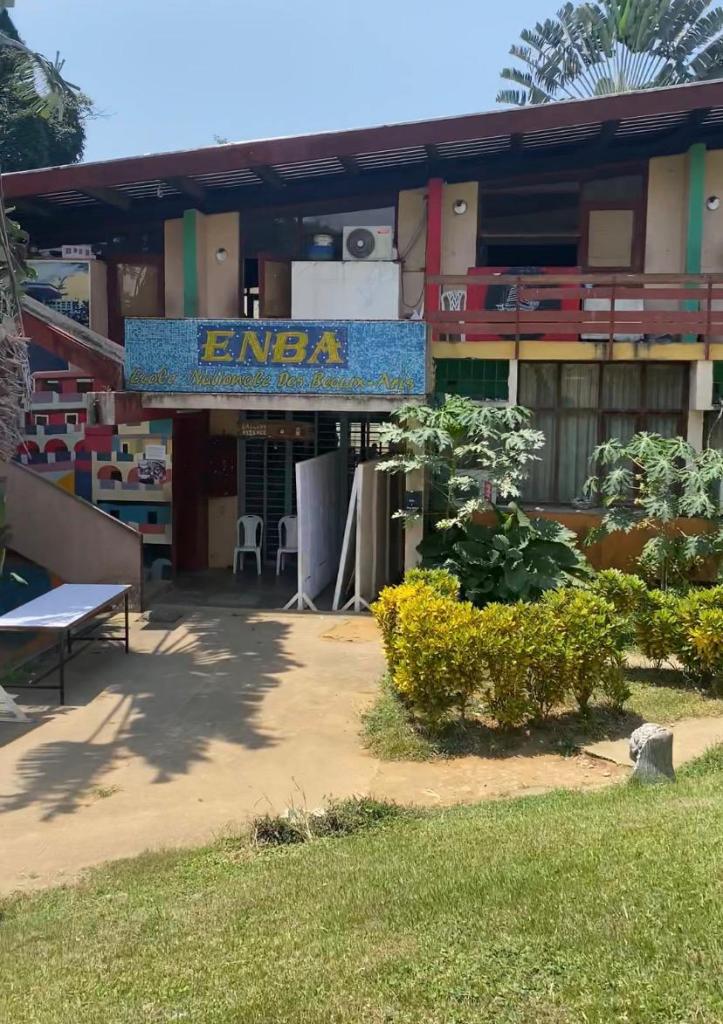
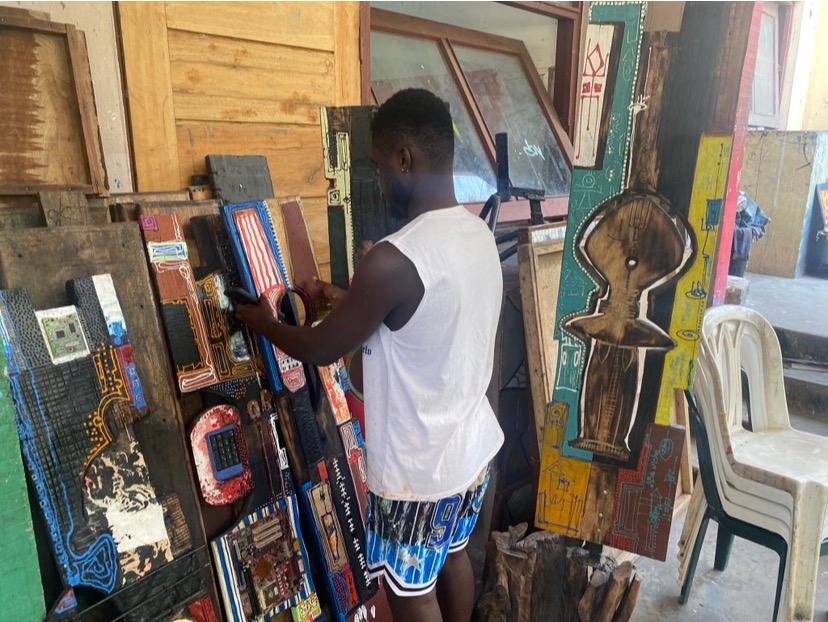
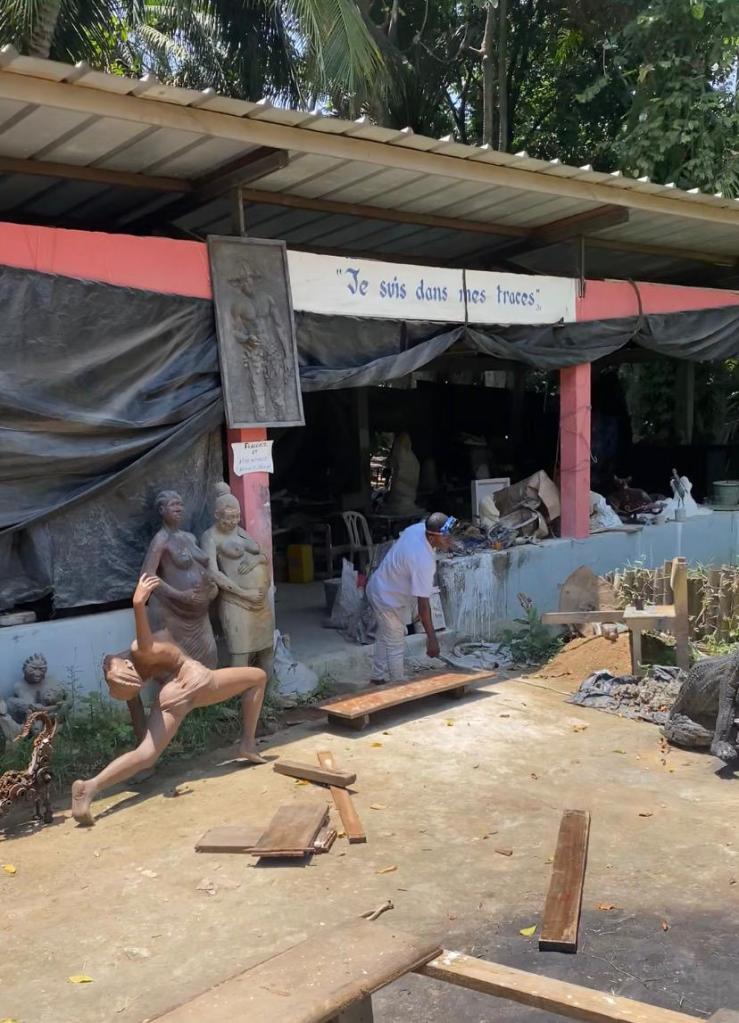
Added to this are the weak professionalization of art programs and the absence of dedicated training in art criticism. As a result, there are almost no real art critics in Côte d’Ivoire. What is often published are promotional, poetic, or flattering texts rather than rigorous critical analysis.
What is then a rigorous art criticism today, and how does it differ from promotional discourse?
A true art critique must first present the basic facts of the artwork: the artist, the title, dimensions, technique, material, and specificity.
It must then situate the work within art history — identifying movements such as Cubism, Expressionism, Surrealism, Pop Art, and placing it within periods such as modernism, contemporary, or postmodern art.
Finally, it must question its aesthetic and philosophical contribution. At this stage, one is led to interrogate artistic know-how in its truth, but also in what it transmits — whether something fruitful or, on the contrary, unsettling. For instance, consider performance art where artists expose, wound, or scarify their own bodies, as in the work of Michel Journiac. Such practices question the very limits of art.
Similarly, when an artist like Piero Manzoni produces “Artist’s Shit” by placing his excrement in cans exhibited in galleries, another question arises: can such production be sold as an artwork? At this point, moral judgment or common sense may be challenged. It is then that the entire inquiry is entrusted to the art critic’s discernment. The critic analyzes the works according to their objectives and produces an informed interpretation.
The art critic is, in my view, a form of erudite. They are capable of grasping diverse languages and meanings, and of making them intelligible to the public while acknowledging the subjectivity inherent in their perspective. The critic must also master language and write with clarity. At times, they rise to the level of the artist: becoming a producer of meaning, capable of validating or revealing artistic profiles.
“In Africa, social proximity often encourages avoiding conflict.”
You said earlier that the critic should not be diluted by complacency. Why does a “complacent discourse” on art persist in Africa?
It is often due to ignorance or lack of training. The arts and culture section is sometimes assigned to general-interest journalists (covering economics, politics, society, the environment, etc.) who are not familiar with the conventions of the field. Like any profession, criticism requires training.
Can art critics in Africa fully assume a position of intellectual confrontation with artists in contexts where artistic networks are sometimes close-knit?
In African contexts, social proximity (“the village effect”) often encourages avoiding conflict. One prefers not to offend. Yet I have personally assumed harsh criticism, even toward friends. A severe critique can generate curiosity and debate. I reject complacency.
In Ivory Coast, there have been instances where artists have filed lawsuits against art critics, claiming that their comments amounted to defamation or, worse, jealousy. In response, some critics stopped writing about exhibitions they did not support. As a result, some major exhibitions — including in France — received no critical coverage. Art journals remained silent.
And what’s interesting is that the artists themselves responded. Some began reaching out to critics, essentially telling them, “Even if you’re harsh in your assessment, please write about our work.” Because an exhibition without critical discourse remains invisible. Paradoxically, even negative criticism can increase visibility and public interest. This shows that art criticism is never truly “bad”: it always contributes to making the artwork exist in the public sphere.
What theoretical tools are essential for art criticism today?
First, mastery of language: precise writing, without errors, in a clear but accessible style. Second, deep knowledge of art history — from Antiquity to contemporary art — and of aesthetic theory (Adorno and others).
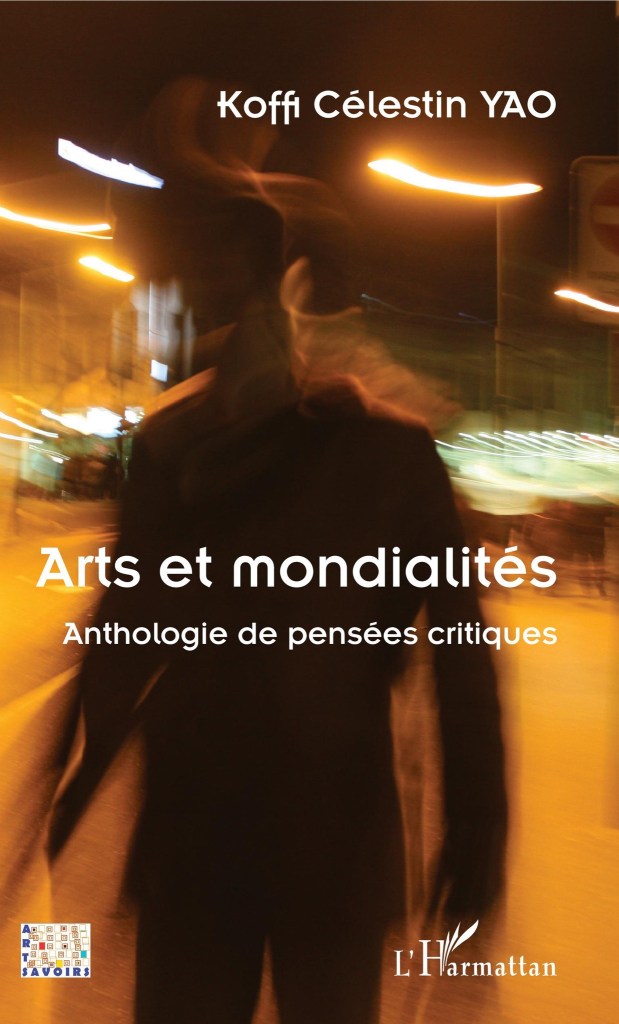
The critic must constantly refine their knowledge: reading, documenting, following publications, and engaging with contemporary artistic trends. They are a “knower,” a scholar capable of analyzing both Michelangelo and contemporary Ivorian artists such as Armand Boua, Jacobleu, or Dükü Ernest.
“One of the most problematic ideas is the claim that ‘African contemporary art’ exists as a category.”
How can European critical traditions be articulated with African contexts?
No culture can remain isolated. And that is why I agree with Claude Lévi-Strauss when he says in Race and History that no culture can remain isolated. It is through the interplay of cultures that a culture manages to improve itself. And sometimes, it can be surprising to see a similarity between, for example, Gouro art, Baoulé art, Senufo art, and the art of the Aboriginal peoples of Australia.
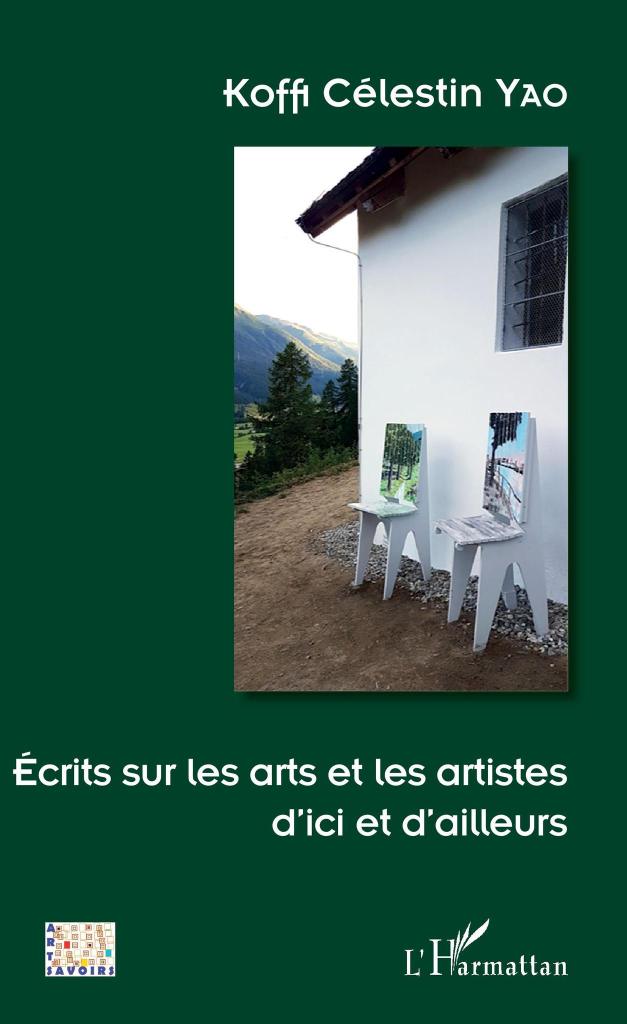
And even when we take mountain art—the art of the Valais region—with its expressionist sculptures, and compare them to the sculptures of the Wê peoples, there is a striking similarity. Moreover, primitivist art has enriched Western art. So, for me, there is something akin to a shared paternity.
Today, art education in Africa draws heavily on the Western model. There is no longer such a thing as “contemporary African art” or “contemporary Western art” in a compartmentalized sense. Ouattara Watts is right to reject the label “African artist.” There is no such thing as an “African artist” as an isolated category, nor is there such a thing as an “African” art critic. An art critic worthy of the name analyzes any work of art, regardless of its origin.
In one of your texts, you also mentioned the ability of criticism to deconstruct established assumptions. In your view, in the African context, what are the most persistent assumptions?
One such assumption is the claim that there is no African contemporary art. And one of the most problematic ideas is the claim that “African contemporary art” exists as a category. Another example of this kind of misconception is “Paris Noir” or even “Africa Remix.” These frameworks create a form of confinement within what is deemed “recognizably African.” I believe that skin color should not be a determining factor.
There are therefore a number of assumptions that we need to abandon. In reality, these are closed enclosures into which artistic productions are being forced. This is why I greatly appreciated Jutta Ströter-Bender’s book Contemporary Art in Third World Countries, where she shows that many artists are tired of being treated as ethnically identifiable artists.
There are so many false assumptions that need to be deconstructed today. I believe one of the essential roles of art criticism is precisely this work of deconstruction.
Today, we can acknowledge that artists such as Aboudia, Yinka Shonibare, El Anatsui, Ouattara Watts, Barthélémy Toguo, Amoako Boafo, and many other artists of African origin or from the diaspora are being sold at Christie’s and Sotheby’s, the world’s two largest auction houses. I am pleased that artists of African origin are finally managing to break down these previously rigid barriers that prevented them from being seen elsewhere in their full international dimension.
There have always been exhibitions such as Magiciens de la Terre, Africa Remix, or Partage d’exotisme, which carried a certain element of exoticism. While it is true that they contributed to highlighting artists born in Africa, they also tended to confine them within identity-based frameworks. These are assumptions that must be absolutely deconstructed.
What specific form of knowledge does art criticism produce, compared to art history or cultural journalism?
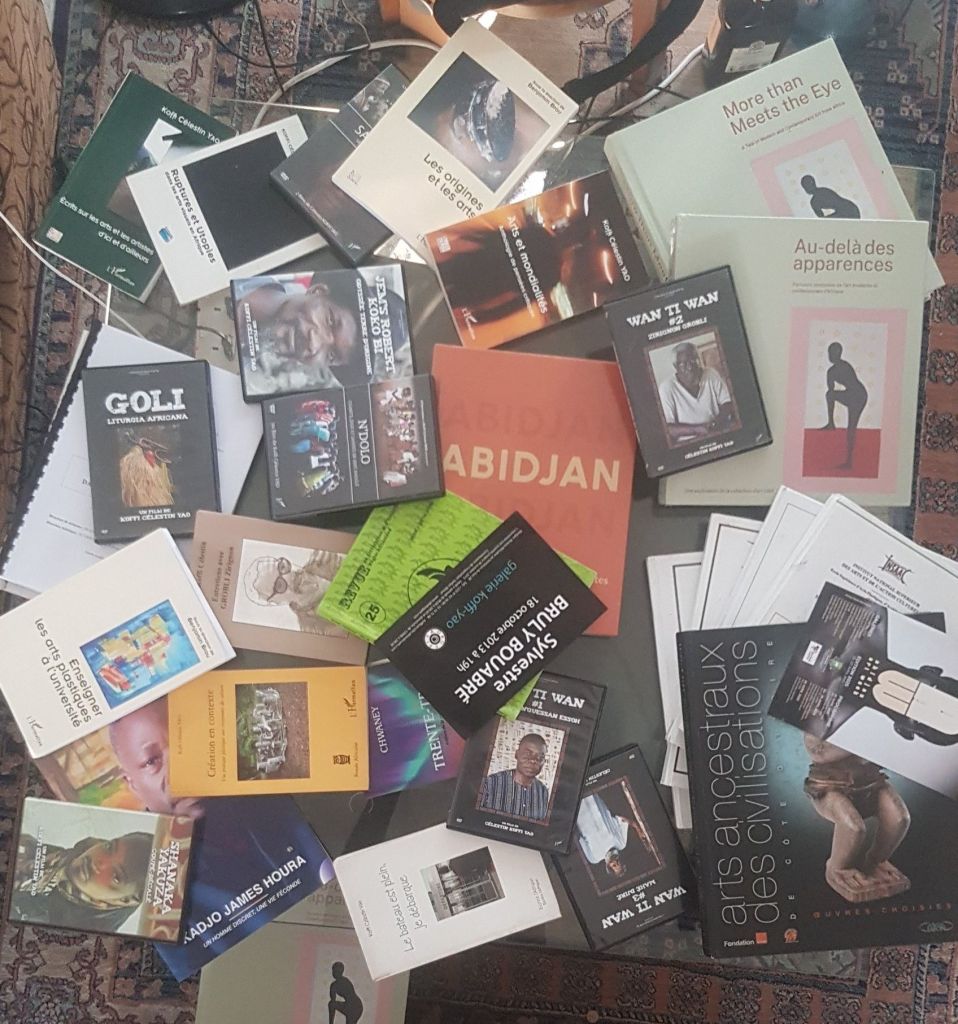
Unlike cultural journalists, who are often generalists, the art critic goes deeper: they analyze, contextualize, and question. They choose their field of specialization (for my part, visual and plastic arts) and continue to develop their expertise throughout their career. Unfortunately, in Côte d’Ivoire, access to specialized books and journals remains limited, which slows down professionalization.
Art criticism is an act of knowledge and courage. It does not have to be kind, flattering, or necessarily benevolent. It must tell the truth, even when it disturbs, provokes, or unsettles — because this is how art progresses.
Read also
The State of Contemporary African Art Today: Dr. Ibou Diop’s Critical Perspective
Abidjan’s New Wave: The Young Artists Shaping Ivory Coast’s Creative Future
 Bridging Africa and The World Through Contemporary Art
Leave a comment