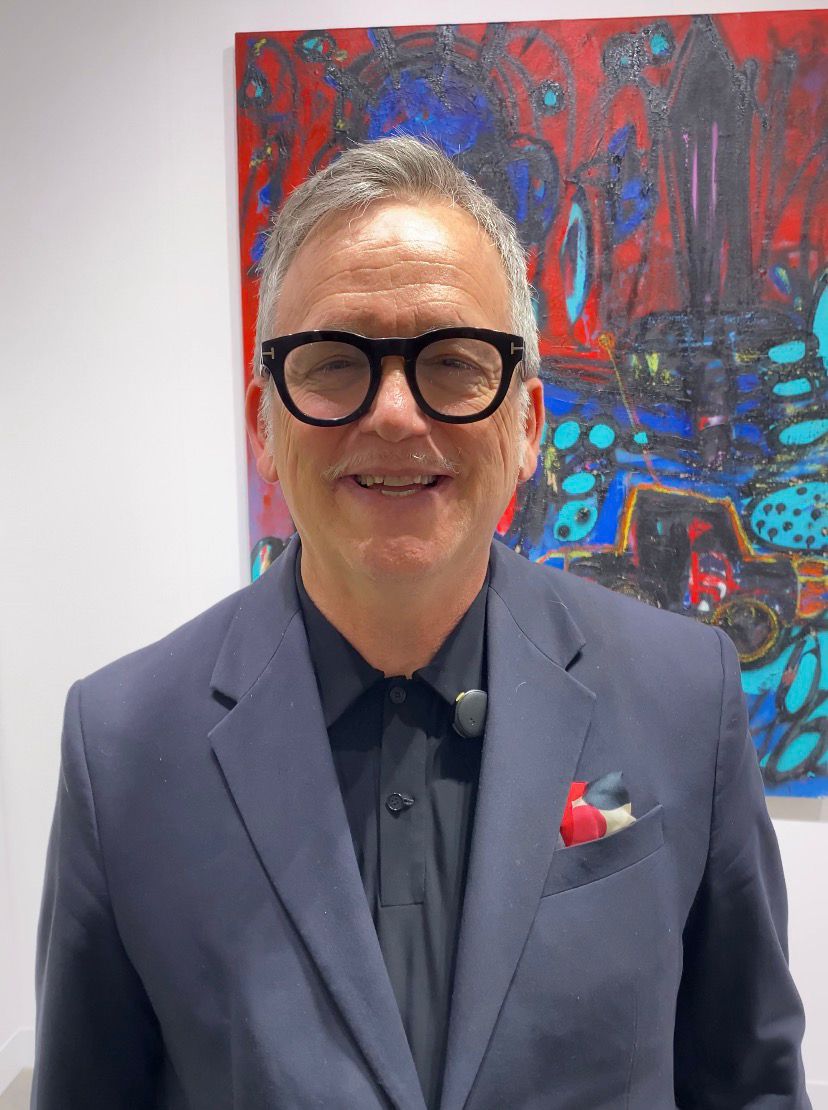

He has been called one of the most influential art dealers in the world. But when you sit down with Ethan Cohen, the first thing you notice is not the reputation. It’s the energy. The questions he asks. The way he leans in when he talks about an artist he loves.
The New York gallerist, who built his reputation over nearly four decades by being the first to bring Chinese avant-garde art to American audiences, has spent the last fifteen years turning that same restless attention toward contemporary African Art.
Today, Cohen is also building something more permanent: a foundation with over 10,000 books and thousands of video archives, a resource he hopes will outlast him. During Volta Art Fair, one of the events taking place alongside Art Basel, DakArtNews met him to talk about his journey into African art, what collectors are actually looking for, and why he believes the art world still has not fully reckoned with Africa’s influence on modernism.
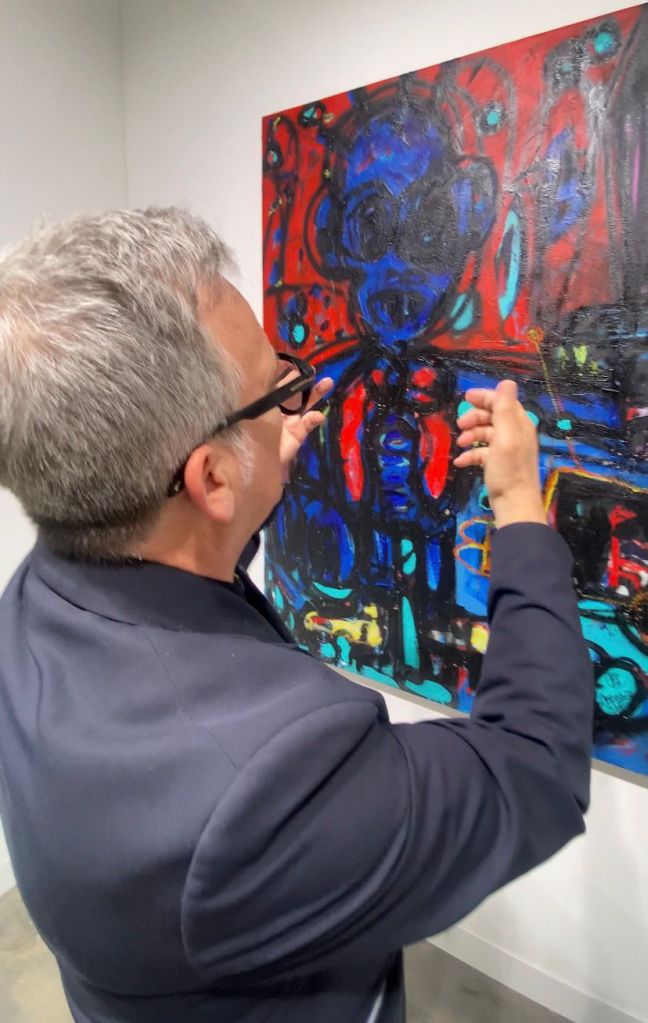
You’ve been dealing art for nearly 40 years, beginning with Chinese contemporary art. What’s your story with African art?
Well, it’s so interesting. When I was in college, one of my dear friends was from Nigeria. He was Igbo, and I was already intrigued by tribal art. I had started collecting years earlier. In fact, my grandmother was an art collector and owned some tribal pieces from Africa and Oceania. My mother was an art historian at the Boston Museum, so I grew up surrounded by art and wonderful collections.
I think I became interested in African art while I was still in high school. Then, when I got to college, I met my friend from Nigeria, who had also started collecting African art. Later, when I opened my gallery in New York, he was celebrating his thirtieth birthday, and I said, “Why don’t I throw a party for you?” So I curated an exhibition of the African art he had collected.
I liked the work, but it wasn’t as edgy, innovative, or exciting as some of the things I knew were happening in Africa. As I grew as an art dealer, I remained interested whenever I encountered African art. Then, about fifteen years ago, when the 1-54 African Art Fair started, my antenna immediately went up. I thought, “I better find out what’s happening in Africa.”
What was interesting is that two artists immediately caught my attention: Aboudia and Gonçalo Mabunda.
At the time, I was much more of a generalist than a specialist. My focus was on Chinese contemporary art, and Africa felt very far away. I remember attending a conference at 1-54. Sitting right in front of me was one of my biggest collectors of Chinese contemporary art, Ambassador Uli Sigg and his wife. I tapped Uli on the shoulder and asked, “Uli, what are you doing here?” He looked at me and smiled. I think collectors are always interested. We’re always curious. We’re always looking.
For me, Africa felt fresh and different. It was something I didn’t know enough about. I never studied anthropology in college, which I now regret. I think I would have loved it. In a way, every day now feels like I’m a living anthropologist. I want to understand African societies. I’m interested in every country, every culture, every community. I’m interested in the tribal traditions and their contemporary expressions.
Aboudia drew me in because he incorporated references to African sculpture and visual culture into his work. Through him, I realized how little I knew and how much there was to learn. Time is limited. We need to stay curious, and we need to plunge in.
“Picasso looks like me — not the other way around.”— Kiné Aw, as recounted by Ethan Cohen
You often speak about the connection between African art and the roots of modernism. Why is that relationship so important to you?
One of my missions became connecting modernism back to Africa. Everything we celebrate in contemporary art has roots in modernism. If you love Marcel Duchamp, Picasso, Léger, Braque, or Dubuffet, you’re also looking at artists who were influenced by Africa. I wanted to go to the source.
I collect traditional African art that directly influenced modernism. I own an Adége sculpture with enlarged legs and arms. If you look at it from the shoulders down, it resembles a Picasso painting from 1923. I love that piece because it opens a door to understanding what Picasso was looking at.
I also have a heddle pulley from the Ivory Coast that is the precise object Picasso copied for his monumental sculpture in Chicago. As a collector, I can touch and feel that history. It connects traditional African art to contemporary art, and I find that fascinating.
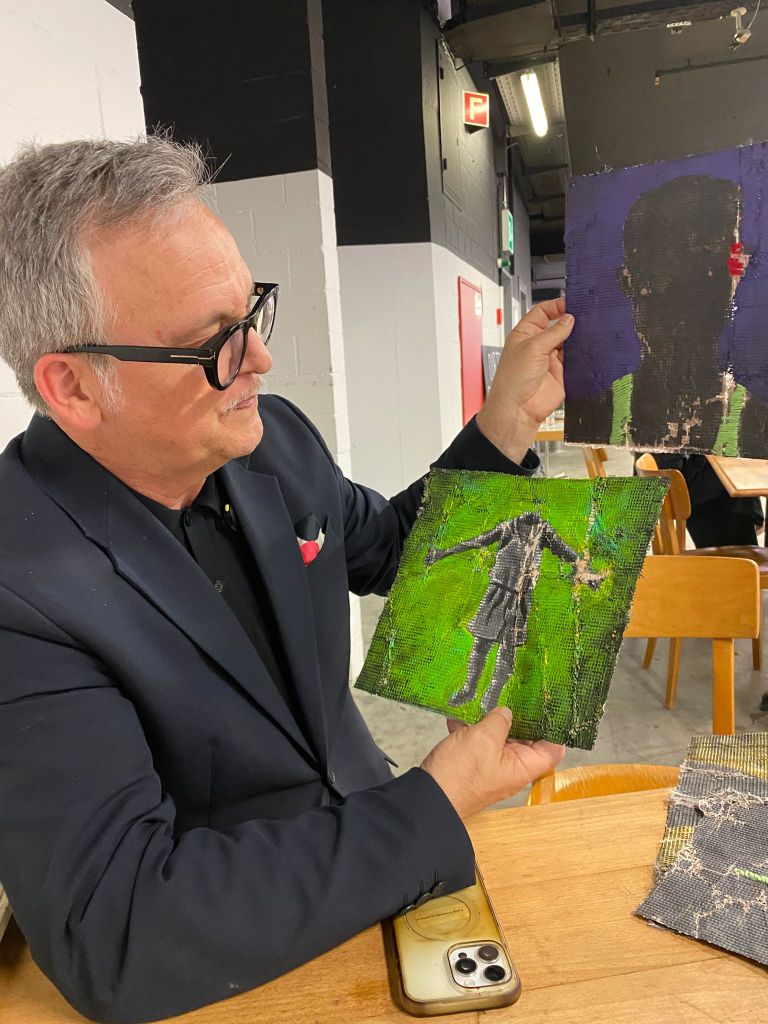
Do you have the feeling that Africa’s contribution to modern art is still not fully understood?
I remember speaking with the Senegalese artist Kiné Aw around eight or nine years ago. I told her that one of her works reminded me a little of Picasso. She became angry and replied, “No, it doesn’t look like Picasso. Picasso looks like me.” That was such a powerful moment. It reminded me how much education remains to be done about the influence of African art on modernism.
We have so much education to do to inform the world, to really understand where Picasso got a lot of his imagery. He said some of the best artists steal. And, Picasso was very open. He’s openly said he copied African art. Kiné is a hardworking artist. She has had museum exhibitions, we’ve shown her work several times, and she continues to grow. Through hard work, persistence, belief in yourself, and a little luck, breakthroughs happen. The important thing is not to give up.
What keeps you exploring new artistic territories?
What’s the fuel in my engine? I want to learn. I want to discover. Gonçalo Mabunda, for example, is an artist I find incredibly interesting. He uses bullets, guns, and other remnants of violence from Mozambique, but transforms them into what I would call contemporary tribal art. Instead of creating ceremonial objects with nails, as one might see in traditional forms, he takes instruments of violence and turns them into sculptures that speak about love, transformation, and memory.
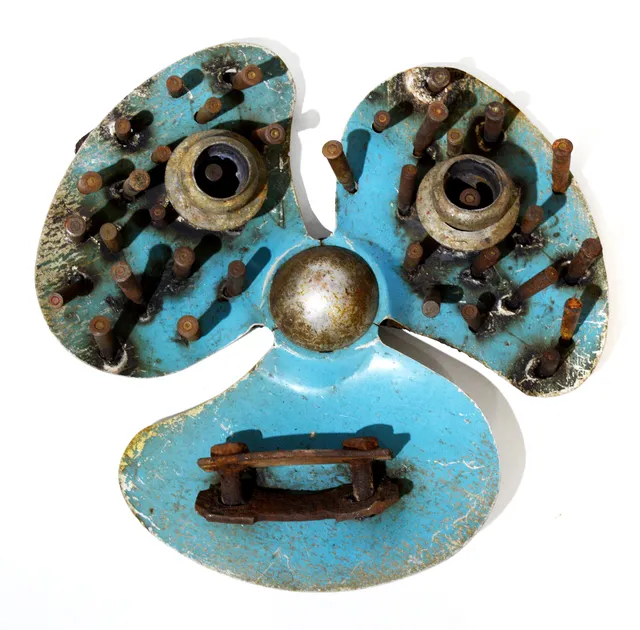
What fascinates me is that the work is innovative, deeply African, and political at the same time. It raises important questions: Why are all these weapons ending up in Africa? Who is selling them? France, Germany, the United States, Israel, the United Kingdom—we all share responsibility. His work reminds us that we are all citizens of the same world.
More recently, I was looking at one of the monumental installations of Moffat Takadiwa at the 154 African Art Fair. I actually collected Moffat’s work ten or twelve years ago. I loved what he was doing and even wanted to represent him at the time.
I remember visiting his studio in Zimbabwe and seeing millions of toothbrushes scattered across the floor. I thought, “Oh My God, all this recycled material is arriving in Zimbabwe, and he’s turning it into art.” I loved it immediately. To me, Moffat is one of the important voices of contemporary Africa.
Over the past decade, African contemporary art has experienced significant growth. Some observers worry that this could simply be a trend. How do you see it?
When the pandemic happened, I honestly thought business was over. I was almost ready to retire. Then something unexpected happened. At the end of the pandemic, interest in African art exploded. It felt fresh and different. Enough collectors had already entered the field, prices remained relatively accessible, and there was genuine excitement. At the same time, African American artists also became increasingly visible. There was a shift in the market and in institutions.
For artists from Africa and for Black artists more broadly, opportunities expanded. But success is never guaranteed. It’s difficult for every artist, regardless of where they come from. Whether you’re in Dakar, Brooklyn, or Beijing, the challenge is the same. If you know yourself, remain honest, and continue working, there is opportunity today. The same is true for women artists. Talented women have far more opportunities than they did thirty years ago.
“Collectors aren’t necessarily just looking because it’s African… What collectors in the world are looking for is talent.”— Ethan Cohen
Is there a common thread among the African artists you choose to work with?
Absolutely. They’re all A+ artists. What I mean by that is they have gone beyond the ordinary. They’re not simply trying to pass the exam. They’re thinking deeply. They’re digesting ideas. They’re finding new answers.
When I was a student, I wanted good grades, but I didn’t fully understand what excellence meant. Today I understand that being A+ requires knowing your field completely. It requires understanding art history, mastering your craft, and contributing something genuinely new.
One artist may be a sculptor, another a photographer, another a painter or video artist. One may be abstract and another figurative. What connects them is originality and excellence. They know how to create something fresh while remaining grounded in strong artistic foundations.
You’ve spent decades working with collectors. What are they looking for when they approach African art today? Is it the “African-ness” of it?
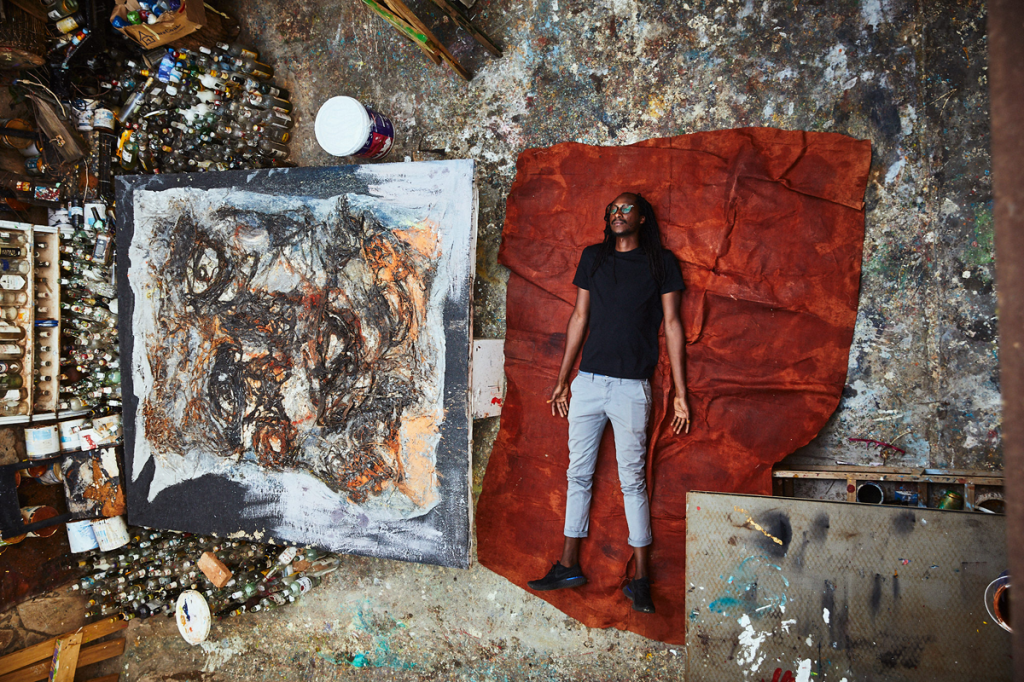
That is the six-million-dollar question. Honestly — no. Collectors are not looking for something because it has African coloration or a tribal feeling. Real collectors, art dealers, museums — we are looking for talent. You could have talent in Brooklyn, in Kigali, in Dakar, in Beijing. What we are looking for is artists who know themselves.
If you know your voice as clearly as Aboudia, as clearly as Frédéric Bruly Bouabré, as clearly as Gonçalo Mabunda, Innocent Kurunziza or Catheris Mondombo — those artists stand out. Their art is interesting, innovative, different. The material is honest. They know their voice. I think the region is less important. What’s most important is the trueness of getting to the message, because as collectors, curators, and museums, we are looking for artists who truly know themselves. That’s the challenge.
How do you discover new artists? What is your process?
It’s complex. Sometimes artists reach out with a simple message — hey, I’m an artist, I have slides. Sometimes they’re introduced by a curator. Sometimes I see them in an exhibition, an art fair, a museum, a nonprofit. When I come to Africa I visit studios. And some of my artists introduce me to other artists they admire — Aboudia has introduced me to many, Innocent too. So each artist becomes a bridge to others. All together, it’s about curiosity. Every month I try to look at new art, keep myself informed. TikTok, Instagram, email, WhatsApp, WeChat — I love showing art in new societies. I’m going to be curating a major exhibition in Shanghai in November for the Westwood Art Fair. At my core, I am a communicator, an educator. I love creating content. I love helping people learn.
What is the last African artwork you acquired, and why?
Frédéric Bruly Bouabré’s family was very generous to me. They offered certain works that were very special — made by Frédéric in the early 1970s, where he was using old record covers as his canvases, recycled material, trying to find his voice. You knew the time in which they were made because of those record covers that had traveled from the United States to Africa and were being repurposed.
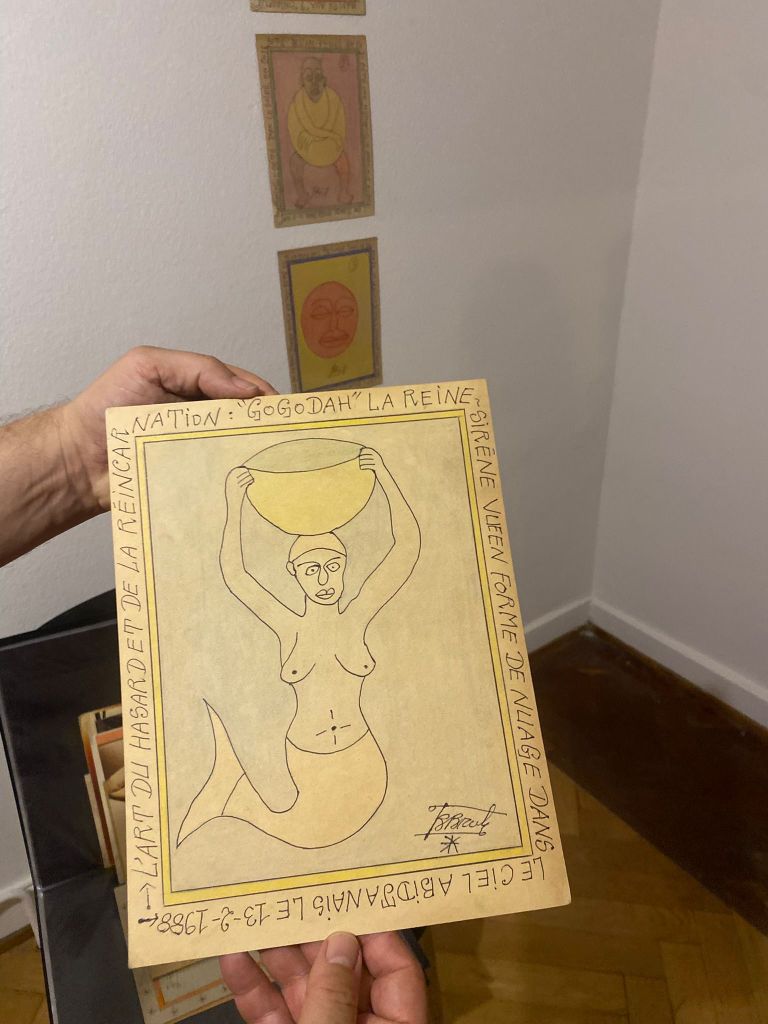
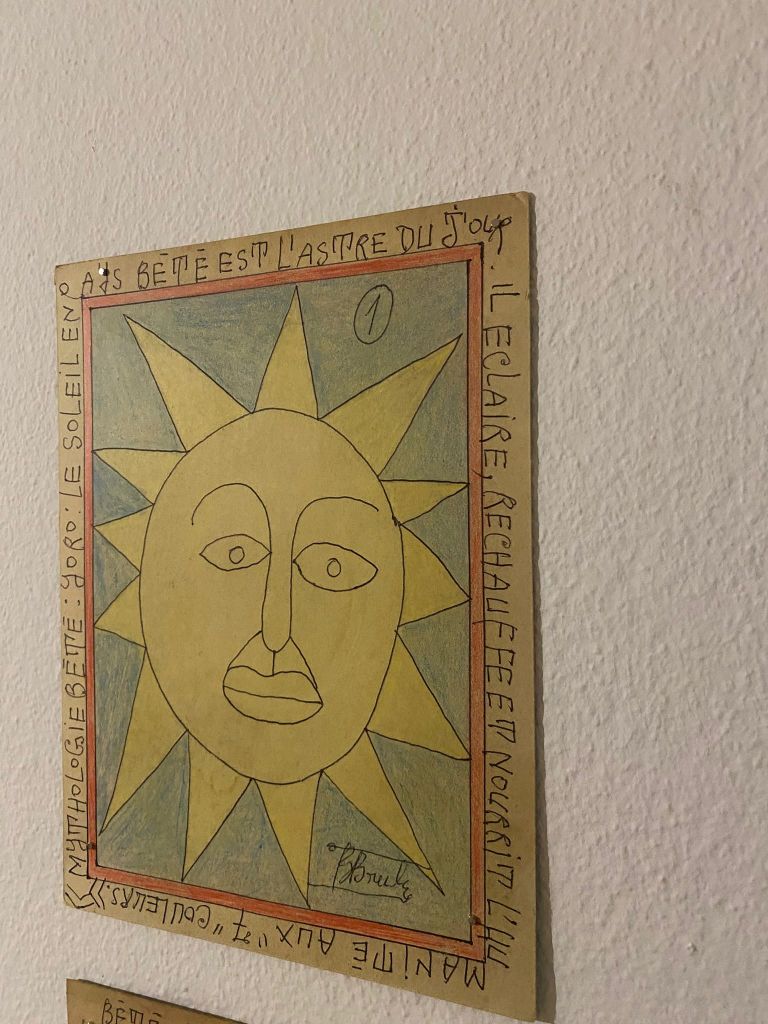
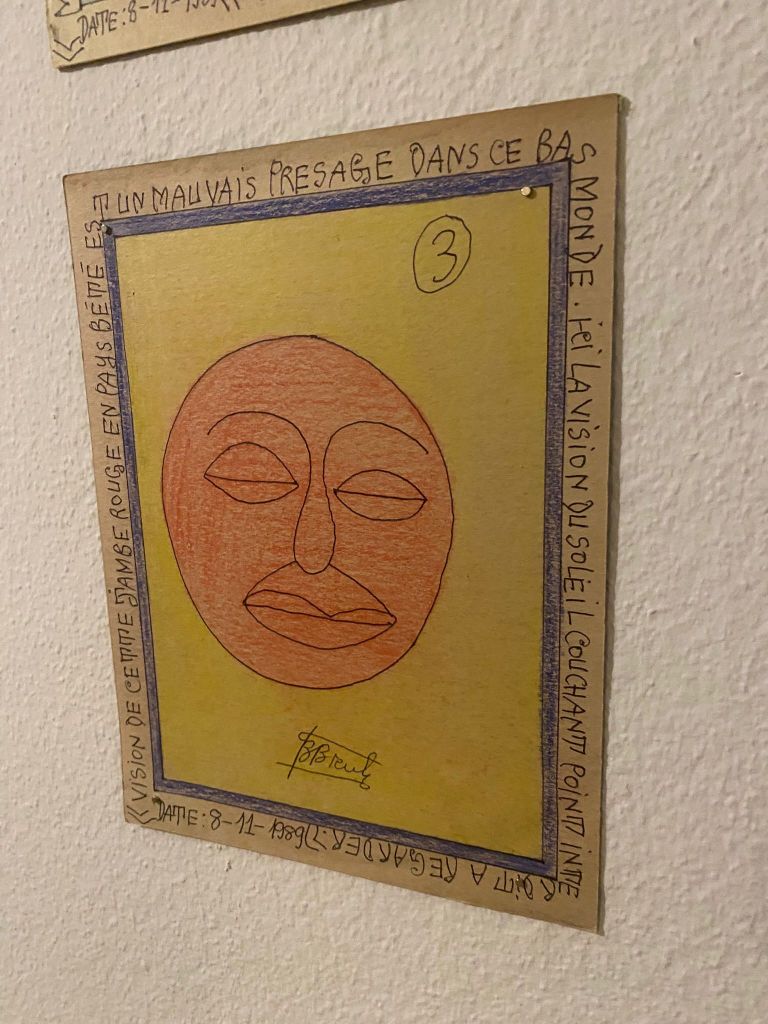
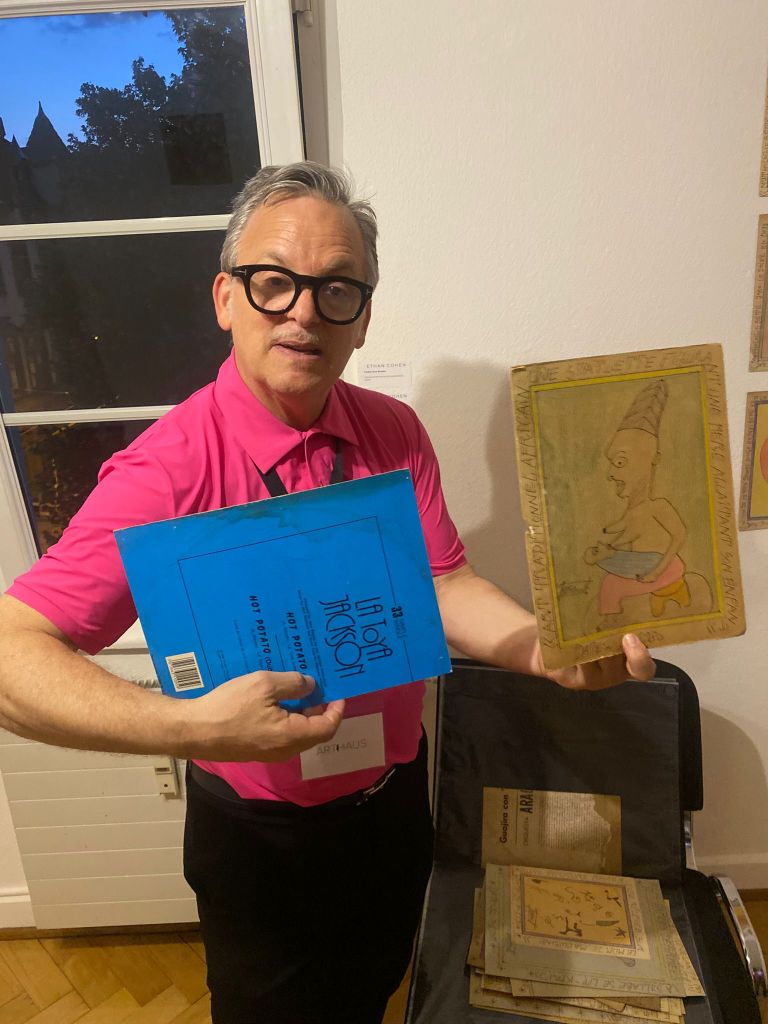
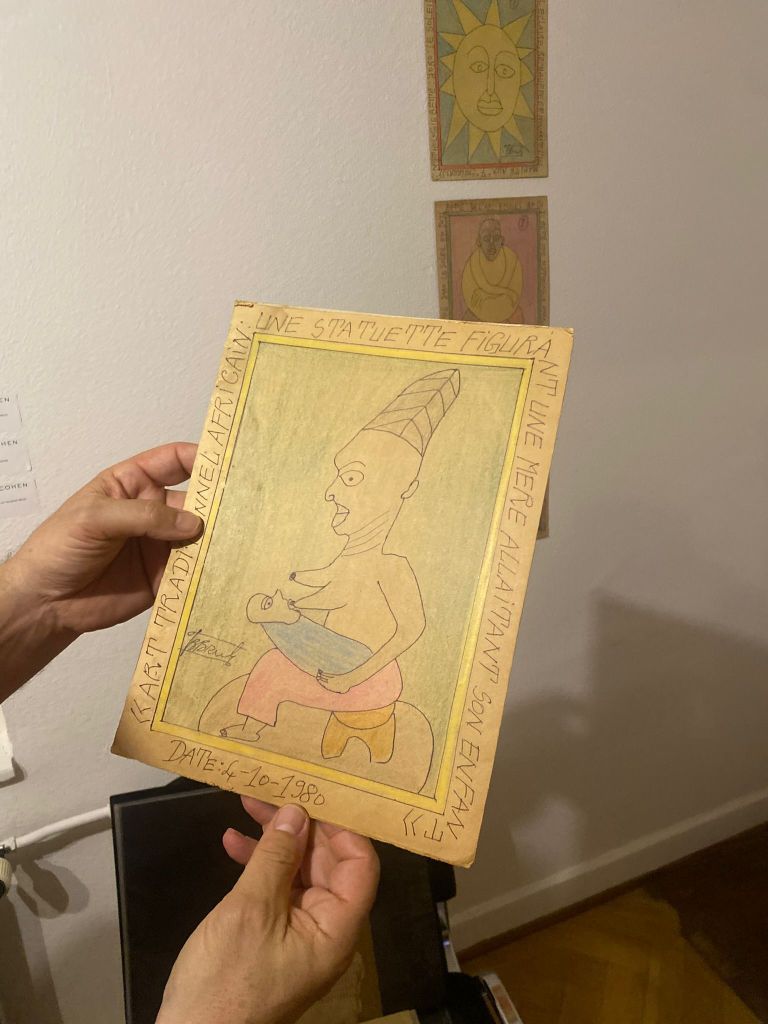
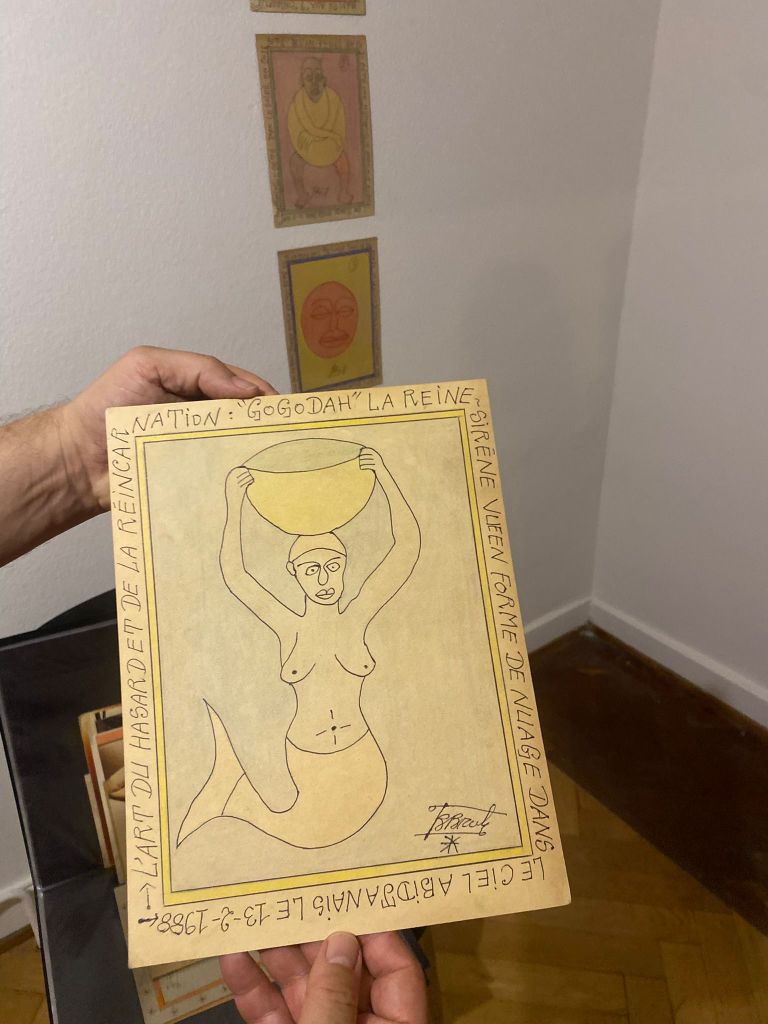
He was using a visual language to teach the world about love, peace, ethics — about what it means to be a human being, what is marriage, what is friendship, what does it mean to believe in yourself. There is so much I can learn from a Bruly Bouabré piece.
And Aboudia — he did a residency with me in New York, made a painting on canvas, then took a spray can and tagged the piece. A lot of the tag spilled onto the wall and the wall and the canvas became one. It was breathtakingly beautiful. One of my collectors wanted it, and I said — only on one condition. We cut out the wall, framed the entire wall with the canvas together. That became a piece. This year Aboudia did another residency and made a whole new series — what we call the Wall Painting Series — which we will show in the future.
“I want people to remember that I was a curious human being, that I wanted to connect people, that I wanted to learn. Learning enriches our lives for a lifetime.”— Ethan Cohen
What advice do you have for young galleries starting in Africa today?
Know what turns you on. Make sure you truly believe in what you are showing. Keep your overhead low — the lowest possible rent, so the financial obligation is not hanging over you. Choose carefully if you want to participate in an art fair. Make a budget. Go out into the world once or twice a year to show your art. Go slow to go fast.
Build step by step — it is not overnight that you build a gallery clientele. Your patrons, you will meet slowly over a lifetime of dedication. Don’t be discouraged. You build it one brick at a time. If you believe and you can pay your bills, that is already a blessing. It is always hard to be a creative — so make sure you can cover your costs, so that you can be free to be creative. But do not overextend yourself. That is the most important thing.
Tell us about the Cohen Foundation.
In honor of both my parents who were academics, we have the Cohen Foundation. We already have over 10,000 books. We hold the largest archive of Chinese art, but we also have a huge archive of contemporary art practice, including many African artists. We have many books on African contemporary art and a growing collection on tribal art.
We’re actively building up this library as a resource for people who want to come and do research. If there are important catalogs on African art that an African curator or collector doesn’t know what to do with, they should send them to me. I want this to become a hub and a research center for future generations, a place where people can come and study different art practices.
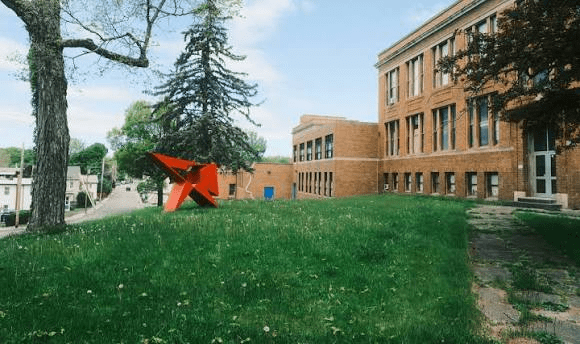
Every day, when I make video recordings or conduct interviews, I donate all my archives to the library. I already have thousands of interviews with artists from all over the world — from Asia, Africa, the United States, and Europe.Your question about transmission and legacy is beautiful. Because my father recently passed away, we spent the last five years thinking deeply about his legacy. He was an educator in law and the rule of law.
My mother was a lifetime educator in art. I realize I am only thirty years younger than my parents, so my life is short. I believe strongly in legacy and in education. When I die and leave this earth, I hope that our nonprofit institution will live on for many, many years. This place will be able to share knowledge with young artists and young enthusiasts who want to learn about Africa, about Asia, and help make the world feel smaller and more connected.
Our library is already open: you can make an appointment, come, and spend an afternoon studying the overall market or focusing on specific artists. We’re building comprehensive holdings of key artists — their catalogs, video interviews, and archives. Many generous people, including artists themselves, are now donating materials. We’re working hard to digitize everything.
What is your vision for the future? What do you want your legacy to be?
Yes, legacy matters to me. When I die, I hope people will remember me as someone who was genuinely interested and curious — a human being who wanted to connect people and who wanted to learn. Learning is so powerful. If we learn something every day, it enriches our lives for a lifetime.I also believe in connecting with people. This moment right now, connecting with you, is exciting — this is my “yay” for today. Every day we should realize how lucky we are to connect.
If you’re interested in African art, be curious, ask questions, go to Africa, visit local art centers. Even if you’re a lawyer, banker, dentist or nurse and don’t have time to be an artist, you can still connect with the art world by collecting. You don’t need to spend a lot of money — you can start with $500.
When you buy a work, you touch it, you become part of the global society of art. You become a member of the ecosystem. Artists need sustainability; they need to make a living. By being a patron, you participate. We have this wonderful ecosystem of art, education, creation, and sharing. Our art center is interested in music, dance, ceramics, voice, painting, sculpture, performance — every form of cultural expression. That’s exciting to me. So that’s my vision for a long-term legacy. I hope people will remember that I was a champion for culture.
Read also
The Post-Visibility Blues: On Venice 2026 and the Limits of Representation – Review
He Watched the Children Draw. Now He Teaches Them to Paint.
We Will Not Forget: How African Artists Confront the Post Colonial Legacy
 Bridging Africa and The World Through Contemporary Art
Leave a comment