
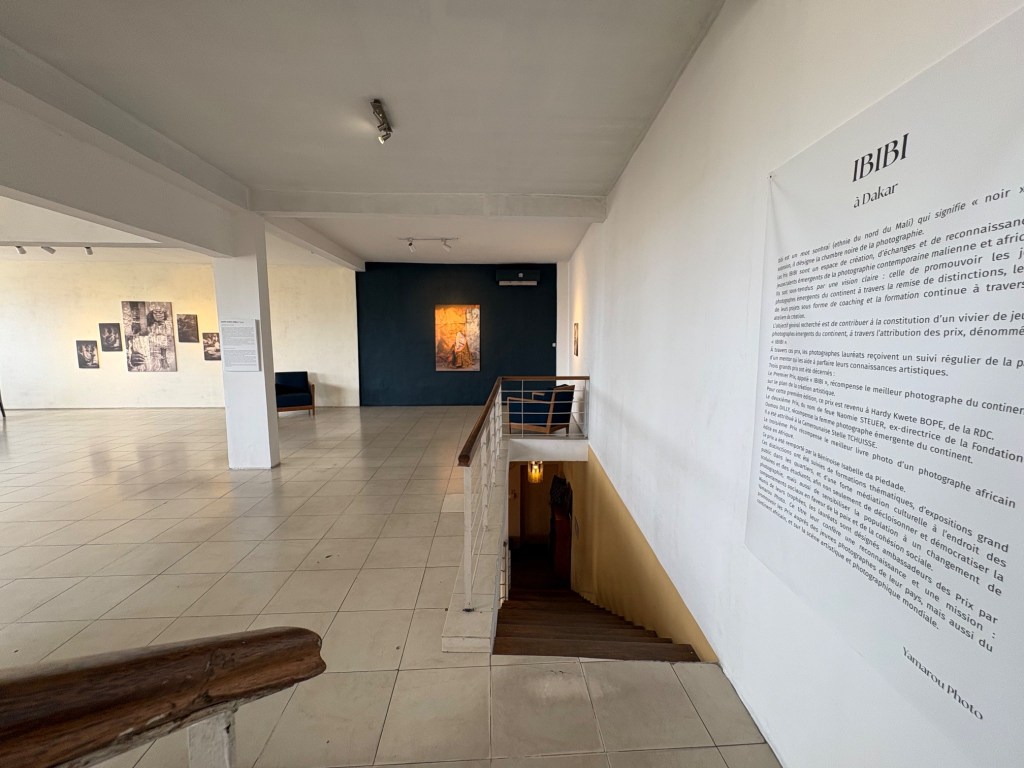

From environmental degradation and spiritual traditions to questions of identity and representation, Ibibi brings together five photographers whose works offer distinct perspectives on contemporary Africa. Presented at Galerie Atiss Dakar, the exhibition features Mariam Niaré (Mali), Koffi Djifa Seble (Togo), Hardy Bope (Democratic Republic of Congo), Isabelle da Piedade (Benin) and Stella Tchuisse (Cameroon), creating a dialogue that stretches across different geographies, histories, and lived experiences.
Derived from the language of the Songhai people of Northern Mali, Ibibi means “Black.” In the context of the exhibition, the term refers to the photographic darkroom as a space of reflection, excavation, and creation.
While each artist addresses different subjects, their works are united by a shared interest in identity, transmission, and African realities.
Mariam Niaré began her artistic journey as a painter under the guidance of her late father before turning to photography in search of greater creative freedom. Her works combine striking compositions and highly saturated colors to create otherworldly scenes.
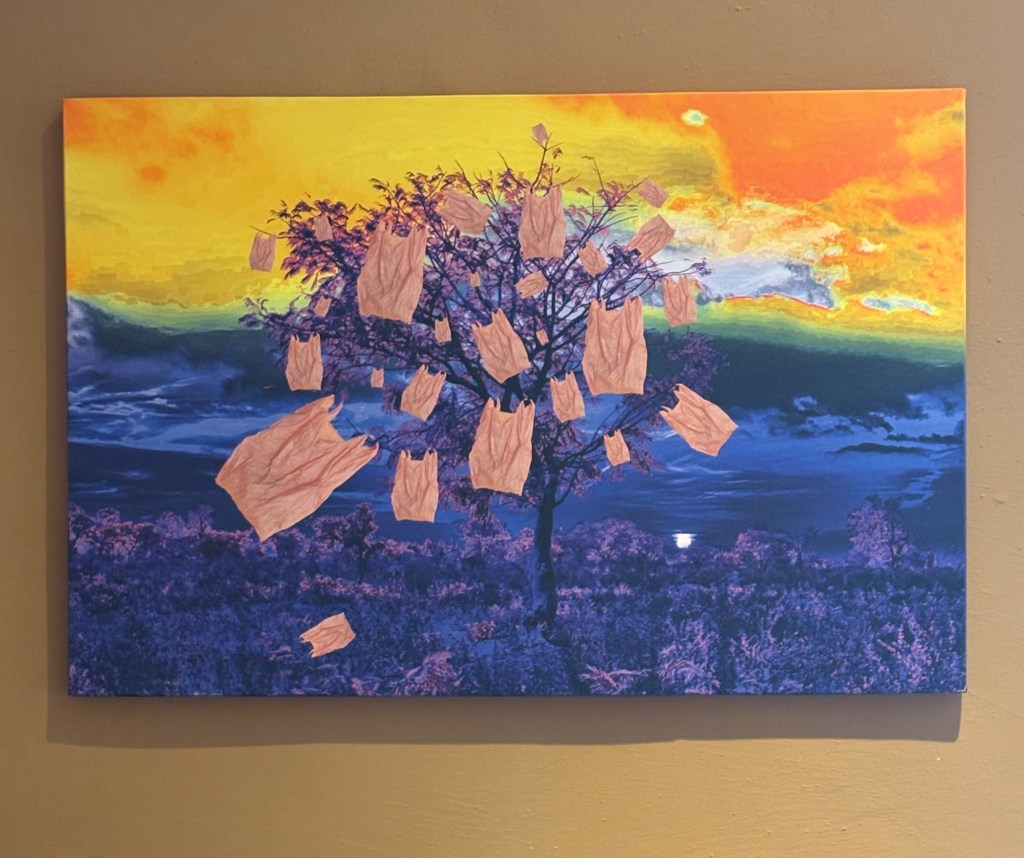
Portraits of Black figures with heads covered in plastic bags evoke erasure, suffocation, and violence, while landscapes overwhelmed by plastic waste immerse viewers in a dystopian environment. From a distance, one might perceive a visually seductive world; up close, however, the images reveal the ecological damage that human activity continues to inflict on the natural environment.
While ascending on the second floor of the show, guests are greeted by Isabelle Da Piedade’s series Ouverture d’Esprit(s). Tucked in the corner almost like a shrine, the series presents the viewers with three deeply expressive black and white portraits of three figures dressed in ceremonial attire, all wearing masks.
Taken during a 2024 Festival des masques in Porto-Novo Benin, these works are rooted in African tradition and spirituality. The charged energy on each figure’s facial expressions and their head attire which consist of remains of animal skulls, threads, feathers, and heavy looking necklaces carry an essence of devotion and celebratory ritual performance.
This series enters into a dialogue with masquerade traditions across West Africa and the African diaspora, from the Yoruba egúngun – which means powers concealed– to the Mardi Gras Indians of New Orleans. In each case, costume and concealment become vehicles through which ancestral memory, spirituality, and collective identity are performed and transmitted.
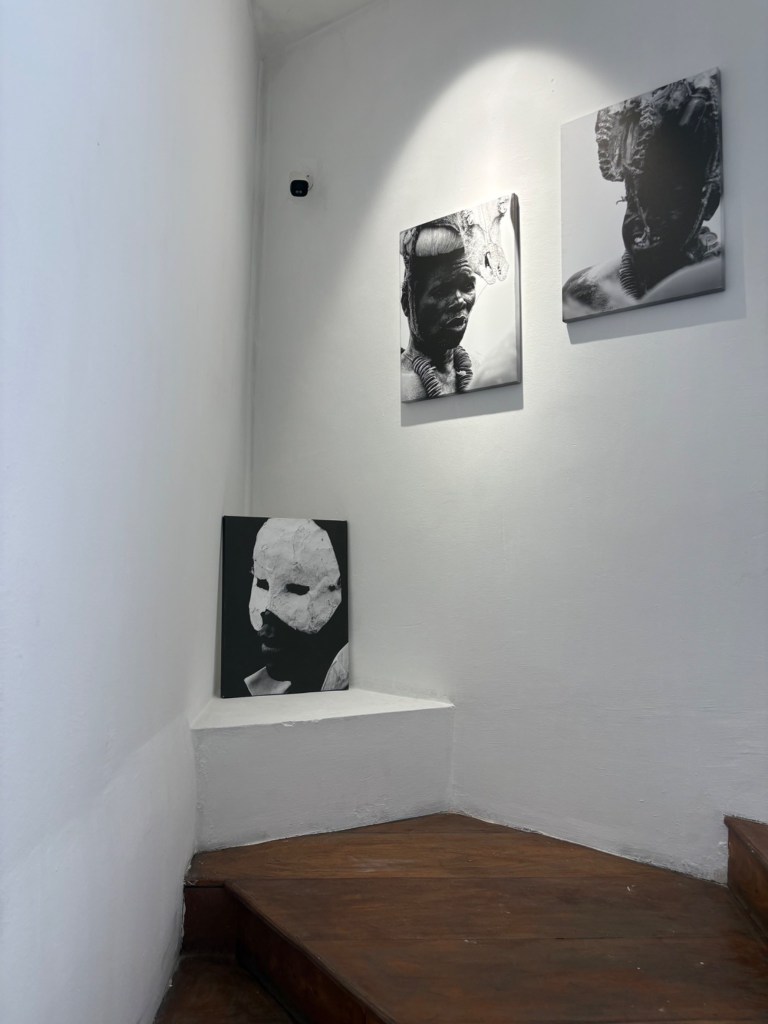
The contemplative stares of each figure coupled with the complete illegibility of the world around them further suspend the work in a mystical and mysterious state of concealment and transcendence. Are they priests, devotees, or regular participants in a ceremonial exchange between the living and ancestors? This is one of many questions the viewer is left to grapple with as they enter the main gallery space.
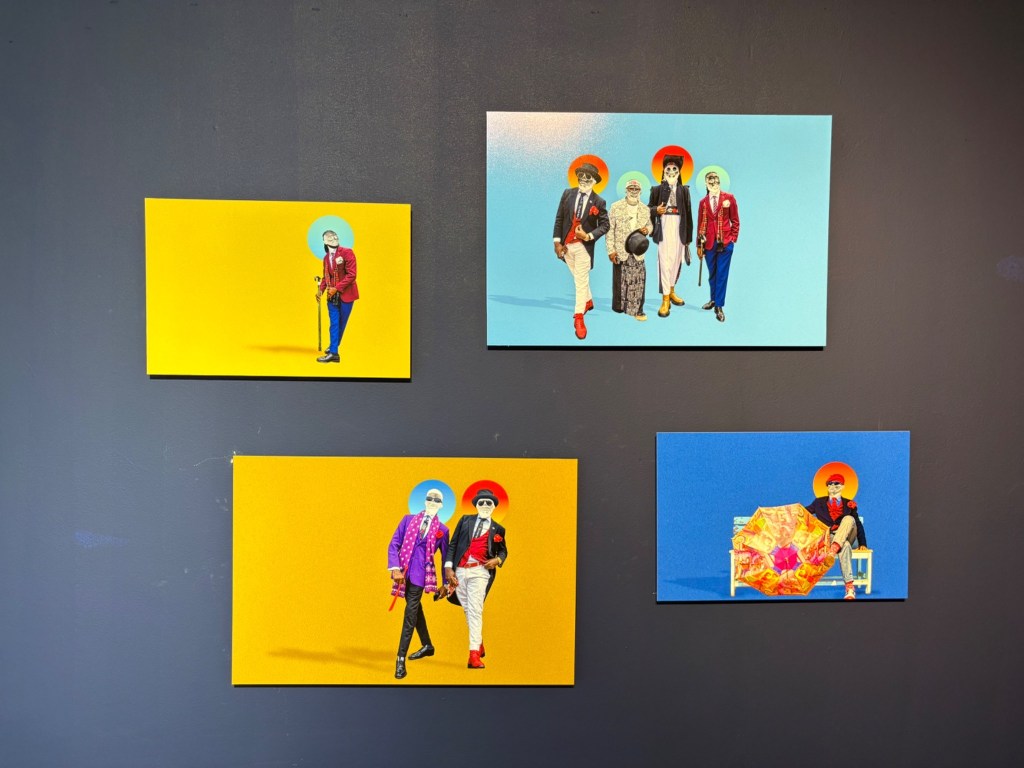
Questions of visibility and concealment continue in Hardy Bope’s work, though in a markedly different register. Rather than ritual masks, Bope turns to fashion and self-presentation as sites of identity construction.
His work Identité Kitendi explores the Congolese sape culture as a venue for identity and aesthetic expression and inquiry. Juxtaposing stylish appearances and concealment, the work contends with societal manifestations of appearances that conceal “inner truth.” It resists the popular saying “the clothes make the man” and challenges “what we show and what we are.” One of the most striking aspects of concealment in this series is the illegibility of the faces of the characters. The monochromatic surroundings also place these figures in an ambiguous place.
Through this tension, Identité Kitendi prompts the viewers to reflect on the visible appearance and inner pursuit of authentic expression and to rethink relations between social image and fundamental inner truths.
While Bope explores identity through the lens of self-representation, Koffi Seble turns to spirituality and ancestral memory as foundations of cultural identity and belonging.
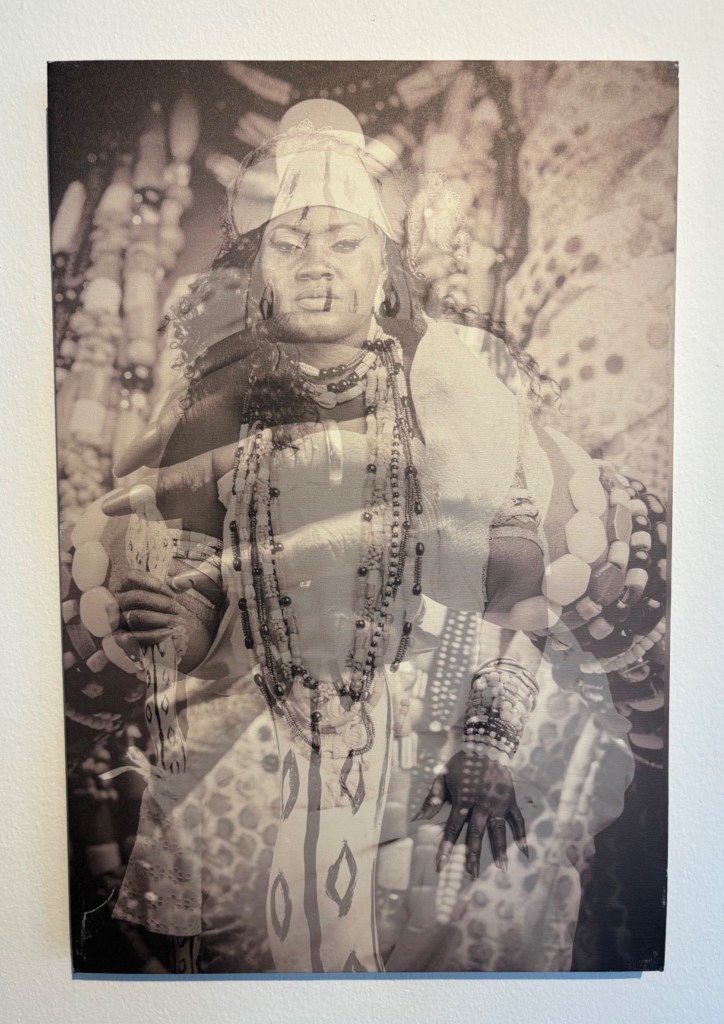
The work of Koffi Seble engages “Vodou spirituality, collective memory, and the transmission of African traditions.” His practice emerges from embodied experiences and observations from his family and community. His deeply layered photographs capture Vodou priests and priestesses engaged in initiation rites and other transitional moments that reflect on the exchanges between the visible world of the living and the invisible one of spirits of ancestors and the divine. Seble’s series “Communion with the Invisible” highlights material like beads which are central to Vodou beliefs as symbols of “protection, transmission, spiritual power, and family heritage.”
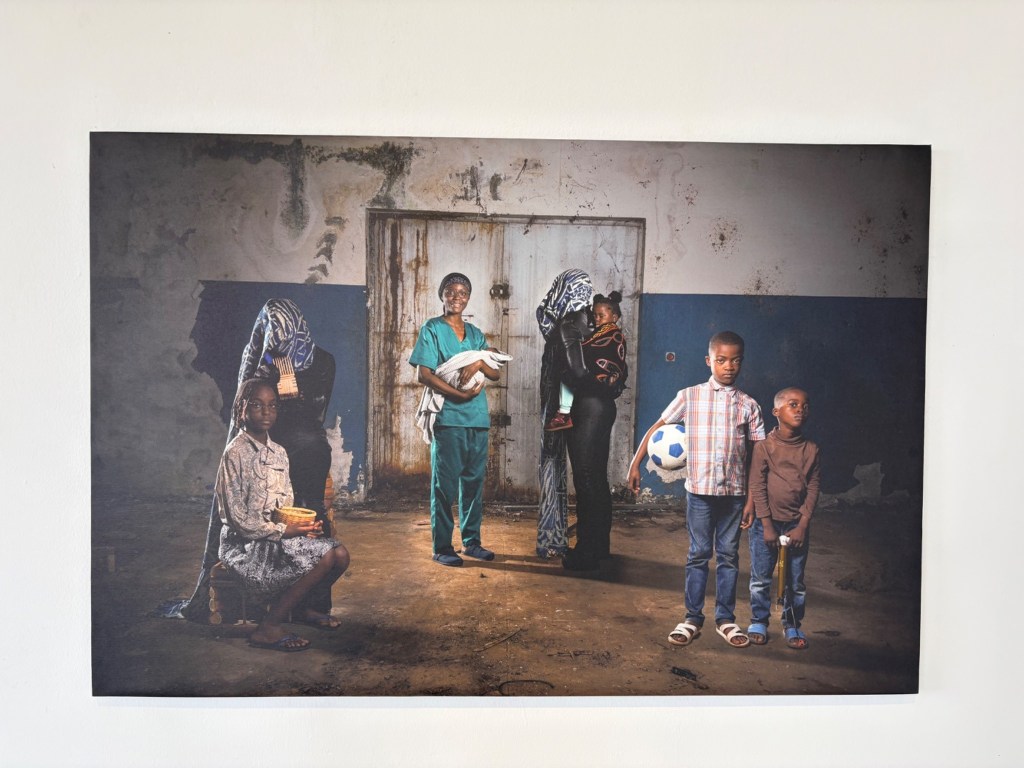
On the opposite side of the showroom, Stella Tchuisse’s series “‘I WANT TO BE LIKE HER’ pays tribute to pioneering African women who are transforming societies and opening doors in fields that are still largely dominated by men.” Her photographs depict women and silhouettes of concealed figures that are engaged in activities such as sports, healthcare, and environmental stewardship. Drawing inspiration from figures like Angelique Kidjo, Alice Nkom, Chimamanda Ngozi Adichie, Françoise Mbango, and Ngozi Okonjo-Iweala, Tchuisse “reenacts their presence and gestures” with an aim to elevate, empower, and celebrate the courage and excellence of African women.
Ultimately, Ibibi becomes a space of remembrance, celebration, and exchange. Through photography and sculpture, the participating artists engage questions of identity, spirituality, memory, and social change while offering distinct perspectives on contemporary African experiences. The exhibition highlights a new generation of African artists eager to contribute to contemporary artistic conversations from their own cultural and historical contexts.
By Olivier Mbabazi
Editorial Intern
 Bridging Africa and The World Through Contemporary Art
Leave a comment