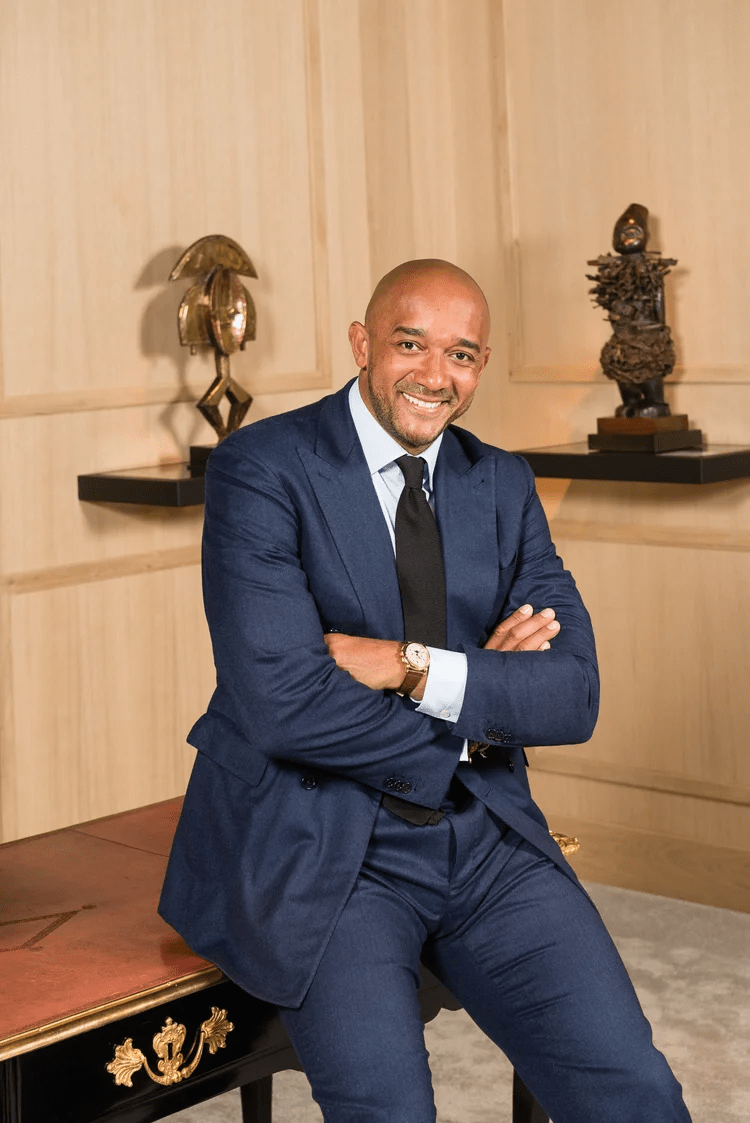

For more than three decades, Belgian-Congolese collector and dealer Didier Claes has been one of the leading voices in the field of classical African art. With “Africa Legacy: The Cradle of Art”, he embarks on what is arguably the most ambitious project of his career: an exhibition bringing together nearly 280 works spanning more than 4,000 years of African artistic creation.
Opening in Brussels this autumn, Africa Legacy traces a continuous history of African art—from ancient Nok terracottas and classical masterpieces to works by more than 50 modern and contemporary artists. Rather than separating historical objects from contemporary practice, the exhibition argues that they belong to the same artistic continuum.
In this exclusive interview with DakArtNews, Didier Claes reflects on the exhibition’s curatorial vision, the challenge of selecting artists and masterpieces, the changing landscape of the African art market, and why he believes the distinction between “classical” and “contemporary” African art has outlived its usefulness.

If an art historian were to discover “Africa Legacy” a hundred years from now, what would you want them to understand as the central idea behind this project?
In the book’s introduction, I explain precisely the meaning and the guiding thread of the project. “Africa Legacy”, I chose this title deliberately, as a proper name. It is not a spelling mistake (even though “African Legacy” would be more grammatically correct). I wanted it this way, just as one chooses the title of a film or a work of art.
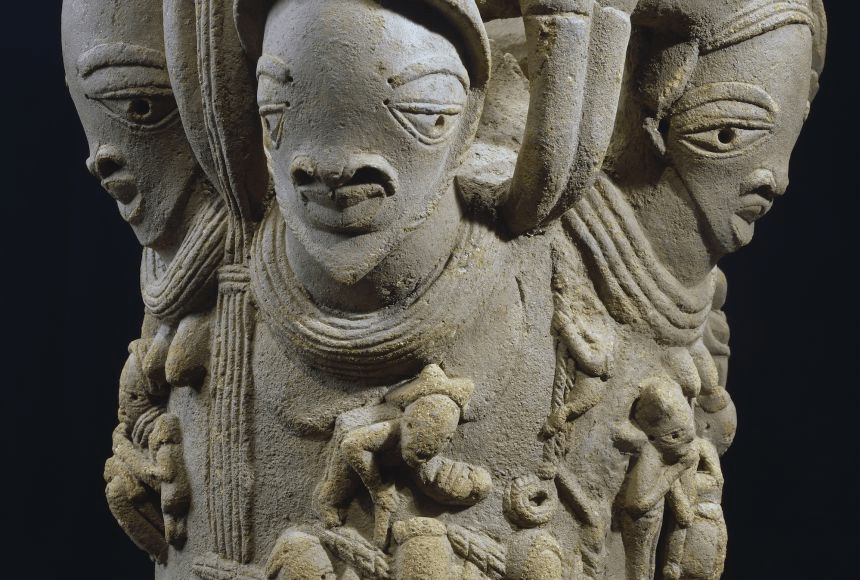
It is an intentional title. For me, Africa Legacy represents the heritage of artists, both ancient and contemporary. The project begins around 2000 BC with the Nok culture in Nigeria and ends with entirely contemporary works, including a piece created specifically for the exhibition. It is above all a tribute to artists. Ancient African art is an art devoid of ego. Beyond being an extraordinary art form, African art is fundamentally an art without ego. By that I mean there is no signature as such, the artists did not sign their works. However, with the body of knowledge we have access to today, we can still identify individual hands.
We are able to recognize certain artists as true masters in their own right. Sometimes in a very academic way, and sometimes in a much more liberal and unconstrained manner. Still, I felt it was important to pay homage to these ancient artists.
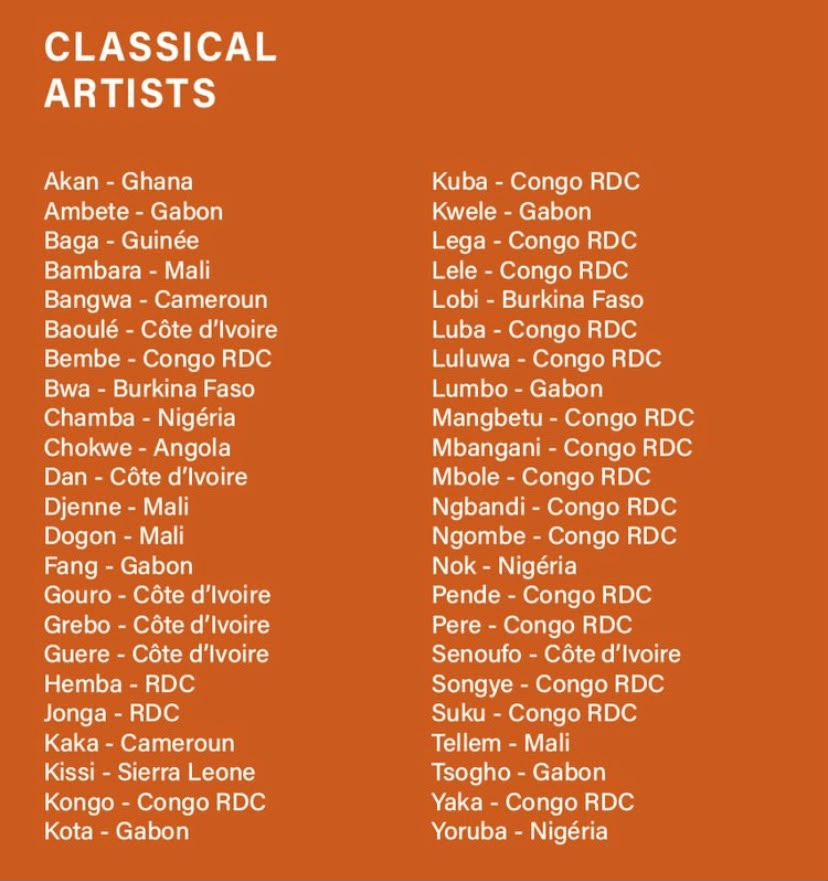
That is why, in the book and in the exhibition, I indicate “Nok Artist, Nigeria,” “Baoulé Artist, Côte d’Ivoire,” and so on. I want people to look at these objects first as works of art, before considering them as ritual or magico-religious objects. And above all, without confining them solely to a colonial lens. These creations are the fruit of great artists who inspired successive generations, from the moderns to the contemporaries, and who continue to inspire African artists today.
Was your starting point more aesthetic, historical, or curatorial?
I did not want to fall into the trap of simple juxtaposition or systematic confrontation between ancient and contemporary works. The guiding thread is primarily chronological: a clear timeline from yesterday to today.
The first work on display comes from the Nok culture, around 2000 BC. Then we move to approximately 200–300 AD with the Djenné culture. We then transition to the “surface objects” of the 19th century — sculpted wooden works intended for rituals, royal courts, or the adornment of palaces.
We then arrive in the 1920s with what I call the “easel painters,” the first artists who painted to exhibit and sell their work, notably in the Congo with figures such as Djilatendo and Albert Lubaki. We continue with the workshops of the 1950s (the Hangar Workshop, Pili-Pili, still in the Congo), the great Malian photography (Malick Sidibé, Seydou Keïta), popular art with Chéri Samba, and we finish on the upper floor with the most recent contemporary art, particularly from Kinshasa. I cannot name them all. And we carry on through to contemporary art from Kinshasa, Cotonou, Dakar… This is truly my perspective, my approach — you cannot hold that against me.
It is a tribute to all of Africa through its sons and daughters, and through a gaze that is itself that of one of its sons. It is an approach that is mine, one I strive to uphold with a conviction that is both that of a passionate enthusiast and that of an expert — since that is how I am regarded today, after 30 years in this field.
What were your criteria for selecting the artists?
I conceived this exhibition as my imaginary collection. I did not want to be influenced by anyone. The exhibition is apolitical, even though many of the artists are not. I wanted the visitor to be confronted first with the work itself, with the gaze, the emotion. In the book, I favored the artists’ biographies rather than a systematic analysis of each work.
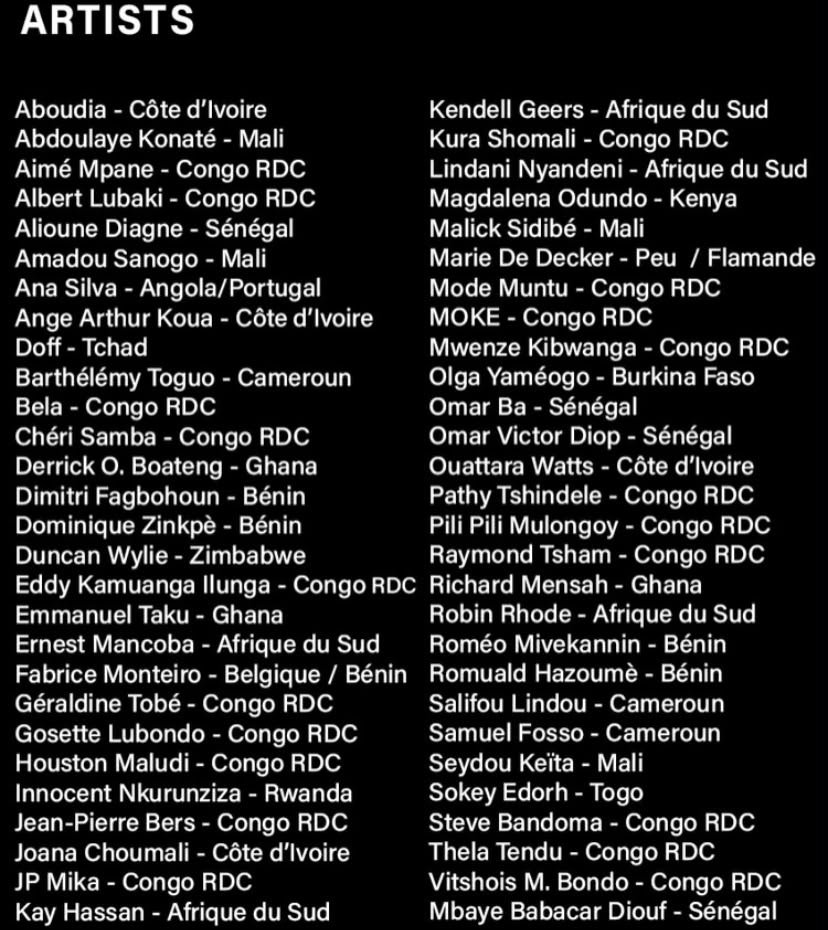
The City of Brussels asked for my personal perspective: that of someone who has championed ancient art for thirty years and contemporary art for more than twenty. The exhibition was mounted in under a year: approximately 280 works in total, around fifty artists, around fifty lenders, 3 institutions and 12 galleries. A bilingual volume of more than 300 pages.
I contacted some artists directly, and they were delighted. For others, I went through their galleries, out of respect for the profession. We have exceptional pieces: photographs by Samuel Fosso that are virtually unavailable on the market, a ceramic by Magdalene Odundo, works by Omar Ba, Barthélémy Toguo (three fantastic pieces), Kendell Geers, and more.
Were there major artists you would have liked to include but who ultimately did not feature in the exhibition?
You don’t always get everything you want. I must admit that there is one very important and well-known artist whose work is not in the exhibition: El Anatsui. He is a truly immense artist. I would even say that not including him is perhaps a form of snobbery on my part. I could have obtained a piece, but well… In any case, it is impossible to have every artist. He is probably the one who is most missing from the lineup for me. What makes it even more particular is that I met him nearly thirty years ago in a gallery, and I already wanted to acquire one of his pieces. Except that I couldn’t afford it at the time. And every time the years passed and I might have been able to buy one, the prices had risen again. I never managed to buy one.
There is also a great Congolese artist I won’t name so as not to embarrass him, it involves a situation with his gallery, but he is probably the one I would have wanted most of all. That said, one must be honest: a great many major names are absent.
We notice a significant presence of contemporary Congolese artists in the exhibition — more than fifteen. Is this a deliberate choice linked to your origins?
(laughs) Well, historically speaking, this is its second participation in the World Cup after 55 years, so it really does seem to be Congo’s year. But to be more serious: I hadn’t even counted. You’re the one telling me. It was absolutely not calculated. My origins are indeed Congolese, but I spend a great deal of time between Dakar, Abidjan, and Kinshasa. I love all of Africa. The reality is that I am based in Brussels, and in Belgium one naturally has greater access to Congolese artists, both ancient and contemporary.
The exhibition is also partly built around Belgian private collections, so that inevitably plays a role. But beyond that, it really comes down to affinities and encounters. For example, Mbaye Babacar Diouf is a Senegalese artist I had met at the Dakar Biennale five or six years ago, and I had promised to get in touch with him one day. Five years later, I contacted him, and he created a magnificent work specially for the exhibition. Here is someone who deserves to be shown to the wider public. And I am very happy for these artists, because in the exhibition as in the catalogue, everyone is given the same stage, presented in exactly the same way as all the others.

You are known primarily as a specialist in classical African arts. How do you define your role in the art world today, now that you are also seen as deeply involved in contemporary art?
People who know me identify me first as an expert in ancient art, and my legitimacy in that field no longer needs to be demonstrated. But those who truly know me are aware that I have been passionate about contemporary art for more than twenty years and that I have already sold works by living artists.
In the Belgian landscape, there are still too few of us. I am obviously not the only one. There are excellent curators, both men and women, whom I salute, but there are never enough of us. It pleased me to see that taking on this role of curator was warmly received by the artists themselves. I gave everything: my energy, my passion, my time. I do the best I can with the means and time available to me. Nothing will be perfect, but what is? Imperfection perhaps leaves room for a sequel. And I take enormous pleasure in this project.
At what point did you become directly interested in contemporary African art?
There were two defining moments. The first was twenty-three years ago. A Belgian curator, Marc Félix, was preparing an exhibition in China and asked me to accompany him to Congo, Kinshasa and Bas-Congo, to take the pulse of the contemporary art scene. For a month, we met artists every day: popular artists, traditional artists, object makers. I bought my first works at that time.
The second turning point was my encounter with Sindika Dokolo, the great Congolese collector. He came from contemporary art and wanted to turn toward classical art. We agreed that there were not two separate African arts, but a single African art. It was also during this period that we popularized the term “classical African art” to replace the older, pejorative labels (“primitive art,” “tribal art”). We wanted to give it the nobility it deserves, placing it within the canons of art history. It was after this encounter that I opened the contemporary department of my gallery, around 2015.
How has your perspective on African art evolved over the past thirty years?
I grew up in a family environment where classical art and contemporary art coexisted completely. From a very young age in Kinshasa, I used to visit artists’ studios with my mother. I have always been immersed in it. I literally fell into it, a bit like Obélix into the magic potion. What is quite remarkable is that the way one looks at art when beginning this profession or this passion inevitably evolves.
But the most curious thing, and I don’t know if it’s the same for many others , is that as time goes by, the gaze often returns to the essentials, to the timeless. That is my personal feeling. And it is something I often explain to new collectors: after thirty years in the field, one eventually develops a confident, assumed gaze. I remember when I was 16 or 17 and starting to organize exhibitions, I was shy. I had difficulty saying what I really thought or fully assuming my own taste.
You feel observed, listened to, judged… So in the end, you end up adopting other people’s views and putting your own aside. But after thirty intense years of practice, you can finally assume your own gaze and calmly say: “This, I connect with. That, I don’t connect with. This, I don’t understand.” And no one will look at you as if you don’t know what you’re looking at. That is exactly what one must achieve.
You really have to assume your own gaze and your own understanding. And above all, never follow fashion or trends. That is dangerous, because you then fall into a spiral where you look at art through other people’s eyes. For me, that is a conscious choice.
What are your collectors looking for today?
In this profession, one encounters all kinds of profiles. My gallery is open to everyone, from enthusiastic beginners to the most seasoned collectors, and I love the idea of nurturing collectors from 7 to 77. But I favor long-term relationships built on trust. When you come to a gallerist or a dealer, you are also seeking their perspective and their taste. Collectors come to me because they want to be initiated into my vision. They know I have exacting standards, for both ancient and contemporary works. That is what I look for: people who share my vision. Younger collectors are naturally more drawn to contemporary art, but with a certain maturity, and I mean that in no pejorative sense.
Personally, I am not sure I have fully acquired that maturity myself, perhaps it never truly arrives. When one collects seriously Picasso, for example, and takes a genuine interest in the artist rather than merely seeking to impress, one realizes that his greatest periods were profoundly influenced by African art. At that point, one is almost compelled to take an interest in African art as well.
How do you evaluate the current market for contemporary African art?
In the contemporary African market, there was a very heated period, particularly with the Black Lives Matter movement and the interest of Western museums. There was what dealers call a “hot moment”: strong demand, strong supply, and many who took advantage of it. But today the market is regulating itself, as all markets do. That is a good thing. We are in a phase of consolidation. Auction houses that had opened contemporary African departments closed most of them after a few years.
Today they are reopening gradually, more cautiously. Galleries and art fairs have also undergone adjustment. The market is becoming healthier, driven by consistent artists and solid galleries. In my view, this is the best moment to move from passion to possession. The artists who have come through these difficult years, the past five, seven, ten years, are those who have proven their staying power. We are also seeing some wonderful revelations among younger artists.
To conclude, what do you hope visitors will take away from Africa Legacy?
First, I would like this exhibition to fill with wonder both those who are accustomed to this kind of show and those who are not. It is worth emphasizing: this is the first major exhibition in Brussels presenting ancient and contemporary African art together, after all these years of debate around heritage and restitution.
But beyond that, my message is clear: I want the viewer to leave filled with wonder. For those who are part of our community as well as for others, I want them to leave with their heads held high, walking tall. Here in Brussels, there is sometimes a tendency to confine this art within certain frameworks, magico-religious, folkloric, or colonial.
But when you look at it with pride, saying “this is what the greatest African civilizations created,” everything changes. It is not merely a message, it is something of a dream of mine: that visitors leave proud of what they have seen, proud of what their ancestors created, and aware that this art has influenced the entire world. If in a hundred years someone looks at this catalogue or this exhibition, the contemporary works of today will have become classics. And perhaps future artists will draw inspiration from what they will have seen in Africa Legacy.
History repeats itself. I hope this message will make people proud and that it will be shared. I speak with passion, it is true, and that is the only thing one can accuse me of. The reality is that I want to inspire wonder. Criticism will come — it should be constructive, that is only natural. If there is no criticism, it means no one was truly moved. I will receive it with humility and pleasure. But my goal remains to inspire wonder, and to kindle that sense of pride.
Read also
We Will Not Forget: How African Artists Confront the Post Colonial Legacy
Curator and Art Critic Massamba Mbaye on Venice, Dak’Art, and Africa’s Place in the Global Art World
Amadou Diaw, Architect of MuPho, Makes Photography the Beating Heart of Saint-Louis, Senegal
 Bridging Africa and The World Through Contemporary Art
Leave a comment