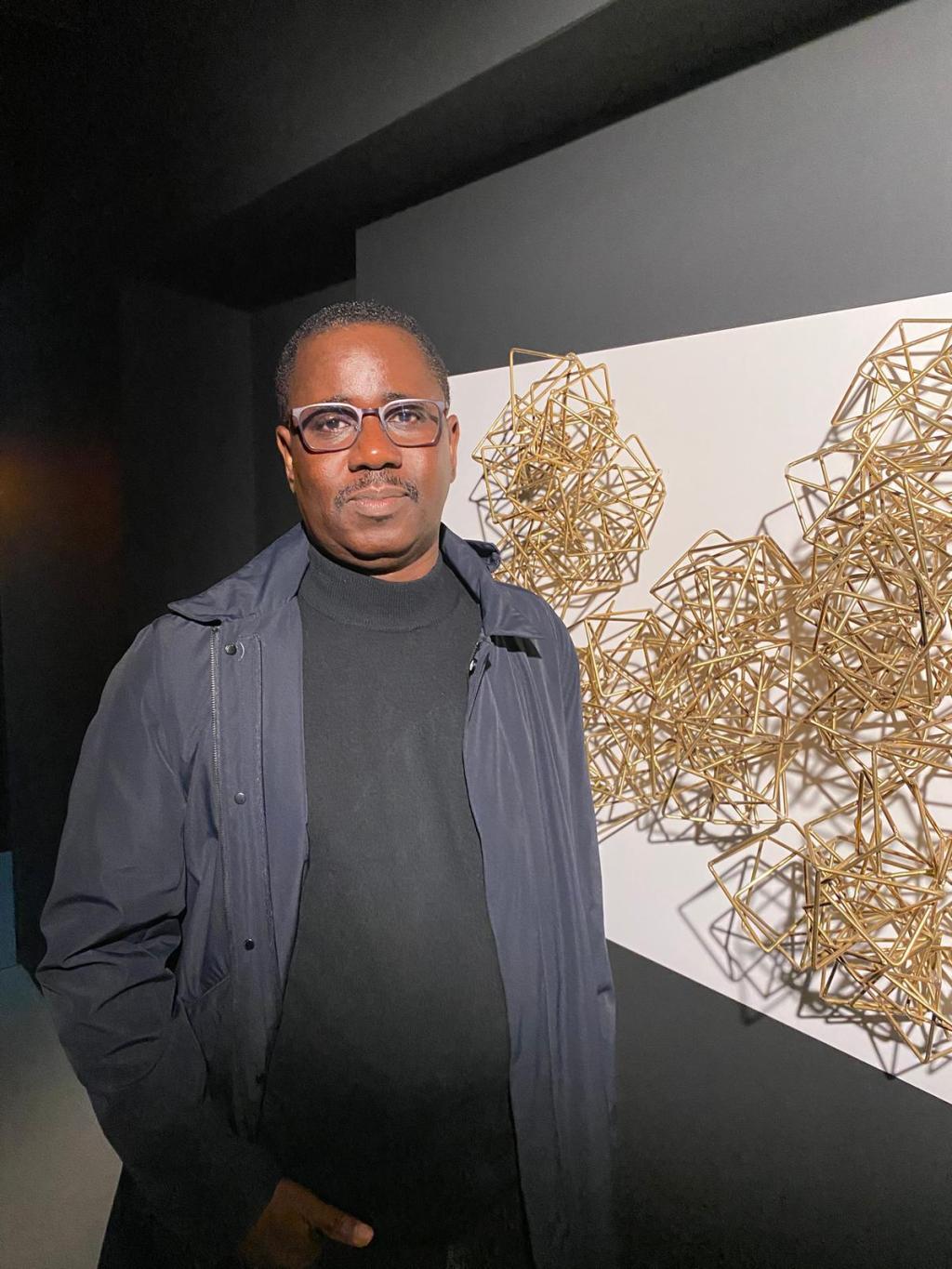

In conversation with DakArtNews, nearly two months after the opening of the second Senegalese Pavilion at the 2026 Venice Biennale. Curator of Senegal’s inaugural participation in 2024 and the 2026 edition featuring artist Caroline Gueye, Massamba Mbaye reflects on this historic moment. In this extensive interview, he delves into the intellectual and symbolic foundations of the project. With clarity and depth, Mbaye discusses the international reception of the pavilion, the challenges of establishing a sustainable African presence at Venice, the current dynamics of the Senegalese art scene, Senghor’s lasting heritage, and the future of Dak’Art. He also addresses broader issues, including the expectations placed on African artists, the tension between cultural singularity and globalization, and the vital role of art criticism in the age of artificial intelligence.
How did the Venice project come about?
In fact, this project was born out of the artist’s own desire. After defending her thesis, she felt the need to return much more actively to her artistic practice. On my side, I had already worked with her on her very first project — her first solo exhibition in Senegal. I have therefore followed her work quite regularly, even though part of her career took place in China and in various countries around the world. There were periods when I was following her progress from a distance.
When the idea of proposing something for the Senegal Pavilion in Venice emerged, the initial question, during the ideation phase, was: how could her field of activity — astrophysics and art — offer points of convergence? We then explored several avenues, including that of metals. Metals fascinate her deeply because they carry a history, sometimes even an extraterrestrial history. That is how gold gradually imposed itself. At the same time, I had myself become interested in Mansa Musa, because historically, something kept coming back whenever these great cycles were evoked. In a way, we are in a cycle that echoes that of Mansa Musa.
Little by little, all these elements came together: her interest in astrophysics, gold, Mansa Musa, but also this desire to make Africa shine in a different way than through the realities of the present alone. Because there is more than just the present. This man is fascinating because for a very long time he was the richest man in history. That is really how everything came about.
This question of value, through gold and the mechanisms of perception, seems particularly important to you. Why?
Because fundamentally, what gives gold its value is the fact that we consider it precious. If you give a gold jewel to a three-year-old child, he will probably not keep it on his body all day long. Why? Because he is not yet aware of the value we attribute to this object. In reality, the structuring of the world — whether in history, current dynamics or even our future projections — revolves around the notion of value. Value linked to an ethos, to a culture, to what makes us who we are. But also value linked to our appreciation of things. Conflicts often arise from this appreciation.
They also arise from what we consider precious and what we deem more legitimate in our own pocket than in someone else’s. These are fundamental questions. Gold thus becomes both an aesthetic projection motif and a tool for reflecting on the world, on contemporary dynamics, on the peaceful but also conflictual perspectives that run through our societies. It is one possible reading.
There is an author, Dominique Moïsi, who wrote a book entitled The Geopolitics of Emotion. It is a fascinating book because it offers a different reading of global power relations. It suggests that emotions, projections and perceptions may be the most fundamental elements in understanding expansionist ambitions, geopolitical positioning and world balances. These perspectives seem extremely relevant today and allow us to better read the present.
You mentioned the reference to Mansa Musa, Mali and gold. There is therefore a very strong African resonance.
I think the role of art is precisely to transmit, to share, to create moments of emotion, but also to help build a global culture, both on an individual scale and on a world scale. It is one of the fundamental missions of art. Contemporary issues, because they are extremely open, allow us to explore all possible artistic perspectives.
Moreover, contemporaneity itself is difficult to define. It is complicated to say precisely what is contemporary and what is not. I think we need to take a fairly broad view: what today’s artists do belongs to the contemporary.It is the combination of all these elements that structured this work around this figure and this history. A history that is not limited to present-day Mali, since the Mali Empire encompassed a large part of West Africa.
There is therefore also an integrationist perspective in this project that gives it even greater scope. Another important aspect lies in this way of making Africa shine. It seems to me that at that time, with this sovereign, but also before and after him, because the Mali Empire did not end with Mansa Musa, the continent occupied a central place. After him, there were other sovereigns, some of whom were not equal to their mission.
One of them, Mari Djata II, is often described as a tyrannical king who allegedly squandered the empire’s resources, notably a gold nugget of exceptional value that he reportedly sold at a very low price to traders. All these questions speak to us today: Africa’s place in the world, the lessons of history for understanding the present and projecting ourselves better into the future.
When we met at the opening in Venice, you spoke to me about a link between Caroline Gueye’s work and Senghor’s theory of “asymmetrical parallelism.” Could you come back to this idea?
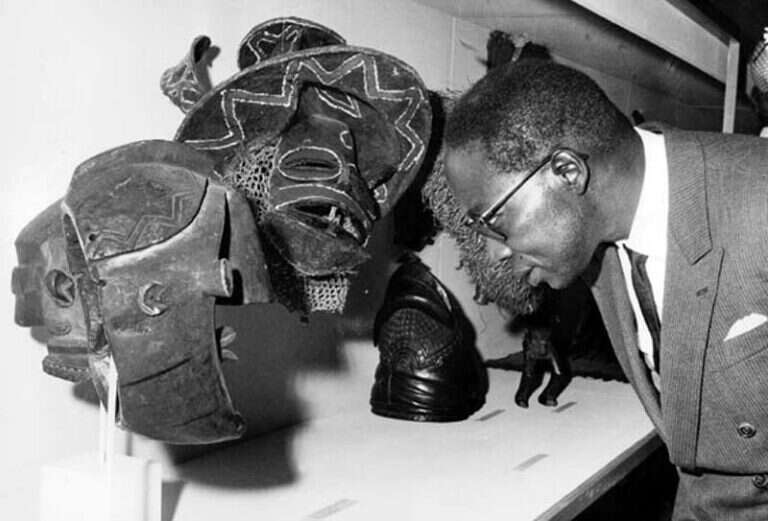
Senghor used to say that African art was not an art of imitation but an art of rendering essential characteristics. When a mask or a sculpture represents a human being, it is not about faithfully reproducing his appearance but about restoring what is fundamental in him. I find this observation particularly accurate. These essential characteristics are what allow us, for example, to recognize two members of the same family who do not look perfectly alike. There is something essential that remains.
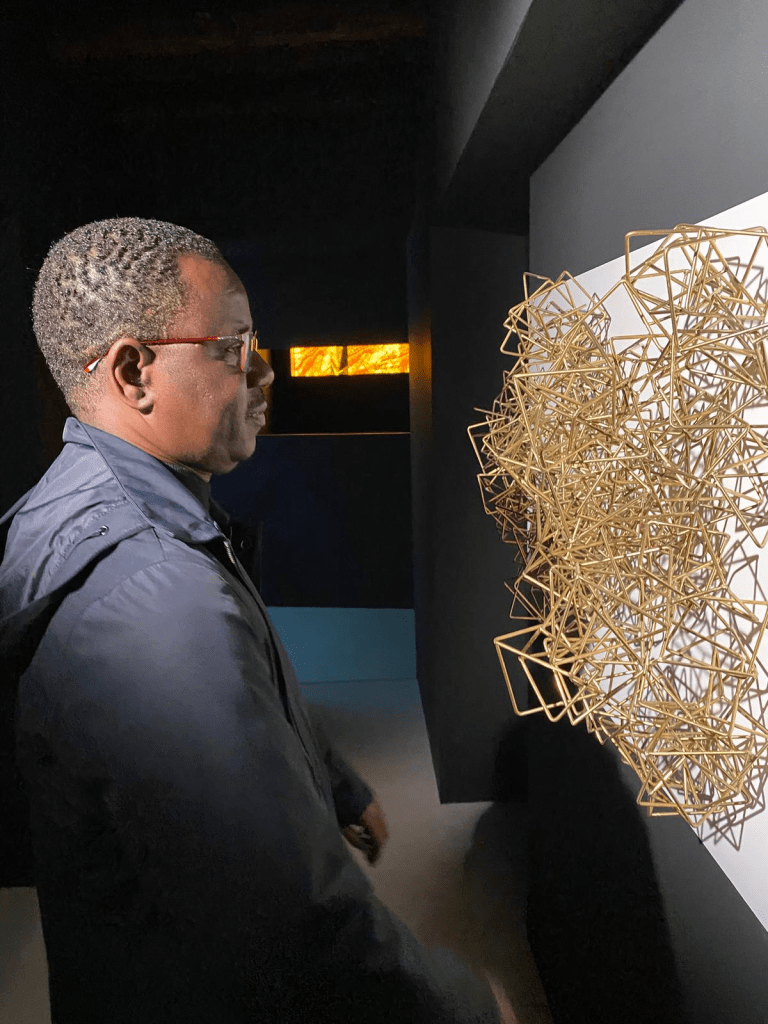
Senghor also developed his thinking around rhythm and “asymmetrical parallelism.” Scientifically, the expression may seem paradoxical. But what he meant is that there are forms that repeat themselves without ever repeating themselves in exactly the same way. And it is precisely this that I thought I perceived in Caroline Gueye’s work. The forms are very clear in her mind before their realization, but they are not pre-drawn. Many people thought that certain structures were computer-generated. That is not the case. Everything comes from her creative process.
The material itself sometimes participates in defining the path to follow. When one looks at her works in brass, the graphic patterns seem to follow a logic. But this logic refers more to the fractal, to a system of repetitions and variations that precisely evokes this asymmetrical parallelism. By spending more time with her recent works, I felt I understood more concretely this notion developed by Senghor. I had already observed this way of structuring lines in her earlier works, but it appears here with particular force.
A month after the opening of the Senegal Pavilion in Venice, what assessment do you make of this first period? Were there any reactions from the international public that particularly surprised you?
I must admit that when I’m involved in a project, I read very little of what is written about it. I prefer to take stock afterwards. There are conceptual aspects that are established before the exhibition, but there are also elements that stabilize gradually over time. This is, after all, one of the depths of a work of art: its ability to continue fascinating us day after day. At a certain point, this becomes almost frustrating for the art critic or curator, because one eventually has to stop this permanent chemical reaction in order to offer a reading, an interpretation, which may or may not be interesting.
This project is the result of extremely elaborate work that required a tremendous number of hours of reflection and effort. I had the feeling that many visitors perceived this level of rigor. They understood that there was a real density of work behind these pieces. But I also think they perceived something else: the care given to the spatial design. Nothing was left to chance. We are not in the realm of the arbitrary; we are in the realm of art. Even when an artist chooses to provoke or disturb, they must create the conditions that allow an emotion, a reaction, or even a form of rejection to arise.
Caroline Gueye’s choice was to present highly elaborate works, installed with enough subtlety to allow the visitor to experience a special moment. And when I say “a moment,” I mean a moment during which something actually happens. That was, in fact, the goal we had set together: to ensure that something would happen. This experience could take different forms. Some visitors expressed their satisfaction. Others seemed more unsettled. But ultimately, that mattered little. A person who shows no immediate reaction may very well carry traces of that experience within them and reactivate them weeks, months, or even years later.
What has this new edition taught you compared to the previous one?
It confirmed to me that the creative and conceptual power we have in Senegal is extremely diverse. From one pavilion to the next, we found ourselves in completely different contexts. The constraints were not the same. The first artist (Alioune Diagne in 2024) worked with a gallery. Caroline Gueye, for her part, had to carry a large part of the project herself.
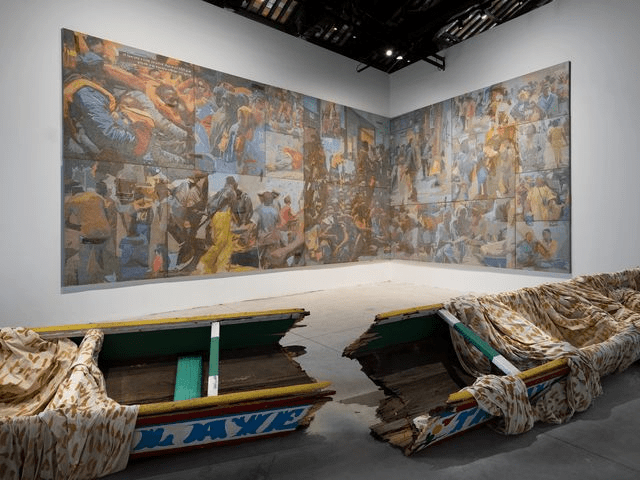
Yet from one edition to the next, talent found the means to express itself. And I believe this diversity reflects more broadly what can be found across the African continent. We are dealing with a particularly interesting generation of artists. Incidentally, both artists were roughly the same age at the time of their participation in Venice, around forty. It is often at this stage that artistic maturity, creative strength, and personal investment reach a particularly fertile balance.
“I would only speak of a real breakthrough if, over three or four editions, we maintain a constant number of pavilions in Venice.” – Massamba Mbaye
How can we ensure that Senegal’s presence in Venice becomes lasting?
I think it first requires a clear political will. During the Senghor era, state patronage was extremely strong. The conditions were already in place to consider Senegal’s presence in Venice. There was a genuine cultural policy and a strong vision. From the 1980s onwards, with structural adjustments and economic changes, investment in the cultural sector gradually declined.
It took time to realize that investing in art is not a secondary expense, but a strategic investment that must be sustained over the long term. Today, what is needed above all is a lasting political will. We also need project leaders capable of working in a multidisciplinary way.
My own approach is primarily aesthetic, but a cultural project cannot be limited to aesthetics alone. It must also be thought through from a managerial standpoint. A cultural project has to be managed. It mobilizes human resources, material resources, organizational skills, planning capabilities, and a level of conceptualization worthy of the event in which it participates.
All these elements must come together. Then, there must be strong personal commitment from all the actors involved. Each edition represents a challenge that must be met. These first two Senegalese participations in Venice should be seen as foundational steps. We must now continue the effort with other artists, other curators, and other proposals in order to keep showcasing the talent that Senegal possesses, as well as that of the African continent as a whole.
AFRICA ON THE INTERNATIONAL STAGE
This year there were 14 African pavilions — a record. The curator of the main exhibition, Koyo Kouoh, was also African. Do you see this as a genuine breakthrough for Africa?
I’ve always observed a strong desire for African representation at the Venice Biennale. There is real potential on the continent and within the diaspora. This potential is affirmed, documented, and analyzed — sometimes through differing lenses, but with great attention. That said, I would only speak of a real breakthrough if we see a constant number of African pavilions sustained over three or four editions.
Some pavilions were announced but never materialized. Others were mounted at the last minute. Until the very end, I wasn’t even sure whether the Guinea Pavilion actually existed. So I cannot yet describe this as a genuine breakthrough. What we need is consistency and a certain critical mass. Beyond the national pavilions, there was also a visible African presence in the main exhibition at the Giardini.
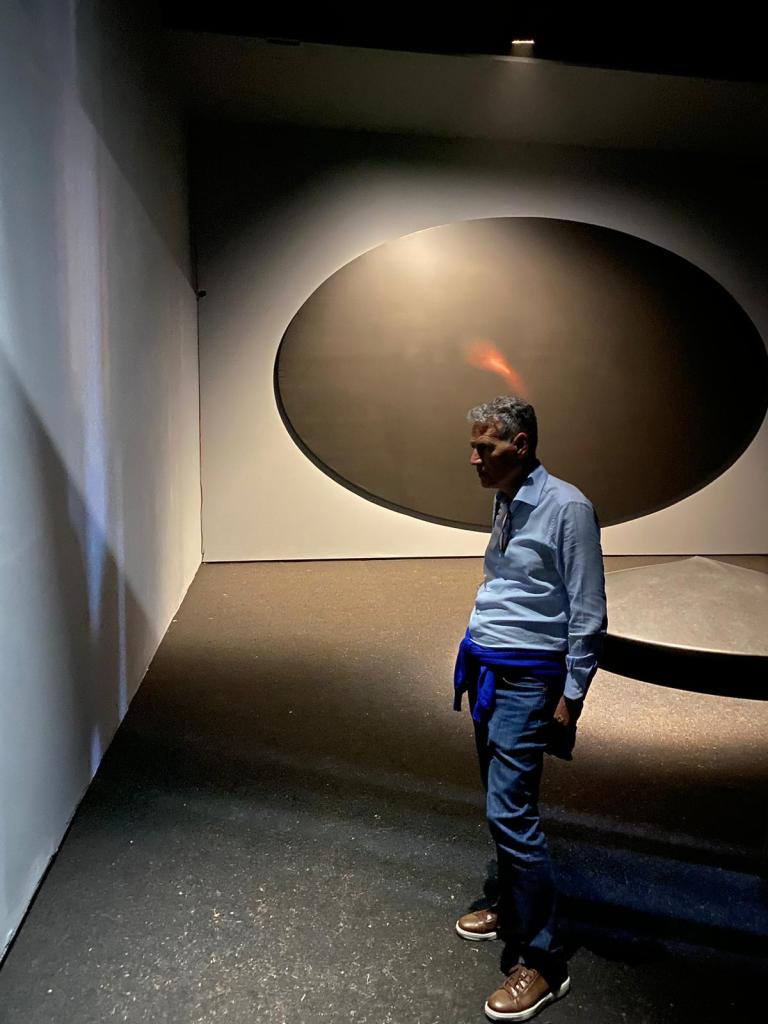
I believe that Africa is, in a way, the DNA of art, just as Africans are the DNA of humanity. So much begins here. I say this somewhat provocatively because it is not always a comfortable idea to defend. But when you look at the history of art, it becomes clear that African artistic practices and artifacts have profoundly shaped its development.
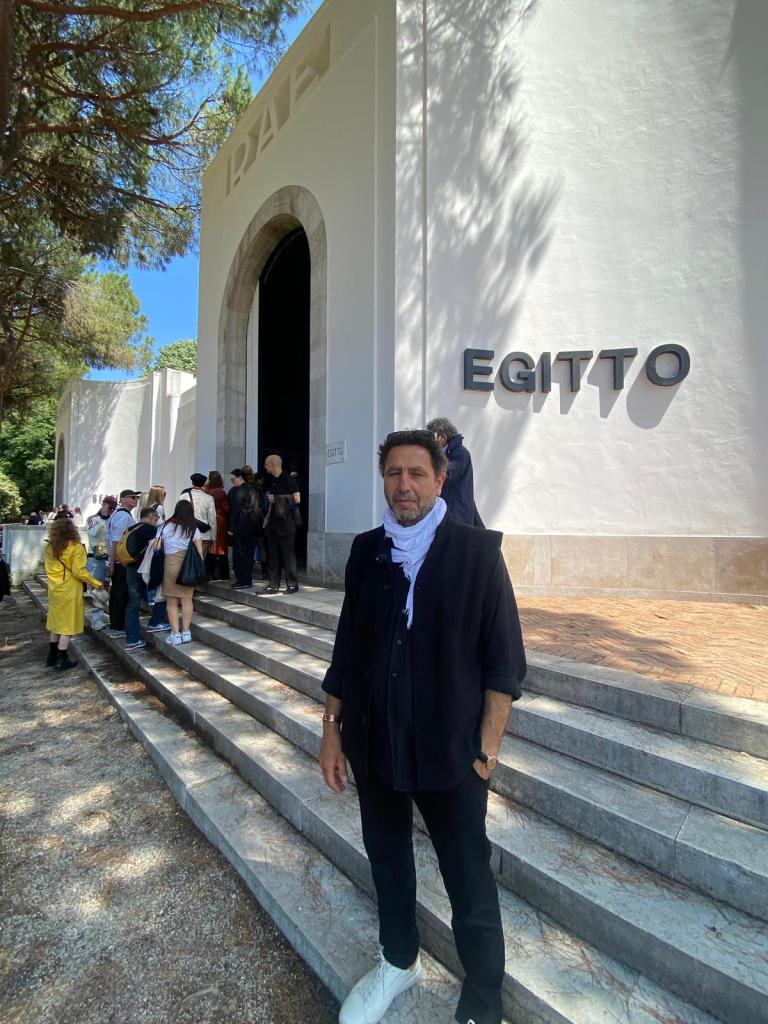
Egypt, for example, with its permanent pavilion, regularly presents high-quality curatorial concepts. Unfortunately, few African countries have permanent pavilions. What we need is not just greater presence, but a more consistent one. When we see the difficulties some pavilions faced in coming together, we realize the battle is not yet won.
“When we see an African artist developing an urban visual language, we should resist the temptation to say: ‘It’s like Basquiat.’” – Massamba Mbaye
Do you think there is an implicit expectation for African artists on the international stage?
The notions of expectation and reception are always linked to the gaze of the Other — with its biases and reductions. I believe the very nature of art is to exceed expectations: to be both an expression of its context and a transcendence of that context. When organizing major international exhibitions, we are at the heart of the art market reactor in London, New York, increasingly in China, and symbolically in Paris. But people always ask: what else? It is this “what else” that can inject fresh curatorial energy and new propositions.
This is where Africa, and other continents, are perhaps expected. Audiences grow tired of seeing the same things. They want to discover artists with ten years of experience who have never been shown internationally, offering work that is conceptually and formally strong, rooted in a specific context, yet capable of renewal. I am not saying, like Samir Amin, that true richness always comes from the periphery. That kind of analysis can be reductive. But I do believe African pavilions are expected to offer another gaze and to renew artistic practice — to add fresh water to the mill.
In a 2008 text you wrote about Basquiat and urban logics in Senegal, exploring questions of permeation and hybridity. How have these hybrid dynamics evolved today?
What I meant when I referred to the text on Basquiat is that, when we encounter an African artist developing their own urban visual language, we should avoid immediately saying, “It’s like Basquiat.” That kind of comparison is often an easy reflex, drawing from a familiar reservoir of references without making the effort to understand what is actually at stake.
What matters is recognizing that an artist can belong to the same artistic lineage as Basquiat without being an imitator. Identifying with Basquiat does not mean reproducing his work; it means sharing certain concerns or participating in a broader artistic genealogy.
That genealogy is far more open than simply claiming to be Basquiat’s “desired or undesired son.” This is the nuance I wanted to emphasize. Whenever we create, we do so from within a particular context and through the references that have shaped us. We cannot ignore what we know. But acknowledging our influences does not mean copying them. We appropriate something because it resonates with us, and then we transform it into something of our own.
This is why I am more interested in the idea of artistic genealogies—whether consciously acknowledged or not—than in the notion of filiation itself. Filiation, in the strict sense, tends to impose limits. What I find truly fascinating is seeing artists who, while clearly belonging to a recognizable lineage, manage to move beyond their influences, sometimes even surpassing their masters.
The same applies to a sculptor such as Ndary Lô. It is difficult to read his work while completely ignoring Giacometti. In fact, that was the very first question I asked him when we met. His studio was filled with sculptures. At one point, he stood beside one of them and said to me, “Massamba, look at me. That figure is me.” Then he added, “If Giacometti saw me years before I was even born, then I’m happy he did. But that figure is also me.”
I think this is a remarkable response. It shows that artistic genealogies are, above all, encounters between an individual sensibility and a set of references that help artists shape their own visual language. They provide a framework within which each artist develops the discourse and the aesthetic punctuation that define their work.
“Those who write about African art must step outside their comfort zones.” -Massamba Mbaye
Some critics speak of the emergence of a global art language that tends to uniformize practices…
Not entirely. What we call homogenization is, above all, a particular way of looking at art from a global perspective rather than a reality of artistic creation itself.
If we stop at the idea of homogenization, we end up constructing a closed universe with no possibility of moving beyond it. Yet the very essence of art is to transcend the world as it is. Without that capacity, there would no longer be genuine artistic practice; it would become, in a sense, a form of self-destructive art.
How can african artists preserve that singularity while remaining open to the world?
Using a visual language shaped by everything we see around us is not something that should be rejected. Writers have always written with words inherited from other writers, yet each of them manages to develop a distinctive voice. The same is true for artists. To me, singularity never limits human potential. Whether artists come from here or elsewhere, they all share the same human condition. They can therefore draw upon elements of a common visual language, one that belongs to our shared cultural heritage, while still developing an expression that is entirely their own. That individuality rests on several foundations.
The first is the fundamental reason why an artist chooses to create in the first place. Choosing art as a mode of expression is already a very specific way of engaging with the world. The second is context. To understand one’s own context is always to work from a particular situation and a particular experience.
There is a widespread assumption that globalization, because it standardizes consumption and reinforces market-driven logic, has made the world essentially the same everywhere. I don’t believe that. Certain habits have indeed become standardized, but there are always nuances, differences and forms of singularity that deserve to be recognized. These singularities are not necessarily rare exceptions. There are probably artists who have been producing remarkable work for ten or twenty years without yet receiving international recognition. They are nonetheless part of what makes contemporary art so fertile and dynamic.
As a critic, how do you perceive today’s critical discourse on African art?
There is a very familiar pattern in which people constantly reduce African artistic productions to things they already know. It’s reassuring to say “it’s like this,” “it’s like that,” “it has Baroque elements,” “it resonates with such and such,” and so on. This type of analysis stems from a certain intellectual and emotional comfort zone. It is often misleading because it forces everything back into what the viewer already understands.
For the discourse to become less predictable, those who engage with African artistic practices must step out of their comfort zone. Instead of immediately comparing, they should make an effort to understand the contexts in which the works were created and truly listen to the artists themselves, whether their discourse is eloquent or clumsy.
I believe this is essential, rather than constantly reducing everything to the standards of the market. And the market itself regularly needs renewal, renewal that often comes from places we least expect. In 2025, for example, we saw a remarkable emergence of Vietnamese artists who produced some of the most striking work on the market. This comes from the logic of renewal at the center. There was far less interest in NFTs and AI than many predicted, even though they were supposed to revolutionize everything. In the end, nothing much happened. I think there is a real demand today for expressions of what is fundamentally human. And this humanity always expresses itself from a specific vantage point, a particular center of observation. Africa, I believe, remains a particularly interesting one.
THE ROLE OF THE DAK’ART BIENNALE
How do you see the current position and evolution of Dak’Art, the Biennale of Contemporary African Art?
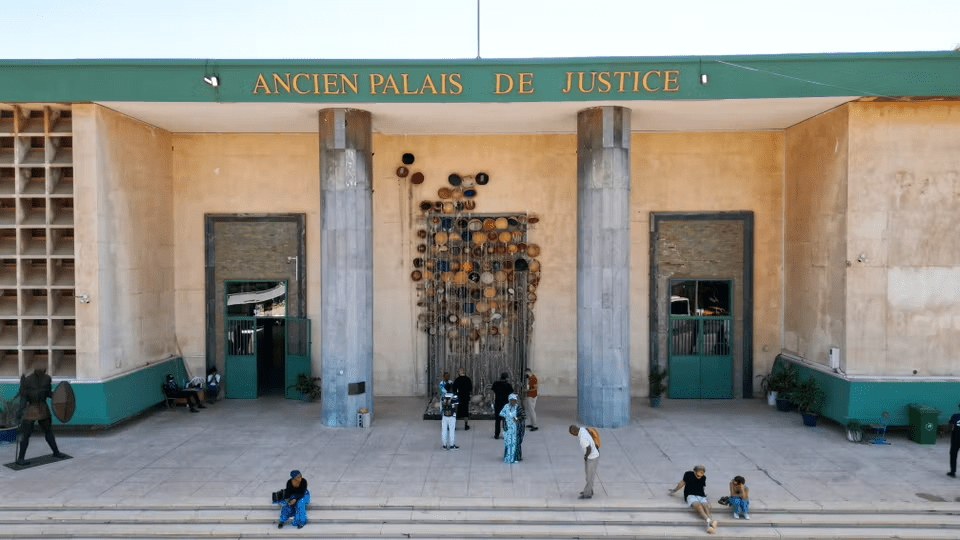
Dakar’s positioning is part of this broader logic of valorization. Over time, the city has established itself and shown real consistency, but questions remain about its capacity to sustain the event in the long term. The real issue is not organizational controversies. Dak’Art now functions through a combination of institutional support and a proliferation of independent initiatives. Even if the official organizers don’t take the lead, others step in and say: “If you won’t do it, we will.” This is how the Biennale has become a true moment and a genuine place.
Still, the question of resources remains crucial. Should it be entirely public, private, or a mix? I believe a public-private partnership is the most viable path. Cultural issues are not merely “sovereigntist” matters, they are questions of cultural sovereignty. African countries must clearly define what they want to show and under what conditions, so that their work can be appreciated on its own terms, just as is done in Europe, China, or the United States.
Even in seemingly less structured markets, there is a strong emphasis on building and valorizing a solid foundation. We must therefore find more reliable ways to sustain this important rendez-vous, which can sometimes fade away even when it appears to have no resources.
What changes would you like to see for the next editions of Dak’Art?
The first and most important change is consistency. Regularity and predictability are essential. Another key aspect is strengthening its managerial structure. The general secretariat benefits from the support of an entire ministry and should also be able to draw on private sector expertise and funding during the Biennale period. This public-private partnership is vital, both financially and in terms of skills.
Beyond that, it is important to maintain continuous work on the Biennale between editions, something that is not always the case. For a long time, the Biennale was perceived as somewhat enclosed, like many museums, disconnected from everyday realities.
In recent editions, however, real efforts have been made: stronger links with schools, guided tours for students, more aggressive communication, and greater openness to the public. These initiatives must not be abandoned. We should push them even further. The last edition saw such large crowds that it even raised concerns about the event’s management. This shows that the questions of popularization and local appropriation by Senegalese and African audiences are worth pursuing. We should also consider reserving a dedicated week for professionals, focused on the commercial, conceptual, and networking aspects, before opening the event more widely to the general public.
After visiting the Venice Biennale, what lessons could be useful for Dak’Art?
I think the first lesson concerns the valorization of culture. Venice is not only a meeting place for artists or art market professionals. It is also a powerful engine for cultural tourism. For a large part of the year, the city lives to the rhythm of this cultural activity. It is also a hub for business tourism. More broadly, the Biennale contributes to enhancing the very image of Venice.One might even ask: what would Venice be today without its Biennale?
I believe these dimensions deserve to be taken more into account in Dakar. The Biennale bears the name of the city of Dakar. Yet it sometimes happens that this relationship is not fully embraced or promoted. I have seen certain editions where even the institutional role of the Mayor of Dakar in the ceremonies was not always clearly defined.Yet this event carries the name of the Senegalese capital. It therefore seems important to me to break down the silos of responsibility.
Dak’Art should not be solely the responsibility of the Ministry of Culture. The City of Dakar should also play a central role. Another issue concerns the relationship between Dakar and the other regions of Senegal. Local authorities are involved in various consultation bodies, but cultural bridges would benefit from being better structured and strengthened. This is an aspect that seems fundamental to me.
How do you see the role of Senegalese artists during Dak’Art?
I think it is important to recall that Dak’Art is not a biennale exclusively for Senegalese artists. For a long time, certain discourses suggested that because we organize the Biennale, Senegalese artists should necessarily be in the majority or omnipresent. I do not share this vision. What must be visible above all is quality. If there is only one Senegalese artist whose work fully meets the requirements of a given international exhibition, then there is no reason to present more simply to satisfy a national quota.
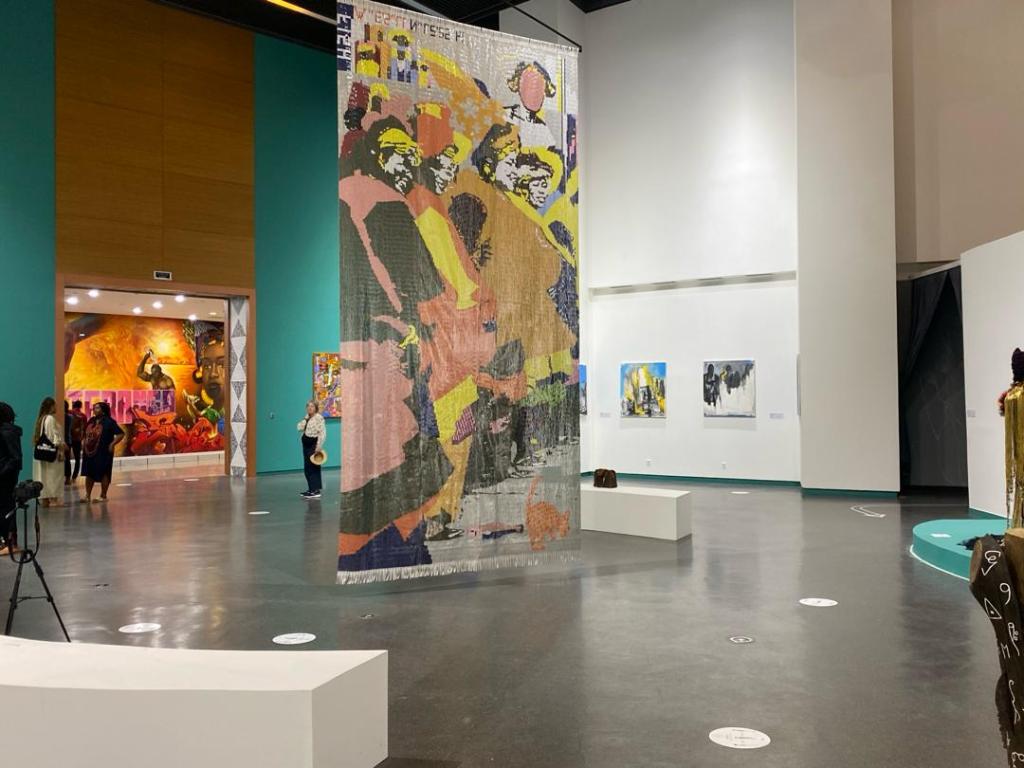
Conversely, if several artists propose relevant works, they should naturally find their place. What matters is artistic and curatorial relevance. The selection is not meant to systematically bring together the “best artists” in absolute terms. It seeks rather to identify the artists who are most pertinent in relation to a specific curatorial project. The real challenge lies precisely in constructing curatorial proposals that are strong enough to bring out the most significant works.
It is often said that the Dakar Biennale is too short. Do you share this view?
Yes, very clearly. A biennale that brings together so many artistic and intellectual proposals in just one month seems relatively short to me. I think we should consider, from a technical standpoint, a longer duration: two months, three months, or even more. Especially since the venue that now hosts the Biennale has become a genuine permanent cultural space. This place exists all year round.
It would therefore be interesting for the works to remain visible longer, allowing a greater number of Senegalese, Africans, and art professionals to access them. Not everyone has the same availability during the Biennale period. A longer duration would enable more people to discover the exhibitions. Furthermore, it could serve as an additional lever for the development of cultural tourism.
So you are thinking of a model closer to that of Venice?
To a certain extent. Cultural tourism could become a complementary source of funding for Dak’Art. In the long term, the Biennale should not belong solely to the Ministry of Culture. It could also involve the Ministry of Tourism, as well as other ministries depending on the themes addressed.The key is to understand that culture is not the exclusive domain of the cultural sector.It also concerns the economy, territorial attractiveness, the country’s international image, and local development.This is probably one of the great lessons we can draw from the Venetian experience.
The Enduring Legacy of Senghor
When we talk about the Senghor period, many people still see Senegal as a major reference in the field of visual arts on the continent. But what about today? What remains of this heritage in contemporary Senegalese creation?
I think contemporary Senegal is still deeply shaped by this heritage. This past remains structural, particularly because several witnesses from that era are still present. They sometimes remind us that there is a level of excellence, a special status that was built historically, and against which we must continue to measure ourselves.This memory is important.
But we must also recall that art has never been simply a matter of decoration or entertainment. It has always rested on strong intellectual, conceptual, and aesthetic constructions. Artistic practices follow precise logics. From the 1980s onwards, a certain number of benchmarks weakened, even though practices continued to evolve according to economic realities, new mediums, and changes in art education.
That said, the intellectual and institutional infrastructures established during that period still exist. Where I see a more significant weakness today is on the conceptual and informational level. I’ll give you a very concrete example. We wanted to organize an Off section through a digital platform. The idea was for the actors themselves to provide and update their information.
Yet nearly 70% of the people concerned did not know how to properly fill out an online electronic form. This reveals a real problem. There are obviously issues of institutional supervision and public policy, but there is also the question of building the capacity of the actors themselves. Today, being an artist also means operating in a complex professional environment. One must understand the logics of production, the stakes of cultural marketing, communication tools, administrative and organizational issues. Yet these skills are sometimes lacking.
Does a contemporary “Dakar School” exist today?
The question is complex. I have always considered that the Senghorian project was based on a fundamental idea: to enable artists to produce their own aesthetic references rather than simply applying pre-existing models. Over time, these references can stabilize and form what we call a school. For the historical Dakar School, there was a relatively identifiable set of theoretical principles that could then be found in the works themselves. But many preconceived ideas have circulated about it. These artists were sometimes portrayed as mere decorators meant to embellish the walls of a new Senegalese bourgeoisie.
I think this interpretation is profoundly mistaken. When an artist spends twenty or thirty years obsessively depicting certain landscapes, figures, or motifs, it necessarily expresses something much deeper. There is an aesthetic, psychological, and symbolic substance there that deserves to be taken seriously. The Dakar School then underwent various evolutions. Other experiences emerged, such as the Laboratoire Agit’Art, which proposed different models. Then, gradually, these dynamics dispersed, notably because artists were confronted with other economic or existential concerns.
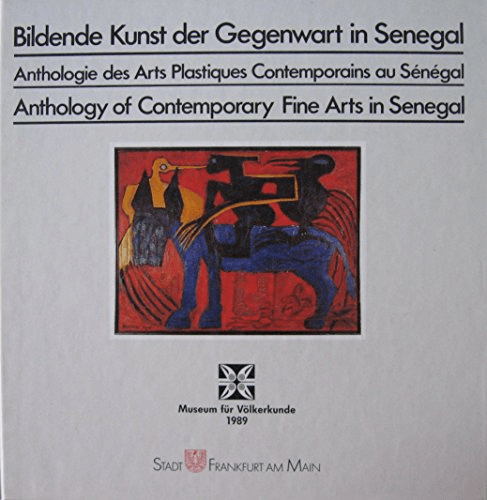
Edited by par Frankfurt am Main: Museum für Völkerkunde., 1989
And today, do you see new lines of force emerging that could form a particular aesthetic in Senegal?
I am not certain that we can still speak of a school in the strict sense. I do not currently see a sufficiently strong systematization to justify such a claim. However, I do see elements that could, in time, constitute points of convergence. References inherited from the Dakar School persist, whether consciously assumed or not. I also observe the emergence of shared concerns linked to the Senegalese urban experience, particularly in Dakar. There are also recurring questions around the psychological, social, and cultural dimensions of what could be called the “homo senegalensis.”
Finally, there is another constant that seems important to me: the relationship to spirituality, to transcendence, and to certain African civilizational continuities. These themes recur regularly in many contemporary artistic practices. Perhaps one day they will form the foundations of a new school. But for that to happen, they would still need to be brought together, analyzed, and systematized. This is precisely the role of art criticism, research, and theoretical work. For the moment, this work remains largely to be done.
What role can art criticism still play today, especially in the age of artificial intelligence?
I believe that art criticism still has an essential role to play. In fact, for the next Biennale, several artists have already contacted me to write texts about their work. But I refuse to work solely from photographs or videos.I need to see the works in person. I need to meet the artists. I need to talk with them.It is from this direct experience that critical discourse can gradually be built. The critic’s job is precisely to try to make intelligible something that is not always immediately so. It is first about offering a reading of the work.
But it is also sometimes about helping the artist to articulate what he or she has expressed plastically, without necessarily having the words to say it. This is where the relevance of the critic still lies. When faced with certain productions generated by artificial intelligence, one often encounters a form of flatness, even when the visual rendering appears sophisticated.
What remains fundamental in art is that irreducible human element. This human dimension continues to run through the works, the gazes, the emotions, and the interpretations. And it is precisely this dimension that criticism must continue to accompany, to question, and to transmit.
Read also
Why the Dakar Biennale Still Matters — Despite Everything
The Post-Visibility Blues: On Venice 2026 and the Limits of Representation – Review
Why Dakar Stands Out in the World of Art! A Conversation with Wagane Gueye
 Bridging Africa and The World Through Contemporary Art
Leave a comment