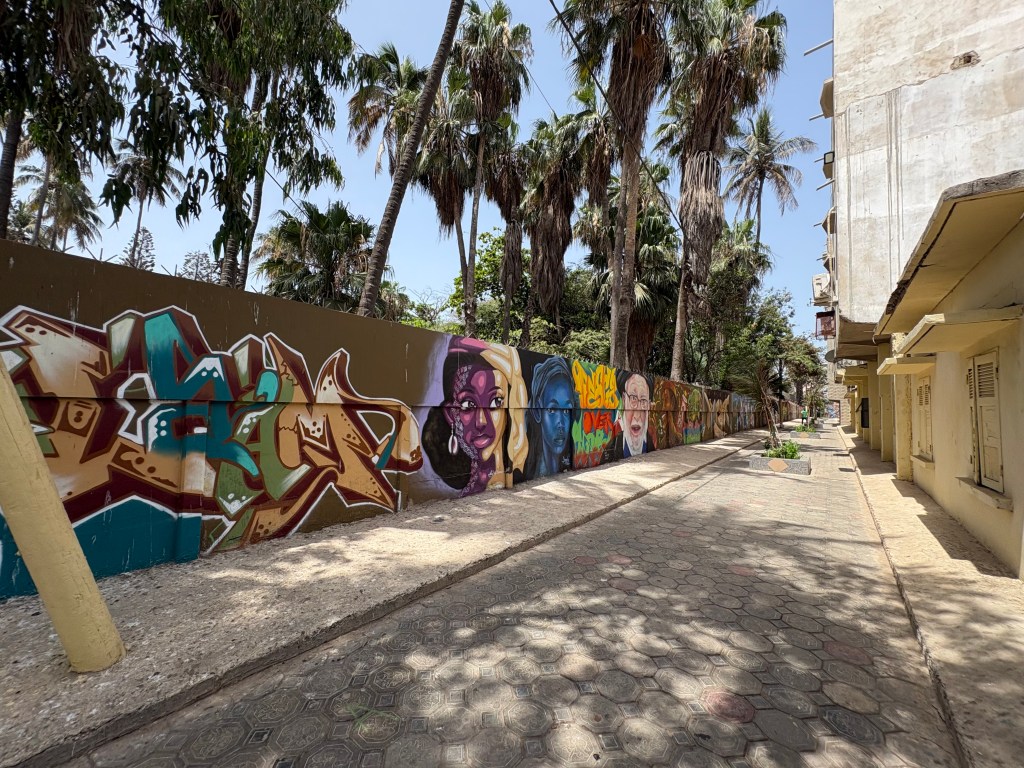

If there is one truth that anyone visiting Dakar would agree with, it is the extensive presence of mural paintings in many parts of the city. The neighborhood of Médina which is one of the oldest quarters of the city, is home to hundreds of frescoes. In addition to mural paintings, Médina hosts other several creative venues such as Village artisanal, Gallerie Atiss, Espace Médina, Yataal Art, and Maison de la Culture Douta Seck. Beyond these formalized spaces, there are dozens of antique and carpentry houses and artists practicing other creative forms of expression such as music and dance. These qualities have earned Médina a nickname of “Musée à ciel ouvert” which translates to an open air museum. Moreover, they further uphold the long and rich history of creative storytelling that is central to Mßedina and Senegal at large.
Art as Everyday Life
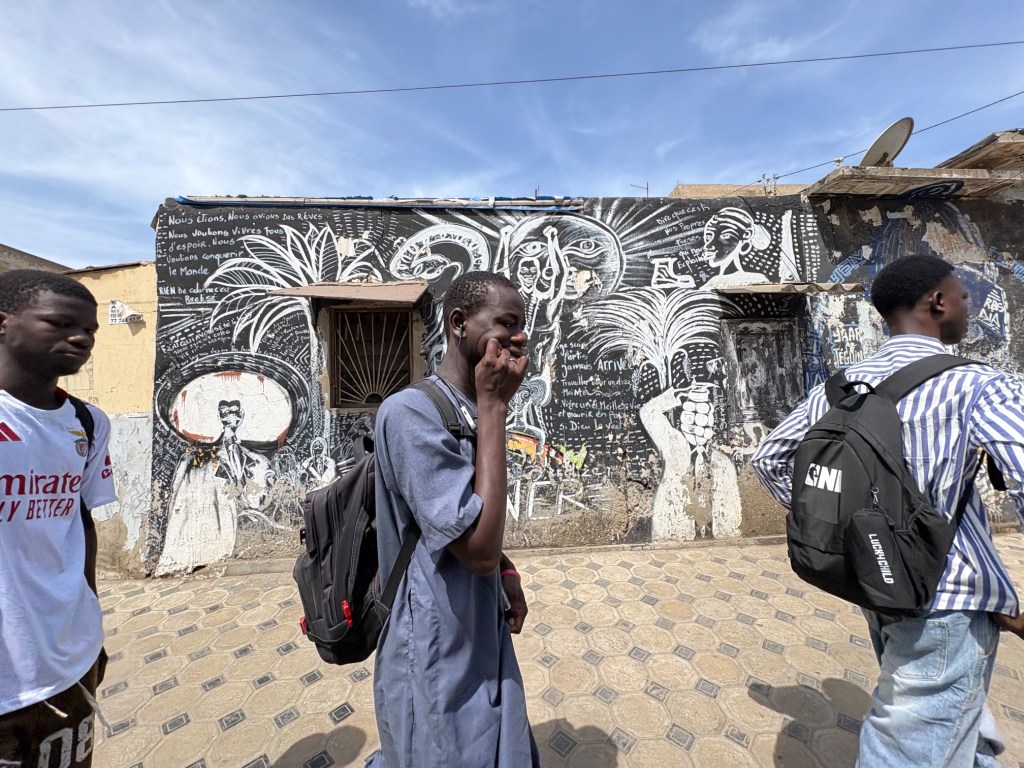
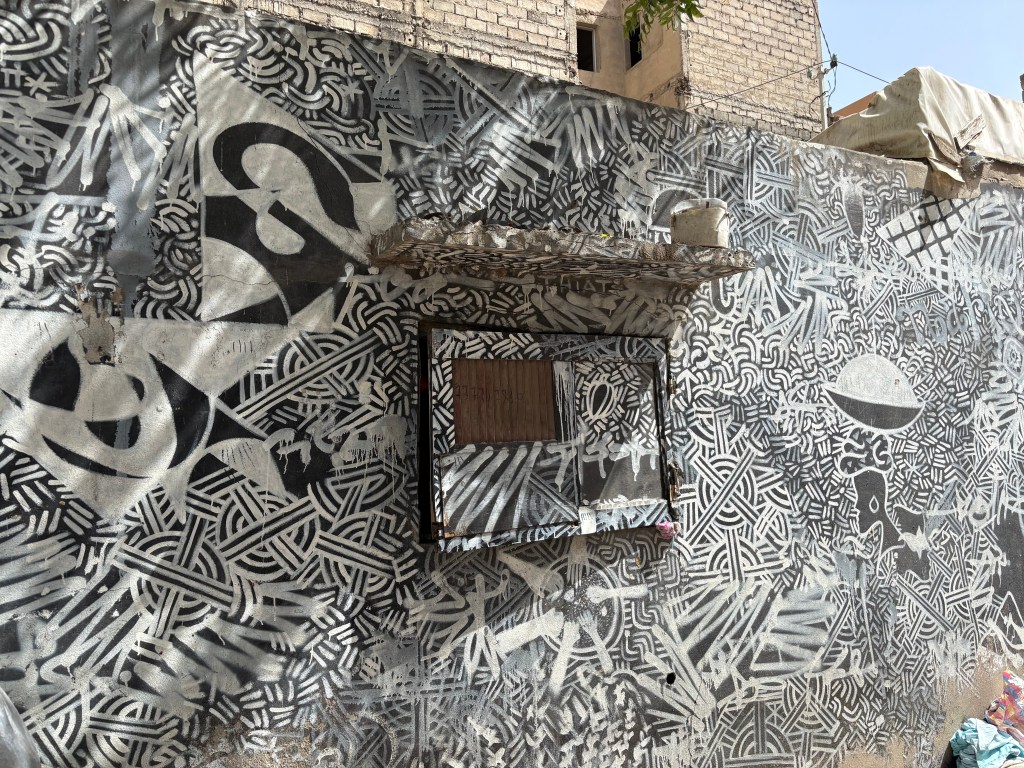
At the intersection of Rue 4 and Rue 19, you will catch a black and white abstract mural on a residential home. Right in front of the mural there is a cozy shade of a tree where on most days you will find a group of women regularly conducting their commercial and domestic businesses like doing laundry, cooking, and selling local delicacies. On the opposite side of the road, there are carpenters and convenience stores. From a distance, the mural transforms the walls into an almost weaving.
“The mural is now part of our daily life” Aissatou – Resident of Médina
The closer you approach it, phrases like “asalam alekoum,” “10,000 problems,”and “Ila touba” begin to emerge from the sea of symbols on the wall. Similar to the majority of the murals in Médina, this work integrates into the busy scene. In a chat with nearby local residents, they expressed pride in having artistic work in close proximity. “It makes our place look clean and good,” they say. Aissatou, another bystander says “the mural is now part of our daily life, we do not necessarily pay too much attention to it.”
These everyday encounters with public art did not happen by chance. They are the result of years of work by local artists and cultural initiatives, such as Yataal Art, a community-based cultural association. His founder, Mamadou Boye Diallo, largely known in the community as Patin, describes street art as a means to pay homage, express themselves, and bring art to the community. “The community members of Médina also participate in the creation of the murals”, he says.
A Community Shaped by Street Art
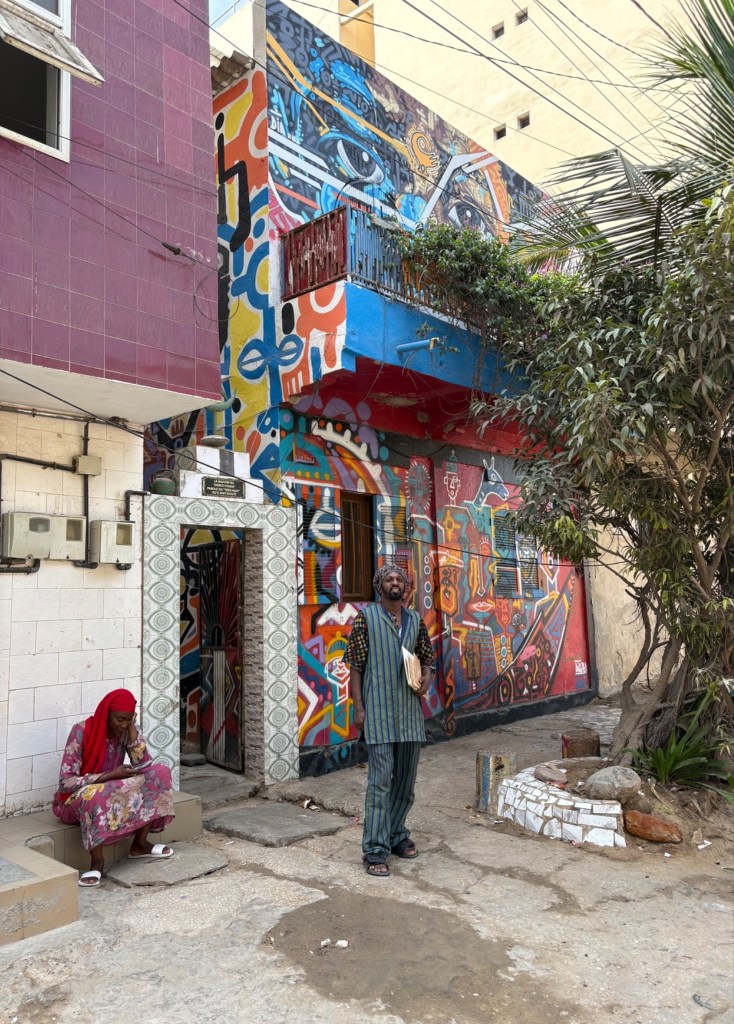
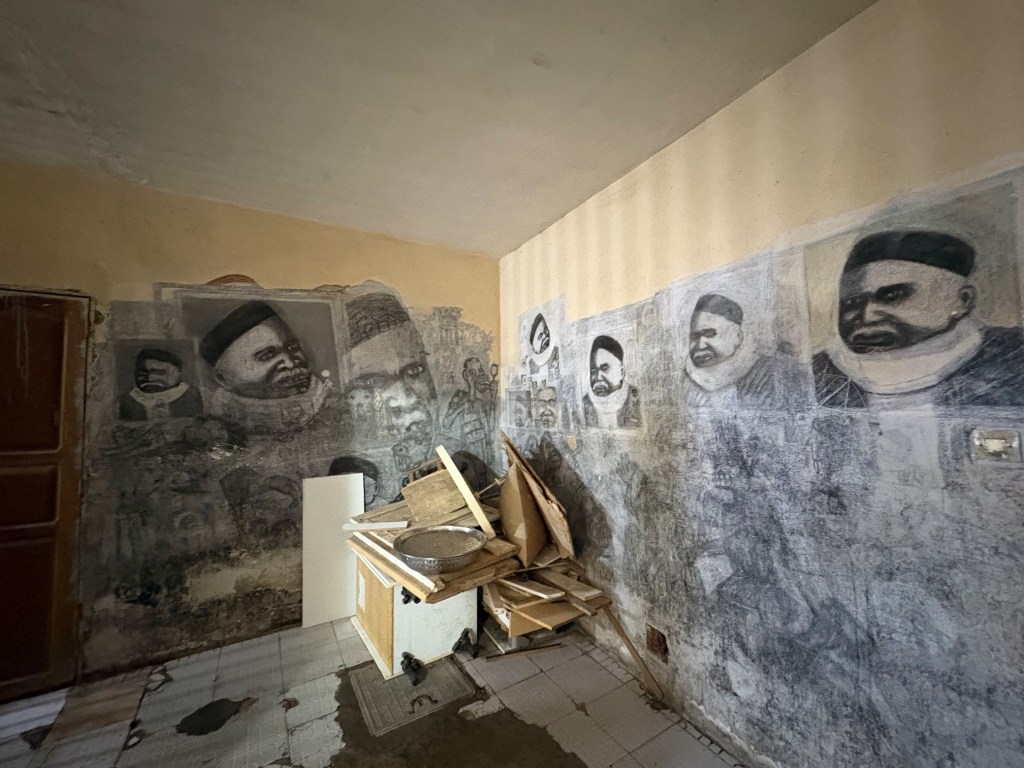
While like in many other parts of the world, street art remains contested and misunderstood, artists in Médina have fostered a positive reputation and mutual collaboration with the community. They often invite their counterparts from other countries and use it for good to valorize their community and raise awareness to pressing social and political issues like sustainability. Together they have led clean up campaigns and transformed old houses into lively works of art.
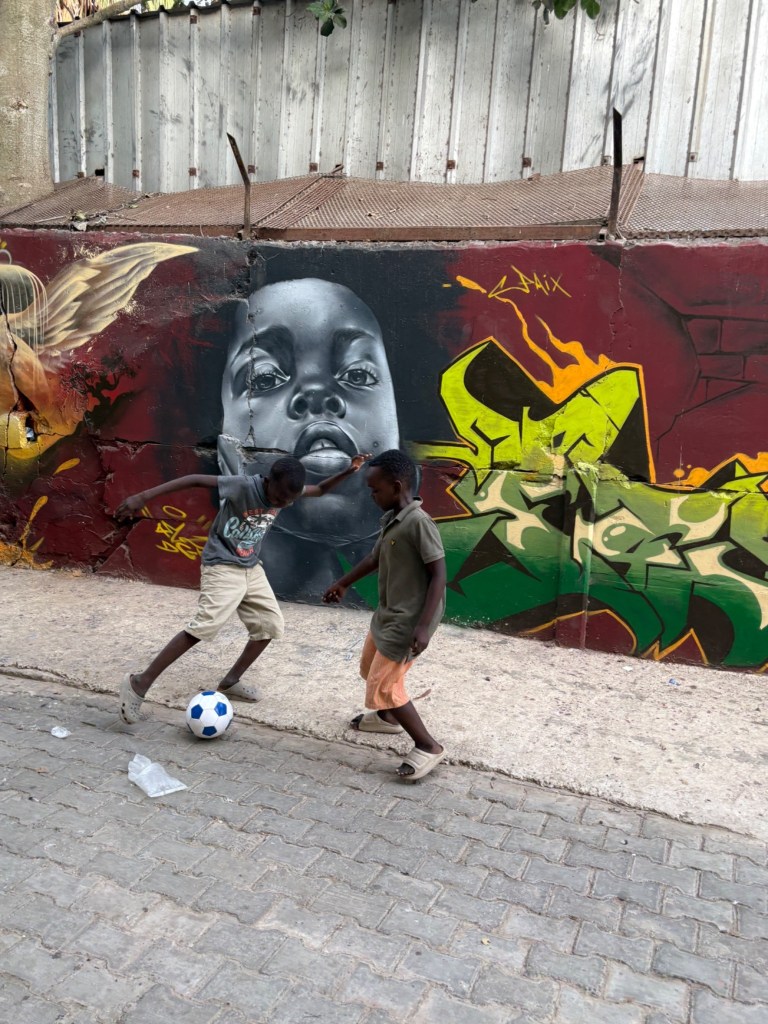
Walking or driving through the streets of Médina, the non-stop rush of traffic of vehicles, motorcycles, and pedestrians going in all directions could feel both energizing and overwhelming. At any time of the day, there are always men and women working various trades or gathering for tea, coffee, and conversation. You will also find children playing football on the streets especially in the evening hours after school.
Amidst this nexus of people and energy, graffiti work slows down the scene, transforming Médina into a moving work of art. For Patin, “every day is a biennial in Médina.” Prolific street artists like Pape Diop have their work across the neighborhood, and their cross-collaboration with carpenters and other community members reflect this spirit of biennial. During the Dak’Art Biennal, Médina hosts numerous OFF events, exhibitions, and artistic interventions, making the neighborhood one of the festival’s most vibrant cultural hubs.
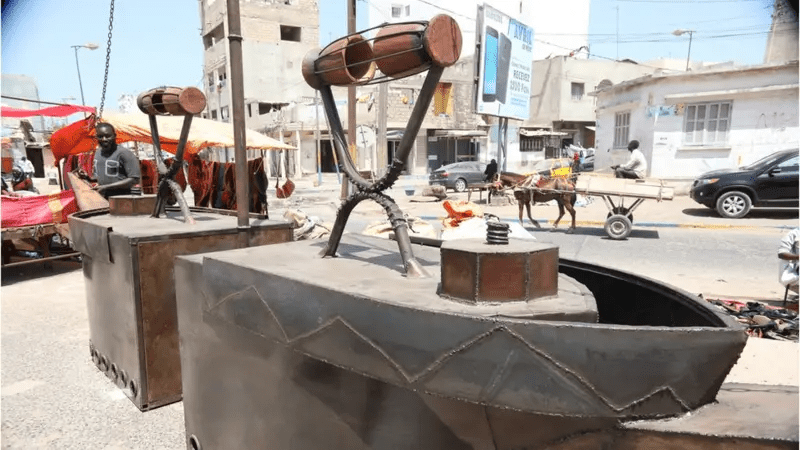
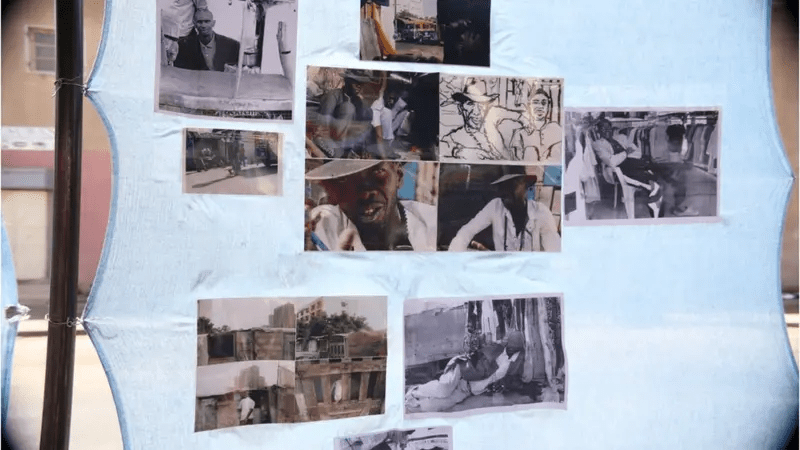
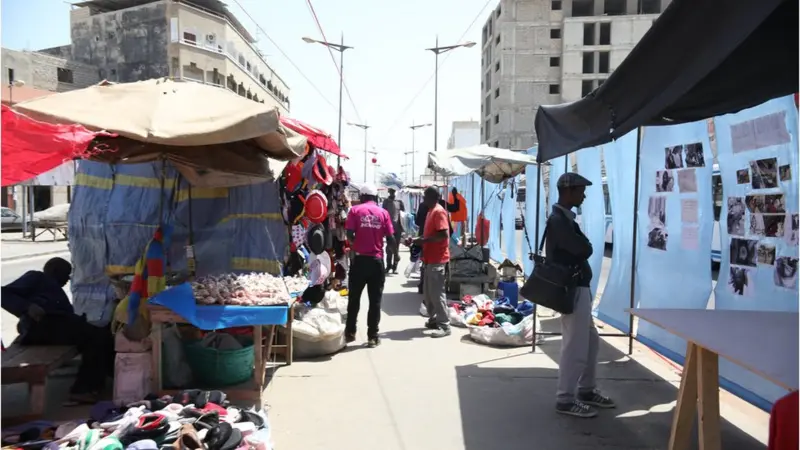

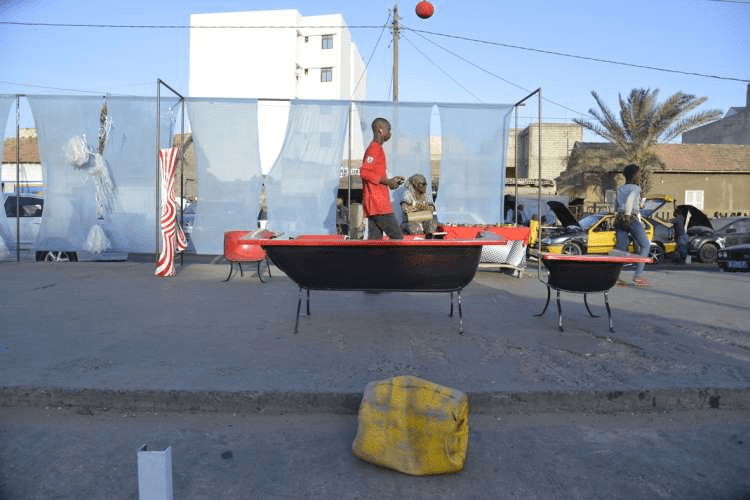

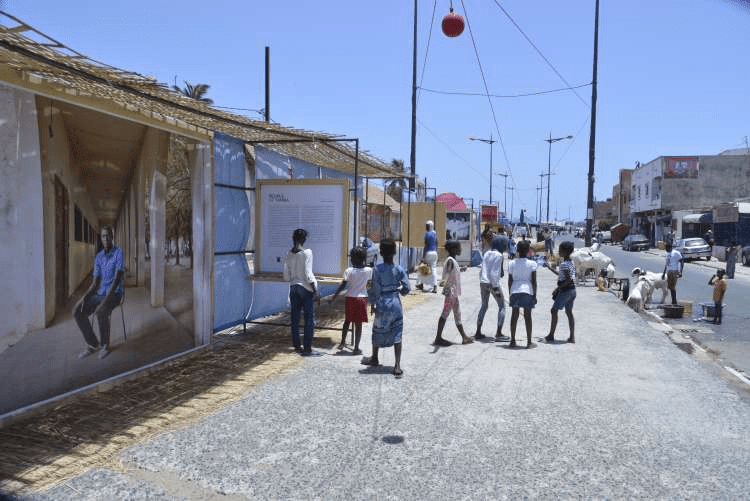
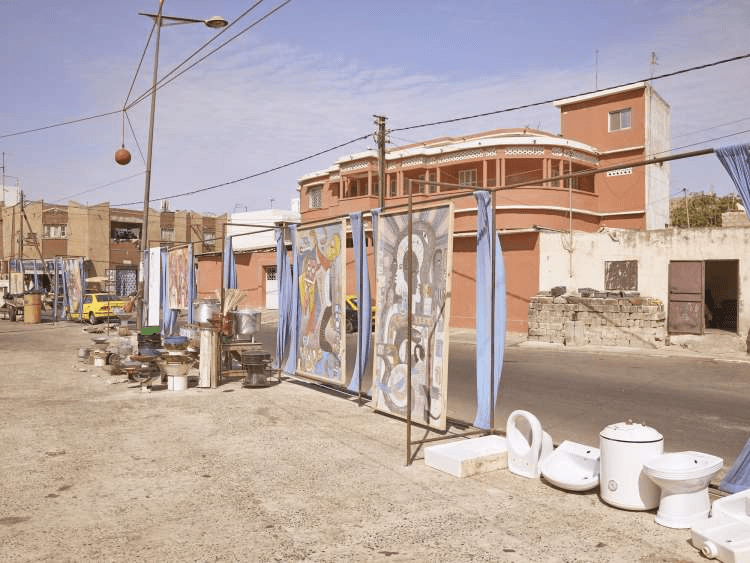
Initiated by Nicolas Dahan and Maurice Pefura, the project brought contemporary art into one of Medina’s busiest streets, where local artists exhibited their work alongside everyday life.
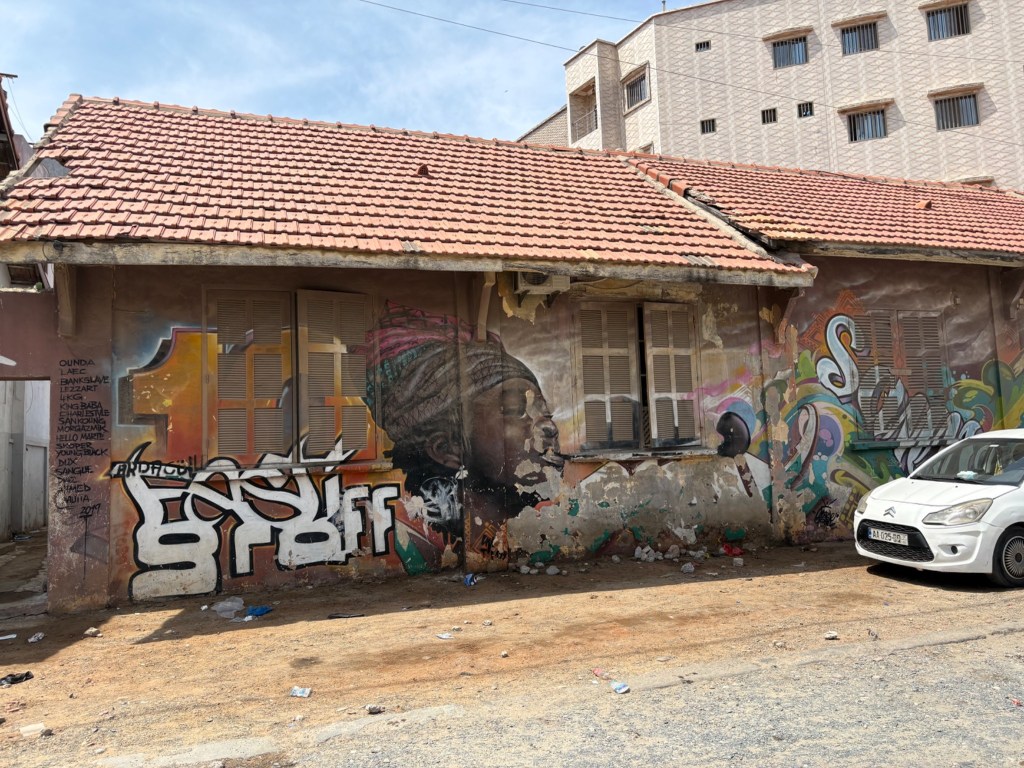
Among the many murals scattered across the neighborhood, some stand out for the stories they tell. Two blocks away from the cultural center Maison de la Culture Douta Seck, there is a stunning Afro-futurist graffiti that depicts an older woman transmitting knowledge to a younger woman. Completed by RSB group, a collective of Senegalese artists, their work reflects and honors the embodiment of matriarchal ancestral knowledge, one of the fundamental cornerstones of Senegalese and many other African cultures.
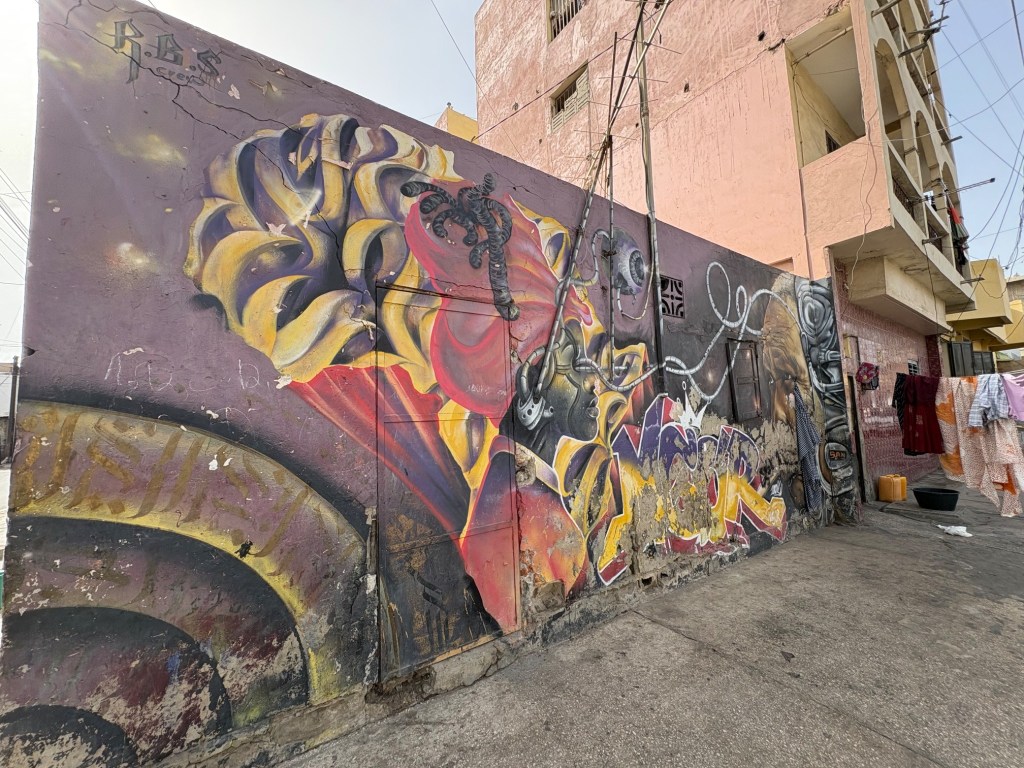
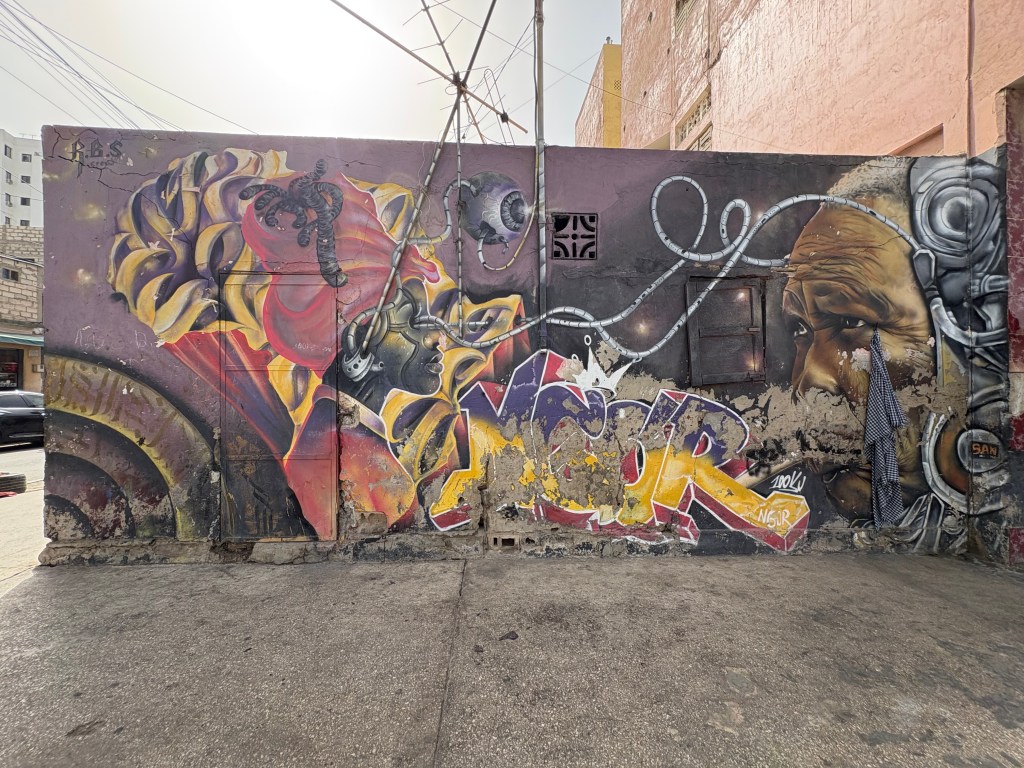
It is painted on a residential home, an aspect that adds a layer of intimacy and local communal knowledge. Adjacent to it, there is another colorful large scale portrait of a young African woman. Her enormous Afro hairstyle and deep eye contact with the viewers makes it an unforgettable sight. It makes you wonder, who is she? What kind of life does she lead? Her composed posture carries a profound sense of agency, self-assurance, strength, and hope.
Many of these murals are the result of collective initiatives that continue to shape Medina’s artistic identity. One of the most important is Fest-iGraff. Earlier in May 2026, Senegalese artists invited their counterparts from over 40 countries across the world to partake in Fest-iGraff, the largest street art festival in Africa. It took place in Médina.
Together, they tackled a theme: “Fàttaliku te Bañ, ‘Mémoire et Résistance’ La résilience des peuples africains et la transmission des mémoires par l’art” a wolof phrase that translate into Memory and Resistance, the resilience of African peoples and the transmission of memory through art.
Balayara Pipeuh — painter, street artist, and one of the organizers of the festival— describes how in 10 days they transformed a once abandoned corner of Médina into a vibrant art work of dozens of murals.
“The ambience was very good; and working with artists from other nationalities cultivated friendships and cross-cultural exchanges. During the entire festival, we lived, worked, and ate together,.. in fact, we did everything together”, he recalls.
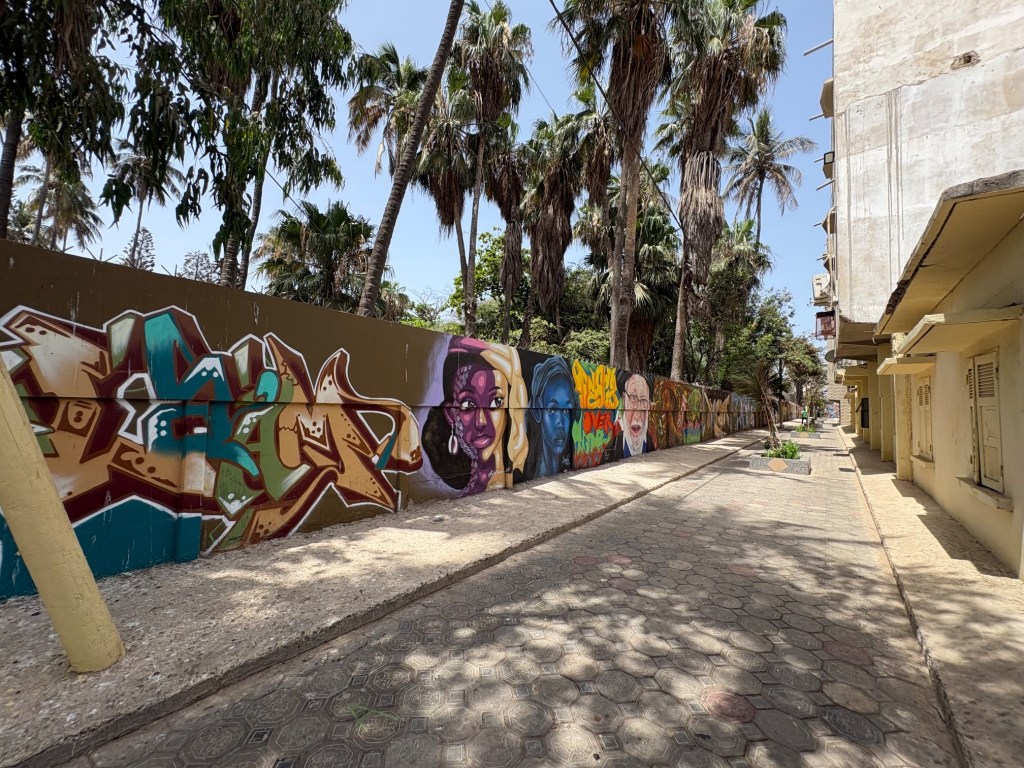
Balayara explained that Fest-iGraff has long been rooted in Medina. “We always organize the festival in Médina, at Maison de la Culture Douta Seck,” he says. This venue offers a wide space to cover all aspects of the festival which, in addition to graffiti, “includes music, dance, theater, comedy and other things,” he adds. Echoing Balayara, Patin stated that “a few months ago, this venue used to be a hub of criminal activity but today it is among the most vibrant artistic and touristic attractions of Médina.”
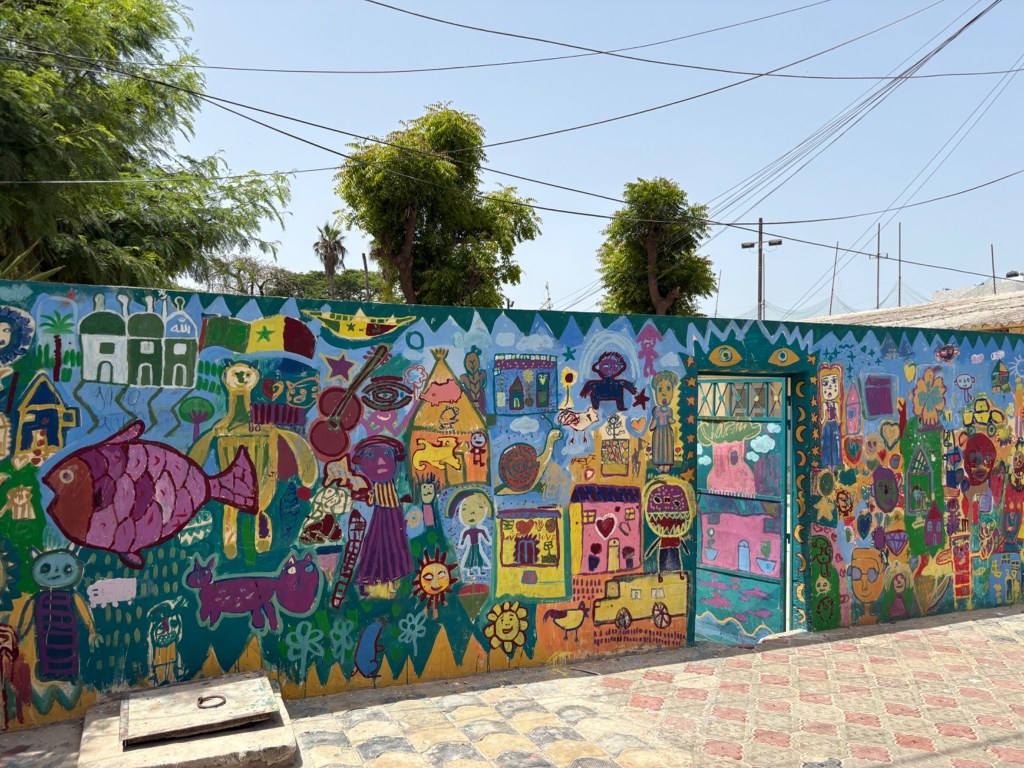
The frescoes made by children from the neighborhood and professionals blend into each other carrying messages of friendship, hope, resistance, and pride.
They also raise serious historical, social, and political questions. For instance, the joy-filled portrait of the late Titina Silá celebrates her heroism during the fight against Portuguese brutal colonial rule in the Lusophone world.
She was among the top and only female officers in that struggle and her sacrifices along with countless other women and male fighters, organizers, and educators from the African Party for the Independence of Guinea and Cabo Verde (PAIGC) eventually achieved the independence of Cabo Verde and Guinea Bissau.
A large-scale depiction of the late supreme leader of Iran Ayatollah Ali Khomnei also brings attention to ongoing tensions in the Middle East and their adverse geopolitical and economic implications on the entire globe. Who would contend that these artists did not accomplish their objective to make the murals of Médina speak? To witness how through spray bombing, brushestrokes, and community making, a formerly forgotten alley flourished into a permanent (and free-to-view-for-all) exhibition is a testament of the restorative and transformative powers of art.
Murals, Memory and Heritage
While Fest-iGraff creates new murals, artists in Medina are equally committed to preserving the neighborhood’s architectural heritage. Yataal Art, in particular, has advocated for the restoration of old colonial buildings from 1914 and 1935. Patin argues that “those houses carry a profound historical patrimony, therefore should be conserved for the community and future generations to learn our history.” Their significance is deeply rooted in the history of the neighborhood.
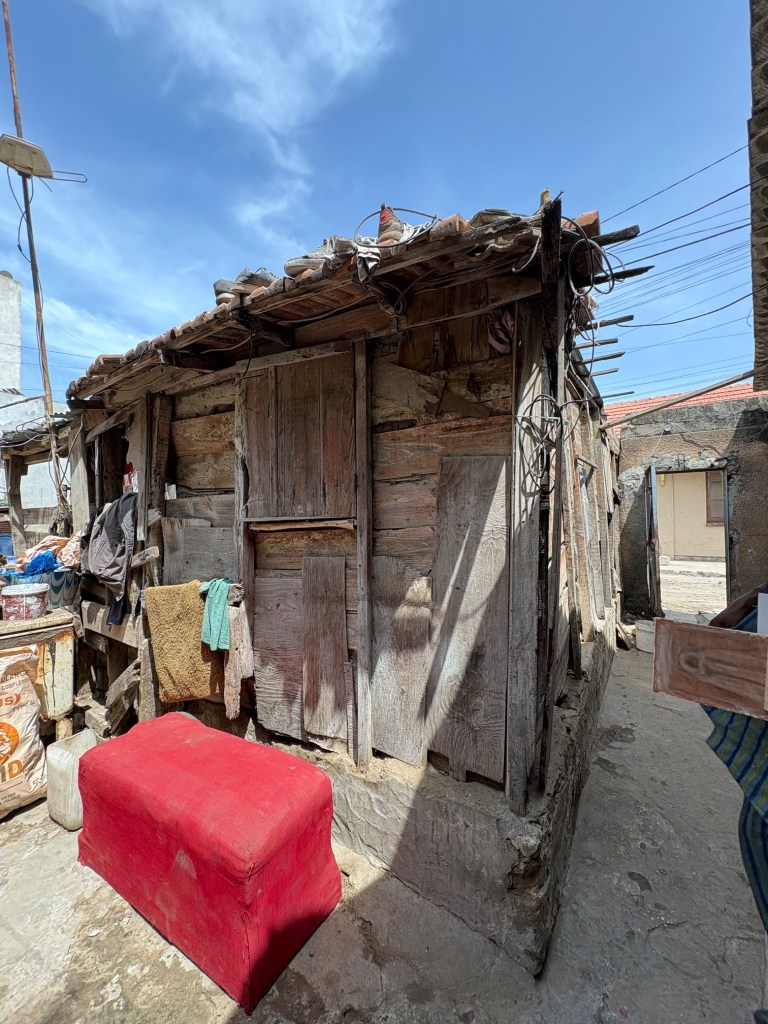
After the 1914 plague, Médina was founded as a segregation village initially called Ponty-Ville 2. To ease the anguish of the displaced local population, Imam El Hadji Malick Sy proposed to change the name, after the Islamic holy city in present-day Saudi Arabia. With this history in mind, fast forward to the contemporary moment, one can argue that among its many other functions, the work that Senegalese street artists have been doing acts as reclamation of agency and territory. It is also an expansive source of critical knowledge production.
This commitment to memory and heritage also explains why street art enjoys broad local support today. The murals of Médina chant resistance, resilience, and community. City officials including the mayor of Mßedina and other cultural organizations like Maison de la culture Douta Seck recognize and support the impact of street art in valorizing the city.
“The office of the mayor provided financial support to Fest-iGraff,” Balayara noted. Patin also indicated that “after the completion of the murals, the officials built gates on both ends of the art corridor to protect the works.” Maison Douta Seck also routinely provides space for the festival and many other creative activities. The vital role of the creative community of Médina has attracted local and internationally renowned artists like iScience and Kerry James. They have both filmed clip videos of their popular songs such as James’s Douleur Ébène in Mediná and featured community members. Ultimately, these intricate intersections between visual art, music, and community engagement make Mediná a sanctuary of socially-engaged arts and a deep source of inspiration.
Olivier Mbabazi
Editorial intern at DakArtNews
 Bridging Africa and The World Through Contemporary Art
Leave a comment