
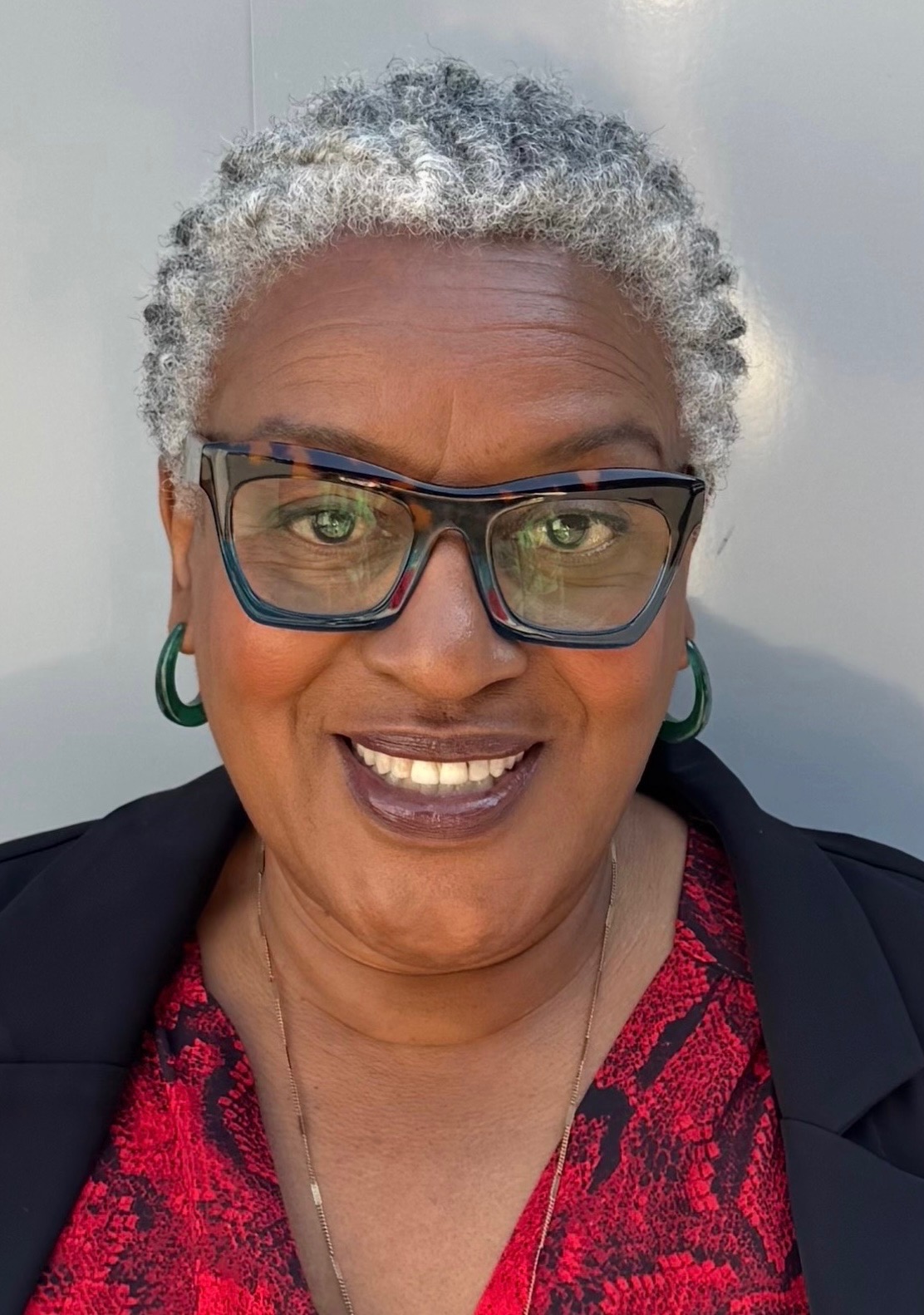

Long before contemporary African art became one of the fastest-growing segments of the global art market, CCH Pounder was collecting the artists she believed would one day define its history. Together with her late husband, the Senegalese anthropologist Boubacar Koné, she founded the Musée Boribana in Dakar (1992), the country’s first museum dedicated to contemporary African art, helping create a space where artists, ideas and audiences could meet at a pivotal moment in Senegal’s cultural life.
Best known internationally for her acclaimed acting career, Pounder has, in parallel, become one of the most respected voices in African art collecting. Her collection, now numbering more than 700 works, reflects the diversity of contemporary African and diasporic artistic practices and a lifelong commitment to preserving the creative history of Africa and its diaspora.
In this wide-ranging conversation with DakArtNews, CCH Pounder reflects on the legacy of the Musée Boribana, the evolution of Dakar’s art scene and the Dak’Art Biennale, the transformation of the African art market, and the responsibilities of collecting. More than a conversation about art, this is a meditation on memory, stewardship and the stories that collections preserve long after their owners are gone.
How did your relationship with African art first begin?
My relationship with African art began with my father. He had a small collection of ebony sculptures from Kenya, animals and human figures, which he kept on the highest shelf, well out of reach of us children. I remember being fascinated by them.
Later, when I was about eighteen or nineteen and beginning to audition as an actress, there was one sculpture in particular, a king wearing a crown, that became my good luck charm. The back of the crown had a small hollow where my thumb fit perfectly, so I carried it in my pocket whenever I went to an audition. Looking back, it’s funny to realize that this small object marked the beginning of my journey as a collector.
Years later, I found myself collecting what I called functional art. Every object had to serve a purpose. I bought handcrafted teapots, bowls and plates made by African artists. Over time, that collection became quite extensive. Eventually, my definition of “functional” evolved. I realized that art’s function did not necessarily have to be practical. Its function could simply be to make me happy. Even then, I still thought of it as functional art.
Everything changed when I met my husband, Boubacar Koné, in 1990. At the time, he was procuring African art for museums and galleries abroad. Someone had told him about a few young collectors, and my name happened to be on that list. When I eventually visited the gallery he had set up, I immediately chose a work that I loved. He looked at me and said, “Oh no, you can’t afford that. Let me find you something less expensive.” I remember thinking, How incredibly rude! He told me he would soon be travelling with a group of curators and would try to find something more suitable for my budget.
Well… I ended up marrying him.
Together, we built not only a life, but also a collection. Boubacar had always dreamed of creating a museum devoted to African art. Having worked with museums for so many years, he wanted to build one of his own. But I reminded him of something very practical: we couldn’t afford to collect historical African art. We couldn’t afford the provenance research, the scientific testing, or the authentication required for older works.
What we could afford was to begin collecting contemporary African art while the artists were creating it. That idea became the foundation of Musée Boribana.
When the museum opened, it featured just thirty-four works. Some were monumental, but every single one represented what we believed to be the very best we could acquire at the time. I think Boribana earned its reputation because we were always committed to quality from the very beginning. Years later, of course, we donated the museum to the Senegalese state.
Looking back, what do you feel Musée Boribana gave to Dakar?
When Boribana opened, Dakar simply didn’t have a museum dedicated to contemporary African art. Even if all we had been able to offer was a single room with the words Contemporary Art Museum on the door, it would already have created a place where artists and the public could come together.

For me, a museum should never be only about the tastes of its founders. It should also reflect what artists are creating at that very moment. Temporary exhibitions allow a country to present its creative pulse, to say, this is what our artists are making today.
That became one of Boribana’s greatest contributions. People didn’t have to visit with the intention of buying art. They could simply walk through the galleries, spend time with the works, discuss them, discover artists they had never encountered before, and perhaps later decide to visit those artists in their own studios. At the time, there were very few galleries in Dakar and almost no art agents. Most exhibitions were temporary and often took place in restaurants or improvised venues. That’s how many artistic communities begin: with determination rather than infrastructure.
“From the very beginning, we wanted Boribana to be a place of opportunity for emerging artists” – CCH Pounder
When you first imagined Boribana, what gap did you feel existed in Dakar’s cultural landscape?
Coming from abroad, I was used to cities filled with museums and galleries. Arriving in Dakar, I discovered a country rich in history and culture, with museums dedicated to heritage, history and tradition, but there was very little devoted to contemporary artistic creation.
That was the gap Boribana sought to fill. Its scale was appropriate for the city at the time, and as public interest grew, so did the museum. We expanded by building a library, an outdoor cinema, artists’ studios and residency spaces where creators could work, exhibit and exchange ideas.
Those facilities were especially important for artists travelling from elsewhere in Africa. Transporting artworks could be expensive, sometimes impossible. At Boribana, artists could come, create new work on site, exhibit it, and even sell directly to visitors.
From the very beginning, we wanted Boribana to be a place of opportunity for emerging artists. One of the initiatives I remember most fondly was the Young Artists Prize. Ironically, because there were so few places where artists could exhibit, people of every generation entered the competition, whether they were twenty-four or sixty years old.
We never turned anyone away. We simply wanted to discover what was happening creatively. We were like fishermen casting a wide net, eager to see what each new catch would reveal. Looking back, those were incredibly exciting years. Of course, there were skeptics who wondered whether a contemporary art museum could succeed in Senegal. Some even assumed that it must have been a foreign initiative.
For Boubacar, it was deeply important that people understood something very simple: we had built it ourselves. A Senegalese man had created a museum dedicated to Senegalese artists, while also welcoming artists from across Africa and the diaspora. In many ways, it reversed the traditional direction of cultural exchange. Today, African artists exhibit all over the world. But Boribana was already saying something similar decades ago: bring your work home, and let Africa discover what its children, wherever they may live, are creating.
I think that was one of Boubacar’s greatest achievements. Together, we built a remarkable collection that brought Senegalese artists, African artists and members of the diaspora into conversation with one another.


“Museums are more than buildings. They survive because people care for them.” – CCH Pounder
Looking back, is there a particular memory or moment from Boribana that has stayed with you over the years?
I think one of the moments that meant the most to Boubacar was when then-First Lady Viviane Wade visited Boribana. Once the presidential family came, people became curious. They thought, If they’re going, perhaps we should see what this place is all about. For many visitors, it was their first experience of entering a museum devoted to contemporary art. They came out of curiosity, but they also discovered a space that welcomed them from the moment they stepped through its blue gates.
Boribana was beautifully maintained. We had an extraordinary groundskeeper who cared for the gardens with genuine love. The museum wasn’t just about what happened inside the galleries; the entire environment invited people to slow down, walk, and experience art. One of the projects that excited me most was the dialogue we created between classical African art and contemporary African art. Rather than presenting them as separate worlds, we placed them in conversation with one another.

That allowed us to ask different questions. What do our contemporary artists inherit from their ancestors? How do ancient forms continue to speak through today’s artistic practices? It was an extraordinary curatorial journey. Boubacar had hoped to publish a book exploring those conversations between classical and contemporary African art. Sadly, he never had the opportunity to complete it. Even more unfortunately, many of the photographs documenting those exhibitions were lost during the transition from analogue to digital photography. That remains one of my greatest regrets.
In 2014, you and your late husband donated the museum to the nation of Senegal. What is your relationship with Boribana today? Do you still follow what happens there, or did you feel you had to let it go completely?
I’ll be completely honest. The first time I returned after donating the museum, I was devastated by what I saw. Its condition broke my heart. I remember feeling so overwhelmed that I nearly fainted. Someone caught me and tried to reassure me, telling me everything would eventually be restored. But for me, something had changed.
I realised that, if I wanted to preserve my memories of Boribana, I had to let it go. When you create something with love over many years, you know every corner of it. You know every tree, every wall, every exhibition, every artist who walked through its doors. Letting go of that is not easy.
Of course, governments have many responsibilities, and museums everywhere face difficult circumstances. But museums are more than buildings. They survive because people care for them. Even when financial resources are limited, there can still be volunteers, communities and individuals who see these places as part of their shared heritage.
That kind of devotion is irreplaceable. So yes, I had to surrender. Walking away was one of the hardest decisions I have ever made. Looking back now, I also think it probably saved me. Boribana was such a significant part of my life that holding on would only have prolonged the heartbreak.


You have attended every edition of the Dak’Art Biennale since it began. Looking back, how has the Biennale evolved, and what role do you believe it should play today?
Dak’Art has become one of the great cultural pillars of Africa. It is one of the few biennales on the continent that people across the international art world immediately recognize. Despite the many challenges it has faced over the years, it has continued to invite remarkable artists whose work has gone on to shape global conversations about contemporary African art. In that sense, the Biennale has become far more than a Senegalese event. It represents not only Dakar, but Africa as a whole.
For me, its importance should never be questioned. Every edition should be supported as a matter of course. There should never be uncertainty over whether it will happen, whether funding will be found, or whether it can continue.
People sometimes ask what the Biennale brings to them personally. I think that is the wrong question. The real question is: What does the Biennale bring to Dakar? It brings visitors, ideas, dialogue, opportunities and international visibility. It contributes to the city’s economy, but even more importantly, it contributes to its identity. The Dak’Art Biennale is one of Senegal’s greatest cultural ambassadors.
How has Dakar’s contemporary art scene changed since you first arrived?
It has expanded enormously. When I first came to Dakar, much of the work I encountered was figurative. Artists explored family, community and everyday cultural life through painting and sculpture. Today, the artistic vocabulary has become much broader. Part of that evolution comes from necessity. African artists have an extraordinary ability to transform the materials around them. Plastic bottles, discarded wood, old tyres, scraps of metal, objects that many people overlook become the raw material for powerful works of art.
That capacity to reinvent is one of Africa’s greatest strengths. The imagination is bottomless. Every time I think I have seen everything, another artist surprises me with a completely unexpected approach or material. Artists are extraordinary people. If you can train your imagination to transform discarded objects into something meaningful, then you also begin to imagine new possibilities beyond art itself.
“At first I collected for the museum. Then I collected for pleasure. Today, I collect for the future.” – CCH Pounder
You’ve been collecting for decades. What kind of collector are you today? What continues to drive you to collect?
I actually still continue to collect what I was collecting for the museum. By now, I feel I’ve been fully trained in collecting—going to artists’ studios, speaking with artists—and I still have that capacity. I haven’t changed very much because it’s still what interests me. Contemporary African art is still what I collect.
I have moved ahead. I think my collection here in the West is about 700-plus works that I consider part of the collection. Then there are other things that I simply consider part of my household. The freedom of no longer having the museum is that, if I come across an artist who isn’t African but whose work fascinates me, I’ll still allow myself a second look. And if I can’t help myself, I might acquire the work.
But I’ll tell you this: I’ve gone from collecting for the museum, to collecting for pleasure, and now to collecting for the future, for whoever it is that may one day come and see the collection. When they look at it, I want it to be very concise. Very specific. It’s art of the African diaspora. It is contemporary art. And it tells the story of the time in which I lived. I miss Koyo Kouoh very much because this was one of the great conversations we used to have. We’d say, “Wow… we’re part of our living history.” I never really gave that a second thought until after she left us.

Has your eye criteria for acquisition changed over the years?
Completely. In the beginning, I was simply thrilled to see Black figures represented in works of art. That alone felt extraordinary. You could spend an entire day walking through major museums and discover only a handful of images of Black people, often hidden away in the upper corners of enormous paintings.
So, at first, representation itself mattered. Then my eye evolved. I moved beyond simply recognising myself in an image and began asking different questions. What story is this artwork telling? Eventually, I realised that I was no longer collecting images, I was collecting stories.
My husband once walked into our house, looked around, and said, “I’m only married to one woman. Who are all these women on the walls?” He was right. At that point, almost every work I owned portrayed women. That observation changed the collection. I began introducing male figures, landscapes, architecture, animals and other subjects. Gradually, the collection became much more diverse.
Today, when I look across it, I feel it captures a particular moment in history, from roughly the 1950s to the present. Perhaps one day it will stretch to 2040 if I’m fortunate enough. What matters is that it reflects the lives, experiences and imaginations of African people during this period. Especially today, when there are attempts in some places to erase Black histories and reduce our visibility, I believe it is important that future generations can look back and say: We were here.
Today, many younger artists are exploring new media, including installation, performance and artificial intelligence. Are those practices also part of your collection?
Absolutely. About twenty years ago, I made an important decision. I didn’t want my collection to spend decades hidden away in storage until someone rediscovered it after I was gone. I wanted it to live. Since 2015, works from the collection have travelled to museums across the United States and the United Kingdom. Because the collection is so extensive, several exhibitions can take place simultaneously.
That has brought me enormous joy. People are engaging with the collection while I am still here to see it. I’ve also planned carefully for what happens after my lifetime. My hope is that the collection will continue to go where it is genuinely wanted—not somewhere it will disappear into storage. Even my home has been prepared for that future.
When I’m gone, it will become a public house museum, allowing visitors to continue living with the collection in the space where it was assembled. I hope I’ve put enough in place for that vision to continue for many years. Whether future generations of my family choose to carry that mission forward, only time will tell.
“For me, art is the gift of expansion. It expands the mind. It expands the heart.” – CCH Pounder
With more than seven hundred works, you obviously can’t live with everything at once. How do you decide which artworks surround you on a daily basis?
I’m actually quite spoiled in this area. Kiné Aw‘s work is the only painting that has stayed in the same place in the house. Everything else rotates. So when members of the public come to visit, they get to see different works. Museum curators, for instance, might be interested in a particular subject. They may want to see works about women, or only abstracts, or only landscapes. In that case, I’ll rehang the house for them. And while those works are up, I’ll invite friends and colleagues who are interested in art, and they’ll often bring their own friends to come and see the new installation.
Within the house, there’s also a gallery. It’s open by private invitation only from September through May.
We also invite artists from outside to exhibit there. We put together a yearly programme, and they come and show their work. It’s called the Corentyne Cottage House.


If you could curate your dream exhibition using works from your own collection, what conversations would you want it to spark?
I don’t think I could ignore the central place that women occupy in my collection. Perhaps that’s simply how the collection evolved. Perhaps it reflects who I am. Either way, it has become one of its defining characteristics. Many of these works explore how women see themselves, how society sees them, and the many stories they carry. Those conversations remain essential because women have spent generations pushing against invisibility, against limitations, against the idea that their voices mattered less.
My collection tells those stories. At the same time, I’m equally fascinated by works that move beyond literal representation. I enjoy artists who abandon the need to depict recognizable figures and instead build visual worlds through colour, texture, rhythm and abstraction. Those are works that ask something of the viewer. They invite you to participate. They don’t tell you what to think; they ask you what you feel.
I’ve never been embarrassed by the emotional response that art can provoke. Quite the opposite. Emotion is one of the qualities that makes us deeply human. If a work of art can make us feel something genuine, then it has already achieved something extraordinary.
We are living in a world marked by social and political tensions. Are there works in your collection that give you hope for the future?
I think it’s very easy to say, “Oh, they’re all my children.” But they’re not. There are some pieces that, for me, verify a certain truth, whether that truth is positive or negative.
For example, there’s a painting by Salah Elmur called Sunflower. It depicts a naked woman standing in front of a vase with a sunflower. She’s surrounded by men, all dressed exactly alike, all with their gaze directed somewhere else, not at her. They’re looking away, avoiding, avoiding, avoiding. And yet the shock of her nakedness, and the objectification of her as the sunflower, made me think, wow. It was really something else. It’s one of those paintings that I think everybody ought to see.
Then there’s another painting by Meghan Murphy. She paints giant women sitting on houses, holding houses in their hands. It’s the idea that women who have been abused must make themselves like giants. They have to become bigger than their houses, bigger than whatever pain they’ve experienced, in order to come back from it.
And then, I could go on, I have a painting by Firelei Báez that immediately brought back the stories I heard as a child. Not fairy tales exactly, but folk tales. The story of La Diablesse, the devil disguised as a woman who could never change the hoof of her foot. She would stick out one foot in a high heel, tempt men to follow her to her tree, and then devour them.
It was always a story I remembered from childhood. And here was a Dominican artist telling essentially the same story. Throughout the Caribbean, this story exists, slightly transformed from one place to another. When I saw that painting, I recognised it immediately. I think I bought it within five minutes. I remember thinking, Oh my God… that’s my childhood. La Diablesse, I know her.
There is still an excitement in the chase, wondering what I’m going to discover next. There are artists like El Anatsui, whom I’ve followed since the days when he was working with burnt wood, stacking burnt wood, long before he moved into the extraordinary metal hangings that he’s now known for.
I’ve also followed artists like Kehinde Wiley, from the time he had just graduated and was connected with the Studio Museum in Harlem, to later seeing my husband help him navigate the process of building a space in Dakar. All of these artists have moved in and out of my life over the years. What I’ve realised is that I keep returning to the same artists, and those artists introduce me to other artists. That’s really how my collection has grown. It’s been a very organic expansion.
“Collecting has made me more curious, more thoughtful and more open to perspectives beyond my own.” – CCH Pounder
As an actress, you’ve spent your career bringing stories to life. As a collector, you’ve spent decades preserving the stories told by artists. Do you see a connection between those two worlds?
Absolutely. When I was very young, I couldn’t decide whether I wanted to become an actress or a visual artist. One of my mentors gave me a piece of advice that changed my life. She said, “Acting is for the young. As long as you have your hands and your eyesight, you’ll always be able to make art.” So I thought, I’ll spend the first half of my life acting and the second half making art.
Life, of course, had other plans. Acting became my career, and I never really found the time to become the visual artist I had imagined. But collecting allowed me to remain part of that world.
Over the years, another role naturally emerged. I began introducing artists to actors, actors to writers, writers to musicians. Creative communities thrive through encounters, and I’ve always loved bringing people together. We’re all storytellers, simply working through different languages. Being married to Boubacar also transformed the way I looked at art. He introduced me to ways of seeing that I could never have learned in a university.
Growing up, I was immersed in the Western canon. Then suddenly I found myself discovering African philosophies, African spiritual traditions and entirely different ways of understanding beauty, history and artistic creation. That education changed my eye forever. Today, when I look at an artwork, I don’t simply ask whether I like it. I think about what the artist has lived through, what they are trying to communicate, and the world from which the work emerged.
There’s always a moment when an artwork outlives both its artist and its collector. At what point do you think a work stops belonging to you and begins belonging to history?
The truth is, nothing really belongs to any of us. While I’m alive, I can care for these works. I can share them. I can tell people why they matter to me. But after that, each generation will discover them differently. Some people will understand exactly what I hoped they would see.
Others will interpret the works in completely different ways. That’s the nature of art. What matters most is that art continues to expand people’s minds. It certainly expanded mine. Collecting has made me more curious, more thoughtful and more open to perspectives beyond my own.
Art asks us to imagine another person’s experience. It invites us to see through someone else’s eyes, even if only for a moment. I can’t think of a greater gift than that. For me, art is the gift of expansion. It expands the mind. It expands the heart. And for that, I remain eternally grateful to every artist of African descent who ever picked up a brush, a pen, a carving tool—or any instrument capable of transforming imagination into something we can all share.
When you encounter an artwork, what matters most to you today? Beauty? The story it tells? Or something else entirely?
Years ago, I probably would have answered, “Beauty.” But my way of looking at art has changed. I remember discovering the work of a young Kenyan artist named Mwass Githinji. His paintings are horrific and beautiful at the same time. They’re disturbing, fascinating, filled with devils and unsettling imagery. And yet, I’m drawn to them. I’m drawn to the quiet moments within the paintings, the flowers rendered with extraordinary beauty, even though there’s something deeply unsettling about them.
I don’t think I would have appreciated that work before what I like to call my mind expansion. Collecting has taught me to look beyond what is immediately pleasing. Today, I’m no longer collecting art simply because I love a painting, or because it would look beautiful in a particular room, or because I don’t yet have that kind of work in my collection. I’m collecting because I believe I’m participating in the documentation of our time.
That’s what matters to me now. Sometimes I acquire works that I might not have chosen for myself years ago. I choose them because they belong to a larger story—one that goes beyond my own personal taste.
“I believe art is a calling. It happens to you.” – CCH Pounder
You’ve witnessed the African art market evolve from relative invisibility to global attention. From your perspective, what has been gained, and what, if anything, has been lost along the way?
That’s a lovely question. I think what I gained, more than anything else, was a personal relationship with the artists I met. Sometimes I didn’t even particularly like the work. But because I was an actor and I had a little extra money, and because artists often needed support, there was this wonderful sense of community. If I couldn’t buy something, I would call someone and say, “You really ought to go and see this artist. There may be something there that you’ll love.”
There was always that kind of interplay between us. Today, I think the gallerist has largely taken over that role. The conversation has become, “You should buy this artist because the work is going to be worth something.”
We’ve moved from personal gifting to investment. And I can tell that way of thinking has become very powerful because, whenever I’m on a panel or giving a talk, people ask me, “Who are you collecting right now?” What they’re really asking is, “Are those artists going to be worth money?” They don’t usually say that second part out loud. But it’s there. And it’s made me almost afraid to answer. Because I can see people writing the names down. They’re willing to bet and purchase based on my word. That’s really scary. That’s a completely different attitude towards looking at someone’s work.

Do you think the growing commercial success of African contemporary art has changed the way artists themselves make work?
Yes, I think so. For some artists, there’s a shift from being in the art sphere to being in the production sphere. You see a beautiful body of work. Then a gallerist comes along and says, “I’ll buy everything you’ve got.”
The idea is that the artist will earn more money, but the gallerist also needs to make a profit. Sometimes the artist doesn’t yet have enough information or experience. They hand over all their work. They’re given a stipend, they have food on the table, and they feel that wonderful things are happening.
Meanwhile, the gallerist may be making far more money from those same works. Let’s say I offer to buy every painting you’ve made for fifty dollars each. You think, “My God, this is wonderful.” But if those paintings are then sold for five thousand dollars each, you’re not really benefiting from their success. There are many different ways this can happen. Some of them are negative.
Some of them are positive. There are also artists who can honestly say, “Thank God this gallerist found me. I was starving. I had absolutely nothing.” Then someone comes along and believes in them. The truth is, it’s really difficult for some artists to hold on, to keep believing in their work, and not feel as though they’re starving. You have to believe you’re going to survive. That’s hard when you have almost nothing, whe
After more than forty years of collecting and living alongside artists, what, in your view, makes a great artist?
First of all, I believe art is a calling. Very few people wake up one morning and decide, I think I’ll become an artist. It happens to you. Whether you’re a painter, an actor, a musician or a writer, there’s something that keeps drawing you back to the work, regardless of recognition or financial reward. That’s why perseverance matters so much.
The artists who stay with me are those who remain faithful to their own vision. Sometimes they spend decades exploring the same materials, the same ideas, the same questions. Then, one day, the rest of the world finally catches up. People suddenly say, “How extraordinary.” But the artist has been doing that work all along. Success doesn’t necessarily arrive when the work becomes better. Sometimes it arrives when people finally learn how to see.
If your collection were remembered for only one thing a hundred years from now, what would you hope that legacy would be?
I would like people to remember that, from the very beginning of contemporary African art in the 1990s, CCH Pounder Koné collected works that reflected what the African diaspora was creating. I hope the collection tells that story. And this is the wish part: that one day it can be seen in museums, anywhere in the world.
Interview conducted by Remy Mallet
Editor-in-Chief at DakArtNews
Read also
Why the Dakar Biennale Still Matters — Despite Everything
The Post-Visibility Blues: On Venice 2026 and the Limits of Representation – Review
Leave a Reply