
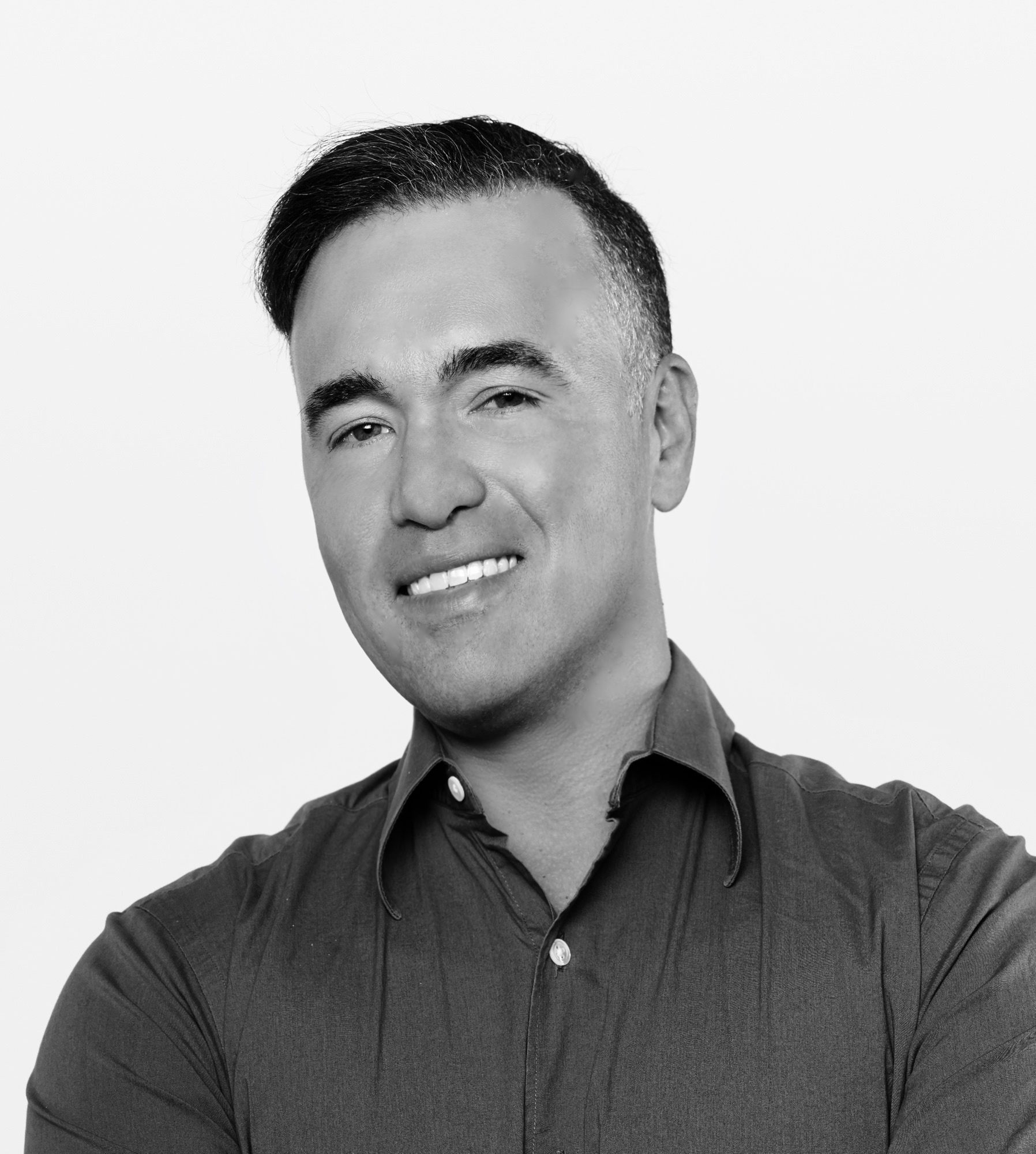
Art historian and Senior Curator at the Smithsonian National Museum of African Art in Washington, DC, Kevin Dumouchelle leads the museum’s curatorial programme. He has curated and co-curated several award-winning exhibitions on African art. Before joining the Smithsonian in 2016, he spent a decade at the Brooklyn Museum, where he was Curator in Charge of Arts of Africa and the Pacific Islands. In this conversation with DakArtNews, he discusses the role of museums in shaping how African art is collected, exhibited and understood. He also reflects on the need to challenge established narratives and develop an art history more firmly rooted in African histories and perspectives.

New & Now: A Decade Building the National Collection of African Art is your upcoming exhibition, reflecting on a decade of acquisitions and the choices behind them. Looking back, what do these acquisitions reveal about how the museum’s understanding of African art has evolved over the past decade?
Over the past decade, which coincides with my ten years at the museum, I’ve seen us move towards a much more strategic approach to collecting.
When I arrived, we followed a more traditional model, with a checklist of desired objects that we hoped to acquire to fill gaps in the collection. We have since moved towards a more holistic approach to strategic planning, bringing together people from within the museum and external stakeholders to review the collection and identify what is missing from the stories we can tell.
This process also considers the audiences we hope to engage and the stories we want the collection to tell in the future. Through it, we identified eight or nine strategic priorities that now guide our acquisitions.
Over the past four or five years, we have collected with these priorities in mind. Rather than simply looking for a particular type of object, we ask whether an acquisition opportunity aligns with one of the stories we have decided to develop.
Is there one acquisition from the past ten years that you remember particularly well?
There are many, but one of the works featured in the exhibition comes from a major gift that I spent about ten years developing with a donor, Jack Faxon, a former state senator in Michigan.
He left the museum his entire collection, comprising 100 works of art, as well as the proceeds from his estate. When the estate was settled, those proceeds became the largest cash gift for the museum’s collection in its history. It was a transformative gift, built on a relationship I had developed with the collector over many years.
One work from his collection that we are presenting is an extraordinary sculpture by a Bété artist from Côte d’Ivoire. It depicts a female figure, with a powerful, monumental sculptural form that speaks to feminine capacity and the power of women.
Your exhibition places renewed emphasis on provenance and ethical stewardship. How has this changed the way you approach the history of individual works?
Across the Smithsonian, we have undergone a significant evolution in how we think about provenance research. In particular, we are moving towards engaging source communities early in the research process, although some of these procedures are still being developed.
One of our priorities is to be as transparent as possible about what we know and what we do not know about an object’s history. When a work has a particularly significant provenance, we want to share that history as part of the story we tell.
This exhibition is also an opportunity to show how a museum operates. We want visitors to understand that we collect intentionally and strategically, and that we acquire objects only when we believe it is appropriate and ethical for the museum to hold and care for them.
Would you consider provenance research as the most challenging aspect of your role as a curator?
I’m not sure I would call it the most challenging, but it is an important issue that we give a great deal of thought to. Having worked at other museums throughout my career, I recognised that even ten years ago, the Smithsonian’s standards for provenance research and acquisitions were much higher than those of many other museums in the United States. Those standards have since become even more rigorous and focused.
We are constantly evolving and reflecting on these processes. Provenance is something we examine critically and carefully, and it is increasingly becoming part of how we tell the story of our collection as a whole.
I would also emphasize that provenance research is not limited to historical or so-called traditional works. We are examining the histories of twentieth- and twenty-first-century paintings and sculptures in our collection as well.
This raises a broader question about how African art is situated within art history. In your talk Beyond “Tradition” and “Modernity”, you challenged a distinction that has long shaped its interpretation, arguing that it places the European colonial moment at the centre of African art history. What would need to change in the way we write that history to move beyond this framework?
This has been a key intellectual question for me, from my PhD dissertation to my curatorial practice today. The challenge is to think holistically about Africa’s history and ensure that the framework we use to tell that story is rooted in the continent itself, rather than beginning with or centering the colonial period.
Colonialism was hugely formative for the twentieth and, in some ways, the twenty-first century. But it was also only one moment in a much longer history. When we step back and look at the broader trajectory of African art history, the relative weight and importance of that period shifts.
Whatever story we tell, African agency, African voices and indigenous African perspectives must remain at the centre.
How have you put this approach into practice at the museum?
This approach has been embedded in almost all the major projects we have undertaken at the museum, and it was already part of the institution’s thinking before I arrived ten years ago.
One of the most enduring examples is Visionary Viewpoints in Africa’s Arts, our permanent collection installation, which opened at the end of 2017 and remains on view. Rather than presenting the collection chronologically, we adopted a thematic approach, exploring African art through seven different agents involved in an object’s life history.
This allows us to make connections across periods and media. In one of the central galleries, for instance, we explore the role of artists in developing their practices, creating works and training others. We bring together canonical Yoruba sculptural traditions, early twentieth-century workshops featuring master artists such as Olowe of Ise, and the development of the Nsukka art movement at the University of Nigeria.
By placing these works and traditions in proximity, we invite visitors to consider how different artistic practices and movements relate to one another, including those that developed at the same time but are often presented as belonging to separate categories of African art history.
Contemporary African artists are often interpreted through historical lineages in museums. How do you navigate this relationship without reducing one to an explanation of the other?
It is a challenge, and the approach depends on the particular exhibition or gallery. I am especially sensitive to this issue when working with living artists from the continent. While they may appreciate the opportunity to be part of the conversation at an institution dedicated to African art, they do not necessarily want that to be the only way their work is understood. They may also want to be seen simply as contemporary artists on a global platform.
Artists should not be confined to a single way of being understood. One of the exciting things about the Smithsonian is that a living artist exhibited at our museum could also be collected and exhibited by the Hirshhorn Museum, the Smithsonian’s modern and contemporary art museum. Ideally, we can create opportunities for both perspectives.
El Anatsui offers a concrete example. When he began producing his large-scale metal sculptures, early Western interpretations often associated them with kente or strip-woven cloth, approaching the work through an almost ethnographic framework. In my own projects with him, I have tried to challenge that reading and encourage audiences to engage with his work as conceptual art, focusing on the ideas it explores. At the same time, we can recognize that its conceptual dimension is deeply rooted in African history and, more specifically, African art history.

Your museum is called the Smithsonian National Museum of African Art. Yet the term “African art” brings together practices from different societies, historical periods and intellectual traditions. Is it still a useful category for museums?
It is a challenge, and one we are increasingly being asked to think about. As an art historian, I believe there is real value in providing a platform where visitors can encounter the full range of Africa’s art history as art, and appreciate the brilliance, innovation and creativity of African artists across time. We are in a unique position because very few institutions focus exclusively on this history.
To understand our approach, it is useful to look across the National Mall at the Smithsonian’s National Museum of Natural History, which also holds a substantial collection of African material culture. Many objects we would consider art are interpreted there through anthropology, within a framework that tends to emphasize their function.
At our museum, aesthetics and visual experience offer a first point of entry, but they are not the only way to understand an object. These works can serve many purposes: they may be deeply spiritual, relate to fashion and personal appearance, or be intended to solve particular problems.
My goal as a curator is to offer visitors different ways of approaching an object, depending on their interests and backgrounds, while helping them understand that these are complex objects that can be interpreted in multiple ways.
We must challenge existing frameworks and expand the range of stories that can be told.
Kevin Dumouchelle
As a national museum with international reach, your choices influence which artists and movements become central to African art history. How do you understand its role in shaping the canon of African art?
It is something we take very seriously. We are mindful of what it means to exhibit works in an institution that is, in a sense, the national museum for this conversation. Our collection strategy helps us establish an intentional and collaborative framework for making these decisions.
At the same time, I have some hesitation around the idea of a canon, because it can become a monolithic and limiting concept. Several of my projects have sought to expand what the canon can mean and whom it can include.
One example is the HERE project, which I worked on over the past few years. It was the museum’s first major institutional effort to bring together artists from the African continent who identify as LGBTQ+ and ensure that their voices have a place in this conversation.
I believe our responsibility is not simply to valorize and celebrate the parts of African art that are already recognized by the market and other institutions. We must also continually evolve, challenge existing frameworks and expand the range of stories that can be told.
How does this translate into your acquisition decisions, particularly when an artwork is significant within its community but has yet to receive international recognition?
Several factors inform an acquisition. Now that we have a collection strategy, we first ask whether the story an object tells aligns with one of the areas we have identified as a priority for the institution.
We then consider what we know about the object’s origins and how it compares with other known examples. Is it a particularly refined example aesthetically? As an art museum, aesthetic quality remains an important criterion. We do not collect simply for the sake of collecting; we look for the strongest example according to the standards of the culture and the story surrounding the object.
One of the challenges, but also one of the strengths, of our museum is that we operate across two very different art worlds: historical objects and the global modern and contemporary art scene. Each requires different expertise, relationships and questions. The way we assess a mask from a particular culture, for instance, will not necessarily be the same as the way we approach a print or painting by a living artist. We must remain attentive to the specific nature of each object and the context from which it comes.
The international market for contemporary African art has expanded significantly in recent years. How do you ensure that the museum’s priorities remain distinct from those of the market?
It is important to be aware of the market, to follow its developments and to build relationships with some of its key players, while maintaining a certain intellectual distance.
There is a temptation to follow the crowd, particularly when certain artists or works are generating excitement at auctions and art fairs. One of the responsibilities of a museum is to slow down, step back from that conversation and think critically about how a work might fit into a collection intended to last for generations.
Will an artwork that is highly sought after today still contribute to an interesting and meaningful conversation five, ten or even fifty years from now? That is a difficult judgment to make, and there is no precise formula for it. It is a decision best made through careful consideration and, whenever possible, in dialogue with others.
Having worked with major collections at both the Brooklyn Museum and the Smithsonian, where do you see the greatest structural blind spot in the institutional understanding of African art today?
There is a tendency in the United States to approach Africa through two main frameworks. With the global contemporary art market booming, some visitors are drawn to what feels exciting and dynamic, reinforcing a particular image of a globally connected Africa. Others understand Africa primarily through the American perspective, shaped by the Middle Passage, the transatlantic slave trade, and histories of trauma, conflict and oppression.
Visitors may therefore enter a gallery devoted to African art expecting to encounter the latter narrative. As an institution focused on the continent’s entire history, we have a responsibility to understand these expectations and address the questions visitors may bring with them, while also broadening their perspective.
That means presenting stories rooted in African experiences, not only stories about what other powers and peoples have done to Africa, but also how Africans have responded, developed their own intellectual traditions and shaped their own histories. We need to centre those perspectives wherever we can.
Are there particular stories or artistic traditions that you feel remain underrepresented in the museum’s collection?
Absolutely. The HERE project is one clear example. I was seeing more and more contemporary artists from the continent who openly identified as LGBTQ+, but there was not yet a space to bring their work together and consider their practices collectively.
North Africa is another area I want to focus on more critically in the coming years. It is a fascinating region that often sits at the margins of different art-historical narratives. It is part of the Mediterranean story, but often at its edges; it is connected to Southwest Asian and Arab histories, yet can also remain marginal to those narratives. And it has often been treated as peripheral to the broader story of African art.
I am interested in how we can collect, interpret and exhibit art from the region while paying attention to its specific histories and to its role as a point of connection between these different contexts.
More broadly, there are many stories that have yet to be told. Our collection strategy helps us identify gaps and build a collection that can present a more comprehensive account of major art movements across the continent. We have strong holdings in some areas, but less substantial representation in others. For example, we could do more to represent the Makerere art scene in East Africa. There is still a great deal of ground to cover.
You mentioned the HERE Project as an effort to expand whose voices are represented in African art history. How did you bring together artists from different African contexts while preserving the diversity of their experiences?
That was a real challenge, and an important one. My co-curator, Serubiri Moses, and I wanted to challenge the assumption in the West that the LGBTQ+ experience in Africa is uniformly homophobic, and that it can only be understood through stories of resilience, trauma, oppression and struggle.
We wanted to present a range of perspectives, first and foremost by centring the artists’ own voices. We sought to bring together a broad and diverse range of artists across the continent, taking into account differences in gender, age, media and training.
As we did so, certain common themes emerged from their stories and practices. We brought those themes together and used them as the organising principle for both the book and the exhibition, building them around eight major human experiences that the artists explored in their work.

When African works are exhibited in American museums, their interpretation can be shaped by the research frameworks and institutional traditions of those museums. How do you ensure that African intellectual traditions and the work of African scholars inform the way you interpret and present works in the museum?
It is very important to us to centre African voices and experiences wherever we can, and there are several ways of doing that. We can cite scholars who have conducted research within the communities or on the artists we are focusing on. We can also bring artists’ own voices directly into the conversation, including through presentations in the gallery.
Above all, we want to remind visitors that there is an intellectual tradition behind these works, and that the artists themselves are actively engaging with these histories and ideas.
We also try to avoid an exclusively ethnographic or functional approach that explains an object only in terms of what it was designed to do. We want visitors to recognise the people behind these objects as artists.
This is also why naming and attribution matter. We are transparent about what we know and do not know, including whether we know the name of the person who created a particular object. Even when we identify someone as a Bamana or Bété artist, we want to remind visitors that the work was made by an individual with creativity and agency, who made choices that led to its creation.
How do visitors respond when the museum presents African art in ways that challenge their expectations?
I do not think we have conducted enough audience surveys to assess this properly, and I would like to see more research into how effectively we communicate these ideas.
Anecdotally, however, I do see visitors responding positively. They seem excited by works that challenge their expectations. The objects attracting attention on the museum’s social media, for instance, are not necessarily the ones people might expect to see at a museum of African art. I find that exciting, particularly when visitors engage with works that are surprising, provocative or unexpected.
In Slavery’s Wake: Making Black Freedom in the World explores the histories and legacies of slavery and colonialism, as well as Black communities’ struggles for freedom. As the exhibition comes to Dakar next year, what do you think its presentation on the African continent can bring to the way these histories are understood?
I am thrilled that the exhibition is coming to Dakar. I should clarify, however, that my involvement has been limited. The project was developed by our sister institution, the National Museum of African American History and Culture, although our museum lent several important objects to the exhibition.
Its presentation on the continent makes an important statement. It recognises that there are extraordinary institutions in Africa capable of telling these stories and serving as valuable partners for museums in Europe and North America. More institutions in those regions should be engaging with them.
I am particularly interested in how audiences in Dakar will respond to an exhibition that explores the historical relationships connecting Europe, North America and Africa through the experience of slavery. In the United States, slavery and the transatlantic slave trade are deeply embedded in the national experience, often understood as a profound collective trauma linking these regions.
For visitors from the African continent, however, I would not necessarily expect this to be the primary framework through which they understand Africa or its relationships with these other places. That difference could create an opportunity to extend the conversation, examine the legacies and meanings of slavery more critically, and consider how this history has shaped broader global understandings of what it means to be African.
Over the past decade, scholarship, collecting and exhibition-making around African art have expanded significantly. From your perspective as an art historian and curator, what questions do we still need to confront more seriously?
We need to continually examine whose stories are being told and which voices are still missing from the conversation.
At the museum, we have had a longstanding initiative to increase the representation of women artists in our collection. The HERE project extends this work to queer artists. North and East Africa are also areas where certain voices remain underrepresented in our collection.
More fundamentally, I would like to see the continued development of an art history that is truly rooted in Africa. So much of the narrative about the continent is still framed through comparisons or connections with other parts of the world. I would like to see the flourishing of an art history grounded in African history and African perspectives.
Interview by Remy Mallet
Read also
Marie-Cécile Zinsou on Why Museums Matter in Africa — and Who They Are For
Leave a Reply